
Ring cameras go mobile as Amazon debuts AI-powered security drone and robot
Amazon is about to turn the Ring brand into a mini‑air‑force, rolling out a drone and a wheeled robot that promise to patrol your living room the way a guard dog used to.
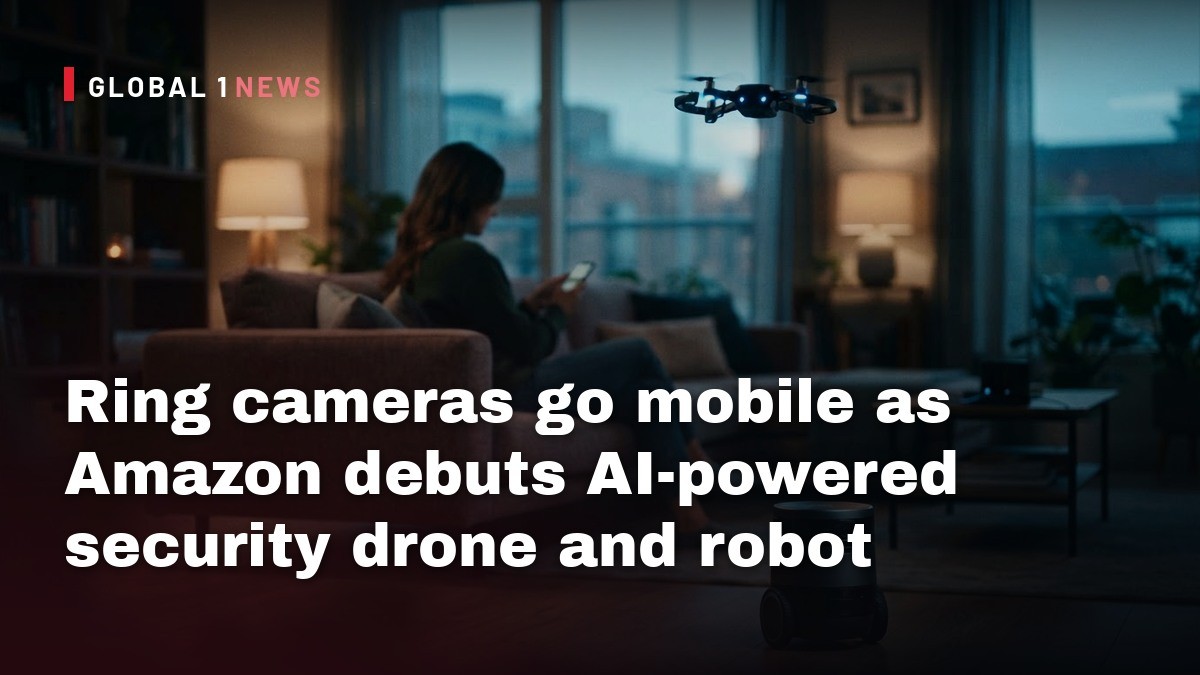
Amazon is about to turn the Ring brand into a mini‑air‑force, rolling out a drone and a wheeled robot that promise to patrol your living room the way a guard dog used to. The Ring Drone Cam and Ring Rover Cam are slated for delivery at the tail‑end of 2026 and early 2027, respectively, and they come wrapped in the same “AI Pilot” hype that Amazon has been pushing for years. As a founder who’s been wiring up data centres and managing on‑premise security for a decade, I see two immediate red flags: the fragility of the AI navigation stack in real homes and the privacy nightmare that comes with constantly streaming 2K‑plus video to the cloud.
What Amazon is actually selling
The Ring Drone Cam is a quad‑copter that will cost the same as the short‑lived Ring Always Home Cam from 2021 – a starting price of $250 – and it won’t hit the market until the FCC signs off. Amazon says the drone will fly pre‑programmed routes when a Ring sensor triggers an alert, and it can be steered from the Alexa Home Map interface. Its camera offers a 148‑degree field of view, 360‑degree rotation and 2K video, with two LEDs to light up low‑light scenes. The catch? A single battery gives you only eight minutes of flight time under controlled conditions, and you’ll need a docking station to recharge.
The Rover is a ground‑based robot priced at $1,000, positioned as a “business‑grade” security robot. It can stream and record up to 4K video, scan 360 degrees, and store footage for up to 180 days in the cloud. Its mast can lift to see over counters, and it carries a siren, a light tower and a two‑way microphone. Amazon claims it can cover up to 5,000 square feet, but it’s limited to single‑floor operation because it can’t climb stairs.
The AI Pilot promise and the reality on the ground
Amazon’s AI Pilot is billed as a combination of on‑device vision models, sensors and cloud processing that maps your floor plan after you walk the drone through the space or let the Rover explore on its own. In theory, that map lets the devices suggest patrol points near side doors, windows or even cash registers in a shop. In practice, the product description warns of degraded performance on reflective surfaces like polished marble, wet tile, blank matte walls, frameless glass and mirrors. Those are exactly the kinds of finishes you find in modern offices and upscale homes.
From my experience running a fleet of edge servers, the moment you rely on a cloud‑assisted AI for navigation you inherit latency, bandwidth and reliability risks. If the network hiccups, the robot could stall mid‑patrol or, worse, mis‑interpret a reflective surface as an open doorway and crash into a wall. The same applies to the drone: eight minutes of flight time means you’ll have to schedule short patrols, and any loss of GPS or Wi‑Fi could send it spiralling into a chandelier.
Privacy concerns that go beyond “just a camera”
Ring’s track record on privacy is already stained. The FTC charged the company in 2023 for allowing employees to watch private video feeds and for lax security that exposed 55,000 accounts. Amazon now says the new devices will use “Throw Away the Key” encryption introduced in September 2026. The EFF called that an improvement but still far short of true end‑to‑end encryption. In other words, video still passes through Amazon’s servers before it’s encrypted at rest.
Both the drone and the Rover will stream continuously when they’re on patrol, and the footage can be stored for up to six months. That creates a massive attack surface: any breach of Ring’s cloud storage could expose weeks of interior video from homes and businesses. Add the fact that the devices have microphones for two‑way audio, and you’ve got a platform that can listen as well as see, all under the watchful eye of a corporation that already hands data to law enforcement on request.
Business‑risk implications for independent hosting providers
If you run a boutique hosting or security service, Amazon’s move is a clear signal they’re trying to lock down the entire “home‑security‑as‑a‑service” stack. They’re bundling hardware, AI software and cloud storage under one roof, making it hard for a third‑party provider to compete on price or features. The AI Pilot’s reliance on cloud processing means that any independent provider that wants to interoperate will have to expose APIs to Amazon’s back‑end, effectively handing over data control.
Moreover, the pricing structure – $250 for a drone that can’t fly more than eight minutes, $1,000 for a ground robot that can’t handle stairs – is designed to lock customers into the Ring ecosystem. Once a customer buys into the hardware, they’re likely to subscribe to the Ring Protect plan to get the full AI‑driven patrol experience, further cementing Amazon’s recurring‑revenue model.
Technical war stories that echo this launch
Back in 2022 we deployed a fleet of edge cameras in a chain of retail stores. The AI we built in‑house could handle reflective tile floors and glass doors because we kept the entire inference pipeline on the device. When we tried to offload part of the vision stack to a public cloud, latency spiked and the cameras started mis‑classifying mirrors as open aisles, causing false alarms. The lesson? Cloud‑assisted AI is fragile in the field, especially in environments with glossy or featureless surfaces – exactly the scenarios Amazon warns about for its own devices.
Another case: we ran a drone‑based inventory scanner in a warehouse with high‑bay shelving. The drone’s eight‑minute flight window forced us to schedule multiple short runs, and any loss of Wi‑Fi meant the drone would hover uselessly until the operator intervened. That mirrors the operational constraints Amazon’s eight‑minute drone will impose on everyday users.
What founders and providers should do now
First, treat the Ring Rover and Drone as a cautionary tale rather than a must‑have gadget. If you’re a small business looking for perimeter monitoring, a simple wired camera system with on‑premise storage still beats a cloud‑dependent robot that can’t climb stairs and may mis‑navigate on reflective floors. Second, audit any third‑party AI service for latency and failure modes before you let it control a physical device in a production environment.
Third, demand true end‑to‑end encryption if you must use a cloud‑based solution. “Throw Away the Key” is a step forward, but it still leaves the video stream exposed while it’s in transit. Finally, keep an eye on the regulatory pipeline – the drone still needs FCC approval, and any delay could give you a window to explore alternatives before the market saturates with Amazon‑branded hardware.
Bottom line: hype versus hard‑won security
Amazon’s Ring Drone and Rover are flashy toys that promise “autonomous security without compromise.” In reality, they add a layer of AI fragility, limited flight or mobility, and a privacy model that still funnels raw video to Amazon’s cloud. For independent hosting providers and founders, the risk‑reward calculus leans heavily toward building on‑premise, locally‑encrypted solutions that you control end‑to‑end. The drone may be a cool demo, but it’s not a replacement for a solid, battle‑tested security architecture.
— Allan Ali, Founder
This article was produced with AI-assisted research and editorial support. Reporting is based on the source material cited below. Sources: Ars Technica; arstechnica.com; Global1.News (11 November 2026).
By Allan Ali, Global1.News
What's Your Reaction?
 Like
0
 Dislike
0
 Love
0
 Funny
0
 Wow
0
 Sad
0
 Angry
0

Publisher of Global1.News. Automation architect, systems builder, and the guy making sure the truth gets published.













Comments (0)