
NATO Tried Twice to Bring Down a Drone Over Lithuania. 300,000 Were Told to Shelter.
Three hundred thousand people in Kaunas were told to shelter overnight as a drone crossed Lithuania from Belarus. NATO fighter jets made two attempts to bring it down and failed, and missile debris was later found near Birzai.
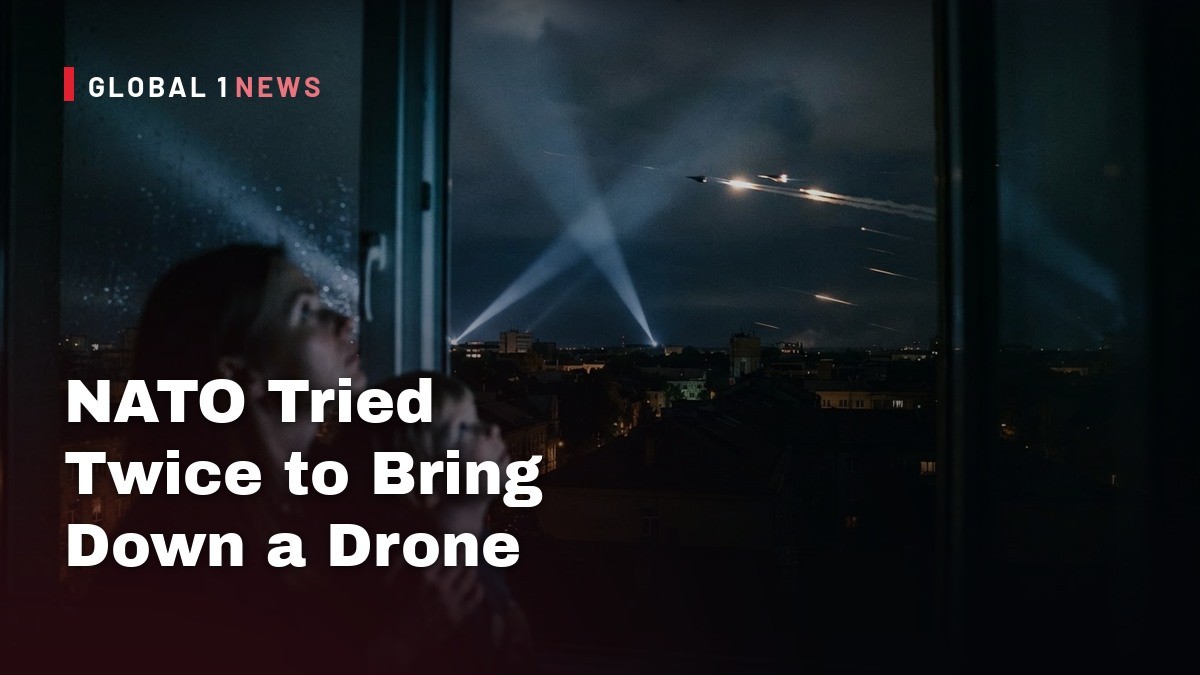
Three hundred thousand people in Lithuania's second city were told, at one o'clock in the morning, to get into a basement and stay there. A drone was crossing their country. NATO fighter jets went after it. Two attempts were made to bring it down. Both failed. By dawn the aircraft was gone — out over Latvia, then Estonia, then Russia — leaving the wreckage of a missile in a field near Biržai and a question the alliance will have to answer.
NATO Tried Twice to Bring Down a Drone Over Lithuania. 300,000 Were Told to Shelter.
Vilnius, Lithuania — The alerts began before the drone did. At around 19:20 on Tuesday evening, Lithuanian Airports restricted operations at Vilnius because of suspected smuggler balloons launched from Belarus. At about 21:30, the National Crisis Management Centre warned of possible balloons that could disrupt airspace, and Vilnius and Kaunas airports closed in turn. The aircraft came later, from the south, and the night turned into the most serious test of NATO's Baltic air policing in months.
The Sky Closed Before the Drone Arrived
The first air alert was declared in the Vilnius and Utena regions at around 23:00 on Tuesday and lifted shortly after midnight. Almost immediately a second alert was issued, initially in the Alytus region, then expanded across much of central and northern Lithuania. That warning was upgraded from yellow to red, which in the Lithuanian system is not advice. It is an instruction to take shelter.
Vilmantas Vitkauskas, head of the National Crisis Management Centre, said three drones had initially been detected over Belarus but that none of them entered Lithuanian airspace during that first episode. One of those aircraft crossed into Latvia and later flew toward northern Russia. The Vilnius and Utena alerts were issued on the strength of that first group, he said, and were lifted when the tracks moved away.
What followed was a second, separate incursion — and this one did not stay outside the border.
What Entered, and Where It Went
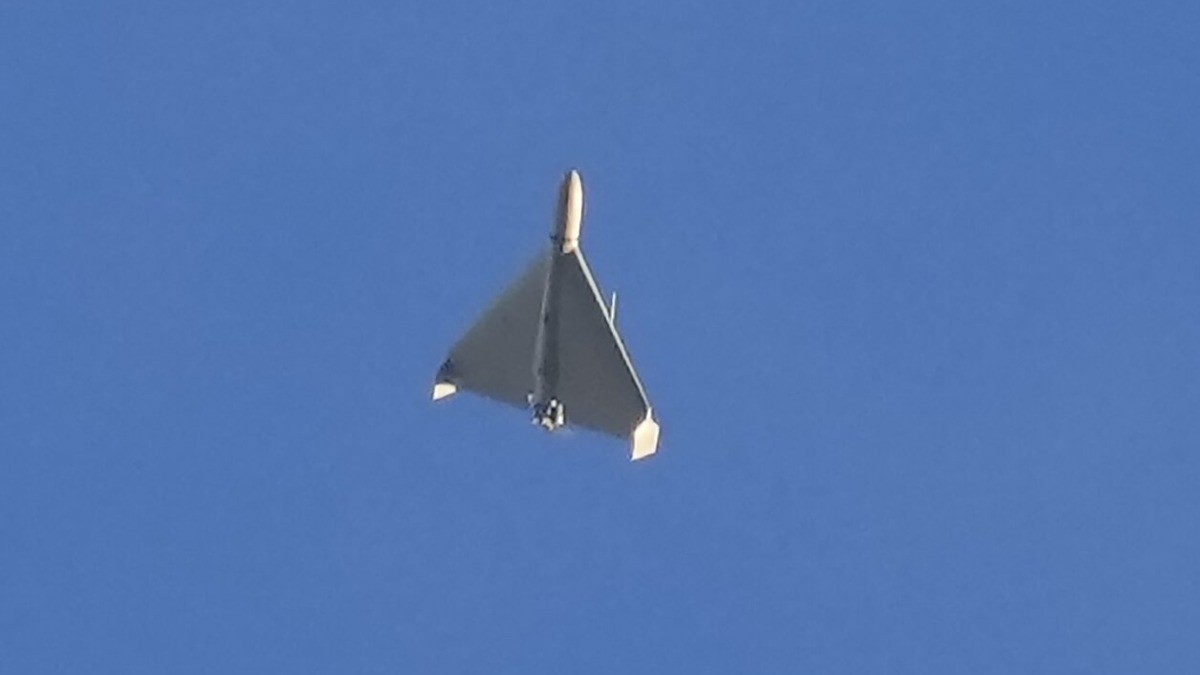
According to Vitkauskas, a single drone entered Lithuania from Belarus in the south, near the resort town of Druskininkai, after midnight. It may have briefly crossed into Poland before turning north, then flew through the Marijampolė, Kaunas and Panevėžys regions and left Lithuanian airspace near Pasvalys, close to the Latvian border.
Air alerts were issued for Druskininkai, Lazdijai, Marijampolė and Kaunas, as well as the districts of Panevėžys, Radviliškis, Pasvalys and Biržai — eight named areas along a corridor running the length of the country, following LRT's list. Daily Baltic's account of the same alerts names Prienai and Kėdainiai but not Radviliškis, so even the list of affected districts does not match exactly between the national broadcaster and its aggregators. AeroTime put the red alerts between 00:38 and 02:02, with all of them lifted by 02:49.
Defence Minister Robertas Kaunas described a slightly firmer track than the crisis centre did: the object, he said, briefly crossed into Poland before returning to Lithuania and eventually flying into Latvia. Yellow and red alerts were issued for every area it passed over. Whether it truly entered Polish airspace is one of several details Lithuanian and Polish investigators will now have to reconcile.
Red Means Shelter, Not a Warning
Lithuania runs a two-tier public alert system, and the difference between the tiers is the whole story of that night for the people living under it. A yellow alert is informational. It tells residents to stay calm, identify a safe place and be ready.
A red alert is an order in practice. Residents are told to move immediately to a shelter or another safe place, look after relatives and wait for further instructions. Shelters are marked with yellow signs reading "Shelter". Where none is nearby, the guidance is a basement, an underground car park, an interior storage room, a windowless corridor or a bathroom — anywhere with at least two walls between a person and the outside. Windows, balconies, lifts, open ground and the top floor of a building are all to be avoided.
In Kaunas, a city of about 300,000 people, that instruction arrived in the middle of the night. Nobody was hurt. The alerts were lifted. But for a couple of hours, a NATO member state's second city was being told to shelter from an aircraft nobody had managed to stop.
Two Attempts, and a Missile in a Field
The intercept failed, and the Lithuanian military has described how. Rear Admiral Giedrius Premeneckas, chief of the defence staff, told reporters that air defence aircraft made two attempts to destroy the unmanned vehicle as it flew north toward Panevėžys. Both were unsuccessful "due to various conditions", he said.
One missile that missed self-destructed, and its remains came down in the Biržai district. The "Shield" plan was activated, the area was secured and the debris was collected. Prime Minister Mindaugas Sinkevičius confirmed on Facebook that debris from a missile fired by a NATO fighter jet had been found near Biržai, and urged residents not to approach or touch any suspicious object but to report it.
The admiral was careful about the reason. A precise answer, he said, would be available only after a full investigation, including assessment of data from the fighter jet, its electro-optical systems and the missile remains. The aircraft itself could not be identified, because it was not brought down and no wreckage was available to examine.
Why Not Over the City
The most consequential decision of the night was made before either missile was fired. Premeneckas said the drone was first spotted near Kaunas, but the military did not attempt to shoot it down there, to avoid putting residents at risk from falling debris. "Destruction of the aircraft was not possible as it was an urbanised area," he said.
Conditions then deteriorated, and the fighter jets had to make several passes at the target before locking on. When conditions allowed, shots were fired.
Vitkauskas put it more plainly. "The fighter jets came quite close to making contact," he said. "But why they failed to shoot it down […] it could have been due to poor weather conditions, or perhaps it was an area where shooting down a drone would have been unsafe."
Those two explanations are not the same thing. One is meteorology. The other is the permanent dilemma of air defence over populated ground: a missile that misses does not vanish, it lands somewhere. That night it landed in a field, and nobody was under it.
Four Drones, Three Countries, Several Accounts
The official numbers moved as the night went on, and they do not all match. Sinkevičius said service data showed four unmanned aerial vehicles and dozens of radar tracks associated with smuggled balloons recorded in the region overnight, and that one drone had crossed Lithuanian territory. That reconciles with the crisis centre's account of three aircraft over Belarus plus a separate incursion in the south — four recorded, one across the border — but it is the prime minister's figure, not the crisis centre's.
The count of what happened over Latvia is vaguer still. Latvia's National Armed Forces said there was no information at that point on how many drones were involved, or whether any of them crashed or were shot down. Estonia's defence forces did not give a number either.
What is not in dispute is that the alerts were real, that NATO aircraft were airborne over all three Baltic states, and that at least one drone crossed a NATO border and left it again without being destroyed.
The Port That Was Burning
All of this happened while north-western Russia was on fire. Ukrainian drones attacked the Ust-Luga port area on the Baltic Sea overnight, and Leningrad Oblast Governor Aleksandr Drozdenko said on Telegram that the strike caused a fire in the port, injured three workers and cut off a power station.
Ust-Luga sits about 36 kilometres from Estonia. ERR's correspondent in Ida-Viru county reported that the flames could be seen from Narva, Sinimäe and Sillamäe — orange light flickering on the horizon across the water. The port is a major outlet for Russian crude, oil products and grain, and it is sanctioned by the European Union, Canada, the United Kingdom, the United States and Switzerland for its role in the war. The European Commission's enlargement directorate says Ust-Luga is used to move Russian crude "by using the shadow fleet and other irregular and high-risk shipping practices".
The Russian accounts of the defence do not agree either. One Reuters dispatch carried Drozdenko saying 92 drones had been shot down over the Leningrad region. Another carried the same governor saying 150. Both are his figures. Neither could be independently verified.
What Lithuania Says It Was
Lithuania's defence minister has offered an attribution, and it is not the one the alerts implied. Robertas Kaunas said the drones were most likely Ukrainian, intended to target Ust-Luga and other sites inside Russia, and had drifted off course.
That is an assessment, not a finding. Officials have not established whether the aircraft detected near or over NATO territory were connected to the strikes on Russia at all.
The three-way argument underneath this is familiar and unresolved. Moscow says Kyiv uses NATO airspace as cover for its attacks. Kyiv says Russian electronic jamming has steered some of its drones off course. The Baltic states blame Russia for the whole situation on the grounds that Russia started the war. All three positions were restated again on Wednesday, and none of them explains why two missiles missed.
It Has Happened Before, and It Usually Ends Differently
This is not the first time Lithuanian airspace has been breached, and it is not the first time the alliance has had to decide what to do about it. On 15 September, NATO jets shot down a drone that entered Lithuanian airspace. On 14 August, NATO fighter jets shot down a drone over eastern Latvia. The last red alert before this week was issued on 18 October across Panevėžys and Šiauliai counties and lifted about an hour later.
What makes this episode different is the combination: a drone that crossed the country end to end, two failed attempts to bring it down, live missile debris on the ground, alerts in three states and precautionary restrictions in a fourth. Finland temporarily restricted air and maritime traffic in the eastern Gulf of Finland, calling it a precautionary measure, then withdrew the curbs.
The political cost is already visible. Drone incursions contributed to the collapse of Latvia's government earlier this year. On Wednesday morning the question in Vilnius was not whether the alerts worked. It was why the intercept did not.
The Talks Going On Next Door
All of it unfolded beside a negotiating table. Russian and Ukrainian officials met in Abu Dhabi from Tuesday in the first round of talks between them in nine months, mediated by the United States, and were due to continue on Wednesday. President Donald Trump has said the war is close to being settled.
Ukraine's president offered his own read of the first day. Volodymyr Zelenskyy wrote that the American side had confirmed Ukraine's battlefield assessment, and that Russia had claimed at the table to occupy half of the Donbas. "This is the problem. Putin lives in a different reality," he wrote.
For the people in that Kaunas basement, the diplomacy is not abstract. A missile fired at a drone in the dark has to come down somewhere.
By Jessica Ali, Staff Writer
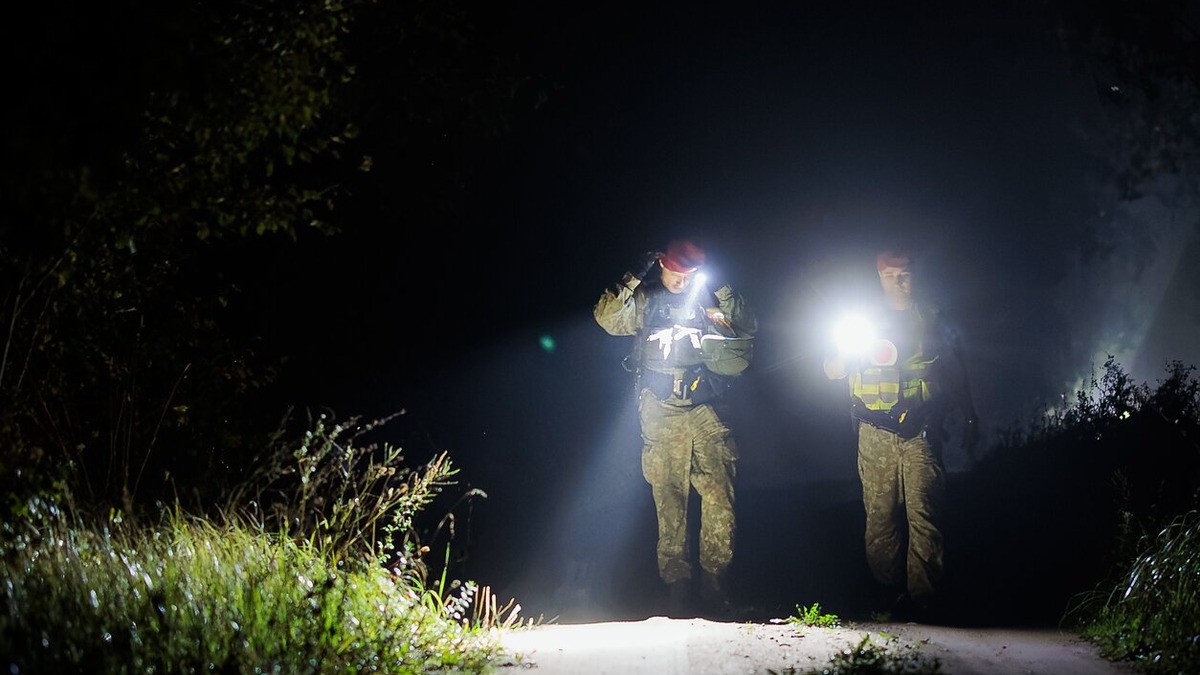
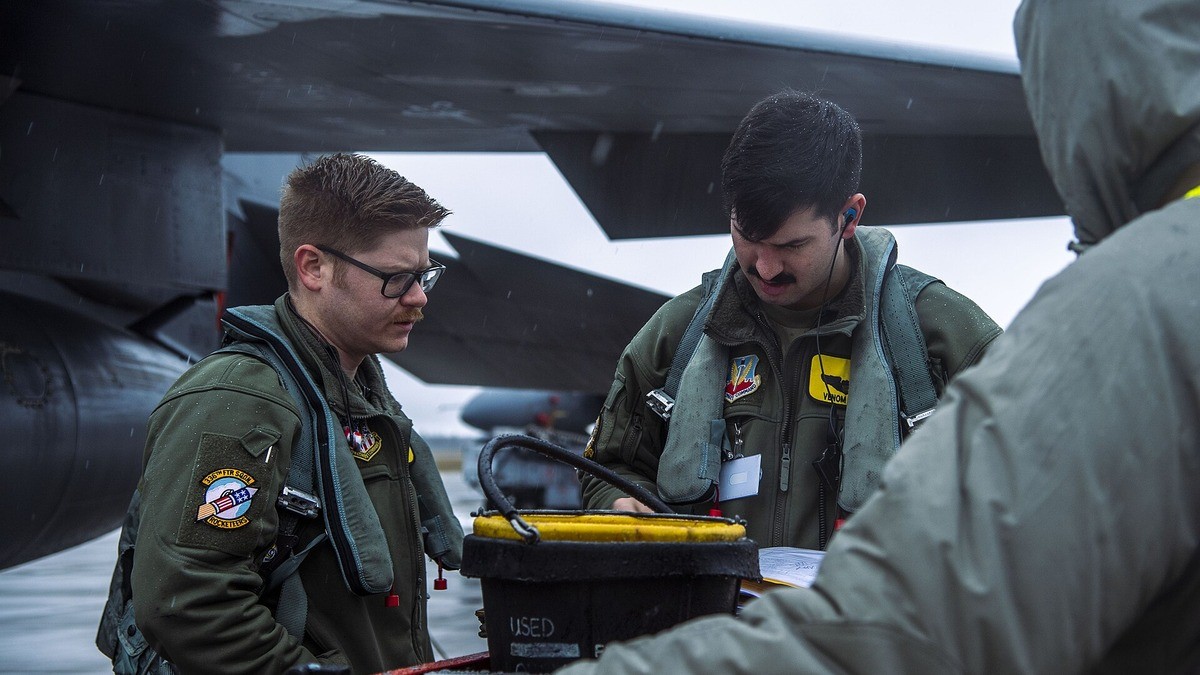
This article was produced with AI-assisted research and editorial support. Sources: LRT, Reuters, ERR, LSM, Lithuanian National Crisis Management Centre, Lithuanian Armed Forces, Government of Lithuania, The Straits Times, AeroTime, Daily Baltic. Photographs: V. Raupelis/LRT (Lithuanian troops on a night exercise); AP (illustrative photograph of a one-way attack drone); U.S. Air Force/Staff Sgt. Megan Beatty (an F-16 at Amari Air Base in Estonia, file photograph). Cover: Global 1 News editorial image.
What's Your Reaction?
 Like
0
 Dislike
0
 Love
0
 Funny
0
 Wow
0
 Sad
0
 Angry
0

Editor-in-Chief at Global1.News. Atlanta-based journalist who cuts through the BS and tells it like it is. Lead anchor, host, and the voice you hear when the spin stops and the truth starts.













Comments (0)