
Pemex begins fracking feasibility studies in Coahuila
In the dusty plains of Coahuila, where the wind sweeps across the ejido fields and the tianguis stalls buzz with the chatter of families, a new kind of drilling is being examined.
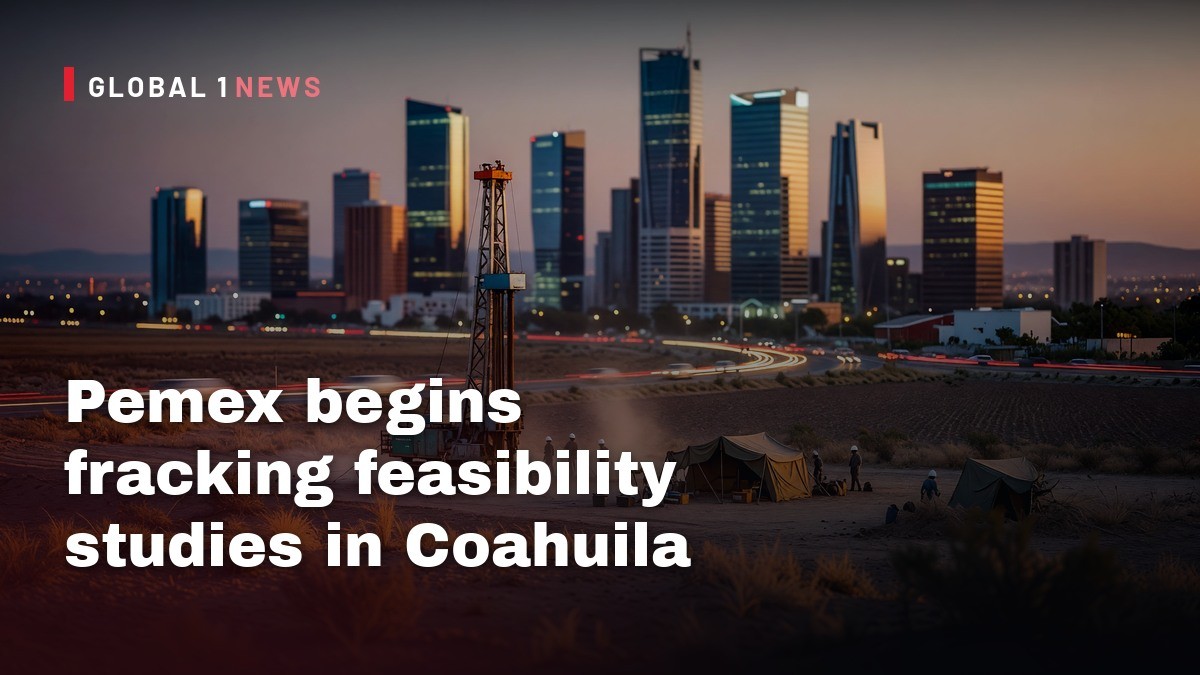
In the dusty plains of Coahuila, where the wind sweeps across the ejido fields and the tianguis stalls buzz with the chatter of families, a new kind of drilling is being examined. Petróleos Mexicanos, the state‑run oil giant, has begun feasibility studies that could bring hydraulic fracturing—commonly known as fracking—to the northern border state. The move, announced by Pemex Director General Juan Carlos Carpio Fragoso before Congress, is framed as a response to Mexico’s heavy reliance on imported natural gas and the volatile price swings that accompany it.
Why Pemex is looking at fracking now
The Sheinbaum administration is wrestling with a stark reality: up to three‑quarters of the nation’s gas supply comes from the United States. That dependence, highlighted in recent congressional testimony, leaves Mexico vulnerable to shifts in cross‑border trade and to the broader uncertainties that surround the United States‑Mexico‑Canada Agreement. By exploring fracking, the government hopes to tap domestic reservoirs and lessen that reliance.
Fracking, as Carpio explained, involves drilling deep wells and injecting a mixture of water, sand and chemicals at high pressure to crack the rock and free trapped hydrocarbons. While the technique promises access to “hard‑to‑reach deposits,” it also raises a host of environmental and social questions that have already sparked debate across the country.
The water question at the heart of the study
One of the key conditions set by the government for any fracking project is the availability of water that does not compromise drinking supplies. In the community of Hidalgo, Coahuila, Pemex has already drilled a well to assess the characteristics of local brackish water and to confirm that it is isolated from freshwater aquifers. Carpio told legislators that the company is “waiting for the results that will confirm the characteristics of the brackish water and verify that there is no connection to freshwater aquifers.”
Mexico’s Environment Minister Alicia Bárcena has underscored this requirement, noting in October that a “series of restrictions”—including water availability—must be satisfied before fracking can proceed. If the study confirms sufficient deep, saline water, the next step could be pilot tests, but without that assurance the project will stall.
Potential reserves and the scale of ambition
A technical committee appointed by the government evaluated basins in Coahuila, Nuevo León and Tamaulipas, focusing on the Burgos and Sabinas‑Burro‑Picacho formations. Their assessment identified these basins as having the greatest potential for fracking, estimating prospective resources of roughly 120.8 million cubic feet. While this figure offers a glimpse of what could be unlocked, experts caution that meeting the nation’s gas needs will require a far larger push.
Analysts estimate that to meaningfully cut import dependence, Mexico would need to launch about 24 entirely new natural gas exploration and production projects. Together, these projects would have to supply an additional nine billion cubic feet per day—a scale far beyond the initial prospects identified in Coahuila.
Economic stakes and investment challenges
The financial magnitude of the undertaking is striking. Industry estimates place the required investment for the 24‑project expansion at roughly $108 billion. This sum reflects the high costs of drilling, infrastructure, and the water management systems needed to keep fracking fluids separate from municipal supplies.
Given the size of the investment, the government’s decision to move forward will hinge not only on technical feasibility but also on the political and social license to operate. Communities in the northern states, many of whom rely on agriculture and local water sources, will be watching closely to see how Pemex addresses concerns about contamination and resource allocation.
Environmental concerns and regulatory hurdles
Beyond water, fracking raises broader environmental issues, from the potential for chemical spills to the impact on air quality. While the source material does not detail specific chemical formulations, the standard practice of mixing water, sand and chemicals under pressure is well known to carry risks if not tightly controlled.
The Sheinbaum administration’s cautious stance—reflected in the explicit water‑availability condition—suggests that regulators are prepared to impose strict limits. Any pilot tests would likely be subject to rigorous monitoring to ensure that brackish water sources remain isolated from aquifers that supply drinking water to towns and colonia neighborhoods.
What this could mean for Mexican families
For the families who line up at the local tortillería each morning, the prospect of domestic gas production carries both hope and apprehension. A reliable, locally sourced supply could lower energy costs for households and small businesses, potentially easing the burden of high utility bills that many Mexican families shoulder.
Conversely, the fear of water contamination touches a deep cultural chord. In many pueblos mágicos, water is not just a resource but a symbol of community life, used in everything from cooking to religious festivals. Any perceived threat to that lifeline could spark resistance, as seen in past disputes over mining and oil projects across the country.
Looking ahead: the path to a decision
The next weeks will be crucial. Pemex’s water‑characterization study in Hidalgo will determine whether the brackish reserves are sufficient and truly separate from freshwater aquifers. If the results are positive, the government may green‑light pilot fracking tests, moving the project from feasibility to implementation.
However, even a green light will not guarantee swift progress. The scale of investment required, the need for extensive environmental safeguards, and the political calculus of balancing energy independence with community trust will shape the trajectory. As Mexico navigates this crossroads, the eyes of families in Coahuila, workers in the oil fields, and policymakers in Mexico City will remain fixed on the outcome—one that could redefine how the nation fuels its future while protecting the water that sustains everyday life.
This article was produced with AI-assisted research and editorial support. Reporting is based on the source material cited below. Sources: Mexico News Daily; mexiconewsdaily.com; Global1.News (11 November 2026).
By Rosa Martinez, Staff Writer
What's Your Reaction?
 Like
0
 Dislike
0
 Love
0
 Funny
0
 Wow
0
 Sad
0
 Angry
0

Latin America/Andes Correspondent at Global1.News. Based in Bogota, covering politics, environment, energy, and social movements across the Andean region. Passionate about environmental journalism and communities protecting their land.













Comments (0)