
Low-pressure area likely to form over Bay of Bengal, ease rain deficit in State
As November unfolds, the Regional Meteorological Centre (RMC) has signalled the likely birth of a low‑pressure system over the southeast Bay of Bengal, a development that could prove pivotal for Tamil Nadu’s water balance.
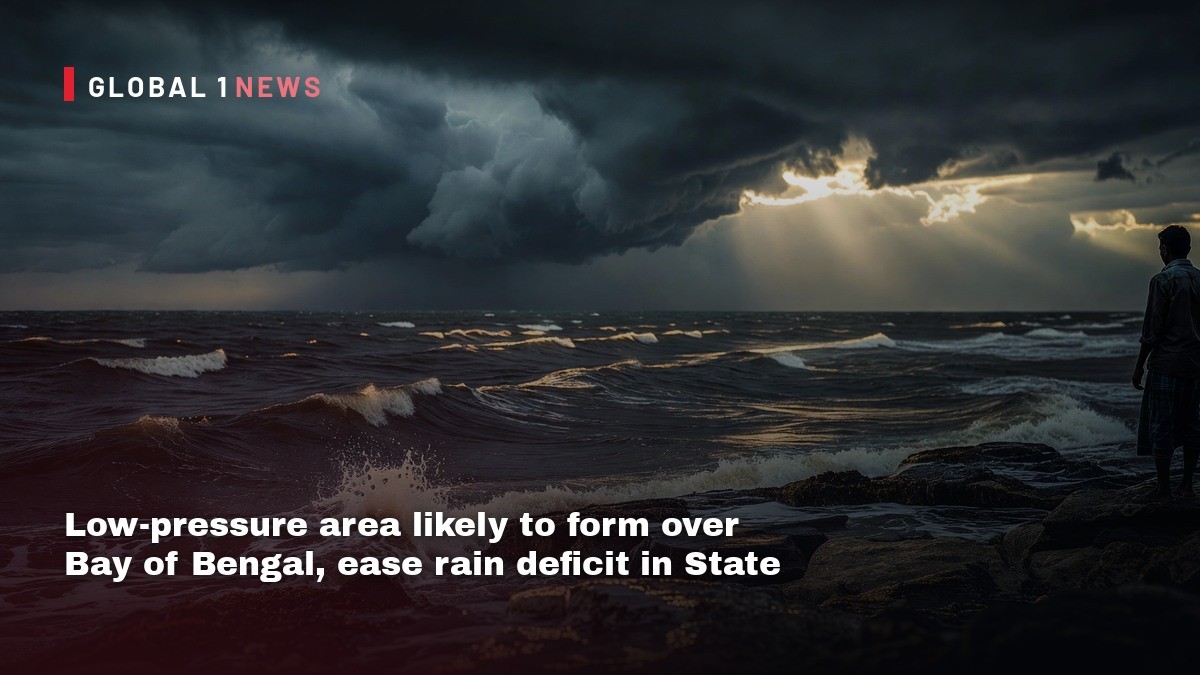
As November unfolds, the Regional Meteorological Centre (RMC) has signalled the likely birth of a low‑pressure system over the southeast Bay of Bengal, a development that could prove pivotal for Tamil Nadu’s water balance. The agency expects the disturbance to evolve into a depression by 15 November, potentially delivering the much‑needed rain to districts that have been grappling with a persistent deficit during the Northeast monsoon. While the exact track and intensity remain uncertain, the forecast has already set in motion a series of policy and operational considerations across the state’s irrigation, disaster‑management and agricultural sectors.
Genesis of the upcoming system and its meteorological backdrop
The RMC attributes the nascent low‑pressure area to an upper‑air cyclonic circulation currently situated over the south Andaman Sea. This circulation mirrors the one that seeded Cyclone Murasu earlier in the season, a precedent that underscores the likelihood of the system moving westward towards Tamil Nadu. According to V.R. Durai, head of the Regional Weather Forecasting Centre, the agency will gain clearer insight into the system’s trajectory within the next one to two days as it consolidates strength.
In parallel, a separate upper‑air cyclonic feature over the Gulf of Mannar is influencing the present weather pattern across parts of the state. This feature has prompted the RMC to retain its forecast of moderate rainfall for the southern and delta districts through Sunday, while the northern coastal belt is expected to receive only light showers until the same day. The interplay between these two circulations will determine whether the upcoming depression can augment the existing rainfall or remain a peripheral influence.
Rainfall deficit in the Northeast monsoon heartland
November traditionally marks the peak of the Northeast monsoon for many coastal districts, including Chennai, Nagapattinam, Cuddalore and Tiruchi. These districts typically receive the bulk of their annual precipitation during this month, making any shortfall particularly consequential for water‑dependent activities. The article notes that districts such as Cuddalore, Mayiladuthurai, Thanjavur, Chengalpattu and Tiruvarur continue to record a rainfall deficit, a situation that has strained reservoirs, groundwater tables and agricultural sowing schedules.
Given the agricultural calendar, a delayed or insufficient monsoon can push rice‑paddy planting into a narrower window, potentially affecting yields. The deficit also amplifies concerns for urban water supply, especially in Chennai, where reservoir levels are closely monitored. The prospect of a depression forming on 15 November therefore carries heightened significance for both rural and urban water security.
Implications for state water‑management policies
The Tamil Nadu Water Resources Department has, in recent years, emphasized a multi‑pronged approach to mitigate monsoon variability: augmenting reservoir capacity, promoting rainwater harvesting and enhancing groundwater recharge. The anticipated rainfall from the upcoming depression could provide a timely boost to these initiatives, particularly in districts where reservoir inflows have lagged behind expectations.
However, officials caution that the scale of impact will hinge on the system’s track. If the depression skirts the coastline or weakens before landfall, the contribution to reservoir levels may be modest. Consequently, the state’s contingency plans—such as the activation of the Tamil Nadu Water Supply and Sewerage Board’s emergency water allocation protocols—remain on standby. The RMC’s warning underscores the need for adaptive management, where real‑time meteorological data informs water‑release decisions from major dams like Mettur and Bhavani.
Disaster‑risk assessment and cyclone monitoring
While the RMC has not yet classified the system as a cyclone, it is actively monitoring the possibility. Historically, low‑pressure areas that originate over the southwest Bay of Bengal have a propensity to track towards Tamil Nadu, as evidenced by Cyclone Murasu’s genesis in the same region. The agency’s emphasis on “more clarity on its movement in one or two days” reflects a standard protocol of escalating alerts as a system intensifies.
Should the depression intensify further, the state’s disaster‑management apparatus—coordinated by the Tamil Nadu Disaster Management Authority (TNDMA)—will need to activate early‑warning systems, pre‑position relief supplies and potentially issue evacuation advisories for vulnerable coastal communities. The article’s reference to “prospects of widespread and heavy rainfall would depend on the track and intensity” serves as a reminder that meteorological uncertainty translates directly into operational uncertainty for emergency responders.
Impact on agriculture and food‑security outlook
For the agrarian segment of Tamil Nadu’s economy, the timing of rainfall is as critical as its volume. The districts listed with ongoing deficits—Cuddalore, Mayiladuthurai, Thanjavur, Chengalpattu and Tiruvarur—are major rice‑paddy zones. A timely infusion of rain can replenish soil moisture, reduce dependence on canal irrigation and lower the cost of cultivation for smallholder farmers.
Conversely, an erratic or overly intense rainfall event could exacerbate water‑logging, especially in low‑lying delta areas, potentially damaging standing crops. The state’s agricultural extension services are therefore likely to issue advisories on field drainage and the optimal timing of sowing, aligning with the RMC’s forecast updates. Such guidance is essential to safeguard the food‑security buffer that Tamil Nadu maintains through its public distribution system.
Urban water supply considerations
Metropolitan Chennai, which relies heavily on monsoon-fed reservoirs and desalination plants, stands to benefit from any additional rainfall. The city’s water‑management authority has previously highlighted the vulnerability of its supply network to monsoon shortfalls. An influx of rain from the depression could help raise reservoir levels, providing a cushion against any subsequent dry spell.
Nevertheless, urban planners must balance the benefits of rain with the risk of flash flooding, a recurring challenge in Chennai’s low‑lying neighborhoods. The RMC’s forecast of “light rainfall” for the north coastal belt until Sunday, followed by an “increase in rainfall intensity from 16 November,” suggests a window where city officials can prepare drainage systems and public‑awareness campaigns to mitigate flood hazards.
Technology, data integration and future forecasting
The RMC’s reliance on upper‑air cyclonic analyses illustrates the growing sophistication of India’s meteorological infrastructure. By integrating satellite‑derived wind patterns over the Andaman Sea and Gulf of Mannar, forecasters can anticipate low‑pressure genesis several days in advance. This capability, however, still depends on rapid data assimilation and transparent communication with state agencies.
In the coming weeks, the effectiveness of the RMC’s early warnings will be measured against the actual performance of the depression. Successful coordination between the meteorological centre, water‑resource departments, disaster‑management authorities and agricultural extension services could set a benchmark for inter‑agency collaboration during climate‑induced weather extremes. As Tamil Nadu navigates the delicate balance between rain‑deficit mitigation and flood‑risk management, the episode underscores the critical role of science‑driven policy in safeguarding the state’s socio‑economic resilience.
This article was produced with AI-assisted research and editorial support. Reporting is based on the source material cited below. Sources: The Hindu; thehindu.com; Global1.News (12 November 2026).
By Dr. Raj Patel, Staff Writer
What's Your Reaction?
 Like
0
 Dislike
0
 Love
0
 Funny
0
 Wow
0
 Sad
0
 Angry
0

India/South Asia Correspondent at Global1.News. Analytical voice with a background in science and health journalism. Based in New Delhi, covering Indian politics, education, healthcare, technology, and policy. Breaks down complex data into clear, actionable reporting.













Comments (0)