
Nepal Floods: Death Toll Surpasses 540, Hundreds Still Missing
The Bhote Koshi river, swollen beyond recognition by a surge of water from the Tibetan Plateau, turned from a lifeline into a killing force in a matter of minutes on Wednesday morning, obliterating entire settlements and sweeping away hundreds of lives in Nepal's central Himalayan districts.
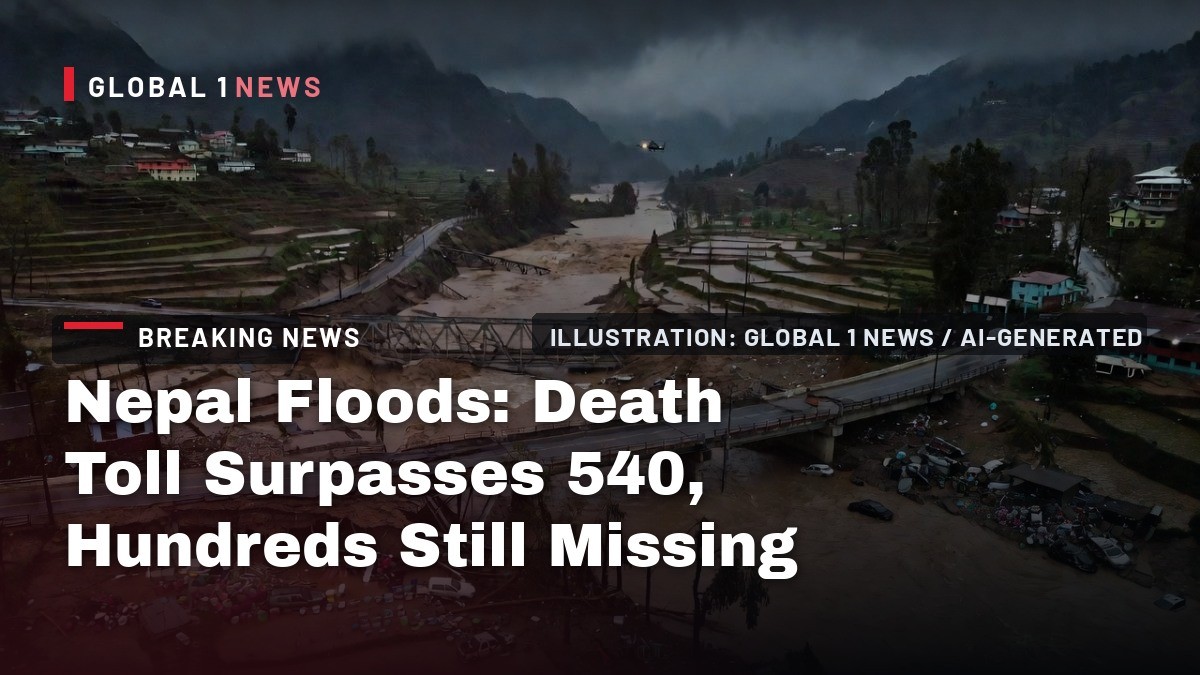
The Bhote Koshi river, swollen beyond recognition by a surge of water from the Tibetan Plateau, turned from a lifeline into a killing force in a matter of minutes on Wednesday morning, obliterating entire settlements and sweeping away hundreds of lives in Nepal's central Himalayan districts. As rescue crews race against time and the elements, the confirmed death toll has surpassed 540, with more than 750 people still unaccounted for, making this one of the most devastating flood disasters the country has faced in recent memory.
Nepal Floods: Death Toll Surpasses 540, Hundreds Still Missing
Kathmandu, Nepal — The scale of the catastrophe is still coming into focus. Nepal Police confirmed 547 deaths as of Friday afternoon, August 28, while the National Disaster Risk Reduction and Management Authority (NDRRMA) placed the figure at 538, a discrepancy that underscores the chaos of the ongoing response. At least 1,473 people have been injured, and more than 750 remain missing, according to official tallies. The flood, which struck the Bhote Koshi-Trishuli river basin on Wednesday, August 26, did not discriminate: it swallowed homes, hotels, army posts, and border crossings alike, leaving a trail of mud, debris, and grief across the districts of Rasuwa, Nuwakot, and Sindhupalchok.
A Wall of Water From the Tibetan Plateau
The disaster unfolded with terrifying speed. Witnesses and officials described a massive mid-morning surge of water that came roaring down the Bhote Koshi river after water was released or breached from the Tibet side of the border. The river, which originates in Tibet and carves a steep, narrow gorge through the Himalayas before joining Nepal's Trishuli river, became a conveyor belt of destruction. The flood hit the Gyirong border-crossing area on the Chinese side as well, according to reports, but the brunt of the human toll has fallen on Nepal's villages and towns strung along the river's banks.
In Rasuwa district, which shares a direct border with Tibet, entire settlements were reported to have been washed away. Nuwakot, downstream, suffered similarly catastrophic damage. District administrator Narendra Pariyar issued a stark warning in the immediate aftermath, telling reporters: "There could be heavy casualties or loss of property." He urged residents living along the Bhote Koshi to move to higher ground, a plea that came too late for many. The flood struck during the monsoon season, when rivers are already running high and the ground is saturated, amplifying the destructive power of the sudden deluge.
The Bhote Koshi is no stranger to flash floods. The region has experienced glacial lake outburst floods and landslide-dam breaches before, but the sheer volume of water and the speed of Wednesday's event have stunned even seasoned disaster managers. Scientists have long warned that climate change and glacial instability in the Himalayas make such outburst floods more likely, and this event appears to fit that grim pattern. The river's steep gradient means water moves at extraordinary velocity, giving residents little time to react.
Tourists and Trekkers Among the Missing
The human cost extends far beyond Nepal's borders. More than 400 tourists were reported missing in the wake of the flood, including at least 340 foreign nationals. Among them are at least 33 Americans and 34 Australians, according to official figures cited by multiple news outlets. The popular trekking and rafting routes along the Bhote Koshi and Trishuli rivers attract adventure seekers from around the world, and many were in the area when the water struck. The missing list also includes Nepali guides, porters, and hotel staff who were working in the tourism industry that sustains the region.
For families abroad, the wait for news has been agonizing. The Australian and U.S. governments have confirmed they are in contact with Nepali authorities and are working to account for their citizens. The exact circumstances of the tourists' disappearance remain unclear — some may have been swept away by the flood, while others may be trapped in remote areas cut off by landslides and damaged roads. The Nepali army has been using MI-17 helicopters to establish an emergency airlift corridor, but the rugged terrain and ongoing weather challenges have slowed the search.
An aid worker on the ground told the BBC that the situation in Nepal is "chaos," but offered a sliver of hope, saying that missing people "could be found alive." That optimism is tempered by the grim reality of the flood's power. Entire buildings were reduced to splinters, and the river's course has been altered in places, making it difficult to know where to search. The missing include not just tourists but also hundreds of residents and security personnel who were stationed in the affected districts.
Rescue Teams Battle Rivers and Rubble
Nepal's security forces have been mobilized on a massive scale. The army deployed MI-17 helicopters to establish an emergency airlift corridor for rescue operations, ferrying injured survivors to hospitals in Kathmandu and other cities. Police said at least 466 injured people have been rescued so far, a figure that reflects the intensity of the search-and-rescue effort. Ground teams are working alongside the air crews, digging through mud and debris in the hope of finding survivors.
The challenges are immense. The flood has destroyed roads and bridges, cutting off many villages from the outside world. Landslides triggered by the heavy monsoon rains have compounded the problem, blocking access routes and forcing rescue teams to approach by foot or by air. The weather has been uncooperative, with low clouds and rain hampering helicopter operations. In some areas, the floodwaters have not fully receded, leaving vast stretches of land submerged and impassable.
Nuwakot and Rasuwa are the worst-affected districts, according to officials. Hundreds of residents, tourists, and security personnel remain unaccounted for in these areas. The Nepali army has set up temporary command posts and field hospitals, but the scale of the disaster is stretching resources thin. International aid agencies have begun to arrive, but the logistics of delivering supplies to remote mountain communities are daunting. The priority, officials say, is to find the living, but the window for rescue is narrowing with each passing hour.
Fresh Flood Warnings as Survivors Wait
Even as rescue operations continue, authorities are warning of new dangers. Police have urged people to head for safety because more water could soak the flood-ravaged villages. There is a palpable fear of fresh flood threats, including the possibility of a glacier collapse in the region. The Himalayas are geologically fragile, and the monsoon has weakened slopes and glacial moraines, creating conditions for further disasters. Scientists have warned that the same mechanisms that triggered Wednesday's flood could be activated again.
Survivors who have been evacuated to higher ground are now living in makeshift camps, waiting for news of loved ones and for the waters to recede. Many have lost everything — their homes, their belongings, their livelihoods. The psychological toll is immense, and aid workers report that many survivors are in a state of shock. The Nepali government has promised support, but the scale of the need is overwhelming. The district administrator's warning that "there could be heavy casualties or loss of property" has proven tragically prescient, and officials are bracing for the death toll to rise further as search teams reach more remote areas.
China, for its part, has suspended rescue efforts at the border area, according to the BBC. The decision has not been fully explained, but it adds another layer of complexity to an already fraught situation. The border crossing at Gyirong is a key trade and travel route between China and Nepal, and its closure will have economic repercussions. For now, the focus remains on the humanitarian response, but the suspension of Chinese rescue efforts has raised questions about cross-border coordination in the aftermath of a disaster that knows no political boundaries.
A River That Knows No Border
The Bhote Koshi river is a transboundary waterway, originating in the Tibetan Autonomous Region of China and flowing south into Nepal, where it joins the Trishuli river. The Trishuli, in turn, flows into India as the Gandak river. This hydrological connection means that the impact of Wednesday's flood is not confined to Nepal. Downstream communities in India are on alert, and authorities there are monitoring water levels and flow rates. The flood has highlighted the interconnectedness of the region's river systems and the need for coordinated disaster management across borders.
The river is also a vital economic artery. It feeds hydropower projects, irrigates farmland, and supports a thriving tourism industry built around white-water rafting and trekking. The flood has damaged or destroyed infrastructure along its course, including roads, bridges, and power plants. The economic cost of the disaster will be felt for years, not just in Nepal but across the region. The Gandak river, which flows through the Indian state of Bihar, is a major source of irrigation and drinking water, and any changes to its flow could have far-reaching consequences.
For the people of the Bhote Koshi valley, the river has always been both a blessing and a threat. It provides water for drinking and farming, and its gorges attract tourists from around the world. But it is also a wild and unpredictable force, capable of turning deadly in an instant. Wednesday's flood was a stark reminder of the power of nature and the fragility of human settlements in the Himalayas. The river that gives life can also take it away.
What This Disaster Means
The full scope of the tragedy is still being assessed, but it is already clear that this is one of Nepal's worst disasters in recent years. The death toll of 547 confirmed by Nepal Police, with more than 750 missing, places this event among the deadliest floods in the country's history. The loss of so many tourists and foreign nationals adds an international dimension to the tragedy, and governments around the world are watching closely as the rescue effort unfolds.
Scientists have long warned that climate change is making the Himalayas more dangerous. Glacial lakes are growing, permafrost is thawing, and extreme weather events are becoming more frequent. The August 26 flood fits this pattern, and experts say it is a harbinger of what is to come. The region's geological fragility, combined with the effects of a warming planet, means that such outburst floods are likely to become more common. The disaster is a wake-up call for Nepal and its neighbors to invest in early warning systems, resilient infrastructure, and cross-border cooperation.
For now, the immediate priority is rescue and relief. The Nepali army's airlift corridor is bringing in supplies and evacuating the injured, but the work is far from over. The missing — the tourists, the residents, the security personnel — are still waiting to be found. The aid worker's words offer a glimmer of hope: "could be found alive." But as the hours turn into days, that hope grows thinner. The world watches, and waits, as Nepal mourns its dead and searches for its living.
By Jessica Ali, Staff Writer
This article was produced with AI-assisted research and editorial support. Sources: BBC News, The Hindu, CBS News, The New York Times, The National, Weather.com, India Today, euronews, The Guardian.
What's Your Reaction?
 Like
0
Like
0
 Dislike
0
Dislike
0
 Love
0
Love
0
 Funny
0
Funny
0
 Wow
0
Wow
0
 Sad
0
Sad
0
 Angry
0
Angry
0

Editor-in-Chief at Global1.News. Atlanta-based journalist who cuts through the BS and tells it like it is. Lead anchor, host, and the voice you hear when the spin stops and the truth starts.












Comments (0)