
Myanmar Rejects ASEAN's Renewed Call for Suu Kyi's Release, Questions Special Envoy's Role
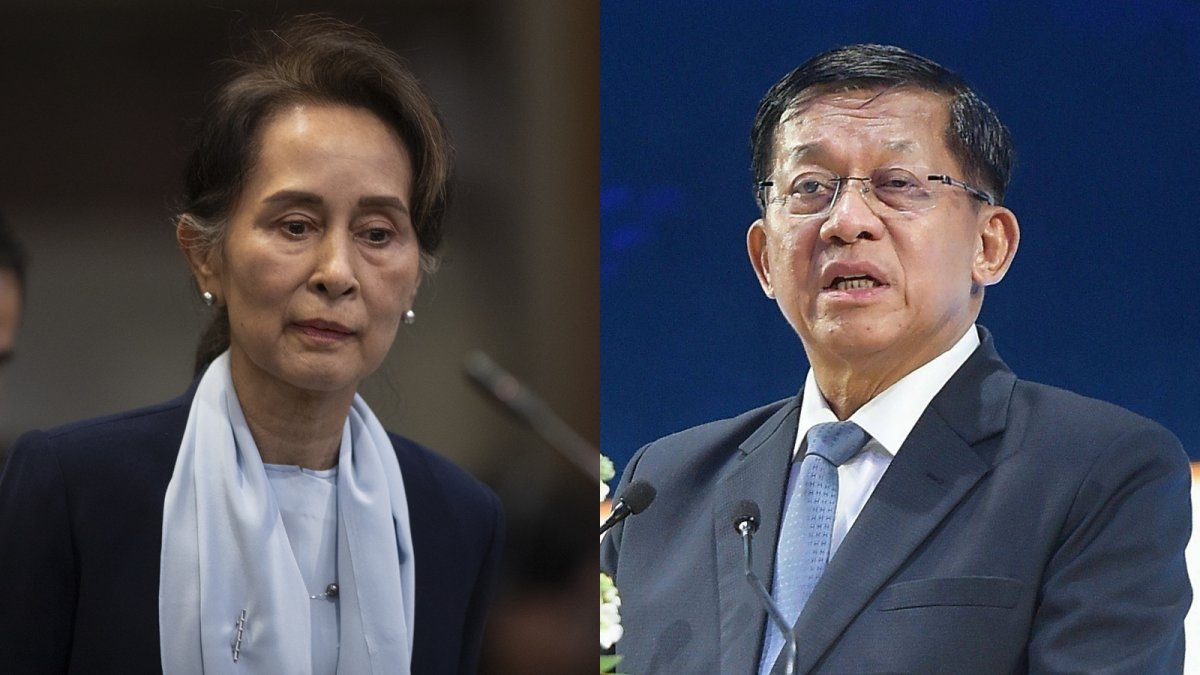
From the bustling border markets of Mae Sot to the hushed diplomatic corridors of Bangkok, the latest news from Myanmar lands with a familiar weight. The military-backed government in Naypyitaw has formally rejected ASEAN's renewed call for the unconditional release of detained former leader Aung San Suu Kyi — and in the same breath, questioned whether the regional bloc's special envoy on Myanmar is even needed any longer.
Myanmar Rejects ASEAN's Renewed Call for Suu Kyi's Release, Questions Special Envoy's Role
From the bustling border markets of Mae Sot to the hushed diplomatic corridors of Bangkok, the latest news from Myanmar lands with a familiar weight. The military-backed government in Naypyitaw has formally rejected ASEAN's renewed call for the unconditional release of detained former leader Aung San Suu Kyi — and in the same breath, questioned whether the regional bloc's special envoy on Myanmar is even needed any longer.
The statement, issued by Myanmar's foreign affairs ministry late Saturday, came as a diplomatic thunderclap. It not only dismisses the appeal from ASEAN's current chair, the Philippines, but signals that Naypyitaw sees little value in continuing the envoy mechanism after Singapore assumes the ASEAN chairmanship on January 1, 2027.
A Blunt Rejection from Naypyitaw
Myanmar's foreign ministry said the government "has commuted her sentences based on humanitarian considerations" — a reference to the 81-year-old Nobel laureate who has been detained since the February 2021 coup — but added that "the matter of a full and unconditional release shall only be carried out in accordance with the law."
The statement went further. It dismissed the call for Suu Kyi's release entirely, asserting that the current administration "emerged from the multiparty democratic elections reflecting the genuine will of the people" and "has assumed state responsibility."
For ASEAN watchers in Bangkok, the language is all too familiar. It echoes the same stonewalling that has defined Naypyitaw's approach to the regional bloc since the military seized power. President Min Aung Hlaing, the former army chief who led the 2021 takeover, has been barred from ASEAN's top-level summits for failing to comply with the bloc's Five-Point Consensus peace plan — an agreement reached in April 2021 to end hostilities and initiate dialogue among Myanmar's contending parties, to be facilitated by a special envoy.
The new statement confirms that Myanmar will continue working with the current envoy, Philippine Foreign Minister Maria Theresa Lazaro, but "doesn't see the need to continue down that path" once Singapore takes the helm next year. It is perhaps the clearest signal yet that Naypyitaw intends to outlast the ASEAN mechanism entirely.
Five Years of Detention, A Single Red Cross Visit
The rejection lands just days after Myanmar allowed a representative of the International Committee of the Red Cross (ICRC) to visit Suu Kyi last week. It was the first known contact between the detained leader and an outside international independent humanitarian organization since her detention began five years ago.
Suu Kyi is being held under house arrest at an undisclosed location in Naypyitaw, Myanmar's purpose-built capital. Her supporters and human rights groups have long argued that the charges against her are politically motivated — a campaign to silence the woman whose National League for Democracy (NLD) won the general election in November 2020 in a landslide, only to be ousted by the military two months later.
The Philippines, as current ASEAN chair, welcomed the ICRC visit on Friday as a step toward dialogue and reconciliation. Manila urged greater access to political detainees and reiterated its call for Suu Kyi's "complete and unconditional release."
Naypyitaw's response, delivered within 24 hours, was a pointed reminder that the military's position has not softened. Granting a single humanitarian visit, the government appears to be saying, is not an opening for political negotiation.
Thailand's Long Border, Deep Ties
For Thai readers, this story is not a distant diplomatic squabble. Thailand shares approximately 2,400 kilometers of border with Myanmar — a boundary that is less a line on a map than a living, breathing connective tissue of family, trade, and displacement.
The refugee camps in Tak province, near Mae Sot, and those strung along the border in Mae Hong Son and Kanchanaburi, house hundreds of thousands of Myanmar migrants and refugees. They fled the violence that followed the 2021 coup and the civil conflict that has since pitted the military against a broad array of resistance forces. When Naypyitaw speaks, the ripple effects are felt in Thai border towns the same day.
Border trade, too, hangs in the balance. The economic lifeline between Mae Sot and Myawaddy — the bustling crossing on the Moei River — has seen traffic ebb and flow with the fighting. For Thai businesses and families on both sides of the river, stability in Myanmar is not an abstract ASEAN talking point; it is the difference between a thriving market and a shuttered one.
In villages along the frontier, the ties run even deeper. Families cross the river for temple festivals on both sides, and children grow up speaking a mix of Thai and Burmese. This is why the crisis in Myanmar is felt so personally by so many Thai communities.
Bangkok's Balancing Act
Against this backdrop, Thailand's own approach to Myanmar has been characteristically pragmatic — and, to some critics, uncomfortably accommodating.
Min Aung Hlaing concluded a two-day official state visit to Bangkok on Friday, a trip that drew protests from Myanmar civil society groups and disruption inside the Thai parliament. Bangkok used the occasion to reiterate its support for Myanmar's participation in ASEAN mechanisms through a "Myanmar-owned and Myanmar-led process."
The phrasing is deliberate. Thailand is positioning itself as a bridge — a neighbor that understands the complexity of the Myanmar crisis and is pushing for re-engagement between the war-torn country and the wider ASEAN family. Thai officials argue that isolation has achieved little in five years, and that dialogue, however imperfect, is the only realistic path forward.
Yet Bangkok's embrace of Min Aung Hlaing, even as ASEAN presses for Suu Kyi's release, risks sending mixed signals. It places Thailand at odds with the bloc's stated position, even as it tries to keep channels of communication open.
The "Sham Election" Gambit
Central to Naypyitaw's latest statement is its claim of democratic legitimacy. The military-held elections, which took place in December and January, were dismissed by critics as a sham — designed to consolidate the military's grip on power while ostensibly restoring civilian rule.
Min Aung Hlaing, who was sworn in as president following those elections, has embraced the narrative of a restored civilian government. In a speech delivered more than three months after taking office, he dismissed ASEAN's peace plan outright, alleging that some member states have discriminated against Myanmar and vowing that his government would respond on a case-by-case basis.
The subtext for the region is unmistakable: Naypyitaw believes it has moved past the need for ASEAN's intervention, and it is banking on the bloc's internal divisions to prevent any meaningful enforcement of the Five-Point Consensus.
What the Envoy Question Means for ASEAN
Myanmar's questioning of the special envoy's role is a direct challenge to ASEAN's institutional credibility. If a member state can simply decline to cooperate with the bloc's designated mediator, what does that say about ASEAN centrality — the principle that the organization must remain at the center of regional diplomacy?
The Philippines, as chair, has tried to walk a careful line: welcoming small steps like the ICRC visit while keeping public pressure on Naypyitaw. But the transition to Singapore's chairmanship on January 1, 2027, now looms as an inflection point. If Myanmar refuses to recognize the next envoy, the Five-Point Consensus effectively becomes a dead letter.
The broader question is whether the Five-Point Consensus, drafted in the urgency of April 2021, remains a viable framework five years on. Thailand's push for re-engagement suggests Bangkok believes a different approach — one that keeps Naypyitaw inside the tent — may yield more than public isolation. Yet with Naypyitaw now openly questioning the envoy's purpose, even that middle path looks increasingly difficult to navigate.
A Region Watching, Waiting, and Hoping
For Thailand and its Southeast Asian neighbors, the stakes are existential. A collapsed Myanmar means more refugees at already-strained borders, more instability along critical trade routes, and a darker shadow over the region's economic future.
The coming months will test ASEAN's patience and creativity. Will it hold the line on Suu Kyi's release? Will it defend the special envoy's mandate? Or will the weight of diplomatic fatigue — and the quiet realpolitik of neighbors like Thailand — slowly erode the consensus?
Back in Mae Sot, the question is simpler. The market stalls along the riverfront still open at dawn, selling everything from Thai cosmetics to Myanmar textiles. Vendors cross back and forth, as their families have done for generations. They do not speak of Five-Point Consensus or special envoys. They speak of peace — the kind that lets them visit their relatives, sell their goods, and sleep without the sound of distant artillery.
For their sakes, one hopes ASEAN finds a way forward. And one hopes Naypyitaw, in its pursuit of legitimacy, remembers that recognition cannot be earned by isolation.
By Ann Srisawat, Staff Writer
This article was produced with AI-assisted research and editorial support. Sources: Khaosod English, Associated Press
What's Your Reaction?
 Like
0
Like
0
 Dislike
0
Dislike
0
 Love
0
Love
0
 Funny
0
Funny
0
 Wow
0
Wow
0
 Sad
0
Sad
0
 Angry
0
Angry
0

Southeast Asia Correspondent at Global1.News. Based in Bangkok, covering Thai and Southeast Asian politics, economy, technology, and culture. Deep regional perspective on one of the world's most dynamic regions.














Comments (0)