
Moscow Court Issues Arrest Warrant for Zhanna Nemtsova
In a move that underscores the Kremlin’s expanding use of “undesirable” designations to silence dissent, a Moscow judge on Thursday issued an arrest warrant for Zhanna Nemtsova, the daughter of slain opposition leader Boris Nemtsov.
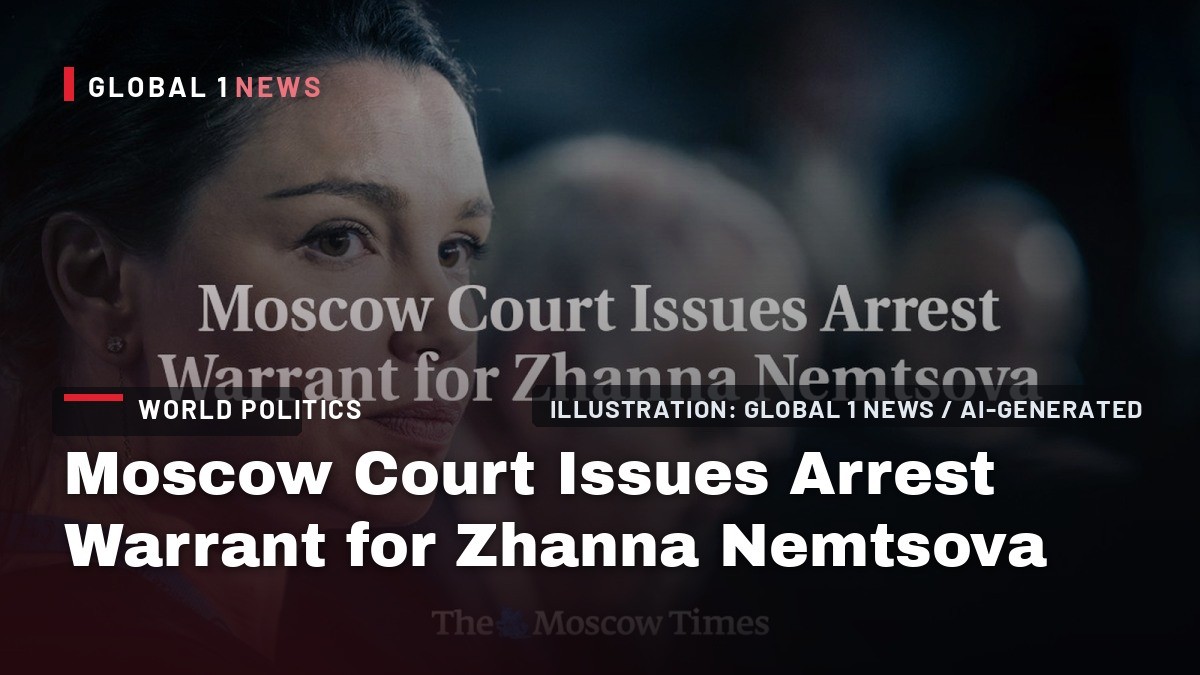
In a move that underscores the Kremlin’s expanding use of “undesirable” designations to silence dissent, a Moscow judge on Thursday issued an arrest warrant for Zhanna Nemtsova, the daughter of slain opposition leader Boris Nemtsov. The warrant, which follows a pre‑trial detention ordered in absentia on July 31, charges Nemtsova with organizing the activities of an “undesirable” organization—a criminal offense that carries a maximum sentence of six years in prison. The case illustrates how the Russian state is extending its legal crackdown from media outlets to the families of prominent critics, leveraging the same legal instruments that have recently been applied to independent outlets such as The Moscow Times.
Legal Basis and Procedural Context
The arrest warrant was announced by the state‑run news agency RIA Novosti, which quoted the judge at the Moscow City Court as stating that the warrant had been issued after the court rejected the defense’s appeal. The judge’s statement, “An arrest warrant has been issued for Nemtsova Zhanna Borisovna,” reflects the court’s formal acceptance of the prosecutor’s claim that Nemtsova’s activities fall under the “undesirable” law. This law, first introduced in 2015, allows authorities to label foreign‑funded NGOs and other entities as “undesirable,” criminalising any cooperation with them and imposing severe penalties on individuals who continue such cooperation.
Under the current legislation, the charge of “organising the activities of an undesirable organization” is a criminal offence that can result in up to six years of imprisonment. The court’s decision to uphold the pre‑trial detention in absentia signals a willingness to apply the law even when the accused is abroad, a pattern that has emerged in recent years as the Kremlin seeks to deter Russian citizens from maintaining links with exiled opposition groups.
Background on the Nemtsov Family and the Foundation
Zhanna Nemtsova, who has lived in Europe for several years, founded the Boris Nemtsov Foundation for Freedom in November 2015. The foundation, based in Germany, describes its mission as supporting independent journalism and providing educational grants and scholarships to activists and reporters. The Moscow Times article notes that the foundation was designated “undesirable” by Russian authorities in 2024, a move that placed its activities under the same legal restrictions now being used to prosecute Nemtsova herself.
The foundation’s work aligns with the broader legacy of Boris Nemtsov, a former deputy prime minister under Boris Yeltsin who became one of Vladimir Putin’s most vocal critics. Nemtsov was assassinated near the Kremlin in February 2015, a killing that resulted in the conviction of five men, though his family and supporters continue to allege that the masterminds behind the murder remain at large. The targeting of his daughter therefore carries symbolic weight, signalling the state’s intent to extend punitive measures to the next generation of opposition activists.
The “Undesirable” Designation as a Tool of Repression
The “undesirable” label has become a central instrument in the Kremlin’s legal arsenal against civil society. By branding an organisation as undesirable, the state not only bans its operations within Russia but also criminalises any Russian citizen who engages with it, even remotely. The Moscow Times itself was recently labelled an “undesirable” organization by the Prosecutor General’s Office, a designation that criminalises its reporting and places its staff at risk of prosecution. This mirrors the earlier “foreign agent” label applied to the outlet, illustrating a pattern of escalating legal pressure on independent media.
In the case of the Boris Nemtsov Foundation, the 2024 “undesirable” designation effectively cut off its ability to operate in Russia, while simultaneously providing a legal pretext for prosecuting its founders and supporters. The arrest warrant for Zhanna Nemtsova demonstrates how the law is now being used not only to shut down organisations but also to pursue individuals linked to them, even when those individuals reside abroad.
Implications for Independent Journalism
The prosecution of Zhanna Nemtsova carries a chilling message for journalists and activists who rely on foreign‑funded NGOs for support. The Moscow Times, which reported on the warrant, framed the development as part of a broader campaign to silence independent journalism. Its editorial note warned that the “undesirable” label criminalises the outlet’s work and puts its staff at risk of prosecution, echoing earlier concerns about the “foreign agent” law.
By extending the reach of the “undesirable” law to the families of opposition figures, the Kremlin is signalling that any link—financial, organisational, or familial—to entities deemed hostile will be subject to criminal scrutiny. This creates a climate of self‑censorship, as journalists and NGOs weigh the personal risks of continued cooperation against the imperative to report on corruption, human rights abuses, and political repression.
Political Context and Kremlin Strategy
The timing of the warrant, issued in September 2026, aligns with a broader intensification of legal pressure on dissent ahead of the 2026 parliamentary elections. While the elections are expected to be tightly controlled, the Kremlin has historically used high‑profile prosecutions to demonstrate its resolve against perceived threats. Targeting the daughter of Boris Nemtsov—a figure whose murder remains a rallying point for opposition activists—serves both to punish a symbolic opponent and to deter others from following a similar path.
Moreover, the case reflects the Kremlin’s reliance on the judiciary as an instrument of political control. By upholding the pre‑trial detention in absentia, the Moscow City Court reinforced the narrative that the state’s legal framework is capable of reaching beyond its borders, a message that resonates with the Kremlin’s broader foreign policy stance of defending “sovereign integrity” against external interference.
International Reaction and Potential Ramifications
While the source material does not detail foreign responses, the pattern of international criticism following similar prosecutions suggests that the arrest warrant for Nemtsova will attract condemnation from human‑rights organisations and Western governments. The designation of the Boris Nemtsov Foundation as “undesirable” in 2024 already drew criticism from the European Union, which has repeatedly warned that such measures undermine civil society and breach international norms.
If the warrant leads to Nemtsova’s arrest—whether through an extradition request or a forced return—Russia could face renewed diplomatic pressure, including potential sanctions targeting individuals involved in the prosecution. Such measures would further isolate the Kremlin, even as it seeks to consolidate internal control through legal repression.
Future Outlook for Opposition Networks
The arrest warrant against Zhanna Nemtsova underscores the heightened risk faced by opposition networks that maintain links to foreign‑based NGOs. As the “undesirable” law continues to be applied, activists and journalists will likely seek alternative channels for funding and support, possibly turning to more clandestine or encrypted means of communication. However, the legal precedent set by this case suggests that any overt association with designated organisations will remain a prosecutable offence.
For the Nemtsov family, the warrant adds a new layer of personal danger to an already tragic history. The legacy of Boris Nemtsov’s murder, coupled with the state’s ongoing refusal to fully investigate the masterminds behind his killing, continues to fuel a sense of injustice among opposition circles. The Kremlin’s decision to target his daughter signals a willingness to extend punitive measures across generations, reinforcing the perception that dissent is not only politically costly but also personally perilous.
In the broader context of Russian politics, the case illustrates how the state’s legal mechanisms have evolved from targeting NGOs to directly confronting the families of high‑profile critics. As the 2026 elections approach, the Kremlin’s reliance on the “undesirable” designation will likely intensify, shaping the operational environment for independent media, civil‑society actors, and opposition figures alike. The international community’s response, and the resilience of Russia’s opposition networks, will determine whether this wave of repression can be mitigated or will further entrench the climate of fear that has come to define contemporary Russian civil society.
This article was produced with AI-assisted research and editorial support. Reporting is based on the source material cited below. Sources: The Moscow Times; themoscowtimes.com; Global1.News (21 September 2026).
By Irina Volkov, Staff Writer
What's Your Reaction?
 Like
0
Like
0
 Dislike
0
Dislike
0
 Love
0
Love
0
 Funny
0
Funny
0
 Wow
0
Wow
0
 Sad
0
Sad
0
 Angry
0
Angry
0

Russia/Eastern Europe Correspondent at Global1.News. Covering Russian politics, energy, security, and the shifting dynamics of the post-Soviet space. Provides clear-eyed analysis on one of the world's most opaque regions.














Comments (0)