
Lukashenko Mocks the Historical Logic Behind Putin's War — Then Puts It Back Together
Belarus's Alexander Lukashenko told Le Point that by Vladimir Putin's historical logic, Russia itself should be handed back to Mongolia, then spent the rest of the interview insisting Moscow has been misread and that he remains with the Kremlin.
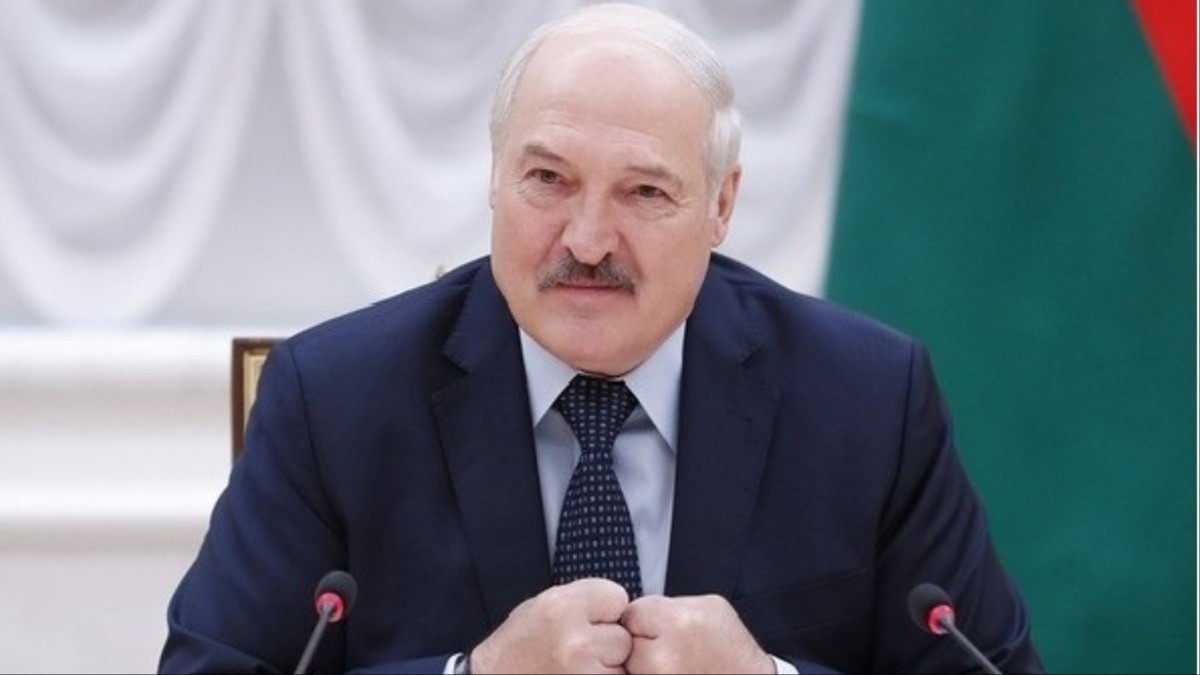
Belarusian President Alexander Lukashenko has spent his career standing beside Moscow. This week, in a French magazine interview, he took a swing at the logic underneath the war. The target was not the war itself. It was the history Vladimir Putin uses to explain it.
Lukashenko Mocks the Historical Logic Behind Putin's War — Then Puts It Back Together
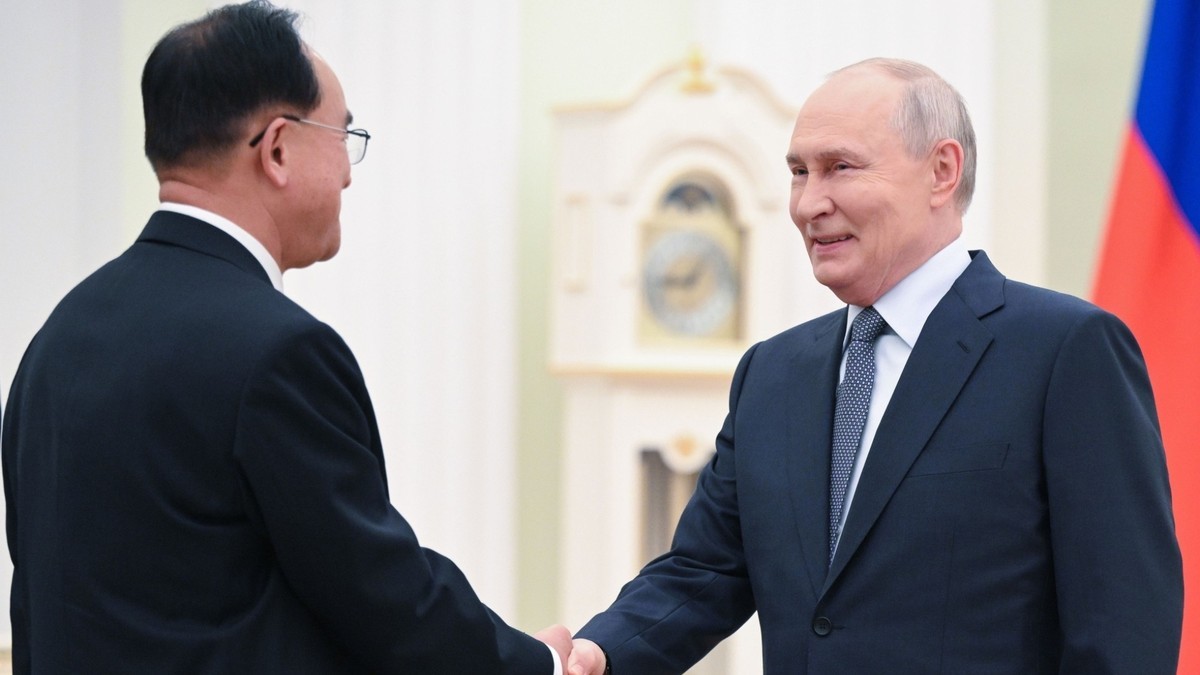
MINSK, Belarus — November 28 — In a 90-minute interview with the French magazine Le Point, recorded on 17 November and published in full on 25 November, Lukashenko asked where Russia's historical claims would end if taken seriously. He then spent much of the same conversation insisting Moscow's case has been misread, that he had never heard Putin deny Ukraine's people or its state, and that the three Slavic nations will decide the region's future together.
A Historian Takes the Argument Apart
The line that traveled came inside a long answer about Kievan Rus. Lukashenko traced Slavic statehood to the 11th and 12th centuries, called that lineage "an indisputable fact," and then turned to the present argument. "And today, to say that these lands were Russian from ancient times," he said. "At some point they were Russian. Well, Russian lands, if you look deeper, were once Mongol-Tatar. Remember? So then, according to that logic, all of Russia should be given to whom — Mongolia?"
Folks, read that twice. The reference is to the medieval Mongol Empire and the Golden Horde, not to modern Mongolia holding title to anything. The move is a reduction: if old possession settles present ownership, every border on the map is provisional. What makes it notable is the speaker. This is not a critic on the outside. This is the man who let Russian forces cross Belarusian territory in February 2022 and later agreed to host Russian tactical nuclear weapons. When a loyal ally dismantles your justification in public, the justification is the story.
The Claim He Was Picking At
The claim has a text. Putin's 2021 essay, "On the Historical Unity of Russians and Ukrainians," has been central to Kremlin rhetoric and was cited before the full-scale invasion of 24 February 2022. Putin has argued that Russians and Ukrainians are one people, that Kyiv was the center of the medieval state of ancient Rus, and that parts of Ukraine are "historically Russian" territory.
That argument does a specific job in Moscow's telling: if the territory is historically Russian, the fighting is restoration rather than conquest. Lukashenko did not dispute the underlying premise that the lands were once Russian. He disputed the inference. His question — "all of Russia should be given to whom — Mongolia?" — does not deny that history happened. It denies that history authorizes. That is a narrower attack than a break, and a more precise one. It also leaves him room, later in the same interview, to say the argument has been misunderstood.
Then He Put the Argument Back Together
He did not leave the pieces on the floor. In the same conversation, Lukashenko said Putin "understands this perfectly well," that the Russian president is simply "misinterpreted," and that he shares Moscow's position on "the need for a common future for the peoples of the region."
The repair job went further. "I have never heard Putin deny the Ukrainian people," Lukashenko said. "He does not even deny the Ukrainian state. This is his inner conviction. On the contrary, he says that we were and will be together. I also adhere to this position." That is the tell. The mockery of the historical logic and the defense of the man who deploys it sit in the same transcript, separated by pages. One reading is that Lukashenko is contradicting himself. Another is that he is doing something more deliberate: separating the argument he finds absurd from the leader he refuses to abandon. He also said Putin's position "does not even include seizing all of Ukraine," and that he had never heard Putin demand capitulation. No Kremlin comment on the interview appeared in the coverage between 24 and 28 November.
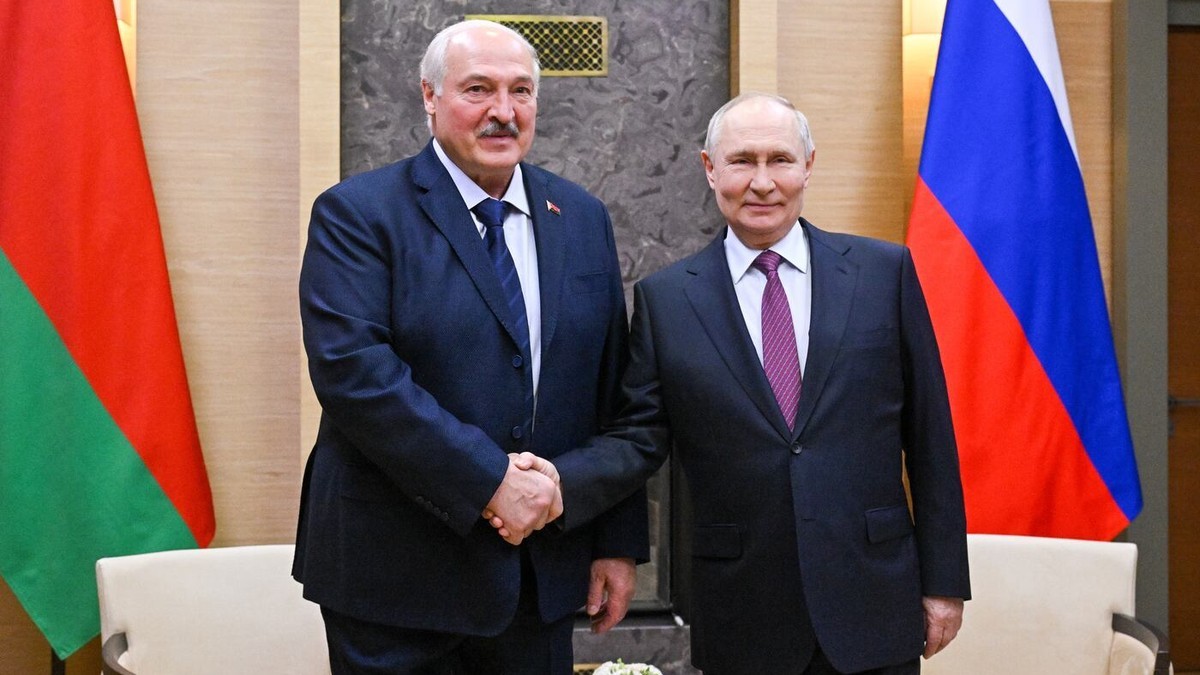
Eight Days From Recording to Transcript
The mechanics explain the echo. Lukashenko sat for roughly 90 minutes with Anne Nivat, a Le Point correspondent, TV host and writer, on 17 November. BelTA, the Belarusian state news agency, published excerpts on Tuesday 24 November. The full transcript went up on president.gov.by one day later, on 25 November — eight days after the recording.
Then the Western coverage rolled in sequence. The Independent ran Alex Croft's piece on Thursday 26 November under a headline asking, "Do we give Russia back to Mongolia?" CNN followed on 27 November, and Euronews the same day with a headline built on the same quote. That staggered release matters. The excerpts gave the wire services a sharp, quotable jab. The full text, arriving a day later, supplied the context that complicates it — the defense of Putin, the "we were and will be together" line, the insistence that the Russian leader has been misread. Anyone who read only the first wave got the swing without the repair. The full document is where the actual position lives.
The Mediator Nobody Asked For
Inside the transcript is a concrete offer. "Volodya Zelensky and I could board a plane together and fly to Moscow," Lukashenko said. "The two of us. As the guarantor of his security, I could sit down with him and fly to Moscow."
He was told Zelensky would refuse. His answer was blunt: "If he does not agree, let him keep fighting. Let him go to the front himself with a machine gun and fight. There is a war going on, it has to be stopped. And we could come to terms." He said a deal among the three Slavic peoples would arrive faster than one brokered with the Europeans, and framed the whole push as a duty: "In order to end the war and prevent people from dying, I, as President, would try to go to any lengths. Later, you journalists and history will judge and condemn us. But right now, the war must be stopped so that people do not die." The offer is extraordinary on its face: a sitting president volunteering to personally escort a wartime leader into the capital of the country that invaded Ukraine.
Am I a Suitcase?
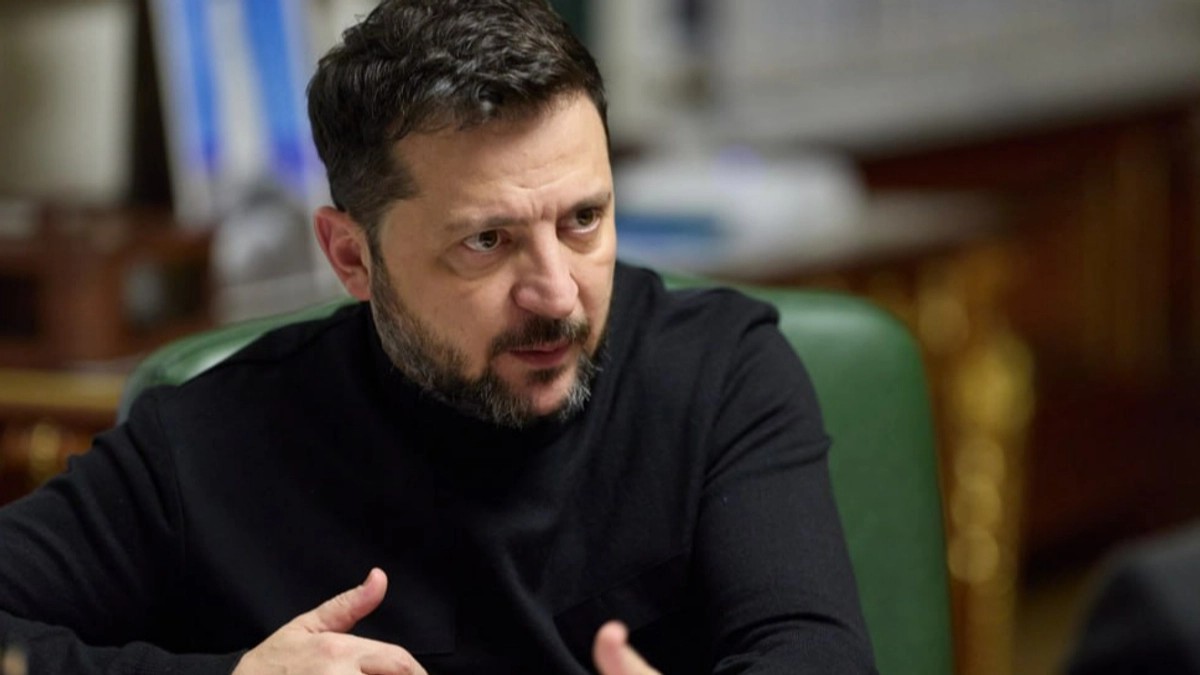
Zelensky answered the same day the excerpts ran, speaking after a press conference on 24 November. "He's offering to take me with him," he said. "What am I to him, a suitcase or something? To take me on a plane and fly off. To Moscow, of all places. What for?"
He then closed the geography and reversed the offer in the same breath. "We are at war. We cannot meet in Moscow, and we cannot meet in Kyiv," he said, adding that proposals of this kind were not "a serious discussion." His counter: Lukashenko could bring Putin to Kyiv instead, and Ukraine "will certainly guarantee their safety here too." That counter-move is worth pausing on. It accepts the frame — a dramatic flight, a guarantor, a table — and reverses the direction. It also quietly reframes who needs whose protection. Lukashenko offered to guarantee Zelensky's safety in Moscow. Zelensky offered to guarantee Lukashenko's and Putin's in Kyiv. The mirror is the point, and it costs him nothing to hold it up.
Where the Talks Actually Stand
The offer landed into a process that is real but thin. Ukraine, Russia and the United States held their first trilateral negotiations in nine months in Abu Dhabi on 10-11 November, and they reached an agreement on a major prisoner exchange. That is the one hard artifact of the recent diplomacy.
Afterward, US envoys Steve Witkoff and Jared Kushner met Putin in Moscow and Zelensky in Dublin. According to Witkoff, those meetings produced an agreement to hold another round of negotiations, this time involving European partners. Here is the friction. Kyiv Post reported that Lukashenko's remarks echoed Moscow's earlier refusal to include Europe at the negotiating table during the Abu Dhabi talks. So the Belarusian president is publicly welcoming European participation, as Reuters noted, while his formulation — three Slavic peoples deciding, with the main role theirs — points at a table Europe would not be seated at as a principal. Both things are in the transcript. The prisoner exchange is the only item on the board that everyone has signed.
The 1997 Demand He Called Maximalism
On NATO, Lukashenko distanced himself from a core Russian demand. Asked whether Moscow seriously wants the alliance rolled back to its 1997 boundaries or is merely using it as negotiating tactics, he replied: "Where do you see this maximalism?"
He then described how the alliance moved east, incorporating the Baltic states and Poland toward the Belarusian and Russian borders, and said "Russia was forced to agree to this." He added: "It was weakened, it had other things to worry about. I was very close friends with Yeltsin." The Seoul Economic Daily reported that he characterized the 1997 demand as a maximalist condition put forward in the early stages of negotiations, and said the two sides would ultimately have to discuss it at the negotiating table. That is a soft dissent, not a rejection. He is not defending NATO's expansion. He is saying the demand, as stated, is a starting bid rather than a settlement — and that the real conversation happens later, between negotiators, not in public ultimatums.
Nine Percent, or Eleven
On Donbas, Lukashenko offered arithmetic of his own. Asked what compromises Russia could make, he deflected — "What compromises Russia can make is something you have to ask the Russians" — then described "a patch of land left there, not conquered by Russia in Donbass, those 9% or 11%." That figure is his estimate, not an established number.
His prediction was bleaker. "They will still, if the war continues, reach the borders of Donbass. That is what one must proceed from. If there is not that escalation I spoke about." He also gave a reason Belarus stays out of the fighting, and it is a military one. "If we end up drawn into the war, then another 1,500 kilometers will be added to the thousand-kilometer front — to make up a total of 2,500. Even together with Russia, we do not have enough people to attack, to advance." That is a military judgment, not a peace argument. He is not saying the war is wrong. He is saying his army is too small to join it.
A Loyalty That Criticizes
So what is this? Not a break. The coverage of the interview describes Lukashenko as broadly pro-Kremlin, and CNN reported that he blamed Ukraine for starting the war, saying "They began the war by killing and burning Russians" — a claim CNN characterized as factually inaccurate. He also predicted Russia would eventually seize the entire Donbas. That is not the language of a man peeling away from Moscow.
What it is, more precisely, is a hedge. Lukashenko has held power since 1994 and leaned on the Kremlin's support to stay in office after the disputed 2020 election and the violent crackdown that followed. He needs Moscow. He also needs to be seen as something other than Moscow's appendage. There is a precedent for the maneuver: in 2024, former Mongolian President Tsakhiagiin Elbegdorj posted a 1471 Mongolian map on X after Putin gave US journalist Tucker Carlson an extended account of Russian history, with the comment, "Don't worry. We are a peaceful and free nation." What to watch is not the quote. It is whether the prisoner exchanges Lukashenko says Belarus hosts keep functioning, whether the next round of talks actually seats the Europeans, and whether Moscow ever answers the Mongol-Tatar question.
By Jessica Ali, Staff Writer
This article was produced with AI-assisted research and editorial support. Photographs: Reuters via India Today (lead); TASS-Yonhap via Chosun Ilbo; Office of the President of Ukraine via Ukrainska Pravda. Sources: the official transcript of President Lukashenko's interview with Le Point on president.gov.by; Reuters; BelTA; The Independent; CNN; Euronews; Kyiv Post; hromadske; Seoul Economic Daily; Chosun Ilbo.
What's Your Reaction?
 Like
0
 Dislike
0
 Love
0
 Funny
0
 Wow
0
 Sad
0
 Angry
0
Editor-in-Chief at Global1.News. Atlanta-based journalist who cuts through the BS and tells it like it is. Lead anchor, host, and the voice you hear when the spin stops and the truth starts.









Comments (0)