
Mexico Overtakes Taiwan as Top AI Server Exporter to US
Mexico Surges Past Taiwan as Leading AI Server Supplier to the United States The hum of assembly lines in Ciudad Juárez, Tijuana, and Zapopan is writing a new chapter in North American trade history. During the first half of 2026, Mexico exported more than US $60.4 billion worth of computer servers and related equipment for artificial intelligence data centers to the United States. In May 2026, Mexico first surpassed Taiwan as the largest
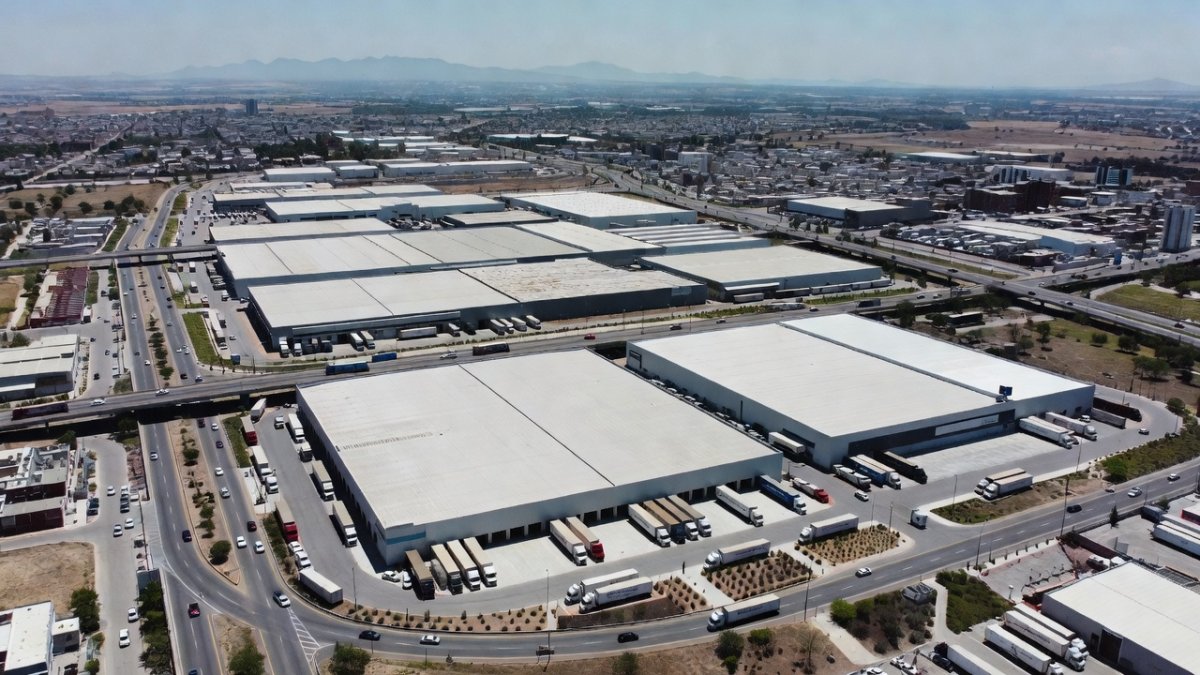
Mexico Surges Past Taiwan as Leading AI Server Supplier to the United States
The hum of assembly lines in Ciudad Juárez, Tijuana, and Zapopan is writing a new chapter in North American trade history. During the first half of 2026, Mexico exported more than US $60.4 billion worth of computer servers and related equipment for artificial intelligence data centers to the United States. In May 2026, Mexico first surpassed Taiwan as the largest monthly supplier of these critical machines, and by the end of the second quarter (April-June), the country had overtaken the Asian manufacturing powerhouse as the leading provider of AI servers to the US market.
This is not merely a statistic for economists to debate in Mexico City boardrooms. For the families in the colonias of Reynosa and the young engineers graduating from universities in Guadalajara, this represents a fundamental shift in what Mexico builds and sells to the world. The data, drawn from US customs records and trade analysis published by Mexico News Daily and S&P Global, reveals that Mexican computer-equipment exports climbed 172% year-over-year in the first half of 2026, reaching US $82.9 billion. For the first time, computers and servers have overtaken vehicles and auto parts—long the crown jewel of Mexican manufacturing—as the nation's leading export category to the United States.
The United States received 93.9% of those Mexican computer-equipment shipments, underscoring the deep integration of the North American supply chain under the USMCA/T-MEC framework. While Taiwan still retains a slight overall edge for the full year to date—approximately 36% of US server imports versus Mexico's 34.5%—the trajectory is unmistakable. Mexico is no longer just the land of assembled cars and refrigerators; it is becoming the strategic assembly platform for the artificial intelligence revolution.
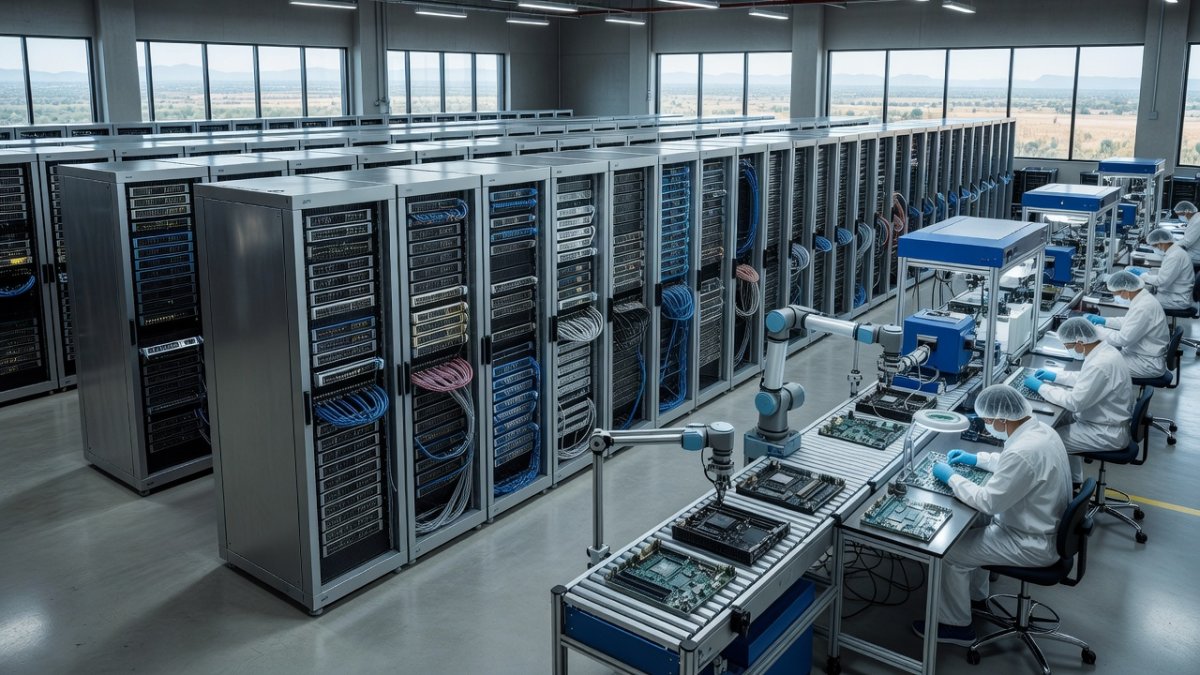
The AI Boom and the Great Realignment of Global Trade
The forces driving this transformation are rooted in the explosive growth of artificial intelligence infrastructure. US cloud providers and AI developers require enormous quantities of servers, processors, and storage systems to train large language models and run data-hungry applications. Simultaneously, Washington has pursued a deliberate strategy to reduce dependence on Chinese suppliers, creating a historic opportunity for Mexico.
The numbers tell a dramatic story of realignment. China's share of US computer-equipment purchases collapsed from approximately 60.4% in 2017 to roughly 2% in the first half of 2026. That vacuum has been filled primarily by Mexico and Taiwan. Taiwanese exports of AI servers to the US grew from US $2.8 billion in 2017 to US $72.2 billion in the first half of 2026 alone. Taiwan remains central to semiconductor production, product design, and contract manufacturing—the intellectual heart of the global server industry.
Yet Mexico's rise is equally remarkable. The country's computer-equipment exports reached US $85.4 billion for all of 2025, up 144.8% year over year. The sector's share of Mexico's national exports rose from approximately 6% to 12.85% in just one year. For context, this means that nearly one of every eight dollars Mexico earns from exports now comes from computers and servers—a seismic shift for an economy long associated with oil, agriculture, and automobiles.
Analysts caution that Mexico's role, while growing, remains primarily that of a strategic assembly platform near the US consumer. A significant share of design, advanced processors, and high-value components still come from Asia. Customs data assigns a server's export to the country of shipment, not where the processor was made or which company captured the profit margin. This distinction matters for policymakers in the Palacio Nacional who dream of moving Mexico up the value chain.
From Maquiladoras to AI Hubs: The New Geography of Mexican Manufacturing
The physical landscape of this boom is concentrated along Mexico's northern border and in key industrial corridors. Production hubs have emerged in Ciudad Juárez, Tijuana, Reynosa, Mexicali, and deeper in the interior at Zapopan in Jalisco and Apodaca in Nuevo León. These cities, long associated with the maquiladora export model, are now home to some of the most sophisticated assembly operations in the hemisphere.
Taiwanese contract manufacturers have led the charge. Foxconn, Quanta Computer, Inventec, Wistron, Pegatron, and Wiwynn have all established or expanded Mexican operations. Foxconn announced a US $168 million investment in its Mexican subsidiary during 2025, expanding AI server capacity in Jalisco, following earlier investments in 2024 and land acquisitions in the state. Jalisco, already known as Mexico's Silicon Valley due to its software and electronics industry, is cementing its reputation as a hardware powerhouse.
For workers in these regions, the impact is tangible. In Ciudad Juárez, where the maquiladora industry has employed generations of workers, the shift toward AI servers means higher-skilled jobs and potentially better wages. In Zapopan, young technicians who once dreamed of emigrating north now find opportunities in their own neighborhoods. The challenge, as always in Mexico, is ensuring that these benefits reach the broader community—the tortillerías, the tianguis, and the family-owned taquerías that depend on local economic vitality.
The proximity advantage cannot be overstated. When a US cloud provider needs a rush order of servers, shipping from Guadalajara to Dallas takes days, not weeks. This logistical edge, combined with the USMCA's tariff preferences and the growing political will in Washington to source from allies, creates a powerful tailwind for Mexican manufacturing.
The Challenge of National Content and Technological Sovereignty
Yet beneath the celebratory headlines lies a sobering reality. Mexico imported US $28.4 billion in computer servers from Taiwan in the first half of 2026—nearly half of what it exported to the United States. This means that a substantial portion of the value in Mexican "exports" is actually created elsewhere, with Mexico contributing assembly labor, factory infrastructure, and proximity.
The challenge for Mexico is to increase national content in these technology chains. This requires expanding electrical capacity—AI data centers and server assembly plants are notoriously energy-hungry—and training specialized personnel in advanced manufacturing, thermal management, and quality control. It also means attracting engineering, research, and design activities that currently remain concentrated in Taiwan, South Korea, and the United States.
The Secretaría de Economía and state governments in Jalisco, Nuevo León, and Baja California have made attracting technology investment a priority, but the road ahead is long. Mexico's educational system, particularly in STEM fields, needs strengthening. The country's electrical grid, managed by the Comisión Federal de Electricidad (CFE), faces reliability challenges that could deter future investment. And the security situation in some border cities remains a concern for corporate executives making long-term location decisions.
For the Sheinbaum administration, which has emphasized industrial policy and technological sovereignty, the AI server boom represents both an opportunity and a test. Can Mexico move beyond assembly to capture more of the design and engineering value? Can it ensure that the benefits of this boom reach workers and communities, not just corporate shareholders? These questions will define the legacy of this trade transformation.
What This Means for Mexican Families and Communities
For the average Mexican family, the AI server boom may seem distant—a story for business pages and government press releases. But its effects ripple through the economy in visible ways. In Apodaca, Nuevo León, new factory openings mean more jobs for young people entering the workforce. In Tijuana, the demand for skilled technicians has pushed technical schools to expand their electronics programs. In Reynosa, the influx of engineers and managers has boosted demand for housing, restaurants, and services.
The economic data from INEGI and Banco de México will likely show continued strength in manufacturing employment and exports. But the benefits must be measured not just in aggregate statistics but in the quality of life for workers. Will the new jobs offer stable contracts and benefits through the IMSS? Will they provide opportunities for advancement? Will they allow young Mexicans to build futures in their hometowns rather than migrating to the United States?
There is also a cultural dimension to this transformation. Mexico has long been a country that assembles things designed elsewhere—cars, appliances, electronics. The AI server boom offers a chance to change that narrative, to become a country that not only builds but also designs and innovates. The young engineers in Guadalajara who dream of creating the next breakthrough in AI hardware are part of this story. So are the technicians in Ciudad Juárez who troubleshoot complex assembly lines and the quality inspectors in Mexicali who ensure that every server meets exacting standards.
The mañanera press conferences at the Palacio Nacional will likely celebrate these export numbers, and rightly so. But the true measure of success will be whether the boom translates into shared prosperity—whether the families in the colonias of the border cities feel the difference in their daily lives.
The Road Ahead: Opportunities and Obstacles
Looking forward, the trajectory appears positive but not guaranteed. The AI infrastructure boom shows no signs of slowing, and US demand for servers is expected to continue growing. Mexico's geographic position, trade agreements, and existing manufacturing base position it well to capture additional market share. However, several obstacles could slow the momentum.
Electrical capacity is perhaps the most pressing concern. AI server assembly plants require reliable, abundant power, and Mexico's grid has faced strain in recent years. The CFE's investments in generation and transmission will be critical. Water availability in northern Mexico, already a challenge in drought-prone regions, could also become a constraint. And the global competition for AI manufacturing is intense—Vietnam, India, and other Southeast Asian nations are all courting the same Taiwanese contract manufacturers.
There is also the question of whether Mexico can move beyond assembly to capture more of the value chain. The US $28.4 billion in imports from Taiwan represents both a weakness and an opportunity. If Mexico can develop domestic capabilities in server components, cooling systems, and even chip packaging, the economic benefits could multiply. This will require sustained investment in education, research, and industrial policy—not just for the current boom but for the long term.
For now, the numbers are undeniably impressive. Mexico has become the top supplier of AI servers to the United States, a position that would have seemed improbable just a decade ago. The country has proven that it can compete in the world's most dynamic technology sector. The question now is whether it can build on this foundation to create lasting, inclusive prosperity.
As the sun rises over the factories of Ciudad Juárez and the tech parks of Zapopan, a new Mexico is taking shape—one that assembles the brains of the global AI revolution. The world is watching, and for once, Mexico is not just a spectator but a key player in the technology story of our time.
Tags: Mexico AI servers, Taiwan exports, US trade, computer equipment, nearshoring, Foxconn Jalisco, USMCA trade, Mexican exports 2026, AI infrastructure, manufacturing Mexico, Ciudad Juarez, Tijuana, Zapopan, technology sector
By Rosa Martinez, Staff Writer
This article was produced with AI-assisted research and editorial support. Sources: Mexico News Daily, S&P Global trade analysis, Puebla Global, INEGI, Banco de México.
What's Your Reaction?
 Like
0
Like
0
 Dislike
0
Dislike
0
 Love
0
Love
0
 Funny
0
Funny
0
 Wow
0
Wow
0
 Sad
0
Sad
0
 Angry
0
Angry
0

Latin America/Andes Correspondent at Global1.News. Based in Bogota, covering politics, environment, energy, and social movements across the Andean region. Passionate about environmental journalism and communities protecting their land.













Comments (0)