
Russia Rolls Back Fuel Quality Standards to Quell Domestic Shortages
The Russian government has authorized the temporary production and sale of low-grade gasoline standards banned since 2013, a direct response to acute fuel shortages gripping much of the country.
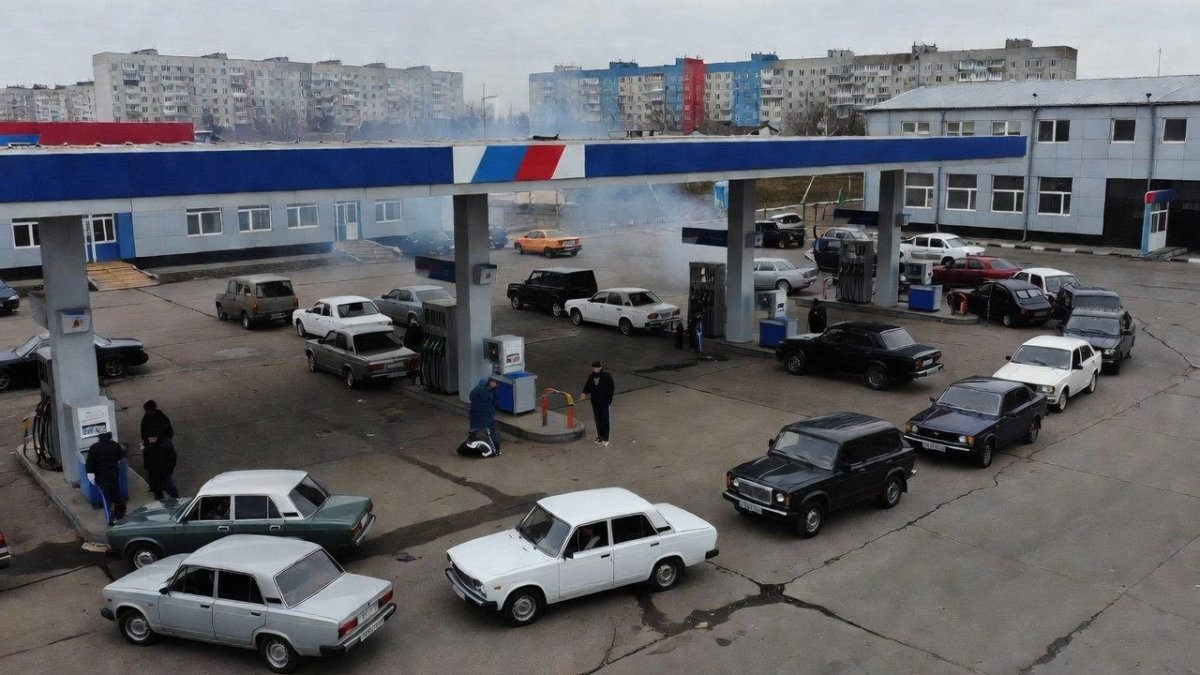
The Russian government has authorized the temporary production and sale of low-grade gasoline standards banned since 2013, a direct response to acute fuel shortages gripping much of the country. The Energy Ministry presented the step as a necessary anti-crisis measure after Ukrainian strikes reduced refining capacity and left millions of drivers facing long queues. This rollback affects fuel quality across dozens of regions and carries clear environmental and health trade-offs.
Russia Rolls Back Fuel Quality Standards to Quell Domestic Shortages
Moscow, Russia — Prime Minister Mikhail Mishustin signed a decree this week permitting the production, import, and sale of Euro-2, Euro-3, and Euro-4 gasoline through July 1, 2027. The Energy Ministry stated the change aims to balance fuel availability against existing quality rules. Gas stations must now display the environmental class of each grade at the pump.
Decree Details and What It Permits
The decree allows refineries to produce motor gasoline meeting environmental classes K2, K3, and K4, which correspond to the older Euro standards. Sulfur limits rise sharply under these classes, reaching up to 500 milligrams per kilogram for Euro-2 compared with the 10 milligrams permitted under current Euro-5 rules. The government also canceled an earlier order that had allowed limited sales of higher-sulfur K5 gasoline through the end of 2026.
Products made under the new rules will not carry the Eurasian Economic Union conformity mark and cannot be exported. The measure applies nationwide and covers both domestic output and imports of the lower-grade fuels.
Government Rationale for the Rollback
The Energy Ministry described the decision as an anti-crisis step required to maintain supply after production shortfalls. Officials noted that gasoline output had fallen to roughly 65 percent of average domestic consumption by early July, while diesel production barely met demand. Prime Minister Mishustin’s decree explicitly cites the need to prevent destabilization in the domestic motor-fuel market.
President Vladimir Putin acknowledged the shortages in late June, stating that lines at gas stations persist and that agricultural producers face particular difficulties during the summer harvest period. The Kremlin has framed the quality rollback as a temporary adjustment rather than a permanent policy shift.
Environmental and Public Health Consequences
Euro-2 gasoline permits up to 50 times more sulfur than Euro-5 fuel, a level that environmental experts warn will increase smog formation and acid rain. Higher sulfur content also accelerates wear on engine components and exhaust systems, raising maintenance costs for vehicle owners. Respiratory conditions such as asthma are expected to worsen in urban areas where the lower-grade fuel sees heavy use.
Russia had phased out Euro-2 standards by 2016 precisely because of these pollutant levels. The current reversal reverses more than a decade of cleaner-fuel policy without any announced mitigation measures beyond pump labeling requirements.
Drone Campaign and Damage to Refineries
Ukrainian strikes have hit 21 of Russia’s 38 large refineries since January 2025, according to BBC Verify. The Omsk refinery, Russia’s largest gasoline producer, halted operations after a July 6 attack. The Saratov refinery stopped production following a strike the next day.
The General Staff of the Armed Forces of Ukraine estimated that 42.74 percent of national refining capacity was disabled by early July. The International Energy Agency placed the figure above 20 percent. Finnish President Alexander Stubb stated that Russia’s overall capacity to produce and export oil had been reduced by 40 percent due to the campaign.
Ukrainian forces have struck Russian oil facilities more than 300 times since February 2022, demonstrating the prolonged and systematic character of the campaign that has now left substantial refining capacity offline across the country.
Human Impact Across Affected Regions
The fuel crisis has reached at least 78 of Russia’s 83 internationally recognized regions plus occupied Crimea and Sevastopol. Three regions—Penza Oblast, Irkutsk Oblast, and Zabaykalsky Krai—declared states of emergency, as did occupied Crimea and Sevastopol in late June. Restrictions on gasoline sales were imposed in 38 regions, directly affecting an estimated 50 million people.
Drivers in Zabaykalsky Krai reported waiting up to 39 hours at filling stations. Social media posts showed altercations at pumps, while farmers in the wheat belt expressed concern that fuel shortages would prevent timely harvesting. Gazprom Neft lifted purchasing limits across 13 regions in an attempt to ease local pressure.
Novaya Gazeta Europe estimated that the shortages now touch 35 percent of the national population, with analyst Jade McGlynn observing that the sight of petrol queues has rendered the war’s domestic costs immediate and tangible for citizens distant from the battlefield.
Crowdsourced maps of stations with remaining fuel supplies have spread rapidly on Telegram channels, allowing drivers to navigate shortages more strategically in affected oblasts. A resident from Chita recounted standing in line for a full 39 hours, underscoring how routine travel has become an endurance test for millions.
Impact on Ordinary Russians
The human toll of the shortages has placed direct strain on daily routines for roughly 50 million citizens, or 35 percent of the population, with long queues forming at stations and occasional fights erupting over access to pumps. In state-of-emergency regions including Penza Oblast, Irkutsk Oblast, Zabaykalsky Krai, and occupied Crimea, residents report that basic mobility now requires advance planning or reliance on informal networks. Farmers across the wheat belt voice growing alarm that delayed refueling could jeopardize the harvest, threatening both livelihoods and national food supplies.
Public sentiment reflects deepening unease. Sberbank CEO German Gref noted that ending hostilities now tops the list of concerns for most Russians, while analyst Jade McGlynn highlighted how visible petrol lines have made the war’s domestic consequences impossible to ignore. A Levada poll recorded a drop to 52 percent of respondents believing the country is heading in the right direction, down from 61 percent in May, even as Putin’s approval rating holds near 73-74 percent.
Economic pressures compound these hardships. Rising inflation and persistently high interest rates have squeezed household budgets, while harvest risks in key agricultural zones threaten further price spikes. These factors have turned fuel scarcity into a lived reality that touches employment, food costs, and long-term financial security for ordinary families far from the front lines.
Economic Picture and Market Measures
The national average gasoline price rose 17.7 percent since the start of the year before easing 1.4 percent last week to 77.69 rubles per liter. The government extended its ban on gasoline and diesel exports through the end of January to retain domestic supply. Sberbank CEO German Gref told shareholders that ending military hostilities ranks as the primary concern for most Russians.
Analysts note that production remains well below design capacity, with the Financial Times reporting June output at 4.1 million barrels per day, 28 percent below the five-year average. The export ban and quality rollback together represent the Kremlin’s main tools for stabilizing the market in the short term.
Broader inflationary trends and elevated central bank rates have added to household strain, while the risk of a compromised harvest threatens to push food prices higher in coming months.
Analysis and Implications for the Kremlin
The decision to reintroduce banned fuel grades signals that refinery damage has created a supply gap the government cannot close through existing production alone. Analysts suggest the move reflects a broader pattern of prioritizing immediate availability over long-term environmental and equipment standards. This approach may ease queues in the near term but risks accelerating vehicle breakdowns and public health costs.
Levada Center polling showed the share of Russians believing the country is heading in the right direction fell to 52 percent in recent weeks, down from 61 percent in May. Putin’s approval rating has also slipped to the low 70s, a relatively low figure in the Russian context. The visible effects of fuel rationing have brought the consequences of strikes on energy infrastructure into daily life for millions of ordinary citizens.
Look-Ahead and Regional Outlook
The decree runs through mid-2027, giving refineries time to repair damaged units while lower-grade fuel circulates. Continued Ukrainian targeting of oil facilities could extend the need for these measures or force additional policy adjustments. Regional authorities in Penza, Irkutsk, and Zabaykalsky Krai will monitor whether the new supplies reduce emergency conditions or simply mask deeper production shortfalls.
Ukraine views Russian refineries as legitimate military targets because they generate both fuel and revenue for the war effort. The Kremlin’s response so far has centered on domestic market controls rather than any announced change in energy infrastructure protection. The coming months will show whether the quality rollback stabilizes supply or creates new problems for Russian drivers and the wider economy.
By Irina Volkov, Staff Writer
This article was produced with AI-assisted research and editorial support. Reporting is based on sources cited in the article.
What's Your Reaction?
 Like
0
Like
0
 Dislike
0
Dislike
0
 Love
0
Love
0
 Funny
0
Funny
0
 Wow
0
Wow
0
 Sad
0
Sad
0
 Angry
0
Angry
0
Russia/Eastern Europe Correspondent at Global1.News. Covering Russian politics, energy, security, and the shifting dynamics of the post-Soviet space. Provides clear-eyed analysis on one of the world's most opaque regions.









Comments (0)