
Mbappé sorry for 'ill-judged' Mao remark after backlash in China
In October 2026, a seemingly innocuous meme involving French football star Kylian Mbappé ignited a diplomatic flashpoint that underscores the fragility of China’s “national sentiment” as a strategic lever in its foreign‑policy toolkit.
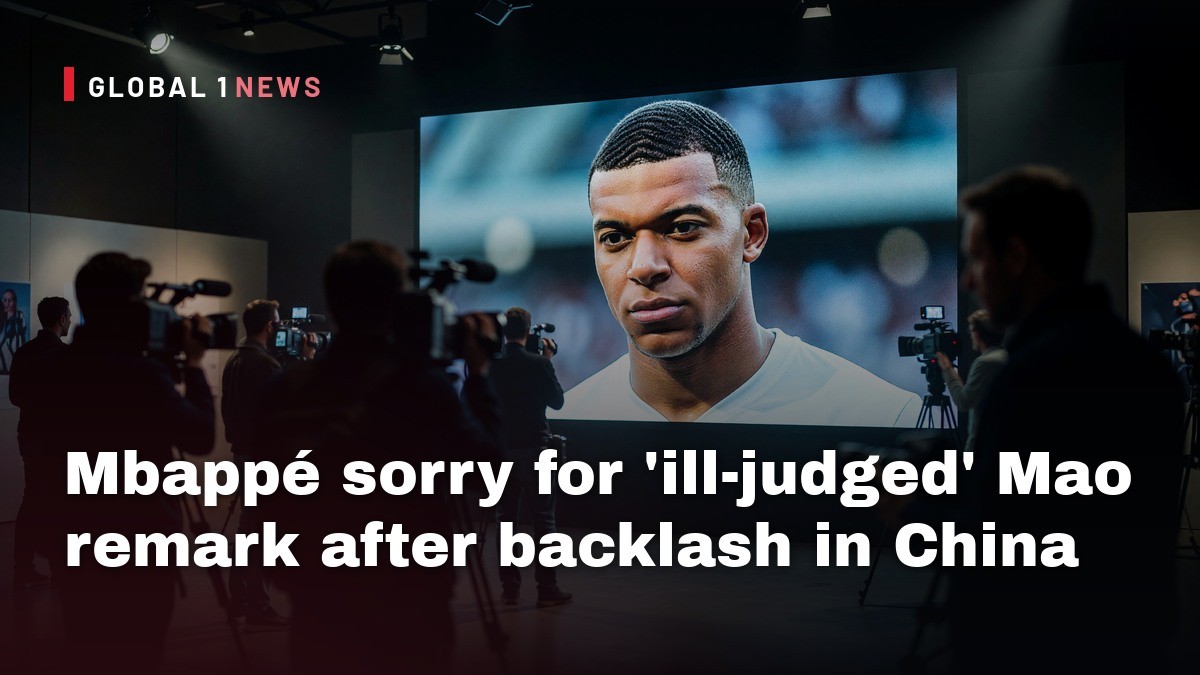
In October 2026, a seemingly innocuous meme involving French football star Kylian Mbappé ignited a diplomatic flashpoint that underscores the fragility of China’s “national sentiment” as a strategic lever in its foreign‑policy toolkit. The incident, which began with Mbappé’s reference to a “Chinese dictator” in a light‑hearted interview, quickly escalated into a cascade of brand withdrawals, media black‑listing, and official statements from Beijing. For observers of Sino‑global relations, the episode offers a vivid illustration of how cultural symbols—particularly the legacy of Mao Zedong—remain tightly woven into the Communist Party’s narrative of legitimacy, and how any perceived affront can be leveraged to mobilise domestic opinion and exert pressure on foreign actors.
From a Talk‑Show Gag to a National Outcry
During a French talk‑show, Mbappé described a popular internet meme that superimposed his face onto an image reminiscent of Mao Zedong, joking that it was “the one where there’s a video of a guy, I think it’s a Chinese dictator.” The clip, which later circulated online, did not name Mao explicitly, but the visual cue was unmistakable. In a subsequent statement, Mbappé called his comment “ill‑judged” and expressed regret for hurting “many people in China and in Chinese communities around the world.” The apology came after a rapid escalation on Chinese platforms, where users and officials framed the remark as an affront to national dignity.
Chinese football forum Dongqiudi was among the first to label the comment “inappropriate” and “hurtful to the feelings of Chinese people.” The forum’s statement also noted an inability to translate the remark, underscoring the sensitivity surrounding any reference to Mao. Within hours, the episode dominated the top trending topics on Weibo, with a hashtag highlighting the termination of brand partnerships with Mbappé topping the list. The speed and intensity of the reaction reveal how quickly a cultural misstep can become a political flashpoint in China’s tightly controlled information environment.
Corporate Fallout: Brands and Media React
Chinese companies moved swiftly to distance themselves from the controversy. Mengniu, the nation’s largest dairy producer, issued a statement asserting a “zero‑tolerance policy towards any words or actions that hurt the feelings of the Chinese people.” Similarly, drinks giant Dongpeng echoed this stance, emphasizing opposition to behaviour that offends national sentiments. While the statements did not directly reference the video, the timing suggests a coordinated effort to protect brand reputation in a market where public sentiment can translate into commercial risk.
State media also joined the censure. According to the state‑owned Global Times, CCTV’s news apps would cease featuring content related to Mbappé, and the broadcaster announced it would stop showing La Liga matches. The move signals a broader willingness to leverage media platforms to enforce ideological conformity, especially when foreign personalities touch upon politically sacrosanct symbols such as Mao. Even Spain’s La Liga issued an apology, expressing deep regret for the offence caused among Chinese fans, further illustrating the reach of China’s soft‑power expectations across international sporting bodies.
The Symbolic Power of Mao in Contemporary China
Mao Zedong remains a cornerstone of the Communist Party’s historical narrative. Despite the catastrophic outcomes of the Great Leap Forward and the Cultural Revolution—episodes that resulted in massive loss of life—the Party continues to portray Mao as a national icon whose legacy is “beyond reproach.” This reverence is not merely nostalgic; it functions as a legitimising myth that binds the Party’s past to its present authority. Consequently, jokes or memes that appear to mock Mao are interpreted not only as personal slights but as challenges to the Party’s curated memory of the nation’s founding.
The sensitivity surrounding Mao explains why the meme, however light‑hearted in its original context, provoked a swift backlash. Chinese netizens, operating within a tightly regulated internet, are expected to align with official narratives on “sensitive topics.” The rarity of open support for Mbappé on Chinese social media reflects the pressure to conform, while the visible condemnation serves as a reminder that the Party monitors and polices discourse around its founding myth.
Strategic Implications for International Brands
The Mbappé episode offers a cautionary tale for multinational corporations seeking to engage the Chinese market. Endorsement contracts with global sports stars—such as those Mbappé holds alongside Erling Haaland and Stephen Curry—represent lucrative avenues for brand exposure. However, the rapid termination of these partnerships after a single cultural misstep highlights the precarious nature of such arrangements. Companies must now factor in “national sentiment risk” alongside traditional market analyses, ensuring that their ambassadors are briefed on the political sensitivities that can trigger consumer boycotts and regulatory backlash.
Moreover, the incident underscores the broader strategic utility of consumer sentiment in China’s foreign‑policy arsenal. By mobilising public outrage, the state can indirectly pressure foreign entities without resorting to formal diplomatic sanctions. This approach aligns with Beijing’s preference for “soft” coercion—leveraging market access, media exposure, and public opinion to achieve political ends. International firms, therefore, must navigate not only commercial considerations but also the geopolitical calculus that underpins Chinese responses to perceived slights.
Diplomatic Echoes: Beijing’s Official Response
China’s foreign ministry, through spokesperson Lin Jian, noted that “words and deeds that hurt the feelings of the Chinese people will naturally be met with opposition from all sectors of Chinese society.” While the statement stopped short of a formal diplomatic protest, it signalled the government’s readiness to endorse popular sentiment and to frame the incident as a matter of national dignity. Such language is consistent with Beijing’s broader diplomatic posture, which increasingly foregrounds “core interests” and “national sovereignty” in response to foreign actions deemed disrespectful.
The ministry’s measured wording also reflects a calibrated approach: it acknowledges the public’s anger while avoiding escalation into a bilateral dispute. This balance allows China to project strength domestically, reinforcing the Party’s narrative that it defends the nation’s honor, while keeping diplomatic channels open for negotiation with affected parties, such as Real Madrid or French authorities, should the issue demand higher‑level engagement.
Historical Context: The Persistence of Mao’s Narrative
Understanding the Mbappé controversy requires situating it within the broader trajectory of Mao’s posthumous reputation. After his death in 1976, China embarked on economic reforms and opened to global trade, yet the Party never abandoned Mao’s symbolic stature. The state continues to celebrate his role as founder of the People’s Republic, even as it distances itself from the excesses of his policies. This selective commemoration creates a “sacred cow” effect: any perceived disrespect is swiftly policed to preserve the Party’s ideological cohesion.
The episode also illustrates how historical memory is weaponised in contemporary governance. By framing the meme as an insult to the Party’s narrative, authorities can rally public sentiment, reinforce loyalty, and deter other public figures from crossing similar lines. The rapid mobilisation of state‑owned media, corporate statements, and online commentary demonstrates a coordinated ecosystem that safeguards the Party’s historical mythos.
Strategic Takeaways for Global Stakeholders
For policymakers and business leaders, the Mbappé incident offers several strategic lessons. First, cultural awareness must be embedded in any engagement strategy with China, extending beyond traditional political risk assessments to include the symbolic dimensions of national identity. Second, the speed with which public outrage can translate into corporate fallout suggests that crisis‑management protocols need to anticipate not only regulatory sanctions but also rapid consumer‑driven boycotts.
Finally, the episode reaffirms that China’s soft‑power toolkit now incorporates cultural policing as a means of projecting power abroad. By leveraging domestic sentiment, Beijing can influence foreign actors without formal diplomatic confrontation. International entities that wish to maintain access to the Chinese market must therefore respect the Party’s historical narratives and be prepared to respond swiftly and sincerely when missteps occur. In an era where a meme can spark a cascade of economic and diplomatic repercussions, the Mbappé case stands as a stark reminder of the intertwined nature of culture, politics, and commerce in Sino‑global relations.
This article was produced with AI-assisted research and editorial support. Reporting is based on the source material cited below. Sources: BBC News China; bbc.co.uk; Global1.News (28 October 2026).
By Prof. Marcus Chen, Staff Writer
What's Your Reaction?
 Like
0
 Dislike
0
 Love
0
 Funny
0
 Wow
0
 Sad
0
 Angry
0
World Politics Analyst at Global1.News. Based in Beijing, covering US-China relations, global trade, and geopolitical strategy. Brings deep analytical perspective to the power dynamics shaping international affairs.









Comments (0)