
Marcos names PhilHealth chief Mercado as new DOH secretary
President Marcos names PhilHealth chief Edwin Mercado as new DOH secretary after Jose Pujalte Jr. resigns for health reasons. Beverly Ho takes over PhilHealth. Graft complaint over P3.225B TB drug procurement looms.
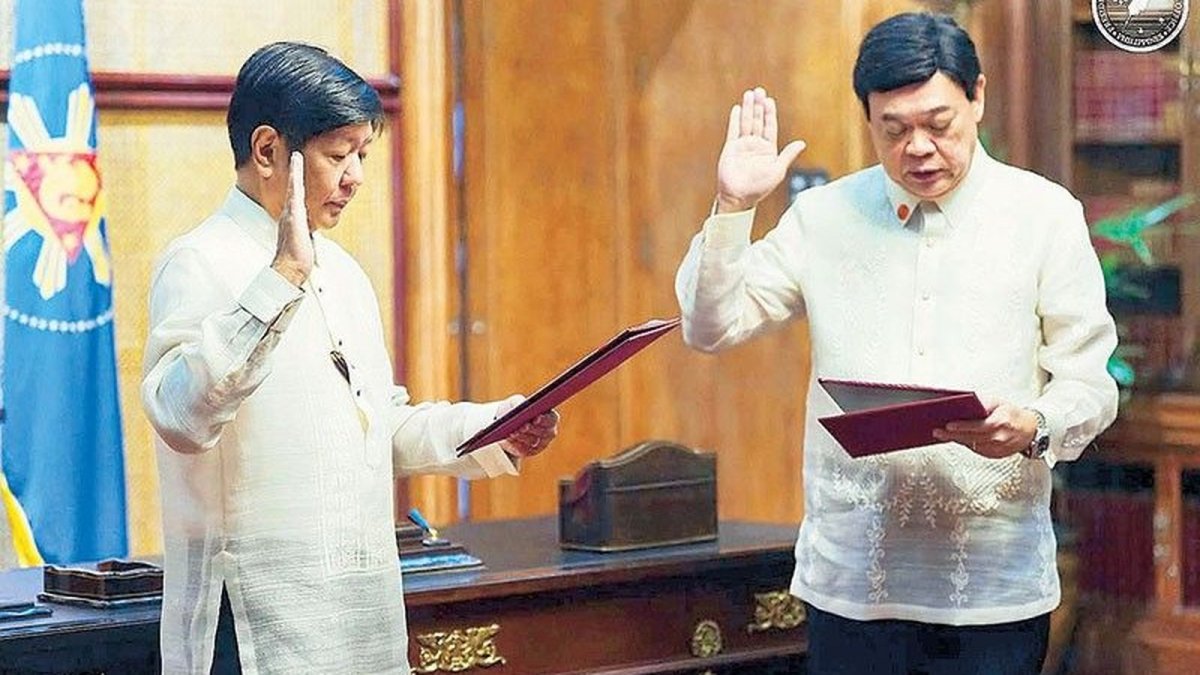
The Appointment Announcement
Castro told reporters at the Palace briefing that Mercado's appointment formalizes a new leadership direction for an agency that oversees public health programs touching every Filipino family. Pujalte, who was appointed on July 13, 2026, served just under a month in the position before stepping aside.
"Ang naipaabot sa atin ay kusang nagresign si Dr. Pujalte dahil na rin sa kanyang kalusugan (What was communicated to us is that Dr. Pujalte voluntarily resigned due to his health)," Castro said, addressing questions about the sudden change at the agency's helm.
The Palace press officer expressed confidence in the incoming secretary, saying, "Alam ni Dr. Mercado ang gusto at nais ng Pangulo para sa ating mga kababayan (Dr. Mercado knows what the President wants for our countrymen)." The statement signals the administration's expectation that Mercado will align the department with the President's health agenda, which includes expanding PhilHealth coverage and strengthening the universal health care law.
Who Is Edwin Mercado?
Mercado brings a blend of clinical training and health systems management to the DOH. He earned his Doctor of Medicine degree from the University of the Philippines in 1987, followed by decades of experience running hospitals and health facilities across the country. Before leading PhilHealth, he served as medical director of Daniel Mercado Medical Center and held president and CEO positions at various hospitals, giving him direct experience with the challenges faced by health care providers on the ground.
His academic credentials extend beyond the Philippines. In 2023, he completed a Master of Medical Sciences in Global Health Delivery from Harvard Medical School, and he holds an Executive Master's in Healthcare Administration from the University of North Carolina in the United States. This combination of local practice and international training positions him as a leader who understands both the realities of Philippine health care and global best practices.
Mercado's appointment to PhilHealth in February 2025 placed him at the center of the country's national health insurance system, where he oversaw ongoing benefit reforms and the implementation of universal health care programs. His familiarity with the intricacies of PhilHealth — from benefit packages to the challenges of claims processing — gives him a running start at the DOH, where coordination with the state insurer is a core part of the job.
Why Pujalte Stepped Down
Pujalte's resignation marks one of the shortest tenures for a DOH secretary in recent memory. Appointed on July 13, 2026, he was at the helm for less than a month before health concerns prompted him to step back from the demanding role.
Castro emphasized that the resignation was voluntary and rooted in personal health reasons, not prompted by external pressure. The Palace did not provide additional details about the nature of Pujalte's health condition, a decision that respects his privacy during what must be a difficult period.
Despite the brevity of his term, Pujalte's departure comes at a sensitive moment for the department, which manages public health programs that reach every barangay in the country — from immunization drives and maternal health services to disease surveillance and the operations of public hospitals. The sudden leadership change means that ongoing initiatives must now proceed under new management, a transition that carries both risks and opportunities.
The TB Drug Graft Complaint Context
Pujalte's exit follows a graft complaint filed against him with the Office of the Ombudsman on Wednesday, August 5, 2026 — just five days before the announcement of Mercado's appointment. The complaint, lodged by unnamed health advocates, alleged that Pujalte ordered the suspension of procurement for anti-tuberculosis commodities worth approximately P3.225 billion.
The complainants accused Pujalte of holding off on the procurement to favor a particular supplier, a serious allegation that strikes at the heart of the country's fight against tuberculosis. The Philippines consistently ranks among the countries with a high burden of TB, and disruptions in the supply of anti-TB medicines can mean interrupted treatments, drug resistance, and preventable deaths.
Pujalte has denied the allegations. The complaint adds a layer of legal scrutiny to his brief tenure, even as the Palace maintains that his resignation was purely a matter of health. Health observers have noted the timing, though no official link between the complaint and the resignation has been established. The Ombudsman's office has yet to announce its findings, and the case remains pending.
For patients currently undergoing TB treatment, the controversy underscores how fragile the supply chain for essential medicines can be. Every delay in procurement translates into real consequences for families — a father unable to finish his treatment, a child exposed to drug-resistant strains, a community facing a longer path to eliminating the disease.
Beverly Ho Takes Over PhilHealth
With Mercado moving to the DOH, the Palace has named Beverly Lorraine Ho as the new president and CEO of PhilHealth, succeeding him at the state health insurer. Ho currently serves as chief health officer of Ayala Healthcare Holdings Inc. and previously held several key positions at the Department of Health, giving her intimate knowledge of how both agencies operate.
Her track record within the DOH means she understands the policy side of health governance, while her recent work in the private health care sector offers insight into how providers and insurers interact. This dual perspective could prove valuable as PhilHealth continues to implement benefit expansions and digital reforms aimed at making claims processing faster and more transparent.
The transition at PhilHealth comes as the agency continues to roll out reforms that directly affect how Filipino families access medical care. From coverage for senior citizens to benefits for maternity care and catastrophic illnesses, PhilHealth programs are a lifeline for millions. Ho's leadership will determine how smoothly these programs continue under a new administration at the agency.
What This Means for Ordinary Filipinos
For the average Filipino family, the change in DOH leadership may seem distant, but its effects will be felt in concrete ways. Mercado's recent tenure at PhilHealth means he enters the DOH with firsthand knowledge of the health insurance system's strengths and weaknesses — the same system that families depend on when a loved one falls ill and needs hospitalization.
In every barangay, from bustling Metro Manila neighborhoods to remote farming villages, the sari-sari store conversations often turn to the cost of medicine and hospital bills. The new secretary's understanding of PhilHealth benefit packages could shape how quickly reforms reach ordinary people, particularly those who have long struggled with out-of-pocket health expenses. When a kapitbahay asks for help navigating their PhilHealth coverage, the answers they get depend on policies crafted at the national level.
Tuberculosis programs are another area of immediate concern. With the TB drug procurement controversy hanging over the department, patients and health workers alike will be watching how Mercado handles the next phase of the country's anti-TB campaign. The Philippines remains one of the countries with a high burden of TB, and interruptions in the supply of medicines could have serious consequences for patients undergoing treatment.
The bayanihan spirit has long defined how Filipino communities respond to health crises — neighbors helping neighbors, barangay captains coordinating vaccination drives, families pooling resources for a relative's hospital stay. The leadership at the DOH and PhilHealth plays a critical role in supporting that community-level resilience, ensuring that the systems behind these efforts function reliably.
Analysis: A Critical Transition in Health Leadership
Mercado's appointment brings a different profile to the DOH than his predecessor's brief tenure. He arrives with recent, hands-on experience running the country's health insurer — a vantage point few DOH secretaries have held immediately prior to their appointment.
His dual perspective, understanding both the insurance side through PhilHealth and the provider side through his hospital management background, could prove valuable as the government pushes toward universal health care. The challenge will be translating that understanding into policies that work on the ground, where health workers in rural health units face shortages of supplies and personnel, and where patients in far-flung areas still struggle to reach hospitals.
The rapid turnover at the DOH also underscores the pressures of the position. Balancing public health priorities, budget constraints, and the political realities of governance is no small task, particularly in a country where health outcomes remain uneven across regions. The new secretary will need to move quickly to establish his agenda while reassuring health workers and the public that the department remains stable.
For Filipino families, the hope is that this transition brings renewed focus to the country's health agenda. As the new secretary takes on the role, the real test will be in the months ahead: whether the promises of universal health care translate into better access, lower costs, and healthier communities from Luzon to Mindanao. The incoming PhilHealth chief, Ho, faces a parallel challenge in ensuring that the insurance system millions rely on continues to deliver.
By Bella Reyes, Staff WriterThis article was produced with AI-assisted research and editorial support. Sources: PhilStar, PCO, Rappler, Manila Times, Inquirer.What's Your Reaction?
 Like
0
Like
0
 Dislike
0
Dislike
0
 Love
0
Love
0
 Funny
0
Funny
0
 Wow
0
Wow
0
 Sad
0
Sad
0
 Angry
0
Angry
0

Philippines/Southeast Asia Correspondent at Global1.News. Manila-based journalist covering Philippine politics, environment, maritime security, and social issues. Passionate about marine conservation and the communities protecting the Philippines' natural heritage.














Comments (0)