
Mali: Dozens of Militants Killed in Battle for San Military Base
The staccato of gunfire that shattered the dawn in central Mali on Sunday was more than a routine skirmish — it was the sound of a decade-old war refusing to end.
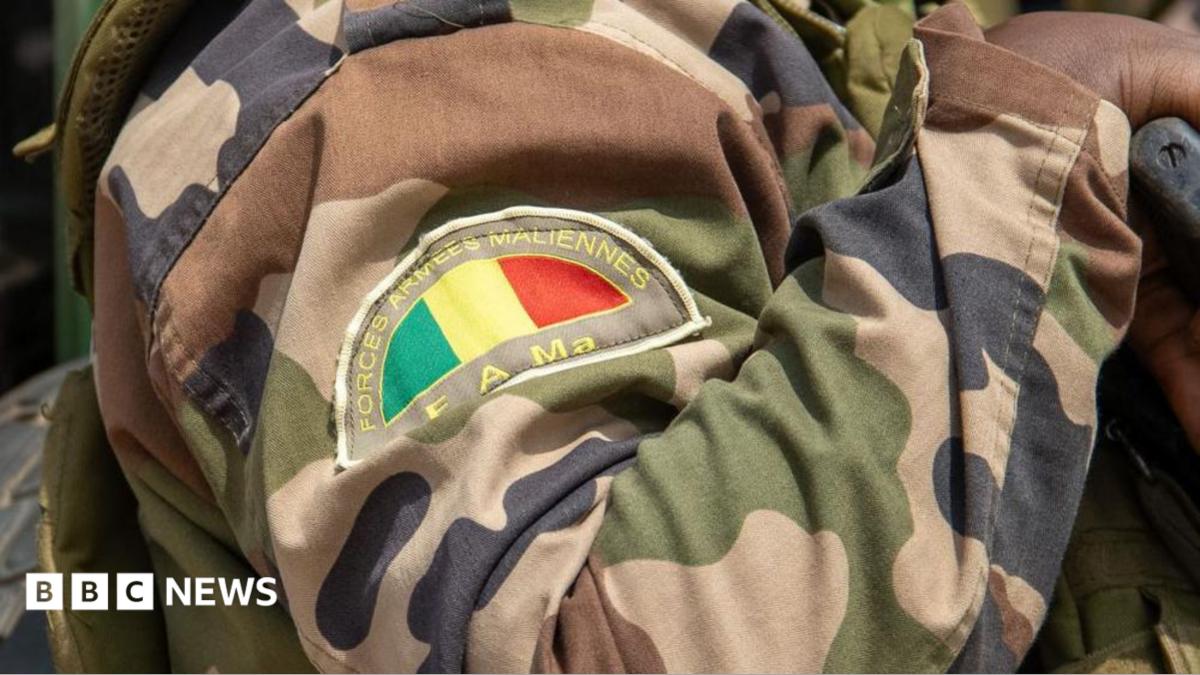
The staccato of gunfire that shattered the dawn in central Mali on Sunday was more than a routine skirmish — it was the sound of a decade-old war refusing to end. When jihadists wearing army uniforms slipped past the perimeter of a military base in San, they reminded the entire Sahel that no garrison, however fortified, is truly safe.
Mali: Dozens of Militants Killed in Battle for San Military Base
Dakar, Senegal — Malian soldiers repelled a sophisticated dawn assault on the 23rd regiment's base in San, killing roughly 40 militants from the al-Qaeda-affiliated group JNIM, according to the army. But at least 10 soldiers also lost their lives in the two-hour battle, and the jihadists' brief seizure of the garrison laid bare the fragility of a state fighting for its survival.
A contested assault on the San garrison
The assault targeted the 23rd regiment's base in the central Malian town of San, with Jama'at Nusrat al-Islam wal-Muslimin (JNIM) — the al-Qaeda-affiliated jihadist group — claiming its fighters took control of the garrison. The army, which suffered casualties of its own, disputed that it had ceded control, but acknowledged that its soldiers had to "retreat temporarily" during the fighting.
The competing accounts from the battlefield are themselves a reflection of how murky and fluid the security situation in Mali has become. More than a decade after a jihadist insurgency began taking root in the north, no single narrative can fully capture the reality on the ground — and the ordinary people caught in the middle are left to piece together the truth from rumours, radio reports and the echoes of gunfire.
How the attack unfolded
The assault on the San garrison bore all the hallmarks of a carefully choreographed operation. According to witnesses quoted by the French broadcaster RFI, the attack began around 05:00 local time on Sunday and lasted roughly two hours. The attackers arrived on motorcycles and on foot, with some disguised in army uniforms to slip past the perimeter unnoticed. The ruse speaks to a level of intelligence-gathering that no amount of sandbagging can fully counter; these fighters knew the base's routines, its vulnerabilities, its blind spots.
Once inside, the militants unleashed a ferocious barrage. Mali's national broadcaster ORTM reported the use of drones, heavy machine guns and armoured vehicles to breach the site's perimeter — weaponry that transforms what might once have been a raid into something closer to a conventional assault, and underscores how far the threat has evolved from the early days of the insurgency. These are not rag-tag fighters; they are organised, equipped and increasingly bold.
One witness described the scene in chilling detail, saying the militants entered the camp and held it "for a long time before leaving". Another resident told RFI: "I noticed that the fighting took place between 200 and 300 metres from the camp. Several terrorists were killed by soldiers, but others fled; some even hid in houses and others went into the forest." The image of jihadists melting into civilian neighbourhoods is a haunting one — it blurs the line between battlefield and home, and it makes every subsequent military response a fraught and delicate exercise.
The army's response
In a video message, Lt Col El Oumrani, commander of the 23rd regiment in the San garrison, sought to reassure residents and push back against suggestions that the base had fallen. "The enemy was eliminated and the attack was successfully repelled. Around 40 terrorists were eliminated," he said. He urged residents to remain vigilant, insisting that his soldiers had "not gone anywhere" and that the base remained under army control. "The camp of the 23rd is not empty, it is under the custody of the army."
The competing narratives emerging from San reveal how difficult it is to establish ground truth in this conflict. JNIM, for its part, claimed its fighters had taken control of the garrison — a boast that, even if exaggerated, reflects a group confident enough to challenge the state on its own soil. The AFP news agency, citing security and local sources, reported that at least 10 soldiers were killed in the fighting and that the assailants briefly took over the camp before withdrawing.
For the people of San, the precise body count may matter less than the simple, chilling fact that their town became a battlefield. Behind every number is a family in mourning, a community shaken, a country that grows wearier with each new attack. When the army says one thing and the jihadists say another, ordinary civilians are left to wonder whom to believe — and whether the next dawn will bring another round of gunfire.
A decade of insurgency
The attack on San did not happen in a vacuum. It is the latest symptom of a crisis that has festered since 2012, when a jihadist insurgency first took root in Mali's vast northern desert. More than a decade on, large parts of the north and east remain outside government control, and the security situation appears to be deteriorating rather than improving. The violence has crept steadily southward, and San itself sits in central Mali, a region that has become an increasingly frequent theatre of war.
The fragility of the state was brought home dramatically in April, when a nationwide, coordinated series of attacks was launched by an alliance of jihadists and separatist rebels — the Azawad Liberation Front — seeking to overthrow the military regime of Gen Assimi Goïta, who seized power in a coup in 2020. During those attacks, Defence Minister Sadio Camara was killed in an apparent suicide truck bombing on his residence near the capital, Bamako. The death of a senior minister on the outskirts of the capital sent shockwaves through the entire region, a sign that no one, however highly placed, is beyond the reach of the violence.
A jihadist threat that keeps expanding
JNIM has proven itself a formidable and adaptive adversary. It has diversified its operations beyond its northern heartland, targeting central and southern Mali, and showing a chilling ability to penetrate deeper into the country's territory despite numerous military operations aimed at containing it. The group that attacked San is not a scattered insurgency; it is a networked, adaptive force that has learned to exploit the gaps in the state's reach.
The attack on San is a particularly telling example. San is not a remote northern outpost; it is a town in central Mali, a region that has become an increasingly frequent theatre of war. The group's capacity to strike across such a wide geographic area complicates any military response and leaves vast stretches of the country vulnerable.
Mali's shifting alliances
The coup that brought Gen Goïta to power was, in part, carried out over the failure of previous governments to ease the security situation. In the wake of the takeover, Mali took the dramatic step of rejecting French military help — a break with decades of post-colonial security cooperation — and instead turned to Russia.
That pivot has reshaped the geopolitical map of the Sahel, with implications far beyond Mali's borders. But for all the talk of alliances and counterterrorism strategies, it is the Malian people themselves who carry the heaviest burden. Their villages become battlegrounds. Their markets are disrupted. Their children grow up in the shadow of conflict. The geopolitics of the Sahel offer cold comfort to a mother wondering whether her son will come home.
A Senegalese lens on Mali's pain
For those of us in Senegal, the battle at San carries an intimacy that statistics cannot capture. Mali is not a distant headline or a faraway trouble spot; it is our eastern neighbour, a brother country bound to us by the shared memory of the Mali Empire and by the living threads of language, kinship and commerce that connect Dakar to Bamako. The markets of the two capitals have long been linked by more than geography — by the movements of traders and travellers who cross the border as casually as they cross a street, by the students who study in both countries, by the families with relatives on both sides. When violence breaks out in a Malian town, the tremors are felt in our markets, our families, our daily conversations.
When San bleeds, the pain echoes across the Sahel. When a Malian mother worries for her children, a Senegalese mother understands. The instability that has gripped Mali for more than a decade does not stop at borders; it ripples outward, threatening the stability of West Africa as a whole.
The deeper tragedy is the weight borne by ordinary Malians: villages become battlegrounds, markets are disrupted, and children grow up in the shadow of conflict. The battle for the base at San is a reminder that the war against jihadism in the Sahel is far from over — and that the region's future will be shaped not only by military might, but by the resilience of its people, the strength of its families, and the ties that bind us together across this vast and beautiful land. West Africa watches the Sahel's fate together, because in truth, we share it.
By Amara Diop, Staff Writer
This article was produced with AI-assisted research and editorial support. Reporting is based on sources cited in the article.
What's Your Reaction?
 Like
0
Like
0
 Dislike
0
Dislike
0
 Love
0
Love
0
 Funny
0
Funny
0
 Wow
0
Wow
0
 Sad
0
Sad
0
 Angry
0
Angry
0

West Africa/Sahel Correspondent at Global1.News. Dakar-based journalist covering politics, security, climate, and development across Francophone and Anglophone West Africa. Tells the stories of a region undergoing profound transformation.











Comments (0)