
Magnitude 7.7 Earthquake Strikes Indonesia's Flores Region, Killing at Least Two
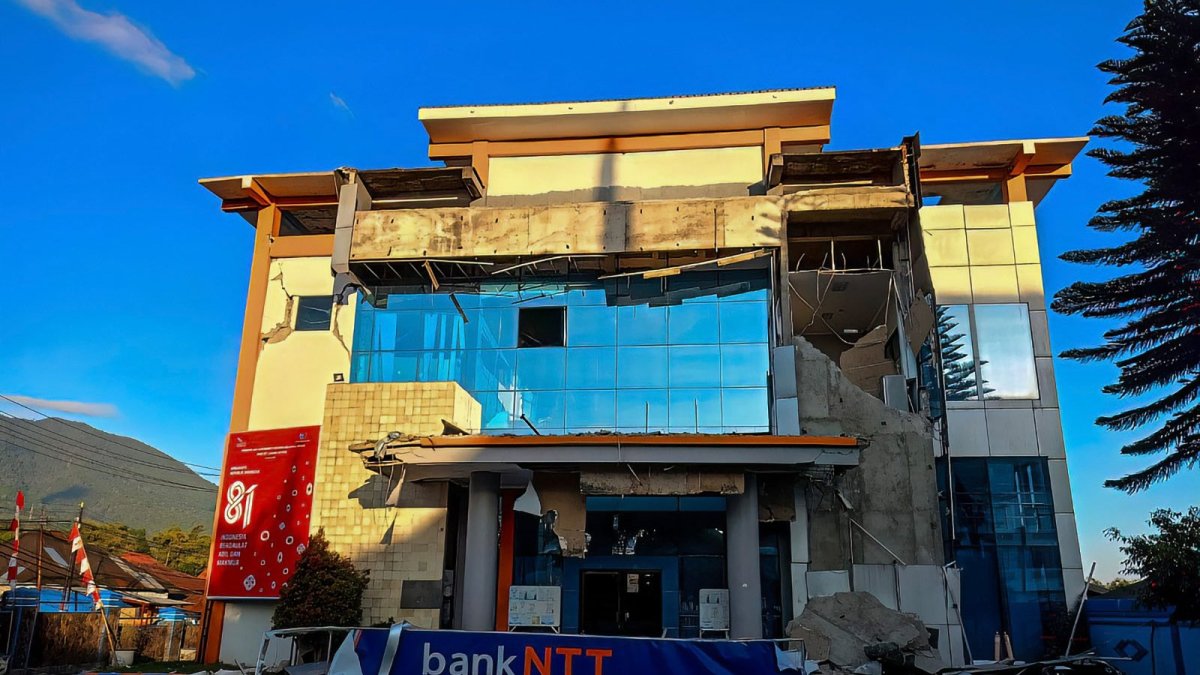
Magnitude 7.7 Earthquake Strikes Indonesia’s Flores Region, Killing at Least Two A powerful magnitude 7.7 earthquake struck off the coast of Indonesia’s Flores region early Saturday morning, collapsing buildings and homes, killing at least two people, and sending panicked residents fleeing to higher ground.
Magnitude 7.7 Earthquake Strikes Indonesia’s Flores Region, Killing at Least Two
A powerful magnitude 7.7 earthquake struck off the coast of Indonesia’s Flores region early Saturday morning, collapsing buildings and homes, killing at least two people, and sending panicked residents fleeing to higher ground. Indonesian authorities issued a tsunami warning for several provinces before lifting it hours later after monitoring showed no significant sea-level changes threatening coastal communities. The U.S. Geological Survey reported the quake struck at 5:58 a.m. local time at a depth of 10 kilometres, with its epicentre located 68 kilometres (42 miles) north-northwest of the city of Ende in East Nusa Tenggara province. The initial tremor was followed by several aftershocks, according to Indonesia’s Meteorology, Climatology and Geophysics Agency.Damage Reports and Casualties
Preliminary reports from the Maumere Search and Rescue Agency indicated that at least two residents were killed and two others injured as the earthquake caused severe damage and collapsed buildings, according to Indonesia’s disaster management agency. The full extent of the damage remains unclear as rescue teams work to reach affected areas across the predominantly Catholic island of Flores. Footage on local television showed patients at several hospitals being evacuated from buildings as a precaution following the quake. Hospital staff moved equipment outdoors, including beds, IV stands and oxygen cylinders, and set up temporary treatment areas to continue caring for patients. Yohanna Embu, a resident of Sikka, a regency within East Nusa Tenggara province, described the scene of destruction. “Many buildings here were damaged ... I saw that the waiting room at the port terminal in Maumere had collapsed,” she said. The quake was felt across much of Flores island, with initial reports indicating heavy damage in multiple districts. Students at St. Peter Major Seminary in Sikka who were attending morning Mass fled in panic when the roof of an assembly hall collapsed, said the Rev. Guidelbertus Tanga, rector of the seminary, known locally as Ritapiret Seminary. “Our students and nuns ran out in panic beneath a collapsing roof,” Tanga said. “At least one priest suffered a broken leg after jumping from the second floor of a building during the quake.”Tsunami Warning Issued and Lifted
Indonesian authorities initially issued a tsunami warning for parts of East Nusa Tenggara, West Nusa Tenggara, South Sulawesi and Southeast Sulawesi provinces, urging residents to stay away from beaches and riverbanks and move to higher ground. The warning was later lifted when the Meteorology, Climatology and Geophysics Agency said monitoring showed no significant sea-level changes that would pose a threat to coastal communities. The brief warning nonetheless triggered widespread panic, with residents in coastal areas rushing to higher ground as a precaution. The episode underscores the region’s heightened sensitivity to tsunami threats, given the devastating history of such events in Indonesia.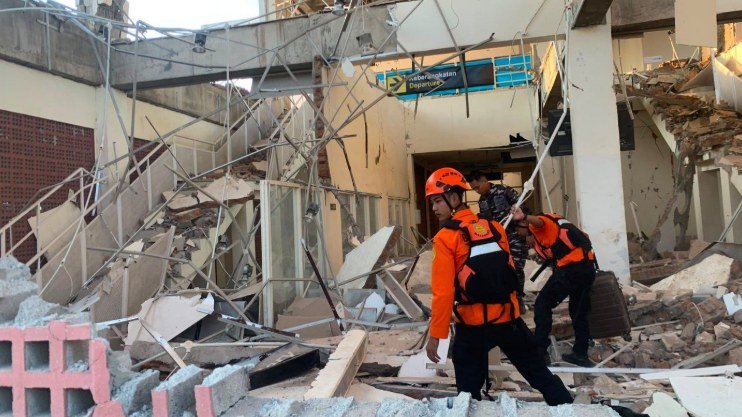
Historical Context: A Region Prone to Deadly Quakes
Indonesia, a vast archipelago of more than 17,000 islands, is prone to earthquakes and volcanic activity because of its location on the “Ring of Fire,” an arc of volcanoes and fault lines in the Pacific Basin. The region has experienced some of the deadliest seismic events in modern history. A powerful earthquake caused a tsunami in 1992 that killed about 2,500 people on Flores, the same island struck Saturday. In 2018, a magnitude 7.5 quake spawned a large localized tsunami that wiped out coastal areas, while liquefaction turned entire neighbourhoods into rivers of sludge in the eastern Indonesian city of Palu; the disaster killed more than 4,400 people. In 2010, a 10-foot (three-metre) wave struck the Mentawai Islands off the western coast of Sumatra just minutes after a massive offshore earthquake; more than 400 people were killed and hundreds of homes destroyed. In December 2004, a massive magnitude 9.1 earthquake off Sumatra triggered a tsunami that killed 230,000 people in a dozen countries, including many foreign tourists and residents across the Indian Ocean basin.Canadian Context: Travel Advisories and Consular Support
For Canadians travelling in Southeast Asia, Saturday’s earthquake serves as a reminder of the importance of preparedness and registration. Global Affairs Canada publishes travel advice and advisories for Indonesia at travel.gc.ca, offering up-to-date safety and security information for Canadian travellers. The department operates the Registration of Canadians Abroad service, a free and confidential tool that allows officials to contact Canadian citizens in affected regions during emergencies. Canadians in Indonesia or planning travel there are encouraged to register their presence so that consular officials can reach them if needed. Canada’s Disaster Assistance Response Team (DART) can deploy humanitarian assistance when requested by an affected country. While no such request has been made in connection with Saturday’s earthquake, the team remains a standing capacity that Canada can mobilise in major international disasters. The Canadian Red Cross also mounts appeals during major international disasters, channelling donations to affected communities through its global network. Canadians wishing to support relief efforts can contribute through the organisation’s international disaster response programs.Impact on Canadian Travellers and the Diaspora
Flores and the surrounding East Nusa Tenggara province are destinations that Canadian travellers visit, particularly for eco-tourism, diving and cultural experiences. The region’s remote character means that infrastructure damage can disrupt transportation and communications, potentially affecting travellers in the area. Canadians in Indonesia or neighbouring regions should monitor local news, follow instructions from local authorities, and contact friends and family to confirm their safety. Those concerned about loved ones in the affected area can contact Global Affairs Canada’s Emergency Watch and Response Centre in Ottawa, which operates 24 hours a day, seven days a week. The earthquake also carries broader implications for Canada’s engagement with Indonesia. Under Canada’s Indo-Pacific strategy, Ottawa has sought to deepen bilateral ties with Indonesia, a major ASEAN partner. Cooperation on disaster resilience and humanitarian assistance has been a growing component of this relationship, reflecting shared interests in regional stability and emergency preparedness.Looking Ahead: Recovery and Preparedness
As rescue and assessment efforts continue on Flores, the immediate priority remains locating any individuals trapped in collapsed buildings and providing medical care to the injured. The relatively low death toll reported so far, compared with past disasters in the region, may reflect improvements in building codes and early warning systems implemented after previous tragedies. However, the earthquake’s impact on infrastructure, including hospitals, ports and religious institutions, will require significant recovery efforts. The collapse of the port terminal waiting room in Maumere, a key transportation hub, could complicate the delivery of aid and supplies to affected communities. For Canadians watching from abroad, the event is a sobering reminder of the region’s seismic volatility and the importance of international cooperation in disaster response. Canada’s capacity to contribute through DART, the Red Cross and bilateral channels with Indonesia ensures that Ottawa can play a meaningful role in supporting recovery efforts should they be requested. In the meantime, Canadians in the region are advised to remain vigilant, follow the guidance of local authorities, and stay informed through official channels. The situation remains fluid, and further information about casualties and damage is expected to emerge as assessments continue.Tags: Indonesia earthquake, Flores earthquake, East Nusa Tenggara, tsunami warning, Ring of Fire, Global Affairs Canada, travel advisory, Disaster Assistance Response Team, Canadian Red Cross, Indo-Pacific strategy, Ende, Maumere, earthquake relief, Canadian travellers, Southeast Asia
By Alex Thompson, Staff Writer
This article was produced with AI-assisted research and editorial support. Sources: Global News, The Associated Press, U.S. Geological Survey, Indonesia Meteorology, Climatology and Geophysics Agency.
What's Your Reaction?
 Like
0
Like
0
 Dislike
0
Dislike
0
 Love
0
Love
0
 Funny
0
Funny
0
 Wow
0
Wow
0
 Sad
0
Sad
0
 Angry
0
Angry
0

Alex Thompson
Canada Correspondent at Global1.News. Based in Toronto, covering Canadian politics, energy, trade, and US-Canada relations. Provides the Canadian perspective on North American and global affairs.













Comments (0)