
Armed police start patrols in Sydney after Bondi Beach attack
In the wake of the December 2022 Bondi Beach massacre, New South Wales police have deployed a new, highly visible armed unit to patrol Sydney’s busiest precincts.
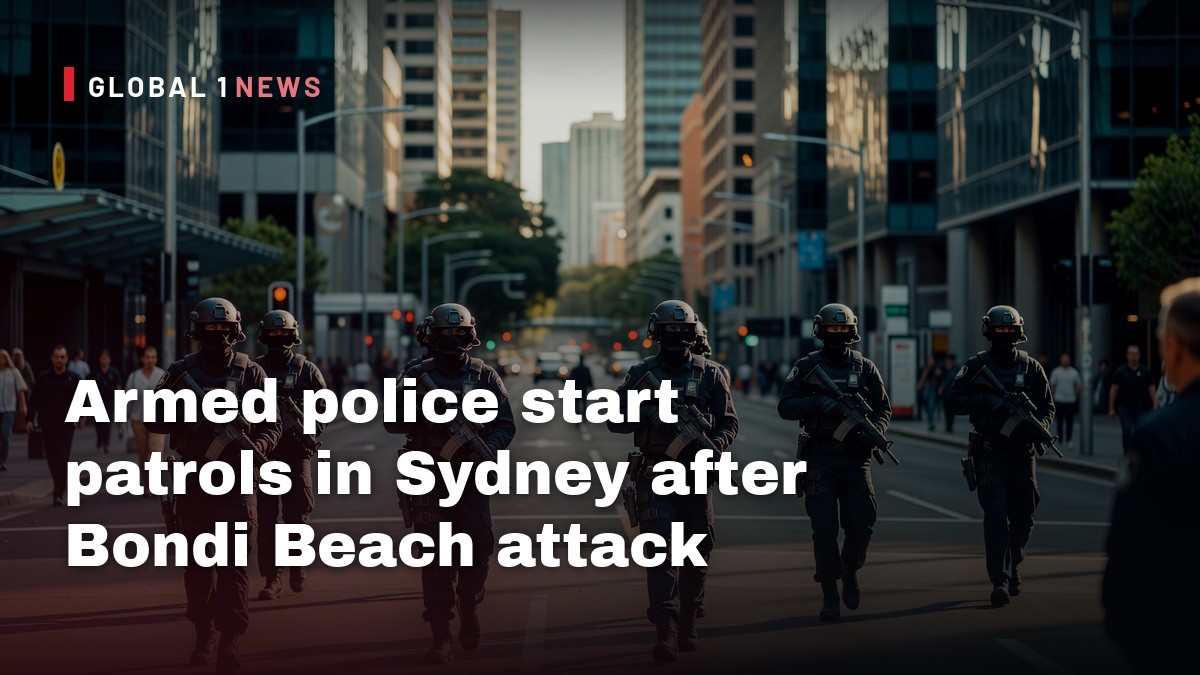
In the wake of the December 2022 Bondi Beach massacre, New South Wales police have deployed a new, highly visible armed unit to patrol Sydney’s busiest precincts. The Armed Response Command (ARC), equipped with long‑arm rifles and specialist vehicles, marks an unprecedented shift in Australian policing, aiming to deter future attacks while raising fresh questions about civil liberties, community safety and the broader political fallout of the tragedy.
Origins of the Armed Response Command
The ARC was created as a direct response to the deadliest mass shooting in Australia in almost three decades. On 14 December 2022, two gunmen opened fire on a Hanukkah celebration at Bondi Beach, killing fifteen people, including a ten‑year‑old girl. The attack shocked the nation and prompted sweeping gun‑law reforms as well as a crackdown on hate speech. In the months that followed, the New South Wales Police Force announced the formation of a specialised unit to patrol “busy tourist areas” and “major events like sports matches and places of worship” to “prevent, deter and rapidly respond to serious threats, including active armed offender incidents.”
Detective Superintendent Andrew Evans described the unit’s purpose as “preserving life,” emphasizing that the presence of armed officers is intended to act as a deterrent and to provide an immediate response should an armed offender appear. The ARC’s deployment is therefore framed not as a militarisation of everyday policing but as a protective measure aimed at safeguarding public gatherings that could be targeted by extremist violence.
Public reaction to armed patrols
Early observations of ARC officers on Sydney streets have produced mixed reactions among residents. One local, speaking to ABC News, called the sight of armed police “unnerving,” reflecting a discomfort with the visual similarity to military forces. By contrast, another woman expressed a feeling of safety, noting that the presence of officers equipped with rifles gave her confidence that a rapid response would be possible if a threat emerged.
Jewish community leaders have welcomed the initiative, acknowledging that the visibility of the ARC may help reassure a community still reeling from the Bondi attack. Alex Ryvchin, co‑CEO of the Executive Council of Australian Jewry, argued that while no Australian wants “officers with military weapons on our streets,” the alternative—“the sight of body bags”—would be far more distressing. This sentiment underscores the delicate balance policymakers must strike between security and the preservation of a civilian policing ethos.
Human‑rights concerns and oversight
Human‑rights organisations have voiced caution about the long‑term implications of deploying heavily armed police in public spaces. Amnesty International Australia, through its spokesperson Andrew Witheford, warned that the “militarisation of policing” could threaten civil liberties if not accompanied by transparent rules and robust oversight. The group called for “clear, publicly accessible rules, robust independent oversight and accountability” to ensure that the ARC would not be used to suppress peaceful protests or other lawful expressions of dissent.
The concerns are not merely theoretical. The presence of long‑arm rifles on city streets raises questions about proportionality, especially in situations that do not involve an active shooter. While the New South Wales Police Minister Yasmin Catley defended the measures as a necessary adaptation to a changed world, she also acknowledged that “our world changed forever,” hinting at an awareness of the broader societal impact of such security policies.
Legal proceedings against the perpetrators
Legal action against the alleged gunmen has proceeded alongside the rollout of the ARC. One of the shooters, identified as Naveed Akram, faces a staggering 78 charges, including fifteen counts of murder, forty counts of attempted murder, and a single count of committing a terrorist act. The scale of the indictment reflects the severity of the crime and the government’s determination to pursue a comprehensive legal response.
The other gunman, identified as the father of Naveed, Sajid Akram, was killed by police at the scene of the Bondi attack. His death, occurring during the immediate police response, adds a further layer of complexity to the public’s perception of law‑enforcement actions during crises. The fact that both perpetrators were armed and that one was neutralised on site has reinforced arguments for a rapid, armed police response in future emergencies.
Political ramifications and policy shifts
The Bondi Beach shooting placed intense pressure on Prime Minister Anthony Albanese’s government to act decisively on antisemitism and broader hate‑crime legislation. The tragedy catalysed a national conversation about the adequacy of existing security measures at public events, especially those with a high risk of being targeted by extremist actors.
In the aftermath, New South Wales introduced stricter gun‑law reforms and a crackdown on hate speech, signalling a policy shift towards tighter controls on firearms and a more proactive stance against extremist rhetoric. The establishment of the ARC can be seen as a continuation of this trajectory, translating legislative changes into operational capabilities on the ground.
Future expansion and operational scope
Police officials have indicated that the ARC will eventually comprise 250 officers, suggesting a long‑term commitment to maintaining an armed presence in high‑risk environments across Sydney. The unit’s design includes “highly visible” patrols, specialist vehicles and the carrying of rifles, all intended to create a deterrent effect while ensuring rapid tactical response.
As the ARC scales up, its operational guidelines will likely be refined to address the concerns raised by civil‑rights groups and to align with community expectations. The balance between visibility for deterrence and the risk of normalising a militarised police image will be a key metric for policymakers and law‑enforcement leaders to monitor.
Implications for Australia’s security model
The deployment of the ARC marks a notable evolution in Australia’s security architecture, reflecting a willingness to adopt measures previously reserved for exceptional circumstances. While the immediate goal is to prevent a repeat of the Bondi tragedy, the broader implication is a potential redefinition of the baseline for public safety in major urban centres.
Australia’s experience may serve as a case study for other democracies grappling with the dual imperatives of protecting citizens from mass‑shooting threats and preserving the civilian character of policing. The ongoing dialogue between government, law‑enforcement, community groups and human‑rights organisations will shape how the ARC is perceived and whether it becomes a permanent fixture in Sydney’s security landscape.
This article was produced with AI-assisted research and editorial support. Reporting is based on the source material cited below. Sources: BBC News Asia; bbc.co.uk; Global1.News (02 November 2026).
By Kenji Tanaka, Staff Writer
What's Your Reaction?
 Like
0
 Dislike
0
 Love
0
 Funny
0
 Wow
0
 Sad
0
 Angry
0

Japan Correspondent at Global1.News. Tokyo-based voice covering Japanese politics, technology, economy, and culture. Tracks the intersection of tradition and innovation in one of the world's most dynamic societies.












Comments (0)