
UPSC Mains Admit Card 2026 Released: 13,343 Candidates Battle for 1,016 Civil Services Vacancies
The Union Public Service Commission (UPSC) released the Civil Services (Main) Examination 2026 e-admit card on August 14, 2026, a day before India marks its 80th Independence Day. With 13,343 candidates qualifying for the Mains against a mere 1,016 notified vacancies, the selection ratio stands at a stark 13:1, underscoring the brutal competition for the nation's most prestigious bureaucratic posts.
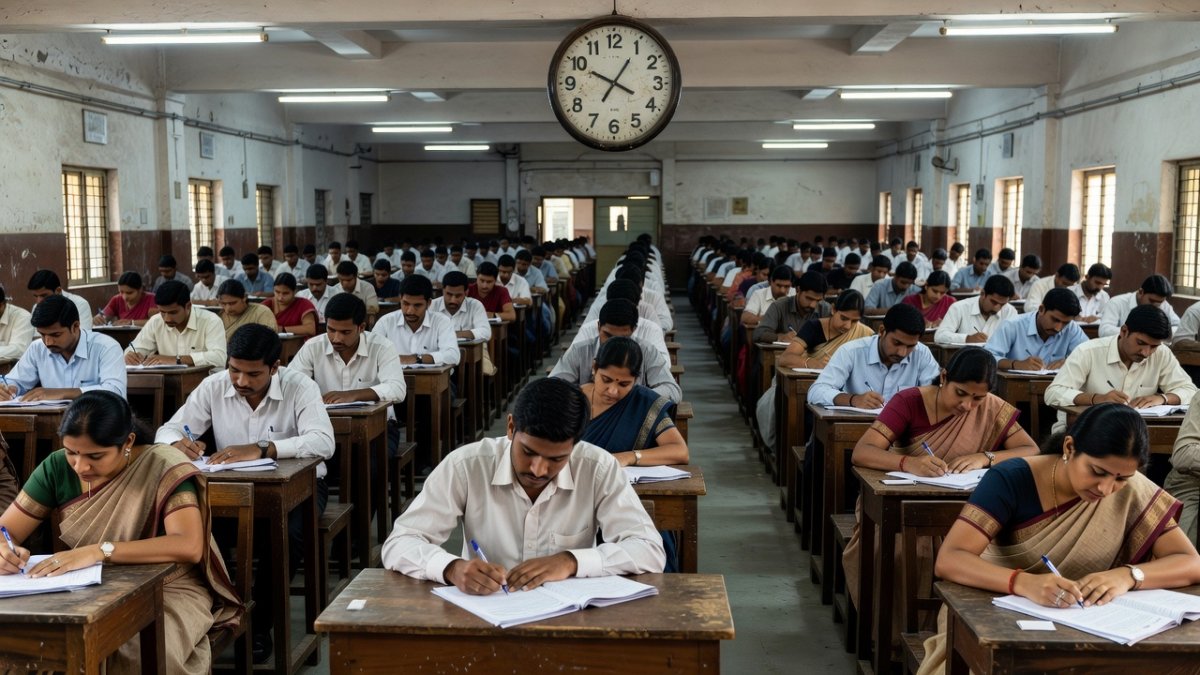
The Union Public Service Commission (UPSC) released the Civil Services (Main) Examination 2026 e-admit card on August 14, 2026, a day before India marks its 80th Independence Day. With 13,343 candidates qualifying for the Mains against a mere 1,016 notified vacancies, the selection ratio stands at a stark 13:1, underscoring the brutal competition for the nation's most prestigious bureaucratic posts.
UPSC Mains Admit Card 2026 Out: 13,343 Vie for 1,016 Seats
New Delhi, August 15, 2026 — The Union Public Service Commission (UPSC) has released the e-admit cards for the Civil Services (Main) Examination 2026, setting the stage for nine papers spread over five days beginning August 21.
Exam Schedule and Paper-Wise Breakdown
The Mains examination, conducted in offline pen-and-paper mode, will run from August 21 to August 30, 2026, across two daily sessions: forenoon (9:00 AM to 12:00 Noon) and afternoon (2:30 PM to 5:30 PM). The paper-wise schedule is as follows: August 21 will feature the Essay paper; August 22 will host General Studies Paper I and II; August 23 will see General Studies Paper III and IV; August 29 is reserved for the qualifying Indian Language and English papers; and August 30 will conclude with Optional Subject Papers.
This rigorous structure tests candidates across nine papers — two qualifying language papers, one Essay paper, four General Studies papers, and two Optional Subject papers. Critically, only the marks from seven papers (Essay, GS I-IV, and two Optional subjects) contribute to the final merit list, while the language papers are purely qualifying in nature. Candidates who cleared the Civil Services Preliminary Examination 2026 and successfully submitted their Detailed Application Form (DAF) are eligible to appear.
The nine-paper structure is a study in comprehensive assessment. The two qualifying language papers — Indian Language and English — require only a 25% score in each (out of 300 total marks) to clear, ensuring a minimum working proficiency across India's linguistic diversity. The remaining seven papers — Essay, GS I through IV, and two Optional subjects — carry the full weight of merit, with each paper typically worth 250 marks, totaling 1,750 before the 275-mark interview. The schedule reflects pedagogical logic: the Essay sets the tone for the analytical rigor of the GS papers, the August 23-29 break allows recalibration, and the Optional papers on the final day reward depth in a chosen discipline — a critical differentiator where a single mark can decide selection.
Selection Ratio: The Mathematics of 13,343 vs 1,016
The numbers tell a sobering story of attrition. Roughly 9-10 lakh candidates typically register for the CSE Prelims, yet only 13,343 have made it to the Mains stage — a conversion rate of under 1.5%. Against the 1,016 notified vacancies for IAS, IPS, IFS, and other Group A/B central services, the competition at this stage remains intense. For context, this means that even after clearing the Prelims, a candidate faces a 13:1 odds ratio at the Mains level, with the final interview stage further narrowing the field.
This selection funnel has profound implications for the aspirant ecosystem. In Delhi's coaching hubs — Rajendra Nagar, Mukherjee Nagar, and Old Rajendra Nagar — lakhs of students spend years and significant financial resources preparing for this single examination. The economics of UPSC preparation are staggering: coaching fees, accommodation, and study materials in the national capital are estimated to exceed ₹3-4 lakh per year, with no guarantee of success. The 2026 cycle, with its 1,016 vacancies, offers a glimmer of hope compared to recent years, but the structural reality remains that over 99% of serious aspirants will not make the final cut.
The arithmetic reveals a deeper structural reality: the Prelims is the primary filter, eliminating over 98% of candidates before a single descriptive answer is attempted — a deliberate design that lets UPSC process a massive applicant pool objectively. For the 13,343 who cleared this hurdle, sustained performance across multiple stages, not a single day of brilliance, determines success. Each candidate represents a cumulative investment of time, tuition fees, and opportunity cost running into several lakhs of rupees. The 1,016 vacancies are thus not just jobs; they are the terminal points of a vast, expensive ecosystem shaping the aspirations of an entire generation.
Admit Card Details and Mandatory Compliance
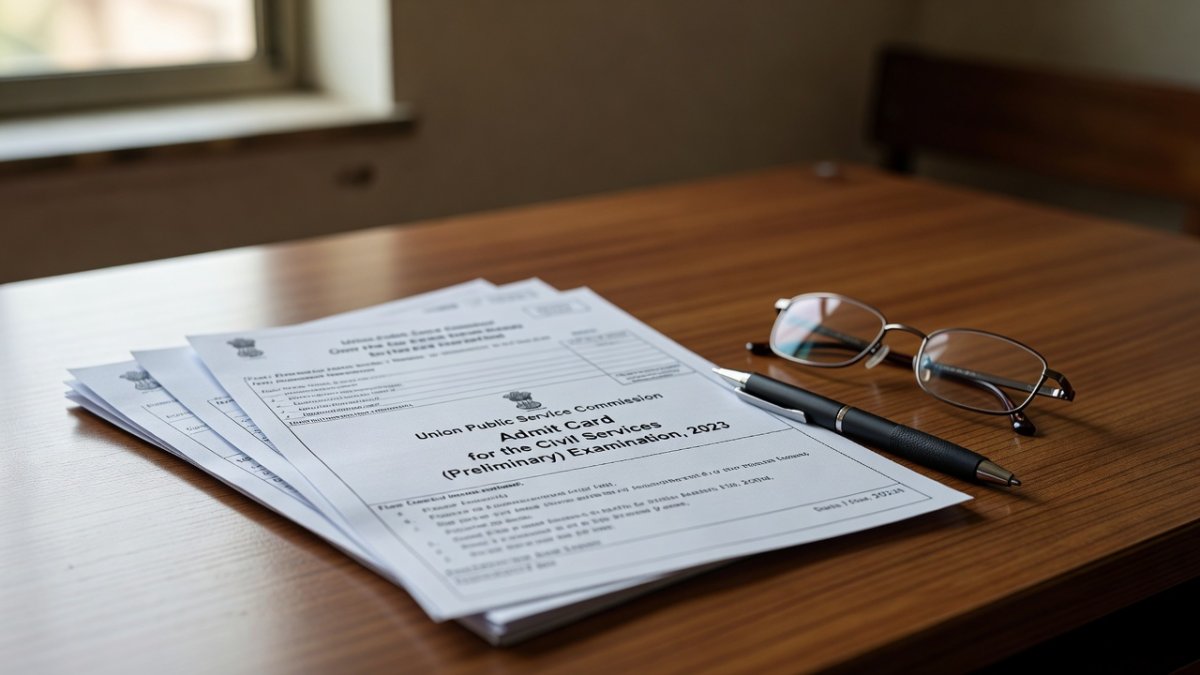
The e-admit card contains critical information: candidate name, roll number, photograph, examination centre, exam timing, and reporting time. UPSC has mandated that candidates verify these details immediately upon download and report any discrepancies without delay. The hall ticket must be printed and carried to the examination venue along with an original valid photo ID — digital copies alone will not be accepted under any circumstances.
In a significant procedural update, UPSC has introduced Face Authentication of candidates at examination venues for the 2026 cycle. This biometric verification, layered on top of existing photograph and signature checks, is designed to eliminate impersonation and ensure the integrity of the examination process. Candidates must also note that once an examination centre is allotted, it typically cannot be changed under normal circumstances, making it imperative to plan travel and accommodation well in advance.
Examination Integrity: Lessons from the 2024-2025 Leak Controversies
The release of the Mains admit card comes against a backdrop of heightened scrutiny of competitive examinations in India. The 2024-2025 period witnessed significant controversies, including paper leak allegations in other recruitment exams conducted by agencies like the National Testing Agency (NTA), which led to widespread protests and policy interventions. In this context, UPSC's robust verification framework — combining e-admit cards, biometric checks, and now Face Authentication — represents a critical bulwark against malpractice.
For the 13,343 candidates appearing in August, this means a tightly controlled examination environment. The two-session daily schedule across five days of actual testing (with breaks between papers) also demands significant physical and mental stamina. The UPSC's insistence on offline, descriptive answers — as opposed to the objective format of the Prelims — further distinguishes the Mains as a test of analytical writing and depth of knowledge, not just recall.
The contrast with the broader landscape is instructive: while UGC-NET and NEET-PG were disrupted by leak allegations in 2024-2025, UPSC has maintained a largely leak-free record through multiple question-paper sets, secure printing, and a layered verification system — now augmented by Face Authentication. For the 13,343 candidates, the Mains is likely to proceed without the specter of cancellation or re-testing that has haunted other recruitment drives.
The grueling week-long schedule demands sustained focus across nine papers, each requiring three hours of descriptive writing. The offline, pen-and-paper format — a deliberate departure from computer-based testing — tests the ability to articulate complex ideas under time pressure. Combined with the 275-mark interview, selection reflects a holistic assessment of intellectual and analytical capabilities. In an era of AI-assisted answer generation and online coaching shortcuts, UPSC's insistence on handwritten, invigilated, biometrically verified examination remains a powerful signal of the standards expected of India's civil servants.
Independence Day Timing and the Developed India 2047 Vision
The release of the admit card on August 14, 2026 — the eve of India's 80th Independence Day — is symbolically potent. As Prime Minister Narendra Modi addresses the nation from the Red Fort on August 15, the theme of "Developed India 2047" will dominate the discourse. The civil services are central to this vision; the 1,016 candidates who eventually clear this examination will be the mid-career bureaucrats tasked with implementing policy in the 2030s and 2040s.
This timing also reflects a deliberate administrative rhythm. By releasing the Mains schedule before Independence Day, UPSC ensures that the examination cycle proceeds without interruption, with the final results expected later this year. For the aspirants, the holiday weekend offers a final window for revision before the Essay paper on August 21.
The Career Stakes: Why Civil Services Remain Coveted
Despite the gruelling selection process and the low success rate, the Indian Administrative Service (IAS), Indian Police Service (IPS), and Indian Foreign Service (IFS) remain the most coveted government careers in India. The reasons are structural: job security, authority, pension benefits, and the ability to influence policy at the district, state, and national levels. The 2026 cycle also signals continuity in bureaucratic reform — the examination pattern remains unchanged, but the introduction of Face Authentication indicates a modernising approach to examination integrity.
For the candidates now downloading their hall tickets, the next ten days will determine the trajectory of their careers. The Mains is a test of endurance as much as knowledge — nine papers over five days of sustained analytical writing. Those who emerge successful will join an elite cadre that has historically shaped India's administrative landscape, the next generation of public servants tasked with realising the vision of a developed India by 2047.
This article was produced with AI-assisted research and editorial support. Sources: UPSC official notification and e-admit card portal (upsc.gov.in, upsconline.nic.in), NDTV, Times Now, Jagran Josh, AddA247.
— By Dr. Raj Patel, Staff Writer
What's Your Reaction?
 Like
0
Like
0
 Dislike
0
Dislike
0
 Love
0
Love
0
 Funny
0
Funny
0
 Wow
0
Wow
0
 Sad
0
Sad
0
 Angry
0
Angry
0

India/South Asia Correspondent at Global1.News. Analytical voice with a background in science and health journalism. Based in New Delhi, covering Indian politics, education, healthcare, technology, and policy. Breaks down complex data into clear, actionable reporting.












Comments (0)