
Dangerous heat index to hit 16 areas Tuesday — PAGASA
Manila – As the nation braces for a wave of scorching heat on Tuesday, November 3, the state weather bureau PAGASA has issued a stark warning: sixteen areas will face “danger” level heat index readings, with the highest expected to reach 43 °C.
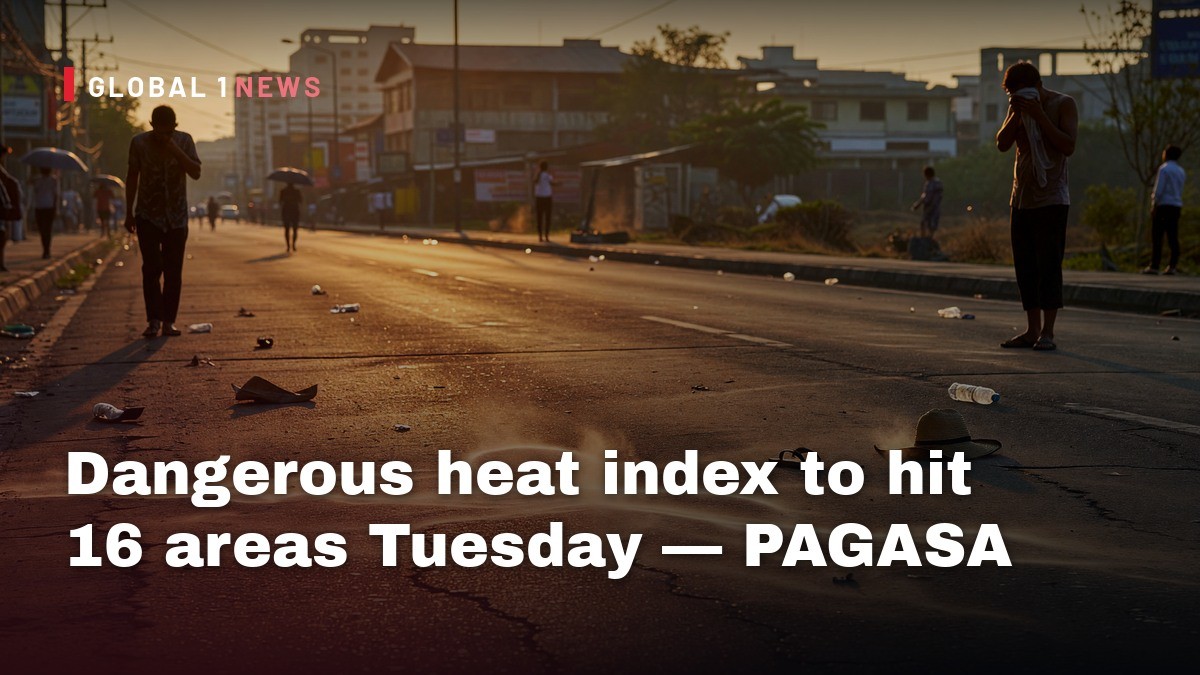
Manila – As the nation braces for a wave of scorching heat on Tuesday, November 3, the state weather bureau PAGASA has issued a stark warning: sixteen areas will face “danger” level heat index readings, with the highest expected to reach 43 °C. For many Filipinos, especially those whose daily lives unfold in bustling barangays, open markets, and crowded jeepney routes, the looming heat is more than a weather report—it is a call to protect health, livelihoods, and community well‑being.
Understanding the heat index and its danger levels
The heat index is not merely the temperature shown on a thermometer; it reflects how hot the air feels when humidity combines with the actual temperature. PAGASA’s classification places the “danger” bracket between 42 °C and 51 °C, a range where the human body struggles to cool itself efficiently. When humidity is high, sweat evaporates more slowly, and the body’s natural thermostat can be overwhelmed, leading to heat cramps, exhaustion, and in severe cases, heat stroke.
Experts stress that prolonged exposure to such conditions can quickly sap energy, impair judgment, and strain the cardiovascular system. For outdoor workers, street vendors, and students walking to school, the danger is immediate. Even indoor environments without adequate ventilation can become hazardous if air‑conditioning units fail or are unavailable, a common reality in many sari‑sari stores and public schools across the archipelago.
Areas most at risk: Iloilo City, San Jose, and Catarman
PAGASA has identified Iloilo City, San Jose in Occidental Mindoro, and Catarman in Northern Samar as the three locales expected to record the peak heat index of 43 °C. In Iloilo City, bustling streets and densely packed markets already contend with limited green spaces, amplifying the heat’s impact on pedestrians and vendors alike. In San Jose, a municipality known for its agricultural fields, farmers will face intensified labor under the sweltering sun, risking dehydration and heat‑related illnesses.
Catarman, a coastal town in Northern Samar, often relies on fishing and small‑scale enterprises that demand early‑morning and late‑evening work to avoid the midday heat. With the heat index projected to soar, even these traditional coping strategies may prove insufficient, pressing local officials and community leaders to reinforce safety measures.
Public health advisories and community response
PAGASA’s warning comes with a clear set of precautions: stay hydrated, limit outdoor activity during peak hours, wear loose and light clothing, and seek shade whenever possible. The Department of Health, though not directly quoted in the source, typically amplifies such advisories through barangay health workers, who play a crucial role in monitoring vulnerable groups such as the elderly, children, and outdoor laborers.
Community organizations and local NGOs have begun mobilizing resources ahead of Tuesday’s heat. In many barangays, volunteers are setting up water stations near schools and markets, while some barangay captains are coordinating with the local police to enforce temporary restrictions on outdoor gatherings during the hottest part of the day. These grassroots efforts embody the spirit of bayanihan, ensuring that neighbors look out for one another when the heat threatens to overwhelm.
Impact on education and daily routines
Students across the affected regions will likely feel the heat’s sting in classrooms that lack adequate ventilation or air‑conditioning. The Department of Education often advises schools to adjust schedules, such as starting earlier or incorporating longer breaks for water intake. Parents, meanwhile, may need to arrange additional care for children who cannot stay home due to work commitments, balancing safety with economic necessity.
For many families, the heat also disrupts daily routines beyond school. Vendors operating sari‑sari stores or street stalls may see a dip in foot traffic as shoppers avoid venturing out during peak heat hours. Conversely, some may experience a surge in demand for cold drinks and ice, prompting a scramble for supplies that can strain already limited refrigeration resources.
Economic implications for outdoor workers
Outdoor laborers—construction workers, farmers, fishers, and delivery riders—face heightened risk of heat‑related ailments that can lead to lost workdays and reduced productivity. In the absence of formal occupational safety regulations specifically addressing extreme heat, many rely on informal practices: taking frequent water breaks, seeking shade under trees, or adjusting work hours.
Local government units (LGUs) in the affected areas have a responsibility to enforce labor standards that protect workers from hazardous conditions. While the source does not detail specific LGU actions, the typical response includes issuing temporary work‑hour adjustments and ensuring that employers provide adequate water and rest areas, aligning with national labor guidelines that prioritize worker health.
Health system preparedness and potential strain
Hospitals and clinics in the sixteen at‑risk areas must brace for a possible uptick in heat‑related cases. Emergency rooms may see more patients presenting with symptoms of heat exhaustion, dehydration, or heat stroke. The Department of Health often coordinates with local health facilities to ensure that emergency protocols are in place, including rapid cooling techniques and intravenous fluid administration.
Preparedness also extends to public education campaigns. Radio stations, community bulletin boards, and social media platforms become vital channels for disseminating real‑time updates and safety tips. In previous heat waves, such communication has helped reduce mortality by encouraging early recognition of warning signs and prompt medical attention.
Looking ahead: Climate resilience and long‑term strategies
The recurring pattern of dangerous heat indices underscores a broader challenge: climate change is amplifying extreme weather events across the Philippines. While the immediate focus is on Tuesday’s heat, the experience highlights the need for long‑term resilience measures. Urban planning that expands green spaces, improves building ventilation, and incorporates heat‑resistant infrastructure can mitigate future risks.
At the national level, agencies such as the Department of Environment and Natural Resources, together with the Climate Change Commission, are tasked with integrating heat‑risk assessments into disaster preparedness frameworks. For ordinary Filipinos, the hope is that these policies translate into tangible benefits—cooler streets, accessible public water stations, and stronger community networks that can collectively weather the heat.
This article was produced with AI-assisted research and editorial support. Reporting is based on the source material cited below. Sources: Philstar.com; Global1.News (03 November 2026).
By Bella Reyes, Staff Writer
What's Your Reaction?
 Like
0
 Dislike
0
 Love
0
 Funny
0
 Wow
0
 Sad
0
 Angry
0

Philippines/Southeast Asia Correspondent at Global1.News. Manila-based journalist covering Philippine politics, environment, maritime security, and social issues. Passionate about marine conservation and the communities protecting the Philippines' natural heritage.













Comments (0)