
Maduro ally pleads guilty in $195m money laundering case in US court
In a courtroom in Miami, a former aide to Venezuela’s long‑time ruler stepped onto the dock and admitted guilt to a massive money‑laundering scheme. Alex Saab, once a senior official under President Nicolás Maduro, pleaded guilty to funneling illicit funds through U.S.
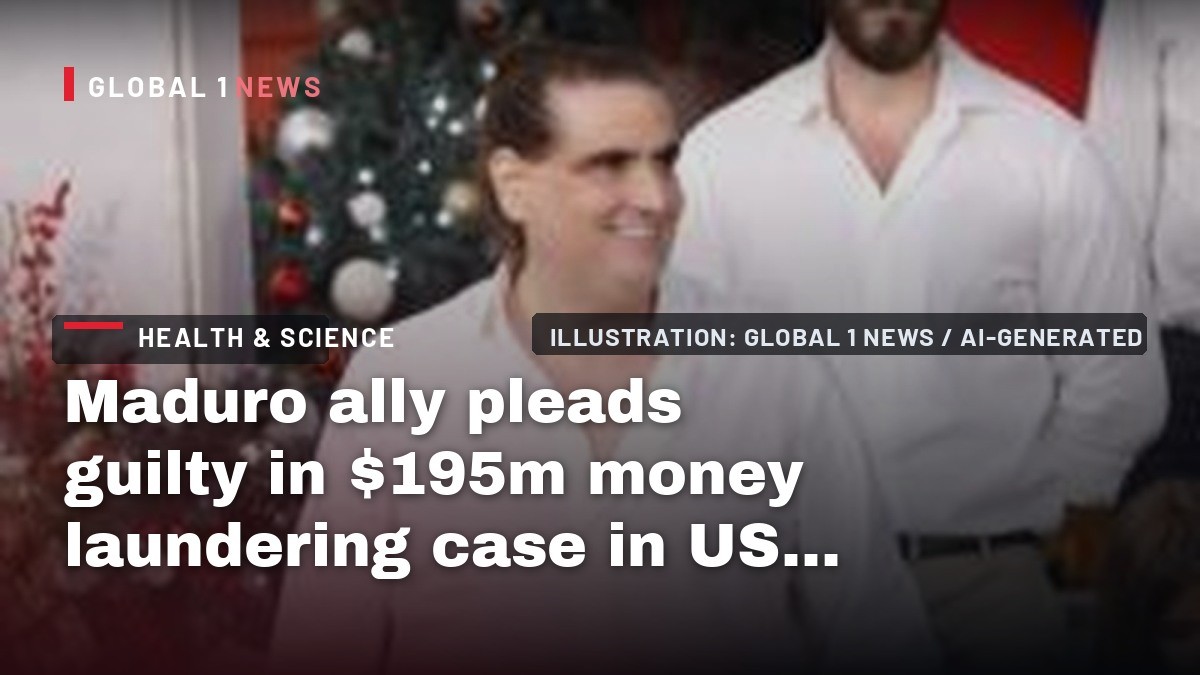
In a courtroom in Miami, a former aide to Venezuela’s long‑time ruler stepped onto the dock and admitted guilt to a massive money‑laundering scheme. Alex Saab, once a senior official under President Nicolás Maduro, pleaded guilty to funneling illicit funds through U.S. banks, sealing a deal that obliges him to forfeit nearly $195 million and to cooperate fully with federal prosecutors. The plea, reached on 19 September 2026, arrives at a volatile moment for the Venezuelan regime, which is already under the glare of a looming trial in New York where Maduro and his wife, former First Lady Cilia Flores, face weapon and drug charges.
From aide to defendant: Saab’s fall from grace
Saab’s trajectory from a Colombian businessman to a high‑ranking Venezuelan official has always been shadowed by controversy. As an aide to Maduro, he became a conduit for moving state resources abroad, allegedly siphoning money meant for a welfare program aimed at feeding the hungry. The U.S. case portrays him as having transferred a portion of those proceeds into American bank accounts, exploiting the financial system to hide the origin of the funds.
The plea agreement, signed on a Tuesday in Miami, marks a stark reversal from his earlier stance. Saab had previously vowed to fight the charges, but the deal now requires him to surrender $195 million—an amount that mirrors the sum the prosecutors say he laundered. In exchange, he avoids a potential 20‑year prison term, though the agreement does not guarantee immunity from future prosecution.
The legal backdrop: U.S. charges and prior extraditions
The current indictment is not Saab’s first brush with American courts. In 2020, he was extradited to the United States to face money‑laundering accusations tied to an alleged $350 million siphoning of Venezuelan assets. That earlier case set a precedent for the U.S. to pursue high‑level Venezuelan officials for financial crimes, framing the narrative that the regime’s corruption extends beyond its borders.
Saab’s 2020 extradition was facilitated by Venezuela’s acting president, Delcy Rodríguez, who succeeded Maduro in a temporary capacity. This cooperation underscored the internal fractures within the ruling United Socialist Party, as Rodríguez’s decision to hand over a close Maduro confidant hinted at a strategic pivot toward the United States amid mounting international pressure.
Implications for the upcoming New York trial
Maduro and Flores are slated to stand trial in New York next year, charged with weapons trafficking and drug‑related offenses. While the Miami plea does not explicitly name them, the timing fuels speculation that Saab could become a key witness. The agreement obliges him to “co‑operate fully” and prohibits him from shielding any person or identity through false information or omission, a clause that could compel him to testify about the inner workings of the regime’s financial networks.
FBI Director Kash Patel emphasized that the case against Saab sends a clear message: “Criminals like Alex Saab who stole from the people of Venezuela and worked to exploit and misuse American financial institutions to fund illicit activities will be held accountable.” This statement frames the plea as part of a broader strategy to dismantle the financial scaffolding that sustains Maduro’s grip on power.
Human cost behind the numbers
Beyond the legal maneuverings, the scandal underscores the stark reality of everyday Venezuelans. The welfare program from which Saab allegedly diverted funds was intended to alleviate chronic shortages of food and medicine—a crisis that has persisted for years under the weight of economic mismanagement and sanctions. The diversion of resources not only deepened the humanitarian emergency but also eroded public trust in a government already seen as corrupt.
While the forfeiture of $195 million represents a symbolic recovery of stolen wealth, the lived experience of scarcity continues to define daily life for millions. The plea does little to address the immediate needs of those who depend on the very programs from which the money was misappropriated.
International dimensions: clemency, politics, and sanctions
Saab’s legal saga is also marked by a surprising act of clemency. In 2023, former U.S. President Joe Biden granted him clemency as part of a prisoner swap, a move that raised eyebrows in diplomatic circles. The clemency, granted after Saab’s initial extradition, highlighted the complex interplay between humanitarian considerations, geopolitical bargaining, and the United States’ broader strategy toward Venezuela.
The episode reflects a pattern where the U.S. leverages legal mechanisms to exert pressure on the Maduro regime while simultaneously navigating the political ramifications of high‑profile clemency decisions. It also illustrates how Venezuelan officials have become pawns in a larger contest over influence in the region.
Domestic reactions: loyalty, betrayal, and power struggles
Within Venezuela, Saab’s plea has sparked a mixture of condemnation and quiet calculation. Loyalists to Maduro view the admission as a betrayal, fearing that any cooperation with U.S. prosecutors could expose the inner circle’s financial operations. Yet, the fact that acting President Rodríguez facilitated his extradition suggests a pragmatic, if uneasy, willingness among some regime elements to distance themselves from the most egregious corruption scandals.
Analysts note that the plea may deepen fissures within the United Socialist Party, as factions vie for influence in the wake of increasing international scrutiny. The internal dynamics could influence how the regime navigates upcoming legal battles and whether it adopts a more conciliatory stance toward external demands.
Looking ahead: what Saab’s cooperation could mean for Venezuela
If Saab fulfills the cooperation clause, prosecutors may obtain detailed insights into the mechanisms used to move state funds abroad, the identities of intermediaries, and the role of foreign financial institutions in facilitating the scheme. Such testimony could bolster the New York case against Maduro and Flores, potentially adding financial crimes to the existing weapons and drug charges.
Beyond the courtroom, the plea could serve as a catalyst for broader accountability efforts within Venezuela. Civil society groups have long called for investigations into the regime’s corruption, and Saab’s admission may provide a legal foothold for future inquiries. However, the ultimate impact will depend on the willingness of U.S. authorities to pursue further action and on the Maduro government’s capacity to contain the fallout.
This article was produced with AI-assisted research and editorial support. Reporting is based on the source material cited below. Sources: BBC News Latin America; bbc.co.uk; Global1.News (18 September 2026).
By Elena Vasquez, Staff Writer
What's Your Reaction?
 Like
0
Like
0
 Dislike
0
Dislike
0
 Love
0
Love
0
 Funny
0
Funny
0
 Wow
0
Wow
0
 Sad
0
Sad
0
 Angry
0
Angry
0

Latin America Correspondent at Global1.News. Based in Mexico City, covering politics, economics, energy, and culture across the region. Brings an on-the-ground perspective to stories spanning from the Rio Grande to Patagonia.















Comments (0)