
ICC rules Rodrigo Duterte fit to stand trial
Manila – The International Criminal Court’s latest decision has confirmed that former President Rodrigo Duterte, now 81, is medically fit to face trial for crimes against humanity.
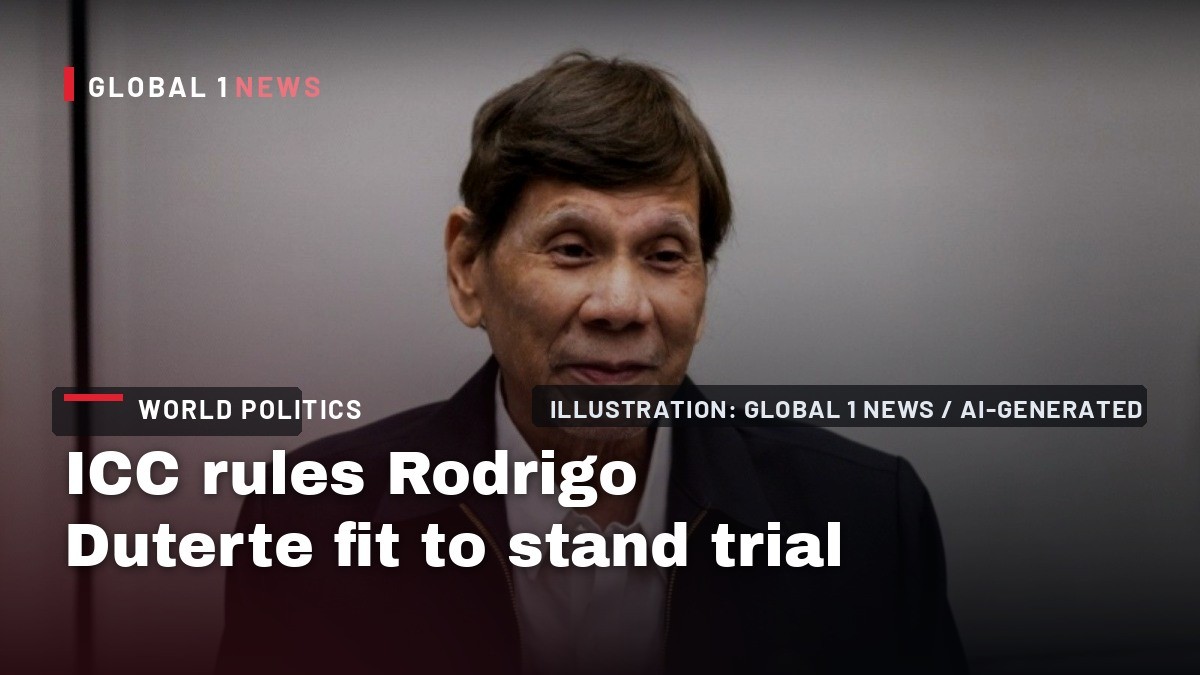
Manila – The International Criminal Court’s latest decision has confirmed that former President Rodrigo Duterte, now 81, is medically fit to face trial for crimes against humanity. The ICC’s Trial Chamber III concluded that despite his frailty, the former leader can comprehend the charges, the proceedings and the consequences of any plea, and can therefore exercise his fair‑trial rights. This ruling, issued on October 8, follows a series of medical assessments and a spirited defense that argued Duterte’s memory impairment barred him from a meaningful defense.
Medical panel’s findings and the chamber’s reasoning
The chamber’s decision rested on the reports of a three‑expert medical panel appointed in June and whose joint and individual findings were submitted on August 21. All three experts agreed that Duterte understood the nature of the accusations, the purpose of the trial and the evidence presented. They also affirmed his ability to instruct counsel in preparing his defense, a key factor in deeming him fit to stand trial.
While the panel noted that Duterte remains physically frail and requires ongoing medical and nursing care, they found no worsening of his mental state that would impede his participation. The chamber highlighted that the defense had not presented any evidence to contradict these conclusions, and therefore dismissed requests for further examinations or for questioning the experts.
Defense’s arguments and the court’s response
Duterte’s legal team argued that the former president suffers from “significant memory impairment,” claiming he cannot retain recent information or reliably access memories. They sought additional medical tests and the chance to interrogate the expert panel about their methodology and findings.
The ICC rejected these motions, emphasizing that the defense had not supplied any new evidence to undermine the panel’s assessment. The chamber’s statement underscored that without such contradictory proof, the experts’ conclusions stand, and Duterte’s fitness remains affirmed.
Accommodations for a frail defendant
Recognizing Duterte’s physical condition, the chamber ordered specific accommodations to ensure his comfort and ability to participate fully. These include the provision of over‑ear headphones or hearing aids, assistance with food, rest and exercise, and access to nursing staff during breaks for medication and care.
The ICC Registry will continuously monitor his health and report any changes promptly. Should his condition deteriorate, either party may request a reassessment of his fitness, ensuring the trial can adapt to his medical needs without compromising procedural fairness.
Procedural timeline and upcoming milestones
Duterte appeared in person before the ICC on September 16 during a status conference, after which the chamber ordered his continued detention, citing concerns that he might abscond, obstruct or endanger the investigation. The defense is slated to file its pre‑trial brief on October 30, a month before the trial’s scheduled commencement.
The chamber also indicated that sitting hours for the trial will be determined case‑by‑case, taking into account the specific circumstances of each hearing and the needs of witnesses, many of whom are expected to testify via video link from the Philippines.
The charges and their broader impact on Filipino communities
The ICC’s case against Duterte centers on three counts of crimes against humanity linked to alleged murders during his anti‑drug campaign from 2013 to 2018, a period that spans his tenure as Davao City mayor and later as president. Prosecutors allege involvement in at least 76 killings, a figure that sits within a larger context of thousands of deaths attributed to the campaign.
For barangays across the archipelago, the trial revives painful memories of families who lost loved ones to the so‑called “war on drugs.” Many sari‑sari store owners, OFWs, and ordinary Filipinos recall the climate of fear that pervaded neighborhoods, where sudden raids and night‑time raids left communities grieving and wary. The ICC’s proceedings thus carry a weight that extends beyond legal accountability, touching the collective conscience of a nation still grappling with the legacy of that era.
International and domestic reactions
The ruling has drawn attention from both global human‑rights advocates and local civil society groups. International observers note that the ICC’s affirmation of Duterte’s fitness underscores the court’s commitment to ensuring that even high‑profile defendants can face justice, regardless of age or health concerns.
Within the Philippines, reactions are mixed. Some sectors, particularly those aligned with the former president’s “law‑and‑order” narrative, view the decision as a political maneuver. Others, including members of the Commission on Elections and the Department of Health, stress the importance of a transparent process that respects both the rights of the accused and the victims’ demand for accountability.
What the trial means for democracy and the rule of law in the Philippines
At its core, the ICC’s determination that Duterte can stand trial reaffirms the principle that no one is above the law—a cornerstone of democratic governance. For a country where the Supreme Court, Congress and the Department of Justice have long wrestled with issues of impunity, the trial offers a tangible test of institutional resilience.
Should the proceedings move forward as scheduled, they will likely set precedents for how the Philippines handles future allegations of state‑sanctioned violence. Moreover, the trial’s visibility may empower local human‑rights defenders, who have long called for justice for the victims of the anti‑drug campaign. As the nation watches, the outcome could either strengthen faith in the rule of law or deepen divisions, depending on how transparently and fairly the process unfolds.
This article was produced with AI-assisted research and editorial support. Reporting is based on the source material cited below. Sources: Philstar.com; Global1.News (09 October 2026).
By Bella Reyes, Staff Writer
What's Your Reaction?
 Like
0
Like
0
 Dislike
0
Dislike
0
 Love
0
Love
0
 Funny
0
Funny
0
 Wow
0
Wow
0
 Sad
0
Sad
0
 Angry
0
Angry
0

Philippines/Southeast Asia Correspondent at Global1.News. Manila-based journalist covering Philippine politics, environment, maritime security, and social issues. Passionate about marine conservation and the communities protecting the Philippines' natural heritage.












Comments (0)