
Liga MX Ends Promotion and Relegation, Sparking Protests
Mexico's Liga MX has permanently scrapped promotion and relegation, sparking player protests, fan blackouts at Atlético Morelia, and a COFECE antitrust petition as clubs fight the closed-league model.
Liga MX Ends Promotion and Relegation, Sparking Protests
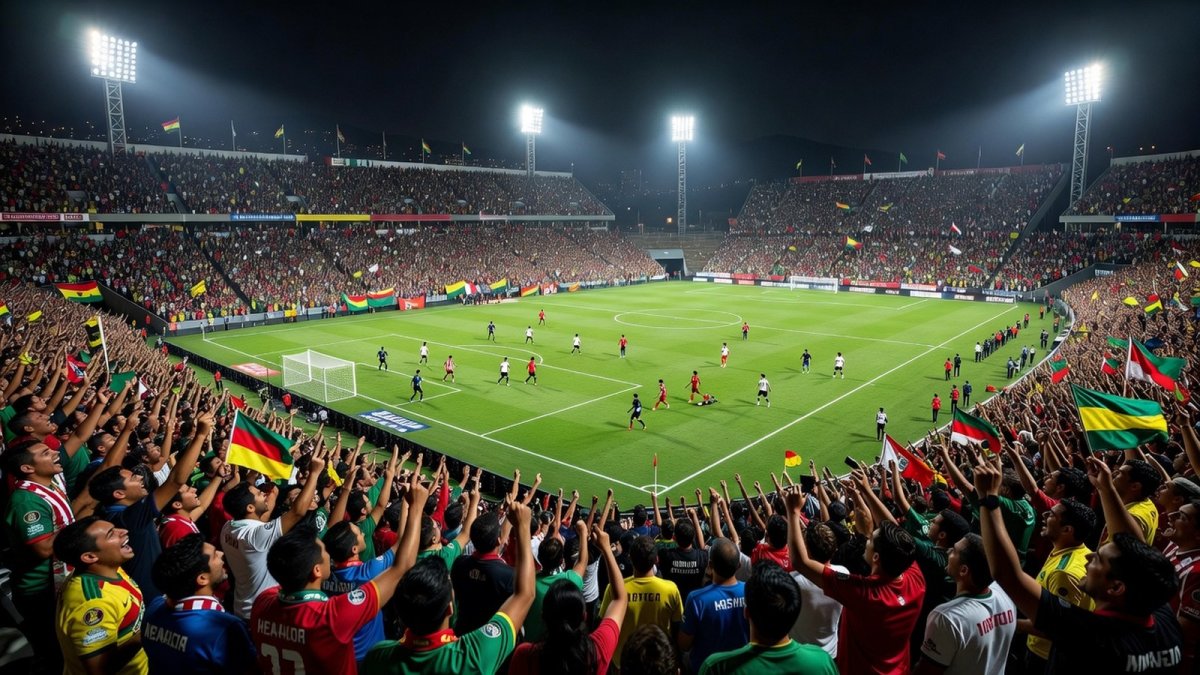
The opening kickoff of the Expansión MX season was meant to be a celebration of the second division’s future. Instead, it became a silent scream against the permanent closure of Mexican soccer’s most cherished pathway. In several matches, players refused to play for the first minute, passing the ball back and forth while their opponents stood still. In one match, a referee pleaded with players to resume, to no avail. The message was clear: the spirit of the game, known to Mexicans for over seven decades, is being buried.
The protest was a direct response to the Mexican Football Federation’s (FMF) July 16 announcement that it is doing away with promotion and relegation—known in Mexico as “ascenso y descenso”—permanently. For generations, this system allowed lesser-known teams from the second-tier Expansión MX to climb into the top flight of Liga MX. Now, the 18 clubs of Liga MX are set in stone, turning the league into a closed franchise model that mirrors Major League Soccer (MLS) in the United States.
For fans in the colonias and barrios, this is not just a bureaucratic rule change. It is the severing of a dream. The idea that a small club from a provincial city could fight its way to the top, earning the right to face the giants of Guadalajara or América, was a cornerstone of Mexican soccer culture. That hope, as footballer Diego de Buen Juárez posted on X, is now fading. "Without the chance to compete for a genuine sporting objective, many fans have stopped believing," he wrote. "And when that sense of hope vanishes, the bond connecting a city to its team is broken as well."
The Pitch Protests and the Threat of Fines
The players’ demonstration in the Expansión MX opener was a coordinated act of defiance: by refusing to engage for the first minute, they signaled that the afición’s concerns were their own. The response from the sport’s governing bodies was swift and punitive. The FMF and the Comisión Disciplinaria (Disciplinary Commission) threatened to fine teams more than US $11,000 for any further disruptions to the schedule.
Undeterred, players have found new ways to voice their opposition. During team photos, they have begun covering their mouths with their hands, a powerful visual metaphor indicating they will not be silenced by financial threats. Meanwhile, Atlético Morelia, a historic club, has asked its fans to wear black to games as a symbolic gesture of mourning for the loss of possible promotion. The image of a stadium draped in black — a funeral for a merit-based system — contrasts with the colorful porras that usually fill Mexican stands.
The tension has even reached the international stage. FMF President Mikel Arriola was met with a chorus of boos at the Concacaf U-20 final, where chants of “ascenso” echoed throughout the stadium. It is a rare public rebuke of a sitting federation president, underscoring the depth of anger that this decision has unleashed.
A History of Ascenso y Descenso: From 1930 to the 2020 Pause
To understand the magnitude of this change, one must look at the history. Promotion and relegation existed in the broader Mexican soccer system since the early 1930s. In 1950, a “Second Division” was created, and the “Liga Mayor” became the “Primera” or “First Division,” with one team promoted and one relegated each year. This system held firm for seven decades, keeping the sport dynamic and competitive.
The first major crack in this foundation appeared in April 2020. Amid the financial devastation of the Coronavirus pandemic, promotion and relegation were paused for Liga MX. Then-Liga MX President Enrique Bonilla justified the move by citing existential threats to clubs. “Given that the financial crisis expanded the problems for the division, several current projects (clubs) are close to bankruptcy and in danger of disappearing,” he said at the time. The pause, initially supported by FIFA, was supposed to last six seasons — with a stern warning.
FIFA urged Liga MX to bring the system back. In a 2020 interview, then-FMF President Yon de Luisa acknowledged this pressure, stating, "The comment that FIFA made to us is that promotion and relegation has to return." However, the promise of a return proved hollow. In February 2022, Liga MX released six certification requirements that Expansión MX teams needed to meet before they could be promoted. These included new infrastructure and stadium standards—field of play quality, lighting, suites, dressing rooms, and security. For many small-market clubs, these requirements were cost-prohibitive, effectively locking them out of the top flight.
The Legal Battle: CAS Ruling and the COFECE Petition
The certification requirements were seen by many as a deliberate obstacle. In July 2022, nine Expansión MX teams released a joint statement arguing that the "certification to ascend" was nothing more than a "legal simulation to disguise that there is no real commitment to return the promotion and relegation." They took their cause to the Court of Arbitration for Sport (CAS), accusing the league’s front office of turning the sport into a "business that favors only Liga MX clubs to the detriment of the entire national football ecosystem." They added, "The so-called certification process is not a quality filter... It is a padlock designed so that promotion to the First Division never opens."
In September 2025, the CAS handed down a ruling that denied the system’s return a year early, noting that “the FMF had always determined to suspend the system until the conclusion of the 2025-2026 season.” It was a procedural setback for the second-division clubs — and set the stage for the current crisis. When the suspension ended, the FMF did not restore the old rules; it modified its regulations to eliminate both mechanisms indefinitely, cementing the closed league structure.
Now, the fight has moved to the political and antitrust arena. According to Quadratín México, Movimiento Ciudadano (MC) is pushing a petition for the Comisión Federal de Competencia Económica (COFECE) to investigate the FMF and Liga MX. The request warns that Mexican football could operate as a closed circuit of 18 franchises, preventing Expansión clubs from reaching the top level by sporting merit. The petition asks whether the 18 franchises exercise substantial joint power and whether the measure represents a barrier to competition. It also alerts on labor market effects for players and technical staff, requesting an ex officio investigation for possible relative monopolistic practices or illicit concentrations. Meanwhile, Expansión clubs are again turning to CAS, with five institutions joining a new legal battle, and Atlético Morelia is reportedly challenging the FMF’s abolition in Mexican courts.
The Economic Shift: Fines, MLS Model, and the World Cup Cloud
The financial implications of this change are profound. Under the old system, the bottom three teams in Liga MX faced fines upwards of US $4 million for ranking last. That money was funneled down to Expansión MX, a vital lifeline for smaller clubs. Under the new system, those fines are no longer applicable, leaving Expansión MX teams with even fewer resources. This creates a vicious cycle: without the threat of relegation, Liga MX clubs have less incentive to spend, and without the parachute payments, second-division clubs are left to wither.
The new model more closely follows Major League Soccer in the United States, which focuses on commercial investments rather than sporting merit. MLS Commissioner Don Garber said in a July interview with Front Office Sports, "We proved that we can build the most valuable commercial market in the world (for soccer)." This philosophy is now being imported into Mexico, a country where soccer is not just a market but a religion. The shift away from the global tradition of promotion and relegation—used by the English Premier League, Spanish La Liga, German Bundesliga, Italian Serie A, and French Ligue 1—places Liga MX in a unique and isolated position.
The cloud over Liga MX contrasts sharply with the optimism of the 2026 World Cup, when El Tri brought hope to the country before a round of 16 defeat to England. FIFA President Gianni Infantino’s US $20 billion plan to sell the tournament’s commercial rights to private equity investors was scrapped after all 55 UEFA member associations threatened to boycott the 2030 World Cup and all 41 Concacaf member associations unanimously rejected it.
For the families in the stands every weekend, for the youth who dream of professional soccer, and for the small clubs from provincial cities, this decision represents a fundamental betrayal. The dream of ascenso is dead, and with it, a piece of the Mexican sporting identity. The protests, the black clothing, and the legal challenges are all cries against a system that has chosen the dollar over the dream.
Tags: Liga MX, ascenso y descenso, FMF, Expansión MX, Mikel Arriola, COFECE, Mexican soccer, promotion and relegation, Atlético Morelia, 2026 World Cup, El Tri, Comisión Disciplinaria, soccer protests, CAS, antitrust
This article was produced with AI-assisted research and editorial support. Sources: Mexico News Daily, Quadratín México.
By Rosa Martinez, Staff Writer
What's Your Reaction?
 Like
0
Like
0
 Dislike
0
Dislike
0
 Love
0
Love
0
 Funny
0
Funny
0
 Wow
0
Wow
0
 Sad
0
Sad
0
 Angry
0
Angry
0

Latin America/Andes Correspondent at Global1.News. Based in Bogota, covering politics, environment, energy, and social movements across the Andean region. Passionate about environmental journalism and communities protecting their land.













Comments (0)