
Morocco Stops Second Ceuta Mass Rush; Migrants in Crisis
In a recent DW News report, the world witnessed the latest chapter in the ongoing human drama at Europe's southern frontier: Moroccan authorities moved decisively to prevent a second mass rush into the Spanish exclave of Ceuta.
In a recent DW News report, the world witnessed the latest chapter in the ongoing human drama at Europe's southern frontier: Moroccan authorities moved decisively to prevent a second mass rush into the Spanish exclave of Ceuta. The crackdown, which resulted in the arrest of nearly 300 migrants, comes just two weeks after a catastrophic surge that left at least 90 people dead and exposed the brutal realities of a border policy that treats human beings as a security threat rather than a humanitarian challenge. For those of us in Mexico, where the border is not an abstraction but a daily reality for millions, the scenes from the Moroccan coast are painfully familiar-a mirror of the dynamics that play out along the Rio Grande, where poverty, misinformation, and the desperate hope for a better life collide with the machinery of state control.
Morocco Stops Second Mass Rush Into Ceuta as Migrants Demand Dignity
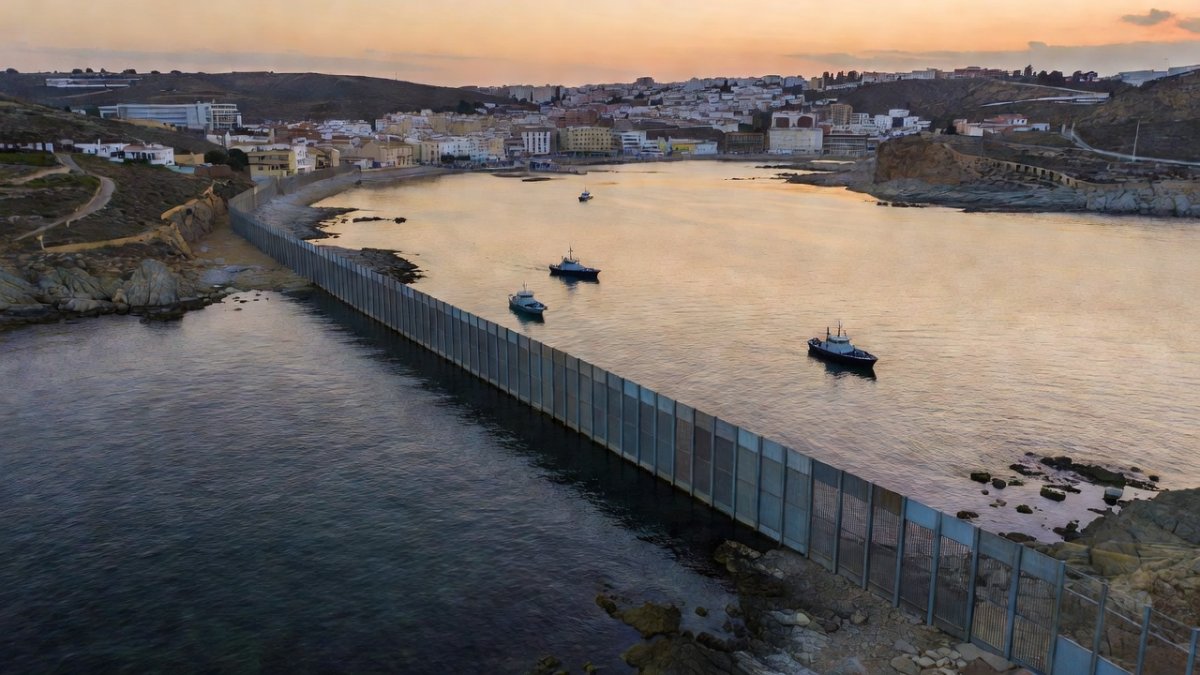
Ceuta, Spain - August 17, 2026 - The attempted crossing on Saturday was not a spontaneous event. It was the culmination of a coordinated social media campaign that called on migrants to converge on Ceuta on August 15, a date that had been circulating in online forums and messaging apps for weeks. Moroccan authorities, still reeling from the late July tragedy, responded with overwhelming force. According to Spain's public broadcaster RTVE, security forces established numerous checkpoints, deployed patrol boats to monitor the coastline, and stationed water cannons at the border itself. The message was clear: there would be no repeat of the chaos that saw tens of thousands of people breach the border fence in a single day.
The Numbers Behind the Crackdown
The scale of the interdiction effort is staggering. Morocco's state broadcaster, Medi 1 TV, reported that 294 migrants from sub-Saharan Africa were arrested on Saturday alone while attempting to enter Ceuta. In addition, Moroccan authorities detained 61 Moroccan nationals accused of facilitating the migration attempts-a clear signal that the state is targeting not just the migrants themselves but the networks that profit from their desperation. The arrests took place not only at the border itself but also in and around Fnideq, known in Spanish as Castillejos, a Moroccan city located about 20 kilometers from Ceuta that has become a staging ground for would-be crossers.
This is not merely a law enforcement operation; it is a statement of intent. Morocco has invested heavily in border security, and the numbers reflect that commitment. A senior Moroccan diplomat previously told The Associated Press that more than 20,000 Moroccan security personnel are deployed along the border with Ceuta each day, at a cost of hundreds of millions of dollars. This is a staggering expenditure for a country that struggles with its own economic challenges, yet it underscores the extent to which migration control has become a central pillar of Morocco's relationship with the European Union.
For the migrants themselves, the arithmetic is grim. The arrests on Saturday are just the latest in a series of setbacks for people who have traveled thousands of miles from countries like Senegal, Mali, and Sudan, fleeing conflict, poverty, and instability. They arrive in Morocco with hopes of reaching Europe, only to find themselves trapped in a legal and physical limbo, caught between a Moroccan state that views them as a problem to be managed and a Spanish state that refuses to grant them entry.
The Shadow of the July Tragedy
The attempted rush on Saturday cannot be understood without reference to the events of late July, when more than 72,000 would-be migrants surged toward Ceuta in what has been described as one of the deadliest migration crises to hit the region. At least 90 people died on both sides of the border, according to official numbers, though human rights groups have reported significantly higher figures. The crisis was driven by a toxic combination of poverty, misinformation, and human trafficking networks that exploited the desperation of vulnerable people.
Morocco has blamed the July surge on misinformation and trafficking networks, and there is truth to that claim. Social media posts calling for a mass crossing spread like wildfire, promising migrants that the border was open and that they would be welcomed in Spain. The reality was far different. The rush resulted in chaos, death, and a humanitarian catastrophe that left thousands of people stranded in Ceuta, a city of just 85,000 residents that was utterly overwhelmed by the influx.
The political fallout was immediate and severe. The crisis drove a wedge between Spain and other EU countries, with some member states accusing Madrid of being too lenient in its handling of the situation. Spain's Interior Minister Fernando Grande-Marlaska has been unequivocal in his response, stating earlier this week that migrants who entered irregularly would not be allowed to stay in the exclave, travel to mainland Spain, or obtain legal status, except in rare cases involving extreme vulnerability. This hardline stance reflects the broader shift in European migration policy toward deterrence and containment, a shift that has profound implications for human rights.
Life on Trampolín Beach
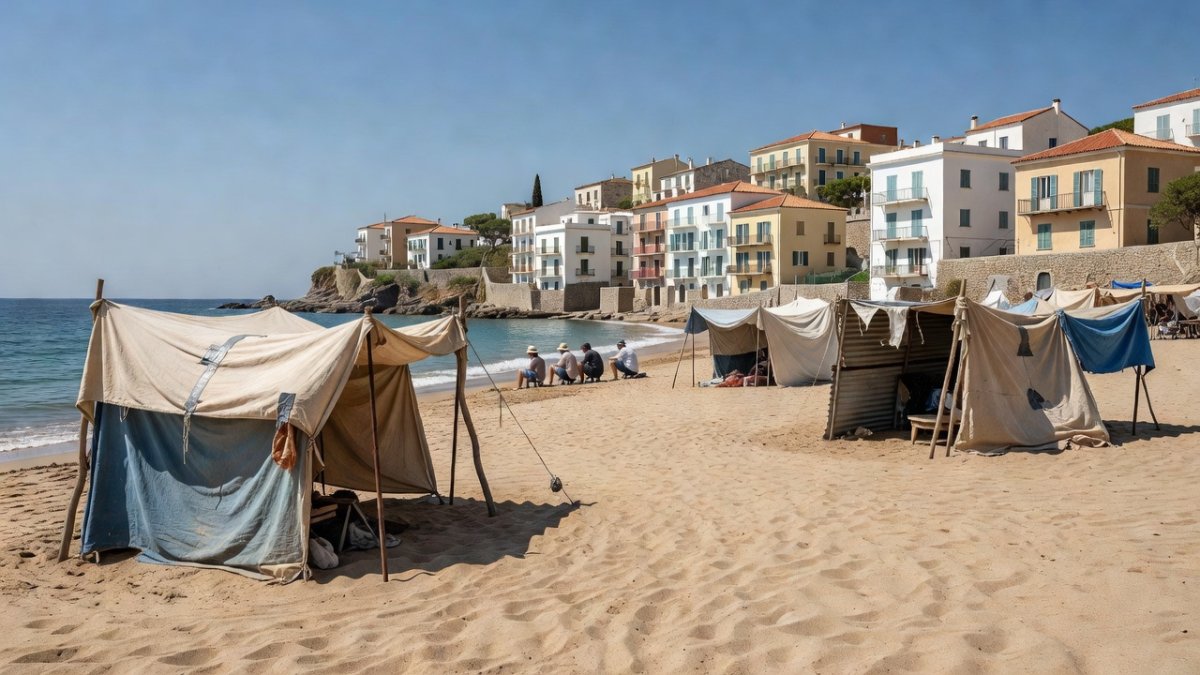
For the estimated 5,000 to 8,000 migrants who remain in Ceuta after the July surge, the situation is dire. With the city's resources overstretched, most are living in precarious conditions on Trampolín beach or on the city's outskirts, awaiting a chance to journey on to continental Europe. They are, in effect, prisoners of a geopolitical standoff, unable to go forward into Spain and unwilling to go back to Morocco.
On Sunday, hundreds of these migrants staged a protest on a popular urban beach, urging Spanish authorities to grant them asylum instead of sending them back to Morocco. The protesters held up Spanish flags and banners reading "We don't want to go back to Morocco" and "We are also human," while chanting slogans such as "We're tired" and "We need a solution." The images are haunting-people who have survived unimaginable hardship, reduced to begging for basic recognition of their humanity.
Ayoub Elarroud, a migrant from Morocco's Tetouan, spoke to Reuters about the conditions. "We're sleeping next to the sea, with cold and bad smells. We're suffering a lot," he said, adding that police were blocking them from going to the city center. His words capture the essence of the crisis: these are not faceless statistics but human beings enduring conditions that most of us cannot imagine. The fact that Elarroud is Moroccan himself is a reminder that this is not simply a sub-Saharan African issue-it is a regional crisis that affects people from across the continent and beyond.
The Silencing of the Press
One of the most troubling developments in the wake of the attempted crossing has been the treatment of journalists covering the story. Reporters from Spain's EFE news agency and RTVE were ordered by a Moroccan Interior Ministry representative to leave Fnideq immediately, without any explanation. The expulsion is a direct assault on press freedom and the public's right to know what is happening at the border.
The response from media leaders has been swift and forceful. EFE president Miguel Angel Oliver urged Moroccan authorities to respect the free, "responsible and rigorous practice of journalism." RTVE president Jose Pablo Lopez went further, stating that "The expulsion of our professionals from Castillejos represents a grave obstacle to press freedom and the right to information." These are not empty words. In an era of misinformation and propaganda, independent journalism is more important than ever. When governments expel reporters, they are not just silencing critics-they are erasing the evidence of what is happening on the ground.
For those of us in Mexico, the parallels are unmistakable. Mexican journalists covering migration along the northern and southern borders have faced similar pressures, from both state and non-state actors. The killing of journalists in Mexico is a chronic problem, and the impunity that surrounds these crimes sends a chilling message to those who seek to document the truth. The situation in Morocco is different in its specifics but similar in its essence: the state is using its power to control the narrative, and the first casualty is the truth.
A Global Story with Latin American Resonance
The crisis in Ceuta is not an isolated event. It is part of a global pattern of migration driven by inequality, conflict, and climate change, and it resonates deeply with the experiences of Latin American readers. In Mexico and Central America, we see the same dynamics at play: border enforcement that criminalizes poverty, misinformation that exploits desperation, and human smuggling networks that profit from suffering.
Consider the situation in the Darién Gap, the treacherous jungle region between Colombia and Panama that has become a corridor for migrants from Haiti, Venezuela, and beyond. Thousands of people risk their lives crossing this dangerous terrain, driven by the same hopes and fears that propel migrants toward Ceuta. Or consider the U.S.-Mexico border, where policies like Title 42 and the Remain in Mexico program have created a humanitarian crisis that mirrors the one unfolding in Ceuta. The faces are different, but the stories are the same: people fleeing violence and poverty, seeking safety and opportunity, and being met with walls, detention, and deportation.
The response of the international community to these crises has been woefully inadequate. In Europe, the focus has been on securing borders rather than addressing root causes. In the United States, the debate has been poisoned by xenophobia and political opportunism. And in Mexico, we are caught in the middle, serving as both a transit country and a buffer zone for the United States, just as Morocco serves as a buffer for Europe. This is not a sustainable approach. It treats human beings as problems to be managed rather than people with rights and dignity.
The Need for a Humanitarian Approach
The events in Ceuta over the past two weeks should serve as a wake-up call. The current approach to migration-based on deterrence, containment, and criminalization-is not working. It is costing billions of dollars, destroying lives, and eroding the very values that democratic societies claim to uphold. What is needed is a fundamental shift toward a humanitarian approach that prioritizes the rights and dignity of migrants.
This means creating legal pathways for migration, so that people do not have to risk their lives in desperate attempts to cross borders. It means investing in the root causes of migration-poverty, conflict, and climate change-rather than simply building walls and deploying security forces. And it means treating migrants as human beings, not as threats, and ensuring that they have access to asylum, legal representation, and basic services.
The protesters on Trampolín beach made a simple but powerful demand: "We are also human." It is a demand that should resonate with all of us, regardless of where we live or what our politics are. The migrants in Ceuta are not asking for special treatment; they are asking for basic recognition of their humanity. They are asking for a chance to live with dignity, to work, to support their families, and to contribute to their communities. These are aspirations that we all share, and denying them to others is a betrayal of our common humanity.
As the sun sets on another day in Ceuta, the migrants on Trampolín beach will sleep under the stars, cold and hungry, uncertain of what tomorrow will bring. The security forces will continue their patrols, and the politicians will continue their posturing. But the question remains: how many more tragedies must we witness before we decide that the current approach is unacceptable? How many more people must die before we recognize that borders cannot contain hope, and walls cannot stop the human spirit?
The story of Ceuta is not just a story about Africa or Europe. It is a story about all of us, and it demands a response that reflects our shared values of compassion, justice, and solidarity. For the sake of the migrants on Trampolín beach, and for the sake of our own humanity, we must do better.
By Rosa Martinez, Staff Writer
This article was produced with AI-assisted research and editorial support. Reporting is based on sources cited in the article.
What's Your Reaction?
 Like
0
Like
0
 Dislike
0
Dislike
0
 Love
0
Love
0
 Funny
0
Funny
0
 Wow
0
Wow
0
 Sad
0
Sad
0
 Angry
0
Angry
0

Latin America/Andes Correspondent at Global1.News. Based in Bogota, covering politics, environment, energy, and social movements across the Andean region. Passionate about environmental journalism and communities protecting their land.














Comments (0)