
Lee’s Peace Gambit: Seoul’s Bold Bid to End a 73-Year War and Reshape the Peninsula
South Korean President Lee Jae Myung has thrown down a diplomatic gauntlet, proposing formal talks with Pyongyang to officially conclude the Korean War, a conflict that has remained technically active for over seven decades. In a Liberation Day address, Lee called for the two Koreas to act as "directly involved parties" to replace the fragile 1953 Armistice Agreement with a permanent peace treaty.
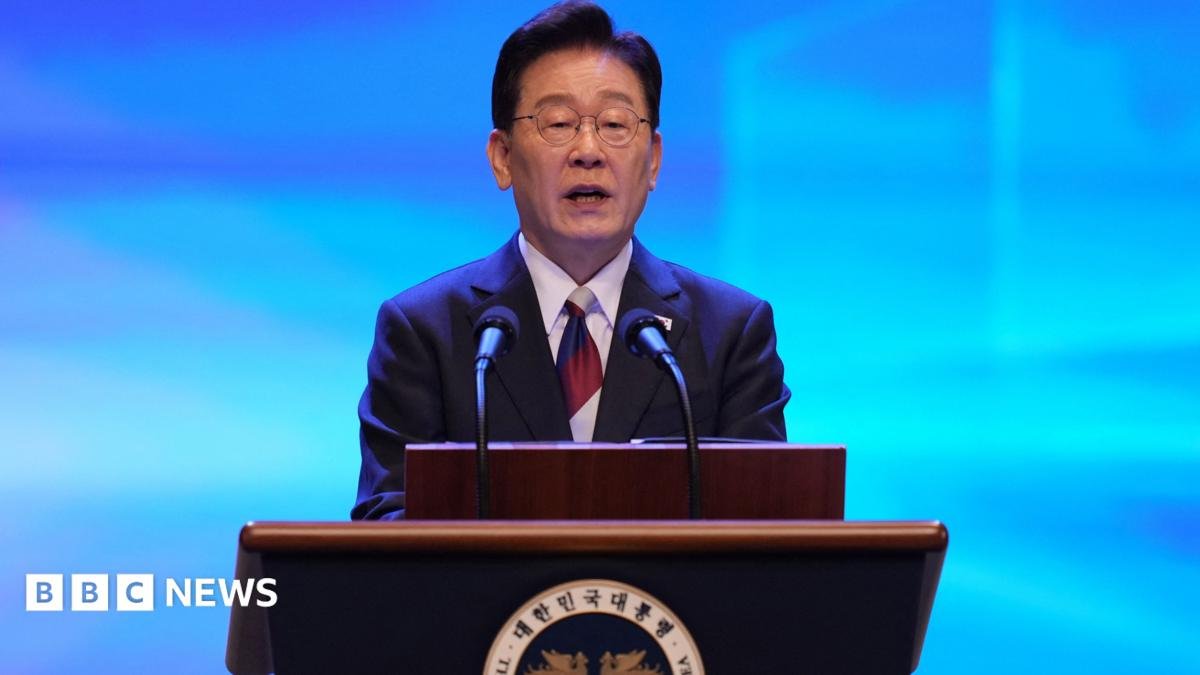
Lee’s Peace Gambit: Seoul’s Bold Bid to End a 73-Year War and Reshape the Peninsula
The Frozen Conflict: A Technical War Since 1953
The Korean Peninsula has existed in a state of suspended animation since the signing of the Armistice Agreement on July 27, 1953. That document, signed by North Korea, China, and the United Nations Command, effectively halted the active fighting of the Korean War but did not constitute a formal peace treaty. Consequently, the two Koreas have remained in a state of war for 73 years, a legal anomaly with profound strategic implications. The DMZ, a 250-kilometre-long, 4-kilometre-wide buffer zone, has served as the world’s most heavily fortified border, punctuated by sporadic clashes, naval skirmishes, and psychological warfare campaigns, including the recent exchange of balloons carrying rubbish and propaganda. President Lee’s proposal is not merely a symbolic gesture. It is a calculated attempt to break a diplomatic logjam that has persisted since the armistice. By invoking the status of "directly involved parties," Lee is signalling Seoul’s willingness to take the lead in a process that has historically been dominated by the United States and China. This framing is critical: it asserts South Korea’s agency in determining its own security destiny, a theme that resonates deeply with Lee’s political base and his broader foreign policy doctrine of "peaceful coexistence."Lee Jae Myung’s Diplomatic Pivot: From Confrontation to Engagement
Lee’s overture marks a stark departure from the policies of his predecessor, Yoon Suk Yeol, who was impeached last year following an ill-fated attempt to declare martial law. Yoon’s tenure was characterised by a hardline stance towards Pyongyang, closer trilateral security cooperation with Washington and Tokyo, and a corresponding deterioration in Seoul-Beijing relations. Lee, who assumed office in the aftermath of that political crisis, has sought to reverse this trajectory, advocating for a more conciliatory approach towards the North and a recalibration of ties with China. In his Liberation Day speech, Lee articulated a vision of "peaceful coexistence and mutual growth," explicitly calling for the two nations to "sit face-to-face." He proposed that such a forum could serve as a platform to discuss "effective ways to halt the advancement of the North's nuclear capabilities." This represents a nuanced shift from the previous administration’s insistence on complete, verifiable, and irreversible denuclearisation (CVID) as a precondition for dialogue. Lee’s framing suggests a more phased, transactional approach, potentially offering security guarantees and economic incentives in exchange for incremental steps towards denuclearisation.The Nuclear Conundrum: A Sticking Point or a Starting Point?
The most contentious element of any peace process will undoubtedly be North Korea’s nuclear arsenal. Pyongyang declared itself a nuclear power in 2022 and has since vowed never to relinquish its weapons, which are estimated to number in the dozens. Lee has previously stated that the North is producing 15 to 20 additional warheads annually, a rate that underscores the urgency of diplomatic engagement. In a previous interview with the BBC, Lee expressed support for a potential deal between former US President Donald Trump and Kim Jong Un to freeze production, indicating a pragmatic willingness to accept a nuclear-armed North in the short term in exchange for a cessation of weapons development. However, Pyongyang’s recent behaviour suggests a reluctance to engage. The North Korean state news agency reported that Kim marked the country’s own Liberation Day commemorations with a wreath-laying ceremony and a guard of honour, making no mention of Lee’s proposal. Furthermore, North Korea fired a ballistic missile into the sea on Tuesday, the 11th suspected test this year, just days before a scheduled US-South Korean joint military exercise. This pattern of provocation followed by silence indicates that Kim may be calculating whether engagement with Seoul serves his strategic interests, or whether continued missile tests offer greater leverage.Beijing’s Strategic Calculus: The Armistice and the Buffer
For China, the Korean Peninsula is not merely a diplomatic issue; it is a core national security interest. As a signatory to the 1953 Armistice Agreement and Pyongyang’s principal diplomatic and economic patron, Beijing holds a unique position in any peace process. A formal peace treaty would fundamentally alter the legal and strategic architecture of the region. For decades, the armistice has provided a legal basis for the US military presence in South Korea, including the 28,500 troops stationed there. A peace treaty could potentially be used to challenge that presence, a goal that aligns with both Chinese and North Korean interests. Beijing’s calculus is complex. On one hand, a stable, peaceful peninsula would reduce the risk of a conflict that could draw China in, potentially against the United States. On the other hand, a unified Korea, or even a significantly more cooperative inter-Korean relationship, could erode China’s strategic buffer. A North Korea that is less dependent on Beijing for survival might pursue a more independent foreign policy, potentially aligning more closely with Seoul or even Washington. Therefore, China is likely to support a peace process that maintains the status quo of a divided peninsula, while seeking to diminish US influence and ensure that any agreement does not undermine its own security interests.The US Factor: Trump’s Legacy and the Alliance System
The United States remains the indispensable actor in any Korean peace process, despite Lee’s emphasis on the two Koreas as the "directly involved parties." The US-South Korea alliance, underpinned by a mutual defence treaty and the presence of American forces, is the cornerstone of regional security. The recent agreement for the US to build South Korea a fleet of nuclear-powered submarines, which Pyongyang has vociferously criticised, further complicates the picture. Any peace treaty would need to address the status of these forces and the future of the alliance, a prospect that generates significant anxiety in Tokyo and other regional capitals. Donald Trump, who is the only Western leader to have met Kim Jong Un, remains a wildcard. During his first term, Trump engaged in a historic but ultimately unsuccessful summitry with Kim, marked by dramatic meetings in Singapore and Hanoi. Since returning to the White House, Trump has focused on other regions, but he stated last August that he hoped to meet Kim again when "appropriate." A potential Trump-Kim summit could either complement or undermine Lee’s initiative. If Trump were to cut a deal with Kim that bypasses Seoul, it would be a profound humiliation for Lee. Conversely, if Trump supports Lee’s framework, it could provide the necessary US backing to make a peace treaty viable.Regional Ripples: Japan, the Alliance System, and the Security Architecture
The implications of a Korean peace process extend far beyond the peninsula. Japan, which has a fraught historical relationship with Korea and a deep-seated distrust of Pyongyang, views any US disengagement from the region with alarm. Tokyo has already expressed concerns about the US-South Korea submarine deal, fearing that it could provoke North Korea and destabilise the region. A formal peace treaty that leads to a reduction of US forces in South Korea would be a strategic nightmare for Japan, potentially forcing it to shoulder a greater burden for its own defence and accelerating its own military build-up. The broader regional security architecture, which has been built around the US-led "hub-and-spokes" alliance system, would also be tested. A peace treaty could create a new dynamic, potentially leading to a multilateral security framework that includes China, Russia, and possibly even North Korea. Lee’s mention of a "multi-layered security system" hints at such a possibility, suggesting a move away from the binary Cold War structure towards a more complex, multi-polar arrangement. This would be a significant victory for Beijing, which has long advocated for a "new security concept" in Asia that excludes US hegemony.Prospects and Pitfalls: A Long Road Ahead
The immediate prospects for Lee’s proposal are uncertain. Pyongyang’s silence, coupled with its continued missile tests, suggests that Kim Jong Un is not yet ready to commit to a formal peace process. The North Korean leader’s January 2024 declaration that unification with the South is "no longer possible" and his call to amend the constitution to designate South Korea as a "primary foe" represent a significant ideological shift. Kim’s focus appears to be on consolidating his regime’s internal control and advancing its nuclear deterrent, rather than pursuing inter-Korean reconciliation. However, the very fact that Lee has made this offer is significant. It signals a willingness to take risks for peace, a departure from the cautious, reactive policies of his predecessors. It also provides a potential off-ramp for Kim, who may eventually see the benefits of a peace treaty in terms of sanctions relief and economic development. The road to a formal end to the Korean War will be long and fraught with setbacks. But for the first time in years, there is a concrete, official proposal on the table. The question now is whether Pyongyang, and its patrons in Beijing, are willing to pick it up. By Prof. Marcus Chen, Staff WriterThis article was produced with AI-assisted research and editorial support. Sources: BBC News.
What's Your Reaction?
 Like
0
Like
0
 Dislike
0
Dislike
0
 Love
0
Love
0
 Funny
0
Funny
0
 Wow
0
Wow
0
 Sad
0
Sad
0
 Angry
0
Angry
0
Marcus Chen
World Politics Analyst at Global1.News. Based in Beijing, covering US-China relations, global trade, and geopolitical strategy. Brings deep analytical perspective to the power dynamics shaping international affairs.













Comments (0)