
Lee Jae-myung’s 11-Day Diplomatic Marathon: AI Supply Chains and South American Minerals
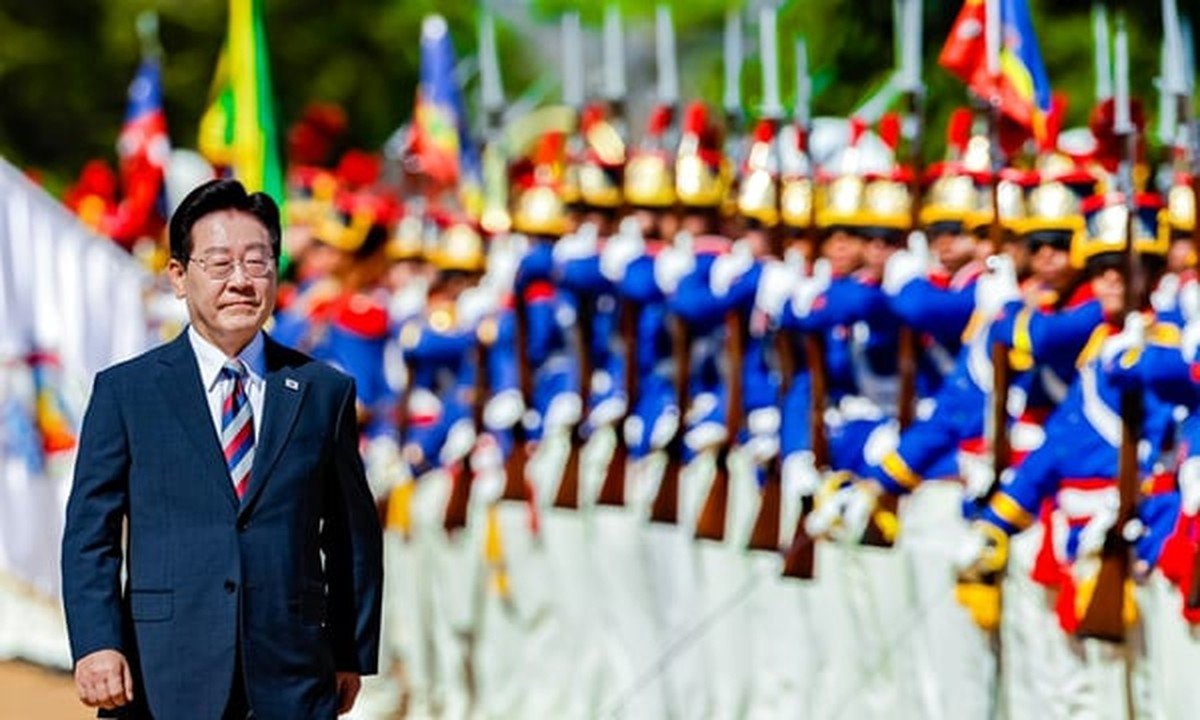
South Korean President Lee Jae-myung is nearing the end of the longest overseas trip of his 14-month presidency, an 11-day itinerary that has carried him from Silicon Valley’s technology corridor to the mineral-rich economies of South America.
A Presidency Defined by Outward Reach
South Korean President Lee Jae-myung is nearing the end of the longest overseas trip of his 14-month presidency, an 11-day itinerary that has carried him from Silicon Valley’s technology corridor to the mineral-rich economies of South America. Having taken office in June 2025, Lee opened the tour with investment pledges from four of the world’s leading artificial-intelligence companies before flying onward to Brazil and Chile, where he secured trade and critical-mineral commitments. The itinerary next took him to Buenos Aires for a summit with Argentine President Javier Milei, with a final stop scheduled in Frankfurt, Germany, before his return to Seoul on August 3.
The Latin American leg marked Lee’s first tour of the region and was framed by the Presidential Blue House as part of a broader “Global South diplomacy” push central to diversifying South Korea’s trade and diplomatic ties beyond the traditional anchors of the United States, China, and Japan. Brazil, Chile, and Argentina together form a market of some 280 million people with a combined GDP of $3.7 trillion—roughly the size of the world’s seventh-largest economy, according to Seoul.
Historically, South Korean presidential travel to South America has been infrequent. Lee’s state visit to Brazil was the first by a Korean leader since Park Geun-hye’s in 2015; his stop in Chile was likewise the first since Park’s South America tour eleven years earlier; and the Argentina bilateral was the first in twenty-two years. Seoul is attempting to convert episodic diplomacy into durable institutional ties at a moment when global supply chains for semiconductors and critical minerals are being reordered.
Silicon Valley: Anchoring the AI Megaprojects
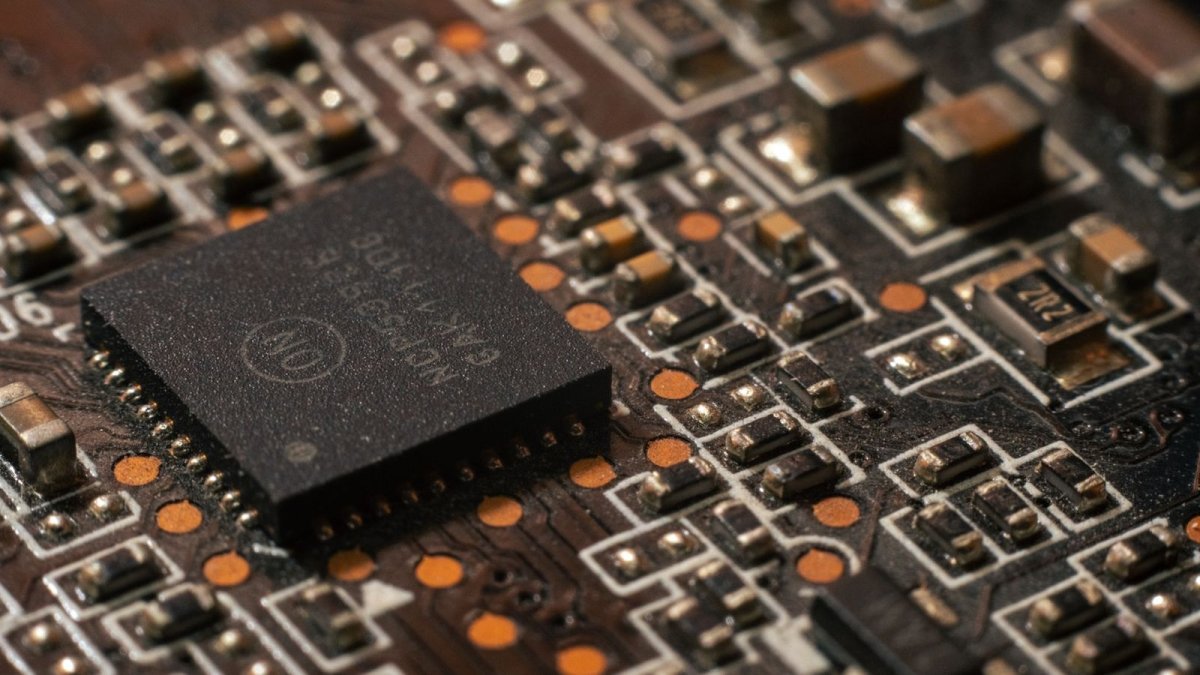
The tour began on July 24 with separate meetings in San Francisco with Anthropic CEO Dario Amodei, OpenAI CEO Sam Altman, Nvidia CEO Jensen Huang, and Broadcom President and CEO Hock Tan. Kim Yong-beom, policy chief for President Lee, stated that the meetings were intended to advance South Korea’s three flagship megaprojects—a government investment push spanning semiconductors, AI data centers, and physical AI announced earlier in the administration. Speaking at the San Francisco AI Summit on July 25, Lee outlined plans for South Korea to serve as a stable supply base for AI infrastructure even amid a global chip shortage, unveiling the “San Francisco Declaration on AI” and pledging that the country “will become a trusted production base and supply-chain partner for AI chips.”
South Korean and U.S. companies translated the summit into deals worth a combined $950 billion over five years. The headline arrangement was a five-year, $200 billion agreement between Samsung Electronics and Broadcom for the supply of advanced memory chips used in AI accelerators; the Korea Herald reported that Samsung and SK Hynix together disclosed the partnerships, valued at approximately 1,375 trillion won. Lee also met representatives of six Silicon Valley venture-capital firms at an investment meetup on July 25, while the National Pension Service separately signed an MOU with global venture-capital firms to build channels into Silicon Valley startups.
These outcomes sit squarely within the chaebol-centered industrial model that has defined South Korea’s postwar development. Samsung and SK Hynix remain the indispensable vehicles through which Seoul projects technological capacity abroad. By positioning the country as a reliable node in AI hardware supply chains, the Lee administration is attempting to convert existing manufacturing strength into geopolitical leverage.
Brazil: Strategic Partnership and the Mercosur Question
Lee arrived in Brazil on July 26 for a state visit at the invitation of President Luiz Inácio Lula da Silva. It was their fifth meeting and the first state visit by a Korean leader to Brazil since 2015. At a summit on July 27 at the Alvorada Palace, the two sides adopted a joint statement declaring 2026 the founding year of an upgraded strategic partnership and signed seven memorandums of understanding spanning industrial technology, space, energy, sports, education, film, and cybersecurity. Critically, they agreed to form a joint working group aiming to resume long-stalled negotiations on a Korea-Mercosur trade agreement, with a target of restarting talks by December.
Brazil and Argentina anchor Mercosur, the South American trade bloc that also includes Paraguay and Uruguay, with Bolivia as a member alongside several associate members. The Lee administration has spent years trying to negotiate a trade agreement with the bloc. Brazil holds the world’s second-largest reserves of rare earth elements, at roughly 21 million tons, and that resource endowment emerged as a central focus of the tour. For Seoul, access to Brazilian rare earths offers a potential hedge against concentration risk in existing supply routes, a concern that has grown more acute as advanced manufacturing and defense applications increase demand for these materials.
The decision to elevate the relationship to an upgraded strategic partnership, and to set a concrete target for restarting Mercosur talks, reflects a recognition that piecemeal commercial diplomacy is insufficient. A successful agreement would give Korean exporters preferential access to a combined market whose scale Seoul has explicitly compared to a top-tier global economy. Whether the December target for resumed negotiations can be met will depend on technical work still ahead, but the political signal from both capitals is clear.
Chile: Modernizing a Legacy Free-Trade Relationship
On July 29 Lee arrived in Santiago—the first South Korean president to visit Chile since Park Geun-hye’s tour eleven years earlier. At a joint news conference on July 30 with Chilean President Jose Antonio Kast, the two sides agreed to revive the South Korea-Chile Free Trade Commission for the first time in a decade and to modernize the free-trade agreement that took effect in 2004. Lee stated that the two governments had agreed to expand trade and investment ties in pursuit of shared growth. They signed five memorandums of understanding on critical minerals and fighting transnational crime, including a partnership that elevates a joint minerals committee to ministerial level to help secure copper and lithium supplies worth roughly $2.1 billion a year.
The 2004 Korea-Chile FTA was an early marker of Seoul’s effort to diversify trade partners beyond Northeast Asia. Reviving the Free Trade Commission after a ten-year hiatus and placing minerals cooperation at ministerial level indicates that both governments now see the relationship through a more strategic lens. Copper and lithium are foundational to electric-vehicle batteries and advanced electronics—sectors in which Korean chaebol maintain significant global positions.
Argentina and the Closing Phase
Lee met Argentina’s Javier Milei on July 31 at the Casa Rosada presidential palace, following a wreath-laying at Plaza San Martín, in the first bilateral trip by a Korean president to Argentina in twenty-two years. Seoul stated ahead of the meeting that it was expected to build a supply-chain partnership around lithium—Argentina holds the world’s fourth-largest reserves—along with energy and food-security cooperation. According to chief presidential spokesperson Kang Yu-jung, talks also covered potential resumption of negotiations on a trade agreement between South Korea and Mercosur. Yonhap reported that the summit discussed cooperation in critical-mineral supply chains and other areas, with Milei welcoming Lee at the Casa Rosada before the formal session.
Argentina served as the final stop in the three-nation South America tour, which the Korea Times described as aimed at enhancing trade and business cooperation. Lee also met members of the Korean community in Buenos Aires; First Lady Kim Hea Kyung accompanied the president. He was scheduled to close the overall trip with a meeting with the Korean community in Frankfurt on August 2 before returning home on August 3.
Strategic Implications for Korean Foreign Economic Policy
Taken as a whole, the eleven-day itinerary links two of the central vulnerabilities in South Korea’s economic model: dependence on advanced semiconductor demand concentrated in a handful of U.S. technology firms, and dependence on critical-mineral supply chains that remain geographically narrow. By securing headline AI-related partnerships valued at $950 billion over five years while simultaneously opening ministerial-level minerals channels with Chile, highlighting Brazil’s rare-earth reserves, and pursuing lithium cooperation with Argentina, the Lee administration is attempting to address both ends of the value chain in a single diplomatic arc.
The “Global South diplomacy” framing supplied by the Blue House situates these moves within a longer effort to reduce over-reliance on the United States, China, and Japan. That effort does not imply distancing from traditional allies; the Silicon Valley leg was, after all, conducted on U.S. soil with U.S. corporate counterparts. Rather, it reflects a hedging logic familiar to students of Korean foreign policy: expand the set of meaningful economic relationships so that shocks in any single theater become more manageable.
Implementation timelines remain cautious. Memorandums of understanding and joint working groups are instruments of intent, not finished treaties. The $950 billion in semiconductor partnerships will be phased in over five years, and the minerals committees and modernized FTA provisions will require follow-on technical work. Yet the political investment is unmistakable. For a presidency only fourteen months old, an eleven-day journey spanning AI boardrooms and South American capitals signals that diversification is no longer a residual category of Korean statecraft but a central organizing principle.
By Prof. David Park, Staff Writer
This article was produced with AI-assisted research and editorial support. Reporting is based on sources cited in the article.
What's Your Reaction?
 Like
0
Like
0
 Dislike
0
Dislike
0
 Love
0
Love
0
 Funny
0
Funny
0
 Wow
0
Wow
0
 Sad
0
Sad
0
 Angry
0
Angry
0
East Asia/Technology Correspondent at Global1.News. Seoul-based voice covering Korean politics, technology, business, and culture. Analyzes how technology and geopolitics intersect across East Asia.









Comments (0)