
Lebanese Exile in Israel Calls for Dignified Return as Beirut Passes Historic Amnesty Law
In a recent i24NEWS English report titled "'I was 5 years old when we were exiled,'" Maryam Younes, a Lebanese woman living in Israel, shares her childhood memories of Lebanon and her enduring dream of peace between Jerusalem and Beirut.
In a recent i24NEWS English report titled "'I was 5 years old when we were exiled,'" Maryam Younes, a Lebanese woman living in Israel, shares her childhood memories of Lebanon and her enduring dream of peace between Jerusalem and Beirut. Her personal story arrives at a pivotal moment, as Lebanon's Parliament in Beirut approved its first general amnesty law since 1991, a move that reignites a decades-old debate over the fate of thousands of Lebanese who fled to Israel after the IDF's withdrawal from south Lebanon in May 2000. The video report, published on August 16, 2026, frames Younes's exile not merely as a personal tragedy but as a lens through which to examine the fragile truce and the unresolved legal status of an entire community caught between two states.
Lebanese Exile in Israel Calls for Dignified Return as Beirut Passes Historic Amnesty Law
Jerusalem, Israel – August 2026 — Maryam Younes was five years old when her family was forced out of Lebanon, a memory she carries with her daily in her home in Israel. In an exclusive interview with This Is Beirut published on August 13, 2026, Younes reacted to Lebanon's newly adopted amnesty law with a mixture of hope and caution, arguing that her community should not be collectively treated as criminals. "Many families still lack guarantees for a safe and dignified return," she told the outlet, calling on the Lebanese state to issue a national apology and to clarify the future of former South Lebanon Army (SLA) members who remain in exile.

Lebanon's General Amnesty: Scope and Exclusions
Lebanon's Parliament approved the general amnesty law on Wednesday, August 12, 2026, marking the first such sweeping pardon since 1991, when the country emerged from the 1975-1990 Civil War. The legislation follows years of public debate over prison overcrowding and the slow pace of judicial proceedings, which have left thousands of detainees awaiting trial for extended periods. The law broadly covers offenses committed before March 2026, but it explicitly excludes serious crimes including murder, terrorism against civilians, attacks on Lebanese soldiers or security forces, crimes involving public funds, corruption, illicit enrichment, and financial or banking offenses.
Critically for Younes and her community, the amnesty does not extend to treason, espionage, or illicit relations with Israel. The law's text, reviewed by Global1.News, states that these offenses remain outside the scope of the general pardon, a provision that reflects the deep political sensitivity surrounding any contact with the Jewish state. The exclusion means that Lebanese citizens who crossed into Israel in 2000 or later, or who maintained ties with Israeli institutions, still face potential prosecution under Lebanese law if they return.
Sentence Reductions and Prison Reform
Beyond the pardon itself, the law introduces a key provision that reduces sentences for individuals condemned to death or life imprisonment to 17 prison years. In Lebanon, a prison year is generally calculated as nine months, meaning this corresponds to 12 years and 9 months of actual imprisonment. Parliament also lowered from 14 to 12 prison years the period after which certain detainees may be released if no judgment has been issued, a measure aimed at alleviating the chronic backlog in Lebanese courts.
The reform comes against a backdrop of severe prison overcrowding. Lebanon's National Human Rights Commission reported in 2025 that the country's prisons had reached approximately 300% of their intended capacity, with prison authorities recording at least 6,268 inmates by the end of March 2025. Human rights organizations in Beirut have long pressed for amnesty legislation as a partial remedy, though critics note that the exclusions for financial crimes and terrorism-related offenses limit the law's impact on the most crowded facilities.
The SLA Question: A Political Minefield
The question of former SLA members and their families who fled to Israel is among the most politically sensitive issues in the amnesty negotiations. Thousands left southern Lebanon in May 2000 following Israel's withdrawal, including members of the Israeli-backed militia and their relatives. For over two decades, their possible return has remained legally and politically contentious, with successive Lebanese governments avoiding a clear stance.
Lebanese MP Ghada Ayoub told Lebanon's Aljadeed TV that Lebanese citizens who sought refuge in Israel but did not participate in any military actions have the right to return under the General Amnesty Law. Her statement aligns with interpretations offered by some Christian politicians, who have said the amnesty allows Lebanese who fled to Israel in 2000 to return — but not those who fought alongside the Israelis. This distinction, however, is not explicitly written into the law, leaving room for judicial interpretation and potential legal challenges.
Younes, for her part, rejects the collective criminalization of her community. In her interview with This Is Beirut, she emphasized that many families, including hers, were civilians who left under duress, not combatants. She called for a national apology from the Lebanese state, arguing that acknowledgment of past wrongs is a prerequisite for any meaningful reconciliation. Her vision extends beyond individual return: she dreams of a peaceful Lebanon where the Lebanese state and army hold exclusive authority, a statement that implicitly critiques the continued armed presence of Hezbollah in the south.
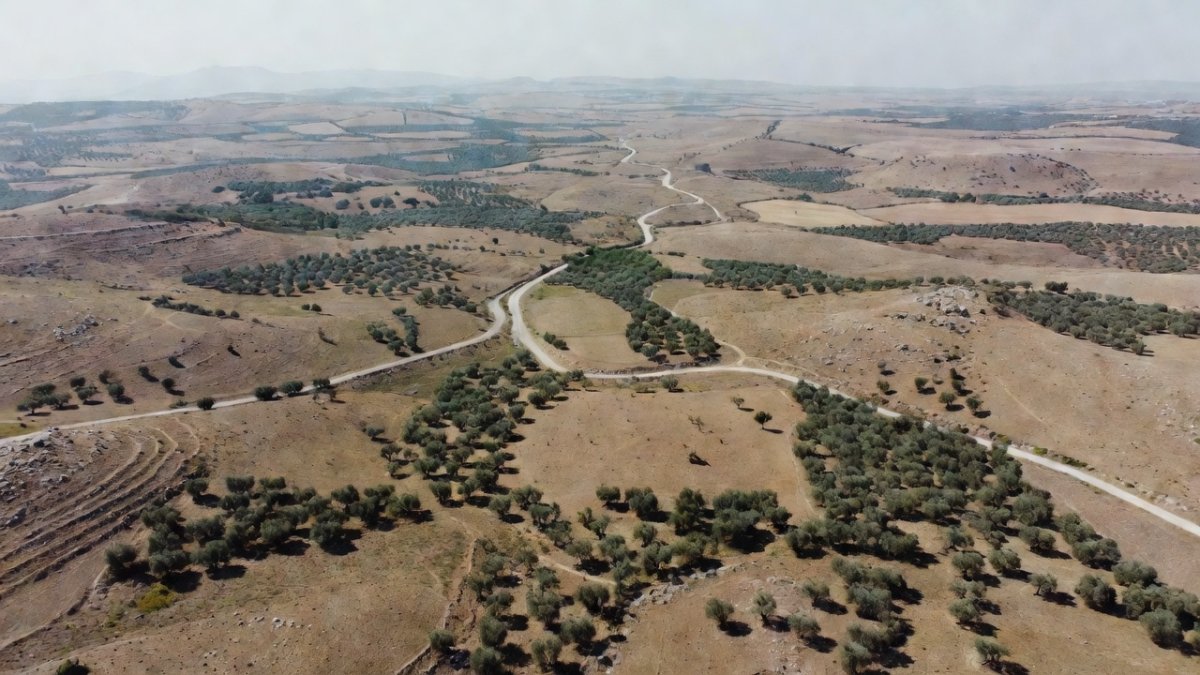
Regional Tensions: Truce Under Strain
The amnesty debate unfolds against a volatile regional backdrop. A fragile truce between Israel and Lebanon has held for nearly two months, but on the weekend of August 15-16, 2026, Israeli strikes in southern Lebanon killed at least 11 people, marking one of the deadliest attacks since the ceasefire took effect. The IDF confirmed the strikes, stating they targeted Hezbollah infrastructure in response to ongoing violations of the truce agreement. Lebanese security sources reported that the dead included both Hezbollah operatives and civilians, though the exact breakdown remained unclear as of this writing.
The escalation underscores the precarious nature of the current calm. Diplomatic efforts between Jerusalem and Beirut, mediated by the United States and France, have focused on implementing UN Security Council Resolution 1701, which calls for the disarmament of militias and the deployment of the Lebanese army to the southern border. However, Hezbollah's continued military presence and its refusal to disarm have stalled progress, leaving the truce dependent on informal understandings rather than a binding framework.
For Younes, the violence is a painful reminder of why peace remains elusive. In the i24NEWS report, she speaks of her childhood in Lebanon with affection, recalling specific places and moments that shaped her identity. Yet she also acknowledges that the dream of return is inseparable from the dream of a transformed Lebanon — one where the state, not armed factions, guarantees security and justice for all its citizens.
Diplomatic Hopes and Domestic Realities
Israeli officials have watched the amnesty debate with interest, though the Foreign Ministry in Jerusalem has issued no official statement on the law. Behind the scenes, however, Israeli diplomats have signaled to international mediators that a clear and inclusive amnesty for SLA members and their families would be viewed as a positive step toward normalization. The issue is complicated by the fact that many former SLA members and their descendants have integrated into Israeli society, with some serving in the IDF and others building businesses in northern Israel.
In Lebanon, the political calculus is different. The amnesty law passed with support from across the sectarian spectrum, but the exclusion of treason and espionage offenses was a red line for Hezbollah and its allies, who view any contact with Israel as a security threat. Christian leaders, particularly those representing communities in the south and the Chouf, have pushed for a more generous interpretation, arguing that the 2000 exodus was a humanitarian crisis, not a criminal enterprise.
The law's implementation will now fall to Lebanon's judiciary, which faces the daunting task of distinguishing between civilians who fled and combatants who fought alongside the SLA. Legal experts in Beirut note that the absence of clear criteria in the law itself leaves significant discretion to individual judges, raising the risk of inconsistent outcomes. Some families may return quickly; others may face years of legal limbo.
A Personal Plea for Peace
Maryam Younes's story, as told in the i24NEWS report, is not just about the past but about the future. She speaks of her children and grandchildren in Israel, who have never seen Lebanon, and of her hope that they might one day visit the villages of their ancestors. She dreams of a day when the border between Israel and Lebanon is open, when families on both sides can travel freely, and when the word "exile" becomes a historical footnote rather than a living reality.
Her plea resonates beyond her personal circumstances. The amnesty law, for all its limitations, represents the first official acknowledgment in over three decades that Lebanon's legal system must address the consequences of its own history. Whether it will lead to a genuine reconciliation with the SLA community — or whether it will remain a symbolic gesture overshadowed by ongoing conflict — depends on the political will of leaders in both Beirut and Jerusalem.
As the truce holds by a thread and diplomatic efforts continue, Younes's voice offers a reminder that behind the strategic calculations and security assessments are real people with real memories. Her dream of peace between Israel and Lebanon is shared by many on both sides of the border, even as the path to that peace remains obstructed by decades of mistrust, violence, and unresolved grievances. The amnesty law is a step, but as Younes herself acknowledges, it is only the beginning of a much longer journey.
By Hannah Berg, Staff Writer
This article was produced with AI-assisted research and editorial support. Reporting is based on sources cited in the article.
What's Your Reaction?
 Like
0
Like
0
 Dislike
0
Dislike
0
 Love
0
Love
0
 Funny
0
Funny
0
 Wow
0
Wow
0
 Sad
0
Sad
0
 Angry
0
Angry
0

Israel Correspondent at Global1.News. Based in Tel Aviv, covering Israeli politics, security, technology, and society. Provides balanced, deeply-sourced reporting on one of the most closely-watched regions in the world.













Comments (0)