
America's Largest Cyclospora Outbreak: 9,481 Sick, 17 States, and a Political Firestorm
Folks. Pull up a chair. Put down the salad. Seriously. Put it down. We need to talk about what is happening in our grocery stores, our fast-food drive-thrus, and our refrigerators right now. This is not a drill, and this is not a "maybe you should wash your veggies a little better" situation.
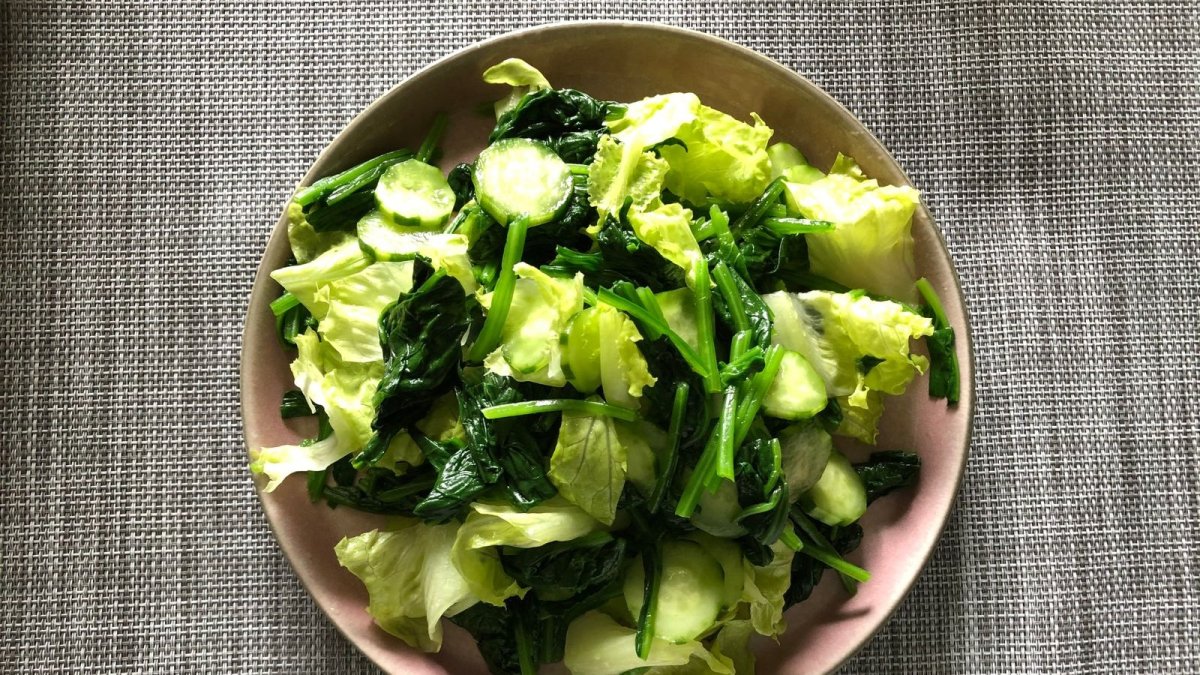
Folks. Pull up a chair. Put down the salad. Seriously. Put it down.
We need to talk about what is happening in our grocery stores, our fast-food drive-thrus, and our refrigerators right now. This is not a drill, and this is not a "maybe you should wash your veggies a little better" situation. This is the largest outbreak of a nasty, microscopic parasite in the history of the United States, and as of this week, it is still not over.
I’m talking about Cyclospora. And I’m talking about 9,481 confirmed illnesses across 17 states. I’m talking about at least two people who have died. I’m talking about hundreds upon hundreds of hospitalizations. And the people in charge of keeping our food safe are telling us, point-blank, that this thing is likely going to get worse before it gets better.
So, what do you need to know? Everything. Right now. Let’s get into it.
What Is Happening: The Scale of the Outbreak
Let’s put this into perspective, because numbers this big can feel abstract until they hit your kitchen table. The CDC and the FDA are jointly investigating what they have officially called the largest outbreak of cyclosporiasis in U.S. history. That is not hyperbole. That is a fact from the federal agencies tasked with tracking this stuff.
As of the August 13 and 14 updates, we are sitting at 9,481 confirmed illnesses. That is nearly ten thousand people. Ten thousand people who ate something as innocuous as a salad and ended up with a parasitic infection that causes severe, watery diarrhea. And here is the kicker, folks: that number is only the confirmed cases. The CDC has said repeatedly that for every confirmed case, there are likely many more that go unreported or undiagnosed because the testing process is so specific.
We are also looking at at least 740 hospitalizations. That number was confirmed by Senator Elizabeth Warren’s office, and earlier reports had it pegged at over 500, so it is climbing. And tragically, we are looking at at least two deaths. Two families who lost a loved one because of contaminated lettuce. This is one of the worst foodborne illness outbreaks we have seen in decades, and the investigation is ongoing as of Friday’s FDA update.
This is not a small regional issue. This is a 17-state crisis. And it started, as these things often do, with something that seemed totally harmless.
Where It Started: The Taco Bell Connection
Let’s rewind the tape. Before this was a 17-state monster, it was a cluster. A weird, unexplained cluster of people getting sick in the Midwest. And the common denominator? Taco Bell.
That’s right, folks. The outbreak first centered on Taco Bell restaurants. We are talking about 1,644 people who reported eating at Taco Bell and tested positive for Cyclospora across five Midwest states. Let me repeat that: 1,644 people. At Taco Bell.
Now, the Michigan Department of Health and Human Services did some serious detective work. They analyzed 190 confirmed cases, and guess what they found? 90% of those people reported eating iceberg lettuce. Not the meat. Not the cheese. Not the hot sauce. The lettuce. The stuff that is supposed to be the "healthy" part of the meal.
By July 24, the outbreak had expanded to nine states, adding Illinois, Kansas, Oklahoma, and Pennsylvania to the list. And since then, it has just kept spreading, growing to the 17 states we are dealing with today. The Taco Bell connection was the canary in the coal mine, folks. And unfortunately, by the time the alarm was raised, the lettuce was already in the supply chain.
The Recall and the FDA Investigation
So, when did the other shoe drop? On July 17. That is the date Taylor Farms de Mexico, a central Mexico-based processor, announced a voluntary recall of all iceberg lettuce sourced from central Mexico. We are talking about 236,192 cases of lettuce that were distributed between June 29 and July 16 to 27 states. Let that sink in. A quarter of a million cases of lettuce, shipped out to 27 states—nearly half the country—in a two-week window, according to recall records.
And then, the very next day—July 18—the FDA dropped a bombshell. A sample of Taylor Farms lettuce collected during import surveillance tested positive for Cyclospora. Positive. The parasite was literally on the product. The FDA has since begun an inspection of the Taylor Farms operation in Mexico, but the damage was already done.
Here is the part that should make you angry, folks. Officials say many of the illnesses began BEFORE the July 17 recall. That means people were getting sick, going to the doctor, suffering through this parasite, while this lettuce was still sitting on shelves and being served in restaurants. The recall was reactive, not proactive. And while Taylor Farms has a history here—they were linked to a mass cyclospora outbreak back in 2013 that sickened hundreds—the CDC and FDA are still scrambling to contain this thing.
The traceback data is clear. The epidemiologic data is clear. The lab test is clear. Iceberg lettuce from Taylor Farms de Mexico was contaminated with Cyclospora and made people sick. Full stop.
The Political Firestorm
Now, I am a journalist, not a politician. But when public health and politics collide, I have to call it like I see it. And folks, this is getting ugly.
Senator Elizabeth Warren (D-Mass.) is not letting this go quietly. She is pressing HHS Secretary Robert F. Kennedy Jr. on the administration’s response to this outbreak, and she is raising some very uncomfortable questions about corruption and influence-peddling.
Here is the tea: Taylor Farms’ parent company has donated millions of dollars to political organizations with ties to President Trump. And Senator Warren is saying that those contributions appear to be timed closely to regulatory actions favorable to the company. That is a serious allegation. She is essentially asking: did money buy a lighter touch from regulators?
Democrats are pushing HHS to detail its outbreak response, and they want answers. They want to know what the administration knew, when they knew it, and why it took so long to act. This is not a partisan issue, folks. This is a "people are dying from salad" issue. And when you have a company with a history of outbreaks donating millions to the party in power, you have to wonder if the fox is guarding the henhouse.
I am not saying the administration caused this outbreak. I am saying that when a company with this track record is writing big checks, and the response feels sluggish, the American people deserve transparency. We deserve to know that our safety is not for sale.
What Cyclospora Does to the Body
Let’s get clinical for a second, because I want you to understand exactly what this parasite does to you. Cyclospora is a microscopic parasite. You cannot see it. You cannot taste it. You cannot smell it. It just sits there on your lettuce, waiting.
Once you consume it, the symptoms typically begin about one week later. And folks, they are not pleasant. We are talking about watery diarrhea—sometimes explosive. Frequent bowel movements that leave you exhausted and dehydrated. Stomach cramps that double you over. Nausea. Vomiting. Fatigue that feels like you’ve been hit by a truck. Loss of appetite. Weight loss. And a low-grade fever that just won't quit.
This illness can last a few days. Or it can last months. And here is the cruelest part: it can relapse. You think you are better, and then it comes back with a vengeance.
The good news? It is treatable with an antibiotic called trimethoprim-sulfamethoxazole. The bad news? You have to be diagnosed first. And that is where the system is failing us. Cyclospora requires a specific stool test that is not part of routine panels. Experts are warning that a "high degree of suspicion" is needed for diagnosis, and if your doctor doesn’t order the right test, you will not get the right treatment. Failure to order that test is a major obstacle to controlling the spread. So if you are sick, and you think it might be this, you have to advocate for yourself. You have to ask for the Cyclospora test specifically.
And remember, folks, this is not spread person-to-person. You cannot catch it from a coworker or a family member. You get it from contaminated food or water. So if you are sick, it is because of something you ate.
What You Should Do Now
Alright, folks. This is the part where we stop panicking and start acting. Here is your checklist. Do these things today.
First, check your refrigerator. Right now. Look for recalled iceberg lettuce from Taylor Farms de Mexico. Look for salad kits and lettuce products that contain iceberg lettuce. If you have any doubt, throw it out. Do not taste it. Do not "just pick off the bad leaves." Throw it away. It is not worth a trip to the hospital.
Second, wash your hands and surfaces. Even if you think you are in the clear, wash your hands thoroughly after handling any raw produce. Wash your countertops, your cutting boards, your knives. Cross-contamination is real, and you do not want to spread this around your kitchen.
Third, if you develop severe or prolonged diarrhea, contact your health care provider immediately. Do not wait. Do not "tough it out." Tell them you are concerned about Cyclospora. Ask for the specific stool test. Remember, the standard panel will not catch this. You have to ask.
Fourth, stay informed. The FDA page as of August 13 states that the investigation is ongoing. That means more recalls could be coming. More states could be added. More products could be implicated. Check the CDC and FDA websites regularly. Do not rely on social media rumors. Get your facts from the source.
And finally, folks, do not let this scare you away from eating healthy. Vegetables are good for you. But we need our government and our food producers to do their jobs. We need oversight. We need accountability. And we need to remember that the people who grow our food have a responsibility to keep it safe.
This outbreak is a wake-up call. It is a reminder that our food system is fragile, and that a parasite you cannot see can bring a nation to its knees. But it is also a reminder that we have power. We have the power to check our fridges. We have the power to ask our doctors the right questions. And we have the power to demand better from our leaders.
Stay safe out there, Atlanta. Stay informed. And for the love of everything holy, check the label on that salad kit before you take a bite.
By Jessica Ali, Staff Writer
This article was produced with AI-assisted research and editorial support. Sources: CDC, FDA, Senator Elizabeth Warren's office, The Hill, Ars Technica, Bloomberg, Food Safety News.
What's Your Reaction?
 Like
0
Like
0
 Dislike
0
Dislike
0
 Love
0
Love
0
 Funny
0
Funny
0
 Wow
0
Wow
0
 Sad
0
Sad
0
 Angry
0
Angry
0

Editor-in-Chief at Global1.News. Atlanta-based journalist who cuts through the BS and tells it like it is. Lead anchor, host, and the voice you hear when the spin stops and the truth starts.














Comments (0)