
KIO's $1.3B Bet on Querétaro: A Digital Milestone for Mexico
Keywords: KIO Data Centers, Querétaro, QRO3, data center Mexico, Marcelo Ebrard, Mauricio Kuri, digital economy, cloud computing, artificial intelligence, Hecho en México, InnovaFest, investment Mexico KIO's $1.3B Bet on Querétaro: A Digital Milestone for Mexico The sun was bright over the Parque Industrial El Marqués on Thursday, August 13, 2026, and the air was thick with the promise of something big.

KIO's $1.3B Bet on Querétaro: A Digital Milestone for Mexico
The sun was bright over the Parque Industrial El Marqués on Thursday, August 13, 2026, and the air was thick with the promise of something big. KIO Data Centers, the company that has quietly powered Mexico's digital transformation for two decades, announced a potential investment of close to US$1.3 billion through 2030 to develop QRO3, the next phase of its technology campus in Querétaro. It was the kind of announcement that makes you stop and think about how far we've come since the days when a dial-up connection was a luxury.
The event brought together an unusual trio: KIO's CEO Octavio Camarena, Querétaro's Governor Mauricio Kuri González, and Mexico's Secretary of Economy Marcelo Ebrard Casaubón. They stood together, not just as officials and executives, but as witnesses to a transformation that is reshaping the economic geography of our country. For those of us who remember when Querétaro was known primarily for its colonial architecture and its role in Mexican history, this moment felt like a page turning in real time.
This is not just another corporate announcement. It is a statement about where Mexico is heading in the global digital economy. With nearly three-quarters of all Mexican data centers now located in Querétaro, this central state has become the beating heart of our country's digital infrastructure. And with this new investment, KIO is doubling down on that vision, betting billions on the idea that Mexico can be a world-class destination for cloud computing and artificial intelligence.
Tags: KIO Data Centers, Querétaro, QRO3, data center Mexico, Marcelo Ebrard, Mauricio Kuri, digital economy, cloud computing, artificial intelligence, Hecho en México, InnovaFest, investment Mexico
The Announcement: A Monster in the Making
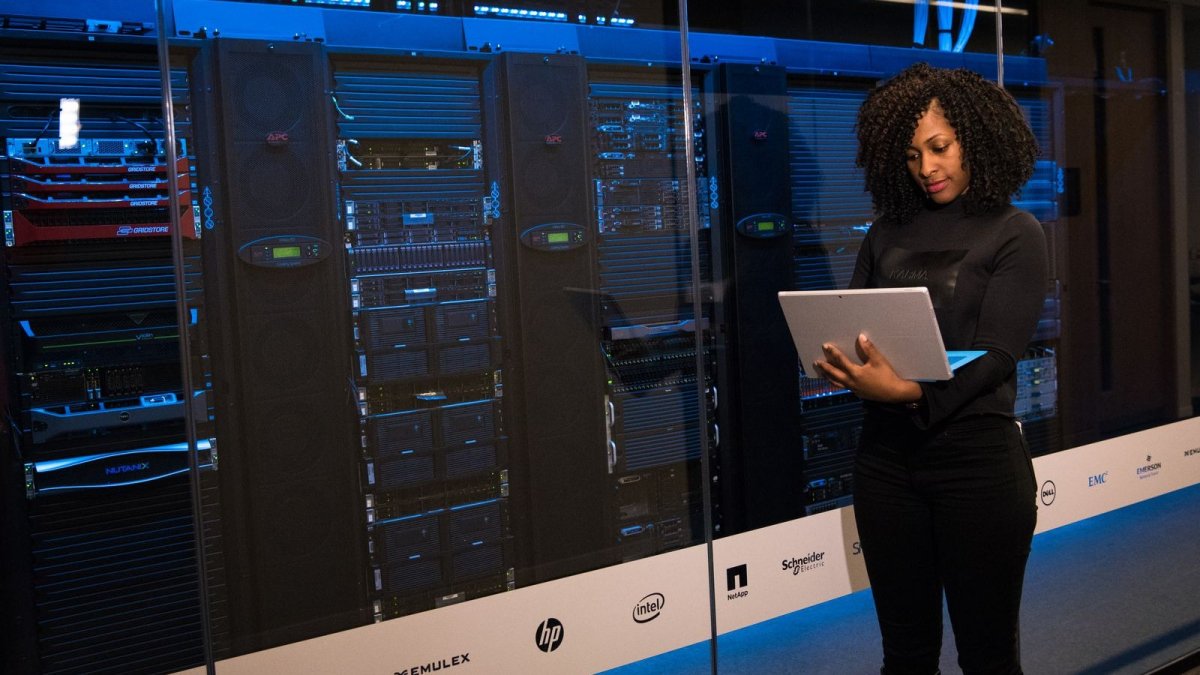
When Secretary Ebrard called the future QRO3 "gigantic" and said "it's going to be a monster, millions and millions of dollars," he was not exaggerating. The numbers are staggering by any measure. QRO3 will have approximately 100 megawatts (MW) of capacity, making it the company's largest data center ever built. To put that in perspective, that is more than eight times the capacity of the recently completed QRO2 phases two and three, which together deliver 12 MW at the Querétaro Mega Campus. The expansion is expected to create more than 8,100 direct and indirect highly specialized jobs in Querétaro. These are not just any jobs — they are the kind of positions that young Mexicans dream about: engineers, software developers, network architects, cybersecurity specialists, and AI researchers. For families in colonias across Querétaro, this means new opportunities for their children to build careers without leaving home, without crossing the border, without sacrificing their roots. Camarena emphasized that data center investment has a multiplier effect of between five and seven times the initial investment. If that holds true, the economic spillover could reach several billion dollars for Mexico. This is the kind of math that makes governors smile and secretaries of economy plan new initiatives. But more importantly, it is the kind of math that puts food on tables and pays for quinceañeras in working-class neighborhoods across the state. The company's track record supports the optimism. Since I Squared Capital became a shareholder in 2022, KIO has invested more than US$900 million in Mexico and Latin America. This year alone, the company will spend more than US$200 million on new projects in Mexico City, Monterrey, Querétaro, and Guatemala. The recently completed QRO2 phases brought total investment in that project to US$170 million, and now the company is preparing to multiply that effort many times over.Why Querétaro: Stability, Talent, and the Triple Helix
Governor Mauricio Kuri was clear about why his state has become the preferred destination for digital infrastructure. "Querétaro offers stability, security, rule of law, infrastructure, economic and political stability, and specialized talent," he said during the tour. This is not marketing speak — it is a formula that has been carefully cultivated over years, and it is paying off in ways that few could have predicted. The "triple helix" model that Kuri referenced — the collaboration between government, academia, and industry — has been central to Querétaro's success. Universities in the state have adapted their curricula to produce the kind of specialized talent that companies like KIO need. The government has invested in the infrastructure that makes large-scale operations possible. And industry has responded with confidence, bringing capital and technology to the region. Secretary Ebrard added another layer to the picture, noting that Querétaro concentrates close to 80% of the country's data centers. He recognized KIO as a pioneer — the company installed the first data center in the state about 20 years ago, in 2006. Since then, KIO has operated in Mexico since 2002 and has driven digital development in Querétaro since 2007. This is not a fly-by-night operation; it is a long-term commitment that has weathered economic cycles and political changes. The state's advantages go beyond the obvious. Querétaro's central location makes it an ideal hub for connectivity, with fiber optic networks radiating outward to the rest of the country. The state has invested heavily in renewable energy, which is increasingly important for data center operators who face pressure to reduce their carbon footprint. And the quality of life in Querétaro — its safety, its culture, its sense of community — makes it easier to attract and retain top talent.Impact on Mexican Communities: More Than Just Machines
It would be easy to think of data centers as nothing more than warehouses full of servers, humming away in the background of our digital lives. But the impact of this investment reaches far beyond the concrete walls of the facilities themselves. When KIO talks about creating 8,100 jobs, it is talking about real people with real families — engineers who will buy homes in Querétaro's growing colonias, technicians who will send their children to local schools, and support staff who will shop at the tianguis on weekends. The multiplier effect that Camarena mentioned is not abstract economic theory. It means new restaurants opening near the campus, new housing developments for workers, new businesses providing services to the data center ecosystem. It means that a young woman from a rural community outside Querétaro can study computer science at a local university and then walk into a well-paying job without having to move to Mexico City or leave the country. The "Hecho en México" certificate that the Secretariat of Economy awarded to KIO during the event carries symbolic weight. It signals that this is not just foreign investment extracting value from Mexican soil — it is a partnership that recognizes Mexican talent, Mexican infrastructure, and Mexican potential. In a country where we have long struggled with the perception that we are only good for manufacturing and manual labor, this certificate is a reminder that we can also lead in the digital economy. For the broader Mexican economy, the implications are significant. Arizton expects Mexico's data center market to grow to US$3.48 billion by 2031, making it one of the region's largest behind Brazil. This growth is not happening by accident — it is the result of deliberate policy choices, strategic investments, and the kind of public-private collaboration that was on full display at the Parque Industrial El Marqués.Reactions and Responses: A Shared Vision for the Future
The atmosphere at the announcement was one of genuine enthusiasm, not just ceremonial politeness. Governor Kuri spoke with pride about what his state has achieved, and Secretary Ebrard matched that enthusiasm with his own vision for Mexico's digital future. The presence of both officials at the same event underscored the importance of this investment for the entire country, not just for Querétaro. Ebrard also used the occasion to announce that the next edition of InnovaFest will be held in Querétaro on August 21, 2026, at the Querétaro Centro de Congresos. The event is expected to draw up to 13,000 visitors, 170 investment funds, 100 companies and universities, 670 prototypes, and 6,500 products. Free workshops by NVIDIA, Meta, AWS, and KIO will be available, making this a rare opportunity for young Mexicans to learn from global tech leaders without leaving their country. The market context adds weight to these announcements. According to CBRE Global Data Center Trends 2026, Querétaro saw the strongest growth in the Latin America region, with installed inventory up 450.2% to 298.2 MW, driven by hyperscale and AI deployments. This is not just a local story — it is a regional phenomenon, and Querétaro is leading the charge. There are challenges, of course. Grid capacity in the city is a constraint, and the rapid growth of data centers will require continued investment in energy infrastructure. But these are the kinds of problems that come with success, and they are far better than the alternative of stagnation. The fact that companies like KIO are willing to invest billions of dollars in Querétaro is a vote of confidence that should not be underestimated.What to Watch For: The Road to 2030
The announcement of QRO3 is just the beginning. The investment of US$1.3 billion through 2030 will unfold over several years, with construction, hiring, and operational ramp-up happening in phases. The company's commitment to spend more than US$200 million this year on projects across Mexico City, Monterrey, Querétaro, and Guatemala shows that this is not a one-off bet but part of a broader strategy. For the people of Querétaro, the next few years will bring visible changes. New construction will rise on the campus, new workers will arrive, and new businesses will spring up to serve the growing ecosystem. For the rest of Mexico, the message is clear: the digital economy is not something that happens elsewhere — it is happening here, in our own backyard, and it is creating opportunities for ordinary people. The challenges should not be ignored. The strain on the electrical grid will require careful planning and investment. The need for specialized talent will require continued collaboration between universities and industry. And the competition from other states and countries will not disappear — places like Monterrey and Guadalajara are also positioning themselves as digital hubs. But for now, the mood in Querétaro is one of optimism. When Secretary Ebrard called QRO3 "a monster," he was not just describing a building — he was describing the scale of Mexico's ambition. And when Governor Kuri talked about the triple helix, he was describing a model that has proven its worth. The combination of private investment, government support, and academic talent is a powerful formula, and it is one that is working. As we look toward 2030, the question is not whether Querétaro will remain a digital hub — it clearly will. The question is whether the rest of Mexico can learn from this example and replicate it. If the answer is yes, then the future of our country's digital economy is bright indeed. And if the answer is uncertain, then at least we have a model to follow, a proof of concept that shows what is possible when we work together.This article was produced with AI-assisted research and editorial support. Sources: Mexico News Daily, El Economista, Telediario/Milenio, Energy & Commerce, w.media.
By Rosa Martinez, Staff Writer
What's Your Reaction?
 Like
0
Like
0
 Dislike
0
Dislike
0
 Love
0
Love
0
 Funny
0
Funny
0
 Wow
0
Wow
0
 Sad
0
Sad
0
 Angry
0
Angry
0

Latin America/Andes Correspondent at Global1.News. Based in Bogota, covering politics, environment, energy, and social movements across the Andean region. Passionate about environmental journalism and communities protecting their land.














Comments (0)