
Putin's First Visit to Disputed Kuril Islands Sparks Fury in Japan
The BBC News video report this week captured a striking image: Vladimir Putin, Russia's president, seated at a table on the island of Iturup, tasting a spoonful of black caviar as officials looked on. The footage, broadcast globally, was not merely a culinary moment but the visual centerpiece of a historic and provocative act — Putin's first-ever visit to the disputed Kuril Islands, a chain Moscow and Tokyo have quarreled over for eight decades.
The BBC News video report this week captured a striking image: Vladimir Putin, Russia's president, seated at a table on the island of Iturup, tasting a spoonful of black caviar as officials looked on. The footage, broadcast globally, was not merely a culinary moment but the visual centerpiece of a historic and provocative act — Putin's first-ever visit to the disputed Kuril Islands, a chain Moscow and Tokyo have quarreled over for eight decades. Within hours, Japan's Prime Minister Sanae Takaichi condemned the visit as "absolutely unacceptable," setting off a fresh diplomatic storm between the two neighbors.
Putin's Kuril Gambit: First Visit to Disputed Islands Sparks Fury in Tokyo
Tokyo, Japan – 14 August 2026 — The Russian leader's trip to Iturup, the largest of the four disputed islands, drew an immediate diplomatic response from Tokyo and sharpened a territorial dispute that has blocked a post-war peace treaty for eight decades.
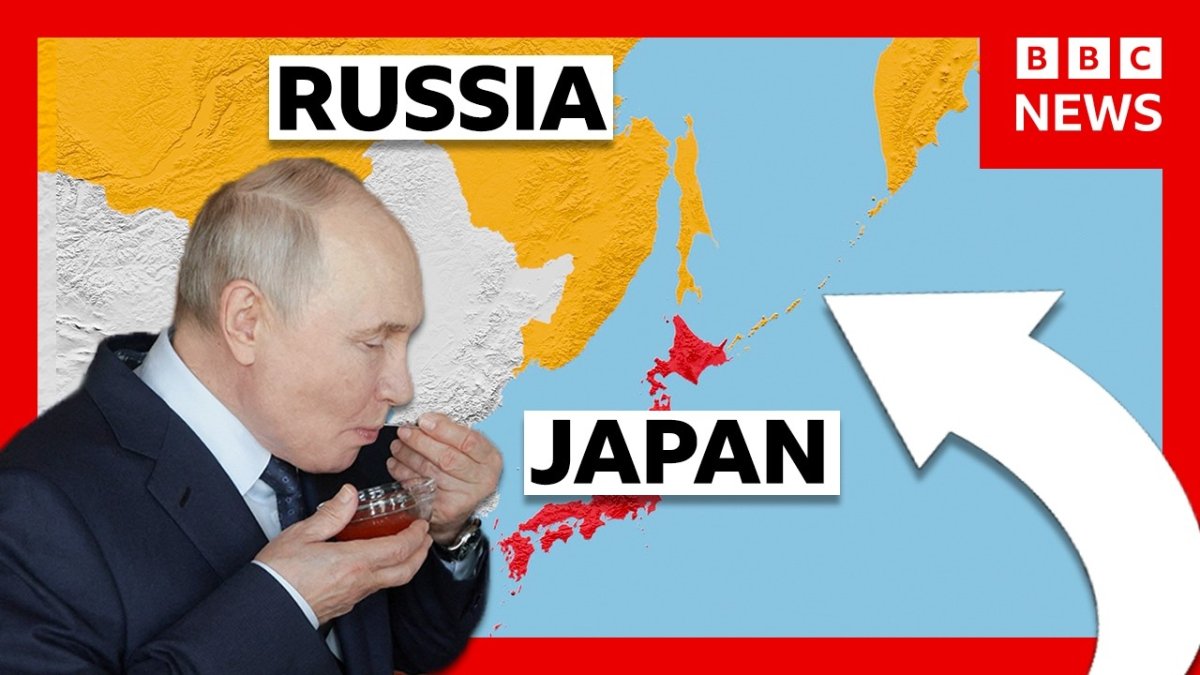
The Kremlin's First: Putin Steps Onto Iturup
Putin's itinerary on Iturup, the largest of the four disputed southern islands, was carefully choreographed to showcase Russian civilian development rather than military might. According to Russian state media, the president toured a fish processing factory, inspected a newly built hospital and a school, and sampled local produce, including the caviar that became the defining image of the trip. During the factory visit, officials told Putin that tuna weighing up to 300 kilograms swim in the waters surrounding the island, a detail he appeared to receive with interest. He was accompanied by Sakhalin Governor Valery Limarenko, who presented the region's economic achievements as evidence of Moscow's commitment to the territory.
The choice of Iturup is significant for reasons beyond its size. The island lies approximately 100 kilometers from Japan's northernmost island of Hokkaido, close enough that residents on both sides can see the other's coastline on clear days. It also hosts Russia's primary military air base in the region, a facility that has been expanded and modernized in recent years. The day before his arrival on Iturup, Putin was on Sakhalin Island, where he inspected Russian navy drills and made a pointed legal argument. He stated that the four islands were recognized as Russian territory in international documents, a claim that directly contradicts Japan's position and set the stage for the confrontation that followed.
Tokyo's Rebuke: 'Absolutely Unacceptable'
Prime Minister Takaichi did not mince words in her response. Speaking to reporters in Tokyo, she said the visit "has worsened Japanese sentiment towards Russia" and reiterated that the islands are "a unique territory of Japan historically and under international law." She described the trip as one that "wounds the feelings of the Japanese people" and declared it "incompatible with Japan's consistent position on the Northern Territories," the name Tokyo uses for the disputed chain. Takaichi also revealed that Japan had repeatedly asked Moscow not to have the president visit the islands, requests that were evidently ignored.
The diplomatic machinery moved quickly. Foreign Minister Toshimitsu Motegi summoned Russian Ambassador Nikolay Nozdrev to the ministry in Tokyo, where he delivered a formal protest. According to a statement released by Japan's foreign ministry, Motegi told the ambassador that "Japan strongly protests this visit." The summoning of an ambassador is one of the more severe diplomatic gestures short of expulsion, and it underscored the depth of Tokyo's anger. Nozdrev, for his part, made no public comment as he left the ministry building, but the message was clear: this was not a routine diplomatic friction but a deliberate provocation.
Eight Decades of Deadlock: The Northern Territories Dispute
The roots of this confrontation stretch back to the final days of World War II. In August 1945, the Soviet Union declared war on Japan, violating a neutrality pact signed four years earlier, and launched a rapid offensive across the region. In the weeks that followed, Soviet forces seized the four southern islands of the Kuril chain — Iturup, known in Japanese as Etorofu; Kunashiri; Shikotan; and the Habomai islets. The Soviet occupation was swift and brutal for the local population: approximately 17,000 Japanese residents were deported from their homes, many with little more than the clothes on their backs, and sent to an uncertain future on the Japanese mainland.
Today, the islands are home to about 20,000 Russian citizens, many of them military personnel and their families, along with civilian workers in the fishing and processing industries. The legal status of the islands has been contested ever since. In the 1951 Treaty of San Francisco, which formally ended the state of war between Japan and many of its adversaries, Japan renounced its claims to the Kuril Islands as a whole — but it did so without recognizing Soviet sovereignty over the four southern islands. This legal ambiguity has been the crux of the dispute for decades. A 1956 joint declaration between the Soviet Union and Japan ended the state of war between the two countries and restored diplomatic relations, but it did not resolve the territorial question. As a result, no post-war peace treaty has ever been signed between Moscow and Tokyo, a diplomatic anomaly that persists to this day.
The dispute has seen occasional moments of thaw. In 2010, then-President Dmitry Medvedev became the first Soviet or Russian leader to visit the disputed islands when he traveled to Kunashiri, a move that shocked Tokyo and set back relations. Prime Minister Mikhail Mishustin, who later served as Putin's prime minister, also visited the islands. The late Japanese Prime Minister Shinzo Abe, however, pursued a different approach. He cultivated a personal relationship with Putin, and the two leaders reached an entente that saw Japanese grave visits to the islands resume and formal peace treaty talks open. That fragile progress collapsed when Russia launched its full-scale invasion of Ukraine in 2022, prompting Japan to join international sanctions against Moscow and freezing the dialogue. The current visit, coming four years later, has effectively buried whatever remained of that diplomatic track.
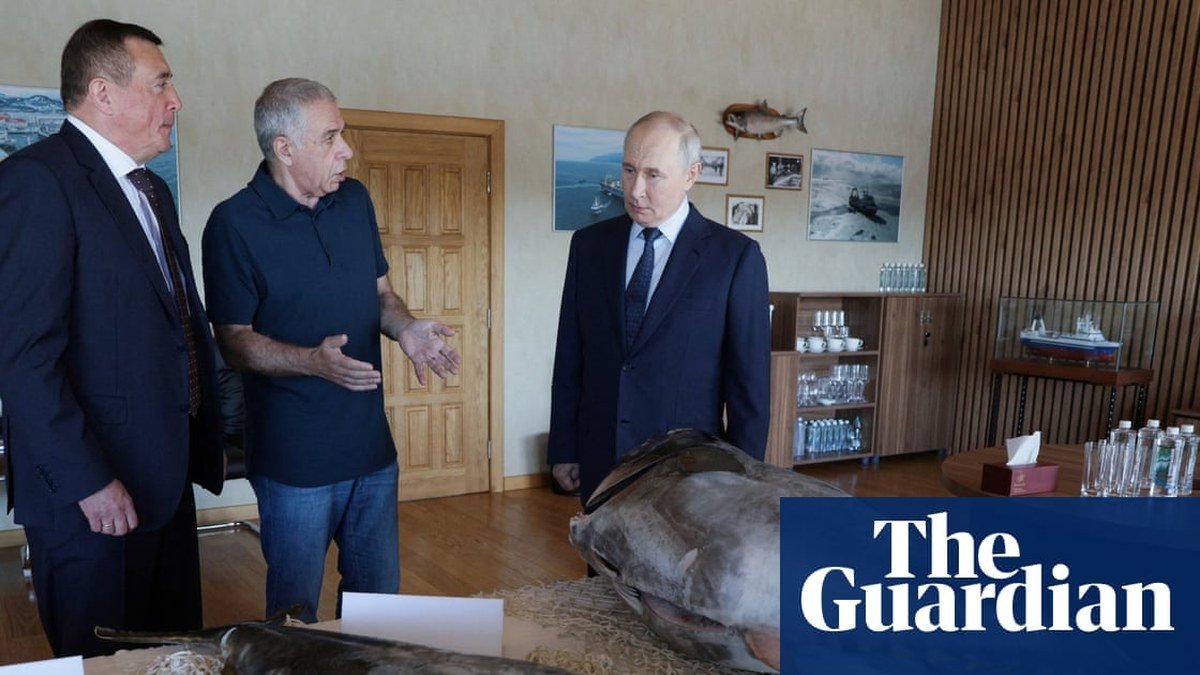
Why the Islands Matter: A Military Bastion in the Sea of Okhotsk
The strategic importance of the Kuril chain cannot be overstated. The islands form a natural barrier that separates the Sea of Okhotsk from the Pacific Ocean, creating a protected maritime zone that is vital to Russia's Pacific fleet. The Sea of Okhotsk, ringed by Russian territory on nearly all sides, serves as a bastion for Russia's ballistic missile submarines, which can operate there with relative safety from detection. Control of the Kuril Islands is therefore not a matter of national pride alone; it is a question of military geography that directly affects Russia's nuclear deterrent posture.
Moscow has been steadily reinforcing its military presence on the islands over the past decade. New coastal defense missile systems, upgraded airfields, and expanded garrison facilities have transformed the chain into a forward operating base for Russian forces. The buildup has not gone unnoticed in Tokyo. In 2025, Japan lodged a formal protest over a Russian shooting drill conducted in waters that included Japan's territorial waters, a move that raised tensions further. More recently, last month, Chinese and Russian naval warships sailed through a Kuril strait during a joint patrol, a demonstration of the growing alignment between Moscow and Beijing in the Pacific. Russia also holds regular military drills near the islands, often timed to coincide with sensitive political moments, a pattern that analysts say is intended to signal resolve.
A Test of Wills: The Defense White Paper and the Kremlin's Reply
The immediate context for Putin's visit is Japan's 2026 defense white paper, published this month. The document brands Russia a critical threat to Japan's security and states that Russia is continuing military activities in the Northern Territories "under illegal occupation." The language is unusually harsh, reflecting a broader shift in Japanese defense policy under Prime Minister Takaichi, who has pushed for significant increases in military spending and a more assertive posture toward both Russia and China. The white paper drew immediate protests from both Putin and North Korea, each of whom objected to being characterized as threats.
Analysts at the Institute for the Study of War, a Washington-based think tank, have offered a pointed interpretation of the timing. They suggest the visit is likely a Kremlin response to the white paper, aimed at undermining Takaichi's defense push by demonstrating that Moscow will not be cowed by Japanese rhetoric. Putin himself addressed the matter directly during his trip. "Japan has identified Russia as a major source of threats," he said. "I would like to point out that we are not threatening Japan. On the contrary, it has territorial claims against our country." He went on to describe Japan's sanctions against Russia as "unprovoked," a characterization that Tokyo rejects but which fits the Kremlin's broader narrative of a Russia surrounded by hostile powers.
Analysis: What Putin's Visit Signals for the Region
Putin's decision to visit the Kuril Islands for the first time is not a spontaneous act but a calculated signal. By stepping onto Iturup, he has consolidated the status quo and made clear that Moscow will not negotiate the islands' sovereignty under current conditions. The timing, coming days after the release of Japan's defense white paper, is a deliberate humiliation of Tokyo — a message that Japan's increasingly hawkish posture will be met with defiance rather than accommodation. For Takaichi, the visit is a domestic challenge as much as a diplomatic one. She has staked her political credibility on a tougher line toward Russia, and Putin has now called her bluff in the most public way possible. Her response, while forceful, offers no clear path forward, and the episode may weaken her position at home if voters perceive that her hardline stance has provoked Moscow rather than deterred it.
Complicating matters is Japan's continued dependence on Russian energy. Despite the sanctions imposed after the invasion of Ukraine, Japan remains a significant buyer of Russian liquefied natural gas, including supplies from the Sakhalin-2 project, in which Japanese companies hold stakes. This economic entanglement gives Moscow leverage that it has not hesitated to use, and it constrains Tokyo's ability to respond to provocations with full force. The broader regional picture is equally sobering. The Russia-China alignment in the Pacific has deepened in recent years, with joint patrols and coordinated military exercises becoming routine. For Japan, this means facing not one but two assertive powers along its maritime periphery, a strategic challenge that no amount of diplomatic protest can resolve.
Looking ahead, the prospects for any future peace treaty between Russia and Japan appear more remote than at any point since the Cold War. Putin's visit has hardened positions on both sides, and the domestic political incentives in each country now favor confrontation over compromise. In Moscow, the islands are a symbol of Russia's resurgence and its refusal to yield to Western pressure. In Tokyo, they are a wound that has never healed, a reminder of wartime losses and postwar injustice. The gap between these two narratives is not merely a matter of legal interpretation; it is a fundamental clash of national identities. As the sun sets over the Sea of Okhotsk, the islands remain what they have been for eighty years — a frozen conflict, a military bastion, and a test of wills that neither side shows any sign of passing.
By Irina Volkov, Staff Writer
This article was produced with AI-assisted research and editorial support. Reporting is based on sources cited in the article.
What's Your Reaction?
 Like
0
Like
0
 Dislike
0
Dislike
0
 Love
0
Love
0
 Funny
0
Funny
0
 Wow
0
Wow
0
 Sad
0
Sad
0
 Angry
0
Angry
0

Russia/Eastern Europe Correspondent at Global1.News. Covering Russian politics, energy, security, and the shifting dynamics of the post-Soviet space. Provides clear-eyed analysis on one of the world's most opaque regions.














Comments (0)