
King Charles arrives in Guyana as Bahamas visit declared 'diplomatic success'
King Charles III touched down in Guyana on Thursday, marking the second leg of a Caribbean tour that British officials have framed as a diplomatic triumph.
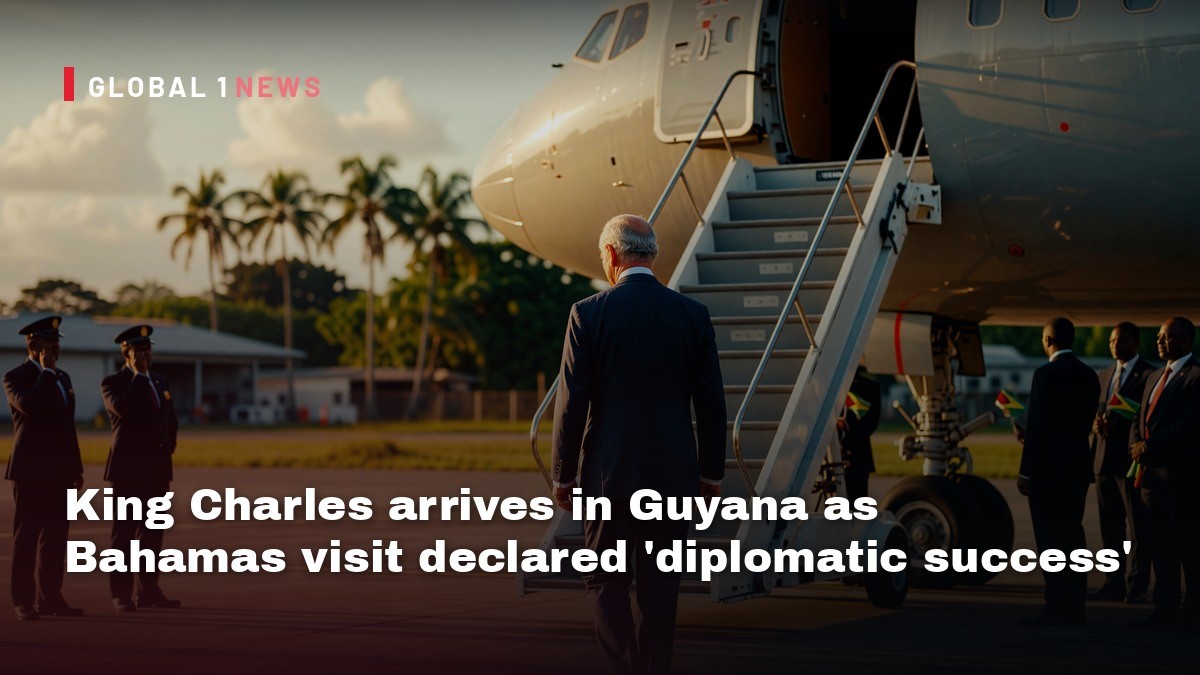
King Charles III touched down in Guyana on Thursday, marking the second leg of a Caribbean tour that British officials have framed as a diplomatic triumph. After a two‑day state visit to the Bahamas, where the monarch mixed ceremonial duties with cultural immersion, the royal entourage shifted northward to a nation whose fortunes have been reshaped by oil wealth and whose forests remain among the world’s most intact. The visit arrives at a moment when Caribbean leaders are pressing the United Kingdom for a reckoning over the trans‑Atlantic slave trade, and it offers a window into how the Crown is navigating the delicate balance between historic accountability and contemporary partnership.
From the Bahamas to Guyana: a diplomatic balancing act
The palace described the Bahamas stop as a “sensitive balancing act” that proved a “diplomatic success.” During his two‑day stay, the King met young boxers, environmentalists and politicians, and even joined a Junkanoo parade, a vibrant street celebration that showcases the islands’ cultural heartbeat. In his only public speech on the Bahamian leg, he acknowledged the United Kingdom’s involvement in the slave trade, referencing the “suffering of the past” and pledging respect for the “great injustices of the past.” This acknowledgment, while symbolic, resonated with a small contingent of protesters who held signs demanding “pay us what you owe us.” Their presence did not disrupt the events, but it underscored the lingering demand for reparations that has been echoing across the Caribbean.
As the King departed, his spokesman noted that the Bahamas hold “a special place in the King's heart,” highlighting the “great wall of cheers” he received. The language of affection and gratitude is part of a broader British strategy to reinforce ties with former colonies through soft power—cultural exchanges, public engagements, and the promise of continued partnership. Yet the very need to frame the visit as a success hints at the underlying tension: the UK is eager to showcase goodwill while Caribbean nations increasingly demand concrete actions on historical wrongs.
The Guyanese agenda: environment, sustainability and oil wealth
Guyana, once British Guiana, is the focus of the next two days. The itinerary centers on “environment and sustainability,” reflecting the country’s paradox of rapid economic growth fueled by oil discoveries in 2015 and an ecological profile dominated by rainforest. More than four‑fifths of Guyana’s land remains cloaked in forest, and it boasts one of the lowest deforestation rates globally. The King’s audience with President Irfaan Ali and a state reception celebrating 60 years of bilateral relations will likely spotlight how the UK can support Guyana’s transition to a low‑carbon future while respecting its natural heritage.
Commercial ties have deepened since the oil boom, and the British government sees Guyana as a strategic partner in the Caribbean basin. The emphasis on sustainability suggests an attempt to align economic development with climate commitments—a narrative that resonates with both local activists and international observers. However, the reality on the ground remains complex: oil revenues have sparked debates over equitable distribution, environmental safeguards, and the risk of a resource‑driven “Dutch disease.” The King’s presence offers an opportunity to spotlight these challenges, but the tour’s limited duration constrains any substantive policy dialogue.
Cultural bridges: bagpipers and Caribbean rhythms
Beyond politics and economics, the tour weaves cultural threads that aim to humanize the monarchy’s image. A group of bagpipers from Scotland’s National Piping Centre will accompany the royal party, symbolizing the shared heritage of the Commonwealth. Their presence alongside Caribbean music and dance, such as the Junkanoo celebrations in the Bahamas, creates a tableau of mutual exchange. For many locals, these moments are a reminder of the lingering cultural ties that bind former colonies to the British Crown, even as political grievances simmer.
Such cultural diplomacy can be double‑edged. While it offers a platform for showcasing Caribbean vibrancy, it also risks being perceived as a superficial veneer over deeper structural issues. The inclusion of Scottish bagpipers, for instance, may be viewed as a nostalgic nod to the imperial past, prompting questions about whose narratives are being amplified and whose are being sidelined.
Protest and the call for reparations
Even as the King’s itinerary proceeds smoothly, the undercurrent of protest remains palpable. In the Bahamas, a “small number of protesters” held signs demanding that Britain “pay us what you owe us,” reflecting a broader regional push for reparations. The Commonwealth Heads of Government Meeting (CHOGM) scheduled for 1 November in Antigua and Barbuda will explicitly address the legacy of slavery, and the King is set to deliver a speech as Head of the Commonwealth.
The demand for reparations is not merely symbolic; it is rooted in the economic realities of Caribbean nations that continue to grapple with the long‑term impacts of the slave trade. While the UK has begun to acknowledge its historical role, the gap between acknowledgment and tangible compensation remains wide. The King’s tour, therefore, is being watched closely as a barometer of whether British rhetoric will translate into material redress.
The Commonwealth summit: a stage for legacy debates
Following Guyana, the King will travel to Antigua and Barbuda to open a major Commonwealth leaders summit. The gathering will bring together heads of government from across the “family of nations,” providing a platform to discuss the “legacy of slavery” among other pressing issues. The King’s speech is expected to reference the shared challenges of the future and the “great injustices of the past,” echoing his earlier remarks in the Bahamas.
This summit is a critical moment for Caribbean states to leverage the Commonwealth’s collective voice. By framing the legacy of slavery as a central agenda item, they aim to pressure the UK and other former colonial powers into more substantive action. The King’s role as a symbolic head of the Commonwealth places him at the intersection of tradition and transformation, and his words will be dissected for both diplomatic courtesy and policy implication.
Economic realities: oil, growth and inequality
Guyana’s status as “the world’s fastest growing economy” since the 2015 oil discovery has reshaped its regional standing. The influx of oil wealth has spurred infrastructure projects, attracted foreign investment, and raised expectations for rapid development. Yet the benefits of this boom are unevenly distributed, and the country faces the classic paradox of resource‑rich states: how to manage newfound wealth without compromising social equity or environmental integrity.
The King’s visit, framed around sustainability, implicitly acknowledges these tensions. By highlighting Guyana’s low deforestation rates and vast rainforest coverage, the tour underscores the need to protect natural capital even as the nation pursues economic expansion. The challenge for Guyana—and for its British partners—is to chart a development path that honors both the environment and the aspirations of a population eager for improved living standards.
Looking ahead: the tour’s legacy and regional expectations
As the royal itinerary winds down in Antigua and Barbuda, the broader significance of the Caribbean tour will be measured against the backdrop of regional demands for justice and sustainable development. The King’s acknowledgment of past suffering and his participation in cultural events have offered moments of connection, but they have not resolved the deeper grievances that drive calls for reparations and climate action.
For Caribbean nations, the tour is a reminder that diplomatic gestures must be matched by concrete policies. The upcoming CHOGM will test whether the Commonwealth can evolve from a ceremonial association into a platform for addressing historical debts and future challenges. The King’s words, while symbolically potent, will be weighed against the lived realities of peoples confronting inequality, environmental threats, and the lingering shadows of colonial exploitation. In the end, the tour’s “diplomatic success” will hinge not on applause or bagpipe melodies, but on whether it catalyzes meaningful change for the region.
This article was produced with AI-assisted research and editorial support. Reporting is based on the source material cited below. Sources: BBC News Latin America; bbc.co.uk; Global1.News (30 October 2026).
By Elena Vasquez, Staff Writer
What's Your Reaction?
 Like
0
 Dislike
0
 Love
0
 Funny
0
 Wow
0
 Sad
0
 Angry
0

Latin America Correspondent at Global1.News. Based in Mexico City, covering politics, economics, energy, and culture across the region. Brings an on-the-ground perspective to stories spanning from the Rio Grande to Patagonia.











Comments (0)