
Kfarshouba: Inside the 'Prison' Village of Israel's Occupation in South Lebanon
In a recent Middle East Eye report, the Israeli military's occupation of southern Lebanon was laid bare through the story of Kfarshouba, a village residents describe as having become "a prison." The report, drawing on The National's on-the-ground reporting by Nada Maucourant Atallah, detailed how the Israeli army has razed dozens of Shia villages while leaving several Christian and Sunni villages standing—but at the cost of their freedom, with residents living in fear of dete
In a recent Middle East Eye report, the Israeli military's occupation of southern Lebanon was laid bare through the story of Kfarshouba, a village residents describe as having become "a prison." The report, drawing on The National's on-the-ground reporting by Nada Maucourant Atallah, detailed how the Israeli army has razed dozens of Shia villages while leaving several Christian and Sunni villages standing—but at the cost of their freedom, with residents living in fear of detention, raids, and the constant threat of violence. This is the lived reality of a "security zone" that has no legal standing, a reality now further entrenched by new earthen barriers in "pilot zone" villages meant to be under Lebanese army control.
Kfarshouba: Inside the 'Prison' Village of Israel's Occupation in South Lebanon
Kfarshouba, Lebanon – August 10, 2026 — The water pump that sustains Kfarshouba's remaining residents is powered by a diesel generator burning $500 worth of fuel a day. It is a daily logistical ordeal for Mohammad El Hage, a municipal employee, who must ferry fuel to the generator under the watchful eyes of Israeli soldiers who occupy the hills above. "Every day we have to take diesel to the generator to pump water. Every single day," he told The National. This is the new rhythm of life in a village that Israeli forces have occupied as part of a belt of land at least 7km deep, a "security zone" that has seen at least 60 villages destroyed and hundreds of thousands displaced.
Kfarshouba, a Sunni village in the Hasbaya district nestled in the foothills of Jabal Al Sheikh, was permitted to remain populated only on a condition: residents must shelter no Hezbollah members or displaced people from neighbouring Shiite villages. This edict, delivered via phone calls from Israeli numbers to the village mayor, Al Qassem Al Qadri, and other Sunni, Druze, and Christian town mayors, has turned daily life into a precarious existence. "Not a single resident dares enter their own land. Not because we've officially been told it's forbidden, but because nobody knows where the danger begins," a municipal employee told The National, capturing the chilling ambiguity that defines the occupation.
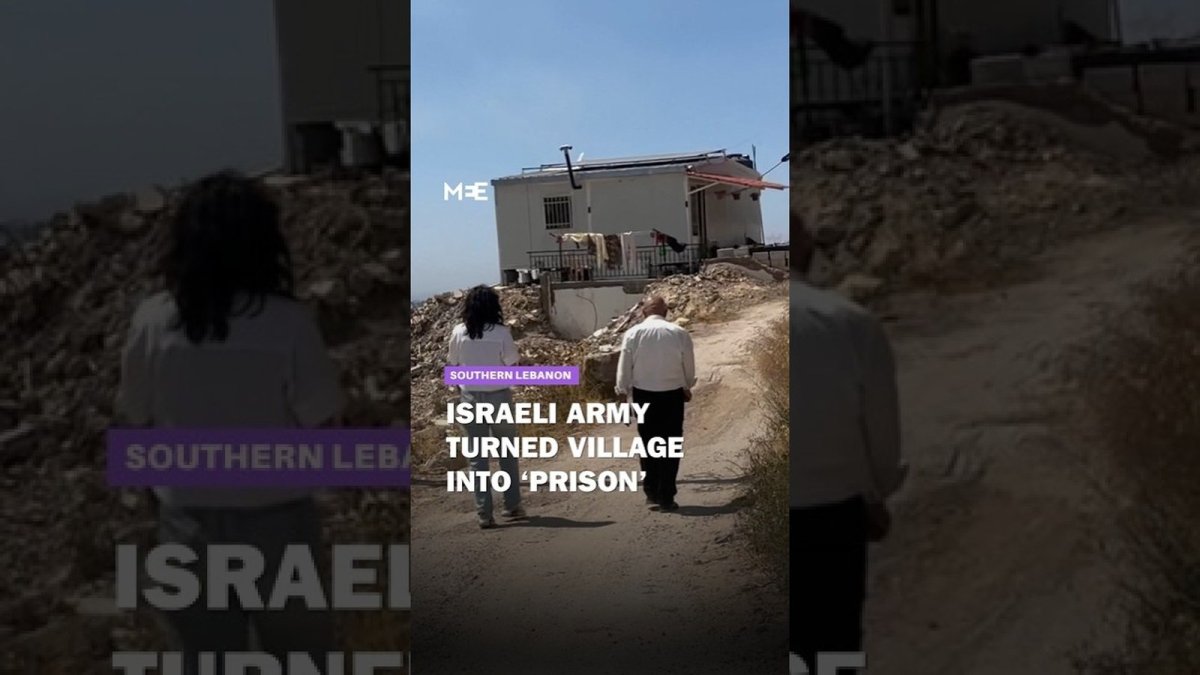
A Routine Errand Becomes an Ordeal
In June, El Hage's routine task of fuelling the village's water generator became a harrowing encounter with the occupation's arbitrary power. He was handcuffed and made to stand against a wall at gunpoint as soldiers snatched phones and searched his truck. "What are you doing here?" he was asked. When he explained, "We're pumping water for the village," a soldier retorted, "Don't you know you're forbidden from coming here?" The trip had been coordinated via UNIFIL, which had secured Israeli army approval. "It was routine," El Hage said, a testament to how the occupation has normalised the abnormal.
Blindfolded and taken to a military base, likely in the Israeli-occupied Golan Heights, El Hage was interrogated for hours before being released and forced to walk back to the village at night. The incident underscores a broader pattern of obstruction. Israel has blocked the municipality from repairing the electricity infrastructure that powers the water pump, and permission for a new electricity pole was granted and then withdrawn. "It keeps happening. Exactly the same story every time," El Hage said. When a municipal team eventually erected the pole under UNIFIL escort, soldiers fired over their heads, leaving the work incomplete. The village's lifeline—water—remains hostage to an occupation that seems intent on making life untenable.
Night Raids and the "Psychological Occupation"
Imad Saadeldin, an elected village official, recounts a night raid in late March that shattered any illusion of safety. Soldiers banged on the door, waking his family. "I thought they were there to kill us," he told The National. The soldiers handcuffed him and his son, forcing them to kneel at gunpoint. As his wife pleaded for their adult son, who has special needs, to be spared, a soldier struck the young man in the head. Saadeldin's cousin was taken into custody and released four hours later. The soldiers' message was clear: "You can stay. But don't let anyone come here. Otherwise we'll have to destroy the village and empty it."
Saadeldin describes the aftermath as a "psychological occupation." "Even months later, if I go to my own house to collect something, I feel as though they're standing behind the wall watching me," he said. This fear is compounded by the disappearance of three day-labourers from Kfarshouba's suburb of Halta, abducted by Israeli forces in May while harvesting their land. "They have not been seen or heard from since," a stark reminder of the occupation's reach. Four Israeli military positions now loom over the village from the Jabal Al Sheikh mountain range, with a fourth recently erected at Rabaa Al Teben in the Kfarshouba foothills, a constant, visible assertion of control.
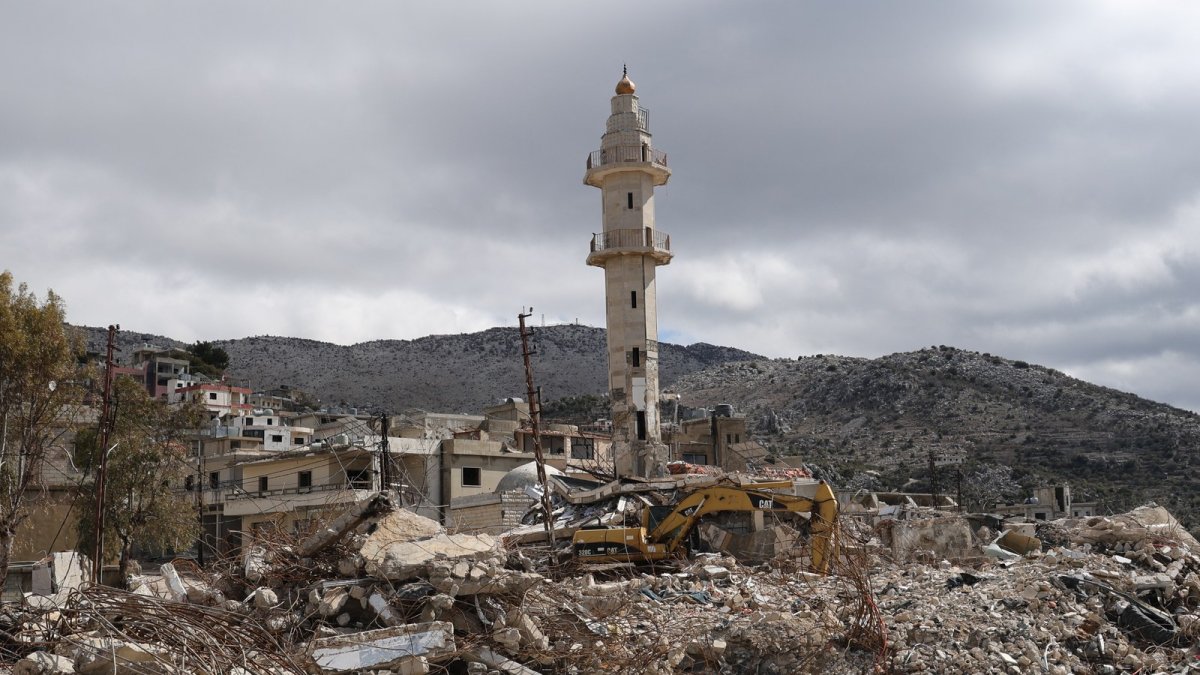
Ancestral Lands Beyond Reach
Walid Nasser, a retired General Security officer in his 50s, embodies the quiet devastation of the occupation. He no longer leaves his home after 7pm. While raids and detentions have become less frequent since the June framework agreement, the occupation has settled into a "quieter rhythm" of patrols, surveillance, and intimidation. "Every day Israelis carry out patrols. Every day there's shooting. Morning. Night. Sometimes it feels like they're simply sweeping the area with gunfire. Perhaps it's to intimidate people," he said. Two days before speaking to The National, shrapnel from Israeli shelling struck his home. Three months earlier, his house was raided while he was away.
Nasser can no longer reach a 15-dunum (1.5 hectare) stretch of land where he built a small house surrounded by walnut, almond, cherry, and apple trees. Another 12 dunums of olive groves in the foothills are also beyond reach. "These are ancestral lands inherited from our parents and grandparents... I can't reach any of it now. This house where we're standing now is all that's left for me here," he said. The Israeli forces have turned the Rabaa Al Teben foothill into a military point looming over the town, and bulldozers have razed a path on the opposite hill, leading residents to suspect further entrenchment. On August 5, fires swept the outskirts of Kfarshouba after Israeli shelling, with the sounds of explosions from the Shiite villages of Khiam and Arnoun in the near distance, where demolitions continue.
The "Pilot Zone" Illusion: Barriers in Zawtar al-Gharbiyah
The occupation's entrenchment is not limited to Kfarshouba. In the early hours of August 8, Israeli troops infiltrated Zawtar al-Gharbiyah, a village that had been placed under Lebanese army control as part of the June framework agreement. They erected an earthen barrier near the town square, blocking the road at the eastern entrance. Mayor Abed Ezzeddine said residents were surprised to see the barrier, as the village was supposed to be under Lebanese army protection. A Lebanese military source called the move a violation of the framework accord, while the Israeli military told AFP it was "not aware of such an event in this area."
Zawtar al-Gharbiyah is one of two "pilot zones" where the Lebanese army is deploying under the US-sponsored framework agreement signed with Israel on June 26. The agreement envisions a phased Israeli withdrawal in return for the disarmament of Hezbollah. The Lebanese army deployed to the village on July 21, and around 50 families have since returned. Yet the barrier, built roughly 100 metres from the town square, undermines the very premise of the pilot zone. The situation is further complicated by the fact that three Lebanese soldiers were wounded on Saturday while trying to defuse unexploded ordnance in the village, and nearby Mansouri was shelled by Israeli artillery, effectively sealing it off and preventing residents from returning.
A Framework Agreement That Hasn't Stopped the Occupation
The framework agreement, in effect since June, provides for a phased Israeli withdrawal and the disarmament of Hezbollah. But residents say Israeli military operations never stopped. The seventh round of direct, US-mediated talks in Rome concluded on August 6, with Israelis refusing to discuss withdrawing from more areas before Beirut's military had full control over the pilot zones. A new round of talks is scheduled for September. Meanwhile, Israel continues to bulldoze in occupied Zawtar al-Sharqiyeh towards the Ali al-Taher area of Nabatieh al-Fawqa, conduct drone strikes on open ground in Mayfadoun, and carry out ground incursions in Kfar Shouba and Haddatha. Villages along the line of contact, such as Nabatieh al-Fawqa and Mansouri, remain uninhabitable.
El Hage's words from Kfarshouba capture the grim reality: "They've been here since early morning... One of the fires is in the valley below the municipal building and the mosque" — both destroyed during the 2024 Israel-Hezbollah war — "and the tanks are still moving above us in the hills." One bulldozed and burnt area is close to the newly erected electricity pole. "We have to keep the water flowing... So people can continue living in Kfarshouba." This determination to survive, to maintain a semblance of normal life, is met with an occupation that seems designed to make that impossible.
Legal Experts: A Potential War Crime
Rights groups and legal experts are increasingly vocal about the illegality of Israel's actions. By preventing the population from returning home, Israel may be committing the war crime of unlawful transfer. The "security zone" has no legal status under international humanitarian law. Aaron Kerney, an international human rights lawyer, notes that acknowledging the occupation would trigger Israel's obligations under the Geneva Conventions, including protecting civilians, safeguarding property, and administering the territory while maintaining the existing legal and administrative order. "Obviously, military necessity cannot justify transferring people or preventing them from returning because of their religion," Kerney said. Israel's threats to still-populated villages that they could suffer the same fate as the emptied Shiite villages could amount to collective punishment or prohibited measures of intimidation.
The Israeli strategy in populated south Lebanon villages is reminiscent of its occupations in Syria's Quneitra and Deraa provinces after the fall of Bashar Al Assad, and in the Palestinian territories. The pattern is consistent: control the land, control the people, and make life so difficult that they leave. For the residents of Kfarshouba and other villages along the line of contact, the future is uncertain. The framework agreement was supposed to bring a phased Israeli withdrawal, but the earthen barriers and ongoing military operations suggest otherwise. As the international community watches, the people of southern Lebanon continue to live under an occupation that has turned their ancestral homes into a prison, with no clear end in sight.
By Fatima Al-Rashid, Staff Writer
This article was produced with AI-assisted research and editorial support. Reporting is based on sources cited in the article.
What's Your Reaction?
 Like
0
Like
0
 Dislike
0
Dislike
0
 Love
0
Love
0
 Funny
0
Funny
0
 Wow
0
Wow
0
 Sad
0
Sad
0
 Angry
0
Angry
0
Gulf/MENA Correspondent at Global1.News. Based in Doha, covering Gulf politics, energy markets, diplomacy, and development across the Middle East and North Africa. Tracks the economic transformation of the Gulf states.










Comments (0)