
The Quiet Vietnamese: Hanoi Nearly Quadruples Laos Investment as Vientiane Hedges Against Beijing
Vietnamese investment in Laos nearly quadrupled in the first half of 2026. On paper, the surge is being framed in the familiar language of "great friendship" and "special solidarity" that has characterized Hanoi-Vientiane relations since the mid-1970s. But the timing, the scale, and the context of Laos's deepening debt crisis point to something more consequential: a small, landlocked, single-party state actively seeking a counterweight to its dominant creditor and infrastructure partner, China.
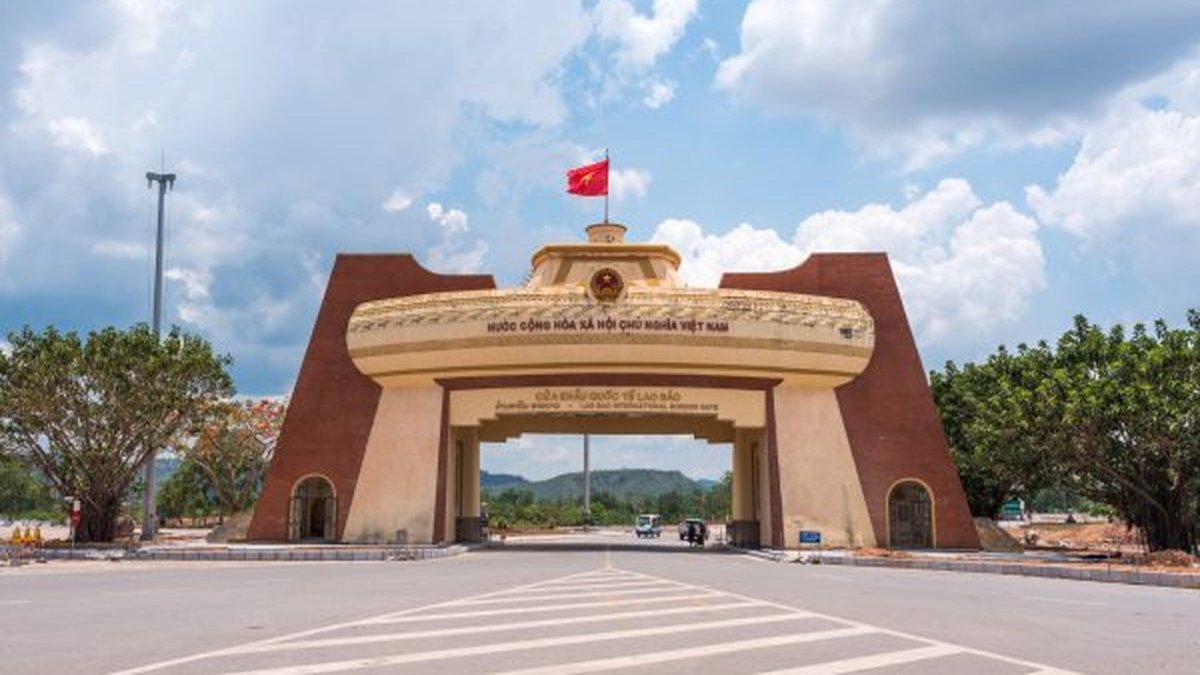
Vietnamese investment in Laos nearly quadrupled in the first half of 2026. On paper, the surge is being framed in the familiar language of "great friendship" and "special solidarity" that has characterized Hanoi-Vientiane relations since the mid-1970s. But the timing, the scale, and the context of Laos's deepening debt crisis point to something more consequential: a small, landlocked, single-party state actively seeking a counterweight to its dominant creditor and infrastructure partner, China.
That is the central argument of an analysis by Chris Taylor, senior risk consultant for Access Asia Group, published in The Diplomat's Pacific Money section. The investment figures are the most concrete signal yet of that strategy. Vietnam's Ministry of Foreign Affairs put first-quarter investment flows at $582 million, up 4.2 times year-on-year, with cumulative Vietnamese investment reaching $6.6 billion across 289 projects. Lao officials, speaking at the July VIETLAO Expo in Vientiane, cited a slightly higher first-half figure of nearly $600 million in new commitments — also a 4.2-fold jump — concentrated in mining, electricity, energy, and agriculture. The two official readings, Hanoi's quarterly figure and Vientiane's half-year estimate, are closely aligned, and both confirm the same dramatic acceleration. An earlier count from March, reported by the Asia News Network, put cumulative Vietnamese state-enterprise investment at $6.21 billion across 276 projects, and confirmed Laos as Vietnam's top outbound investment destination among 85 countries.
The Investment Surge: More Than Fraternal Solidarity
The trade numbers reinforce the trajectory. VietnamNet reported Vietnam-Laos trade turnover of $1.07 billion in the first five months of 2026 — Vietnam exporting $293 million and importing $782 million — with both governments, according to Voice of Vietnam's coverage of the Expo, targeting $4 billion in bilateral trade for 2026, on the way to a stated goal of $10 billion by 2030.
Official discussion of the relationship remains wrapped in the mantras of "great friendship," "special solidarity," and "strategic cohesion" — language that has been circulating between Vietnamese and Lao officials since the mid-1970s. Nothing in recent statements from Hanoi or Vientiane signifies an imminent break with convention. But the new Lao leadership installed after January's 12th Party Congress has formalized "self-reliance" and partner diversification as explicit policy, according to an East Asia Forum analysis from March. The investment surge is the practical expression of that policy shift.
Laos's Debt Crisis: The Numbers Behind the Hedging
The reality driving this diversification is a debt crisis of serious proportions. The Bertelsmann Transformation Index's 2026 Laos country report puts public debt at $16.4 billion — 108 percent of GDP by IMF estimates — and warns that annual debt service is set to climb past $700 million a year by 2028. That level of service, the report warns, will likely require debt relief from China "on an unprecedented scale."
The exposure to Beijing is the core of the problem. 9DASHLINE puts Laos's specific debt exposure to China — its largest single bilateral lender — at around $12.2 billion, or roughly 65 percent of GDP. Coface's country risk analysis notes that foreign direct investment, which totaled around 5 percent of GDP in 2024, still comes mainly from China, Thailand, and Vietnam, and mostly flows into hydropower dams, mining, and grid infrastructure. The concentration of FDI in sectors tied to Chinese infrastructure compounds the dependency.
The market has registered its concerns. Laos returned to the international bond market in November 2025 for the first time in years, raising $300 million in Singapore at an 11.25 percent coupon — a rate that, as the East Asia Forum noted in its February country review, reflects investor concern over prior negative-pledge violations on hydropower assets and continued opacity around Chinese debt deferrals. China has granted partial debt deferrals, which the same review says buys Vientiane breathing room without resolving anything. A more comprehensive debt restructuring is expected sometime in 2026.
The Structural Limits of the Hedge
For all the activity, Laos is not dropping China — and cannot. The structural ties are too deep. The Laos-China Railway and China Southern Power Grid's stake in the national grid are capital-intensive, decade-horizon projects that define the physical shape of the Lao economy. They are not going anywhere, and nothing in the current Vietnam-Laos push is designed to touch them.
Vietnam is not displacing China; the two economies are not even competing for the same assets. Vietnamese capital is concentrated in mining, hydropower and energy, and high-value agriculture — sectors where Vietnamese firms already have regional experience and where investment tends to be smaller-ticket and faster to deploy than the multi-billion-dollar infrastructure projects China has built. What Vietnam is doing, in effect, is filling the gaps around Chinese infrastructure, with Vientiane's active encouragement.
A 2026 academic assessment of the relationship by Khanh Tran, Hoan Quang Truong, and Hoa Le Phuong argues that the Vietnam-Laos "strategic connection" now explicitly contains elements of competition with China and the exertion of Vietnamese influence — alongside, not instead of, the fraternal solidarity language — as both countries navigate the pressure that a more assertive China is putting on the wider Mekong subregion.
What Vietnam Provides That China Cannot
There is something the investment figures do not capture: legitimacy. The Hanoi-Vientiane relationship carries decades of party-to-party trust that no amount of Chinese financing can replicate. For a single-party state seeking to manage its most consequential external relationship, that political capital matters as much as the capital inflows. The Lowy Institute, in its own assessment of Laos's debt crisis, cautions that the "debt trap" framing is overstated and that Lao elites bear real responsibility for the borrowing decisions and the collapse in revenue collection that followed. But it agrees China has built dominant infrastructural and geoeconomic power over Laos over roughly two decades — even as Vientiane keeps trying to balance that against Vietnam, Thailand, Russia, and others.
The texture of the Vietnam-Laos relationship is visible at events like the VIETLAO Expo, where the July edition in Vientiane drew more than 250 booths and 140 companies from both sides — a bigger showing than in previous years, according to VietnamPlus. VietnamNet's coverage of the accompanying business seminar quoted a Vietnam Trade Promotion Agency official calling for stronger direct business links and better cross-border logistics: better roads, better customs processing, and fewer middlemen skimming margins off cross-border trade. Lao officials, for their part, explicitly encouraged more Vietnamese investment in organic agriculture and deep processing — refining goods into finished or semi-finished states prior to export — a higher-value activity than the raw resource extraction that has defined so much of Laos's relationship with China.
Russia: The Other Counterweight in Vientiane's Portfolio
Vietnam is not the only partner Laos is visibly leaning on. The other, less discussed in the ASEAN business press but just as real, is Russia. The East Asia Forum's March analysis notes seven wide-ranging agreements signed in Moscow, including a defense cooperation roadmap, since the start of the year. Neither relationship is a substitute for China's role in Lao infrastructure. What both offer instead is a hedge: additional capital sources, additional political cover, and — in Vietnam's case particularly — additional legitimacy.
What to Watch: Debt Restructuring and the Mekong's Strategic Moment
The trade fair season and the investment figures are encouraging, but the more useful indicator of Laos's economic trajectory will be the outcome of debt restructuring talks scheduled for later this year. If Laos can successfully renegotiate its China debt while continuing to scale up Vietnamese investment, it may be able to genuinely diversify its way out of dependency — avoiding the concession of state assets to Chinese buyers to plug near-term liquidity gaps. That is a lingering problem with mining concessions and state-owned enterprises.
The stakes extend well beyond Laos. The Mekong subregion is where China's economic statecraft meets the diversification instincts of smaller states, and Laos is the most extreme test case of that tension. For middle powers like South Korea — itself one of Vietnam's largest investors and a country that has navigated deep economic interdependence with China while diversifying its own partnerships — the pattern is familiar. The lesson from Vientiane is that diversification is not a rejection of dependence but a management strategy for it. What Laos is attempting is not exit but balance: keeping Beijing's infrastructure in place while building enough alternative relationships to retain room to maneuver.
Whether that balance can hold will depend on factors well beyond Vientiane's control: the terms of the debt restructuring, the trajectory of Chinese lending behavior, and the willingness of partners like Vietnam and Russia to scale up their commitments. The investment surge of early 2026 is a signal, not a solution. But it is a signal worth reading carefully.
By Prof. David Park, Staff Writer
This article was produced with AI-assisted research and editorial support. Reporting is based on sources cited in the article.
What's Your Reaction?
 Like
0
Like
0
 Dislike
0
Dislike
0
 Love
0
Love
0
 Funny
0
Funny
0
 Wow
0
Wow
0
 Sad
0
Sad
0
 Angry
0
Angry
0

East Asia/Technology Correspondent at Global1.News. Seoul-based voice covering Korean politics, technology, business, and culture. Analyzes how technology and geopolitics intersect across East Asia.












Comments (0)