
A Judge Reads the President His Own First Amendment, Then Ends the Case for Good
A Miami federal judge dismissed President Trump's second defamation suit against The Wall Street Journal with prejudice, ruling he failed to plead actual malice. The order leaves open a possible anti-SLAPP fee award and does not decide whether the letter is real.
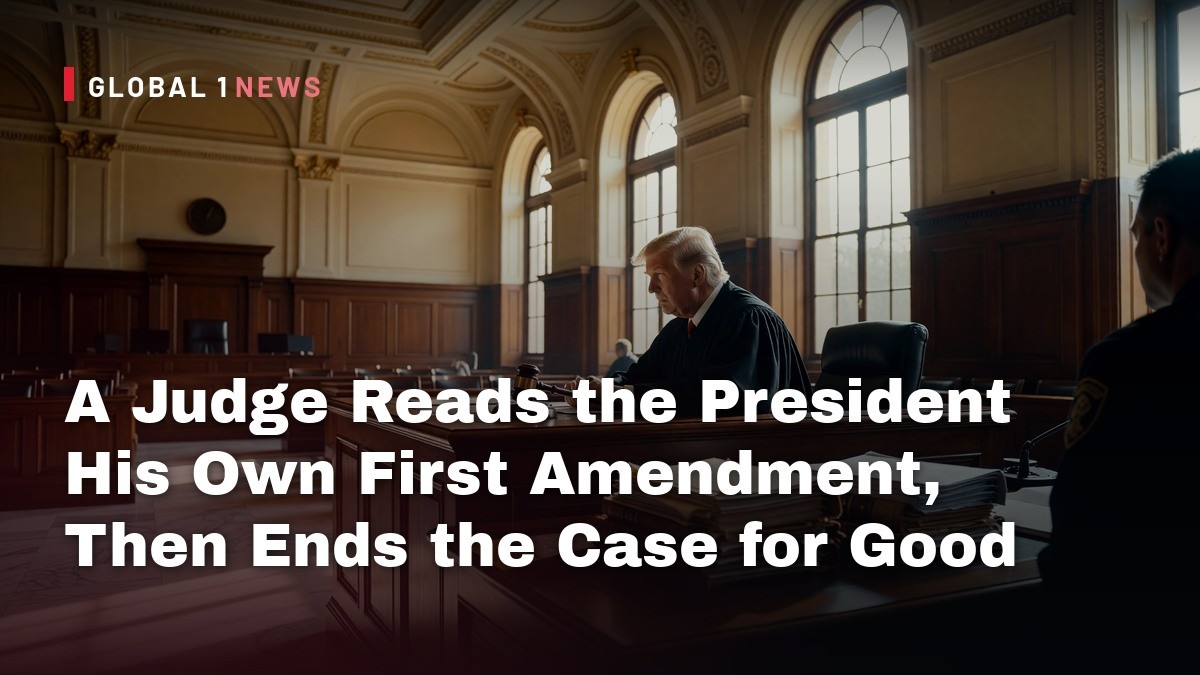
A federal judge in Miami has thrown out President Donald Trump's second attempt to sue The Wall Street Journal and five other defendants over a July 2025 story about a birthday letter to Jeffrey Epstein, and he did it with prejudice. The order, docket entry 80 in Case No. 1:25-cv-23232, entered 31 October 2026 and signed by U.S. District Judge Darrin P. Gayles, is not a ruling on whether the letter is real. It is a ruling on what a public figure must plead before he gets discovery, and it opens not with the facts but with Justice Brandeis. The dismissal is permanent, the fee question is still open, and the underlying factual dispute remains untouched by any court.
A Judge Reads the President His Own First Amendment, Then Ends the Case for Good
Washington, United States — A sitting president sued a newspaper over a story he called fake, and a federal judge has now told him, in twenty pages, that the First Amendment does not work that way. The case is over in the Southern District of Florida. The question at the centre of it is not.
A Twenty-Page Order That Opens With Brandeis
The document's first page is an epigraph rather than a recital of facts: Justice Brandeis's concurrence in Whitney v. California, as quoted in New York Times Co. v. Sullivan. "Those who won our independence believed," the passage reads, "that public discussion is a political duty; and that this should be a fundamental principle of the American government." It closes on the line that the Framers "eschewed silence coerced by law-the argument of force in its worst form." The order was signed in chambers in Miami by Judge Gayles and names six defendants: Dow Jones & Company, which publishes the Journal; News Corporation; Keith Rupert Murdoch, described in the order as a director and majority owner of News Corp; chief executive Robert Thomson; and the reporters Khadeeja Safdar and Joseph Palazzolo. CNN and CBS have described the original claim as $20 billion; Reuters reports he sought at least $10 billion in the refiled suit.
What the Judge Decided, and What He Left Alone
The holding is procedural. Judge Gayles granted the motion to dismiss the First Amended Complaint and dismissed it with prejudice, citing Michel v. NYP Holdings for the Eleventh Circuit rule that a public figure "must plausibly allege actual malice at the outset of the litigation." The reason given is that the costs of defending through discovery "could chill free speech nearly as effectively as the absence of the actual malice standard altogether." What the order does not decide matters just as much. The court expressly declined to address whether the statements were true or defamatory, saying it need not reach those issues once actual malice failed. It stated that whether President Trump authored the letter, or was Epstein's friend, are questions of fact that cannot be resolved on a motion to dismiss. It also declined to incorporate by reference the birthday book and the letter produced from the Epstein estate, because the president disputes their authenticity.
Two Days Between the Warning and the Presses
The order reconstructs the pre-publication window in detail. On 15 July 2025, Palazzolo emailed then White House press secretary Karoline Leavitt advising that Dow Jones intended to publish an article about a birthday letter Trump purportedly created for Epstein. Leavitt called Palazzolo and told him the "subject matter" of the proposed article was false. Trump, through counsel, denied writing the letter and warned Dow Jones not to publish. Trump then told Murdoch directly that he had not signed or sent it; when Murdoch responded that he would "handle it," Trump thought the paper would not print. The Journal published online on 17 July 2025, and ran the story on the front page of its print edition on 18 July 2025. Trump's denial to the paper was explicit: "This is not me. This is a fake thing. It's a fake Wall Street Journal story."
Denial Is Not Malice
The core of the ruling is that a denial cannot manufacture malice. Trump's argument, as the court framed it, was that once he declared the letter a "fake," the paper should have disregarded everything else it learned and not published. Judge Gayles rejected that squarely. "Indeed, were that the law, any time a public figure or his team denies an accusation, journalists would be immediately blocked from publishing negative or contradictory press-a result that flies in the face of the 'American privilege to speak one's mind, although not always with perfect good taste, on all public institutions.'" The court also noted that the article did not ignore or minimize the denial; it told readers Trump had called the letter a fake and denied writing it, which made any allegation of actual malice less plausible. In plain terms, actual malice means knowledge of falsity or reckless disregard for the truth, not hostility, and not a refusal to accept a subject's word.
The Investigation the Order Called Thoughtful and Detailed
The court found the amended complaint "comes nowhere close" to the pleading standard because the article "details a thoughtful and detailed investigation." Before publication, the defendants contacted Trump and his team, Justice Department officials and the FBI. Trump and his team responded with the denial, the Justice Department did not respond at all, and the FBI declined to comment. The reporters sought to speak with Ghislaine Maxwell; she did not respond, and her attorney said she was focused on her case before the Supreme Court. They reached out to others named in the birthday book, including Leslie Wexner and Alan Dershowitz, and to people involved in binding the book, who confirmed that the bookbinder Herbert Weitz put it together. "Grasping at straws," the order says, "the Amended Complaint attempts to manufacture flaws with the investigation."
Why Maxwell Became a Red Herring
The amended complaint leaned heavily on Ghislaine Maxwell, and the court dismantled that reliance on timing. The Justice Department interviewed Maxwell on 24 July 2025, and she stated, subject to penalty of perjury for lying to a federal officer, that she did not remember Trump submitting a letter for Epstein's fiftieth birthday. The decisive point is sequence: the interview happened after the article was published. A footnote in the order says so directly, concluding that the defendants could not have included a discussion of it in the article. The court also found it difficult to reconcile the "purposely avoided" theory with Trump's own allegations. Its summary of the Maxwell references is blunt: they are "a red herring." The order treats the interview as an allegation the complaint made, not as a finding about what happened in 2003.
The Argument That Turned Around on the President
On 8 September 2025, the Journal published a piece titled "A Visual Breakdown of the Trump Birthday Letter to Epstein," comparing the signature, typeface, drawing style, point of view and diction in the letter with earlier Trump communications. Trump's team seized on it, arguing the piece showed his signature "could not be more different" from the one in the letter. The court turned that around, noting it is unclear why the president makes that argument "when it contains several examples where President Trump's actual signature and sketches are similar to those in the Letter." Separately, the court found the defamation per quod count failed for want of special damages, holding that reputational harm is not a special damage. That finding sank the second count independently of the malice question.
The Fee Question the Headlines Skipped
The defendants asked for attorneys' fees under Florida or New York anti-SLAPP law, statutes designed to stop strategic lawsuits against public participation by allowing early dismissal and cost-shifting when a suit targets speech on a public issue. The court agreed on the merits of the underlying claim: "The Court agrees that President Trump's defamation claims lack merit." But it found that, on the limited briefing before it, it is unclear which state's statute applies. The order notes that several federal district courts have found New York's anti-SLAPP statute precludes a fees application brought by motion in federal court, while Florida's fee-shifting provisions may be brought that way. Judge Gayles reserved jurisdiction and allowed thirty days for a fees motion including a choice-of-law discussion. No fees have been awarded, and entitlement is undecided.
A Pattern Rather Than a One-Off
The dismissal sits inside a wider run of litigation. CNN reported that Trump filed a $15 billion defamation case against The New York Times over its coverage of his 2024 campaign, and that a judge directed him to revise his complaint again, which he did in August; it also reported that legal analysts it spoke with could not recall another instance of a sitting president suing a news outlet over a story. CNBC reported that another Miami federal judge ordered on 22 October that he sit for a deposition in his $10 billion defamation case against the BBC by 11 December. A judge dismissed his suit against the Des Moines Register and pollster J. Ann Selzer with prejudice in September, CNN reported. The Associated Press noted that he is also in litigation with the wire service itself, and with CNN, MS NOW and Politico, which are suing him for restored White House access after he banished them in mid-September.
What Happens Next
A spokesman for Trump's legal team told CNBC the president plans to appeal; CBS, citing a source familiar with the strategy, reported that an appeal is likely. None has been filed. Dismissal with prejudice means the case cannot be refiled in that court, but an appeal would go to the Eleventh Circuit, whose precedent the order applies throughout, and would test how the actual-malice pleading rule was applied here. The thirty-day window for a fees motion runs from 31 October 2026, and the choice-of-law question will have to be answered before any award. What no court has resolved is the question at the centre of the story: whether the letter is authentic, and who wrote it. The order left that exactly where it found it.
By Jessica Ali, Staff Writer
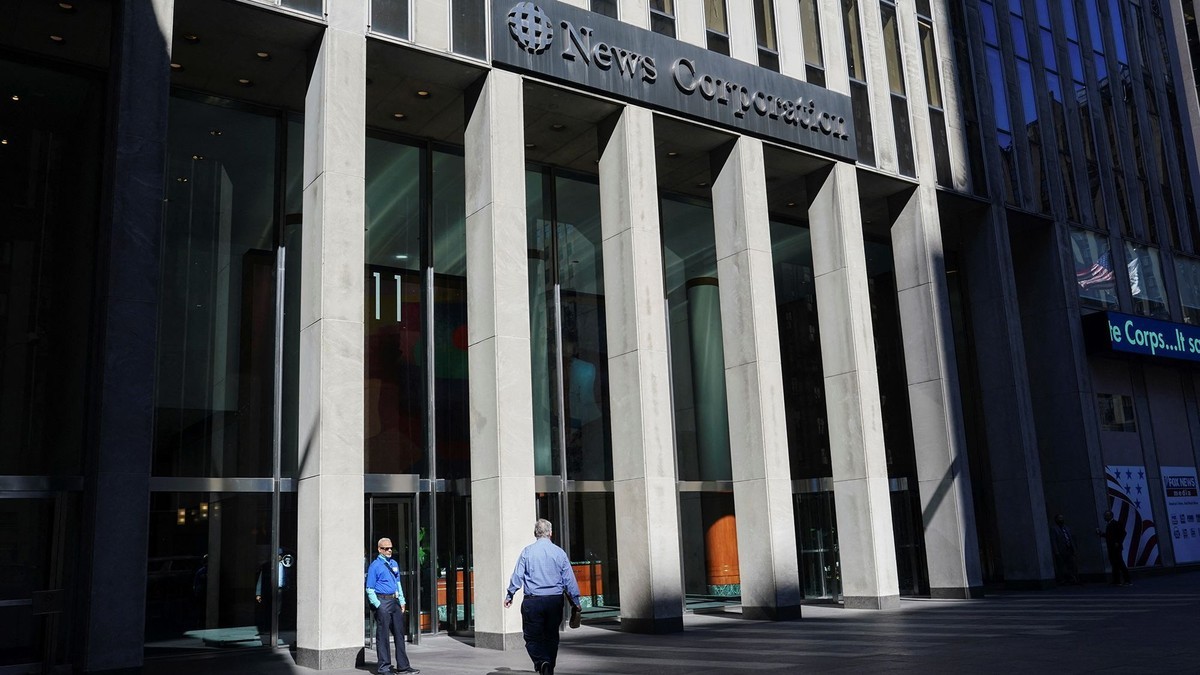
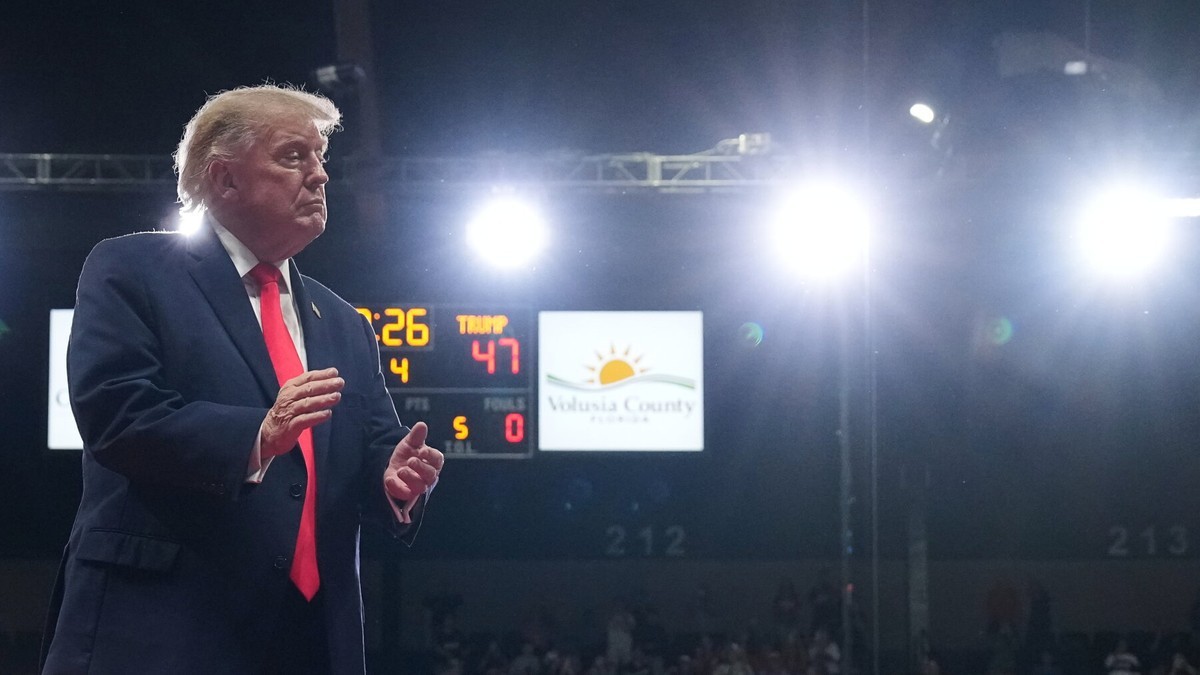
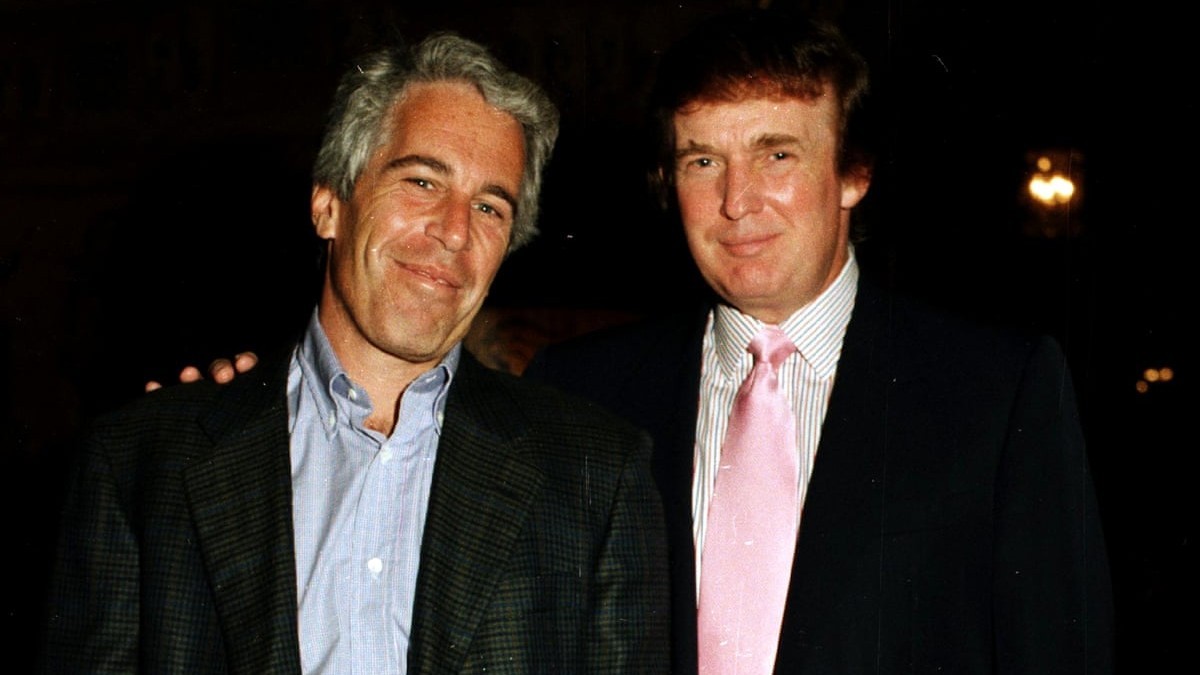
This article was produced with AI-assisted research and editorial support. Photographs: Bing Guan/Reuters (the News Corporation building in Manhattan, which houses The Wall Street Journal); Jacquelyn Martin/AP (President Donald Trump in Daytona Beach, Florida, on 30 October 2026); Davidoff Studios Photography/Getty Images via The Guardian (Jeffrey Epstein and Donald Trump at Mar-a-Lago, 22 February 1997). Cover: Global 1 News editorial image. Sources: U.S. District Court for the Southern District of Florida (Order, Case No. 1:25-cv-23232, ECF No. 80); Associated Press; Reuters; CNBC; CNN; CBS News; NPR; The Guardian; CourtListener.
What's Your Reaction?
 Like
0
 Dislike
0
 Love
0
 Funny
0
 Wow
0
 Sad
0
 Angry
0

Editor-in-Chief at Global1.News. Atlanta-based journalist who cuts through the BS and tells it like it is. Lead anchor, host, and the voice you hear when the spin stops and the truth starts.














Comments (0)