
J&K Medical Interns Strike: 1,600 Doctors Demand Rs 30,000 Stipend, End to 80-Hour Work Weeks
Over 1,600 MBBS, BDS, and FMGE interns across all medical colleges in Jammu and Kashmir have launched an indefinite strike, demanding an immediate revision of their monthly stipend from Rs 12,300 to at least Rs 30,000.
Over 1,600 MBBS, BDS, and FMGE interns across all medical colleges in Jammu and Kashmir have launched an indefinite strike, demanding an immediate revision of their monthly stipend from Rs 12,300 to at least Rs 30,000. The protest, which began on August 31, 2026, has brought the Union Territory's medical education system to a standstill, with interns at Government Medical College (GMC) Jammu reporting work weeks exceeding 80 hours—a figure that starkly contrasts with National Medical Commission (NMC) recommendations.
J&K Medical Interns Strike: 1,600 Doctors Demand Rs 30,000 Stipend, End to 80-Hour Work Weeks
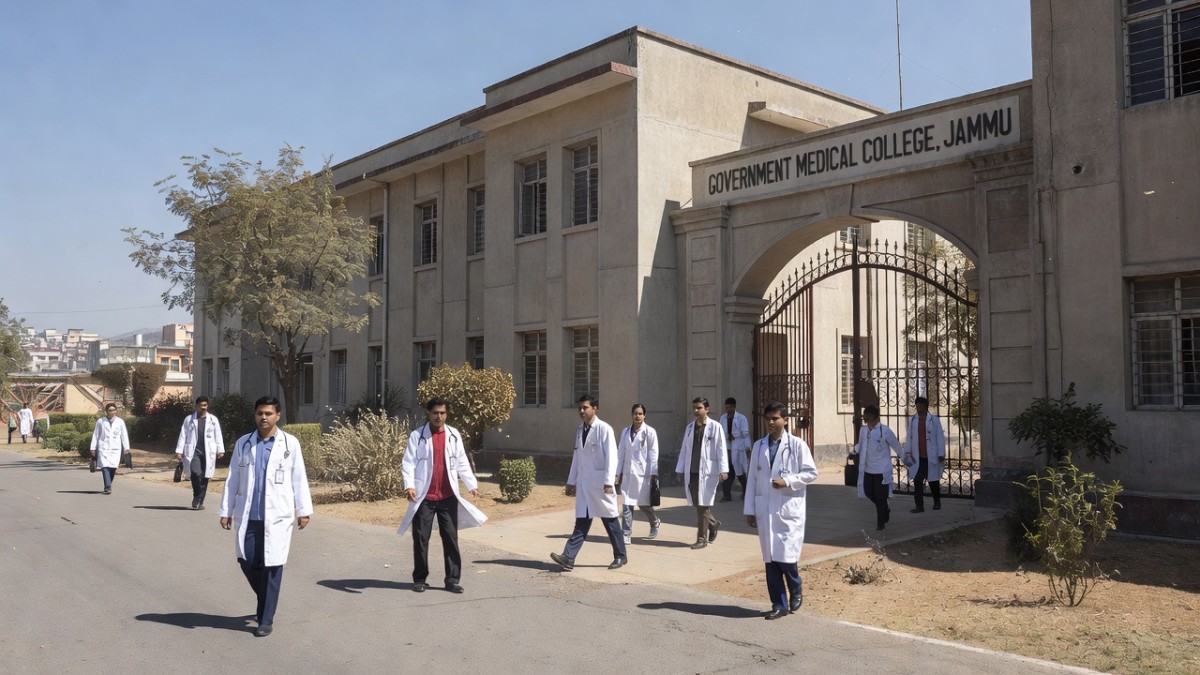
Jammu, Jammu & Kashmir - September 2, 2026 - The corridors of Government Medical College (GMC) Jammu, usually bustling with white-coated interns, now echo with protest chants. The indefinite strike, triggered by a seven-year freeze on stipends, has exposed a deeper crisis in India's medical education framework—one where the gap between regulatory recommendations and ground reality continues to widen. As the Union Territory's health minister acknowledges the demand as "genuine," the striking doctors remain unmoved, demanding written assurance rather than verbal promises.
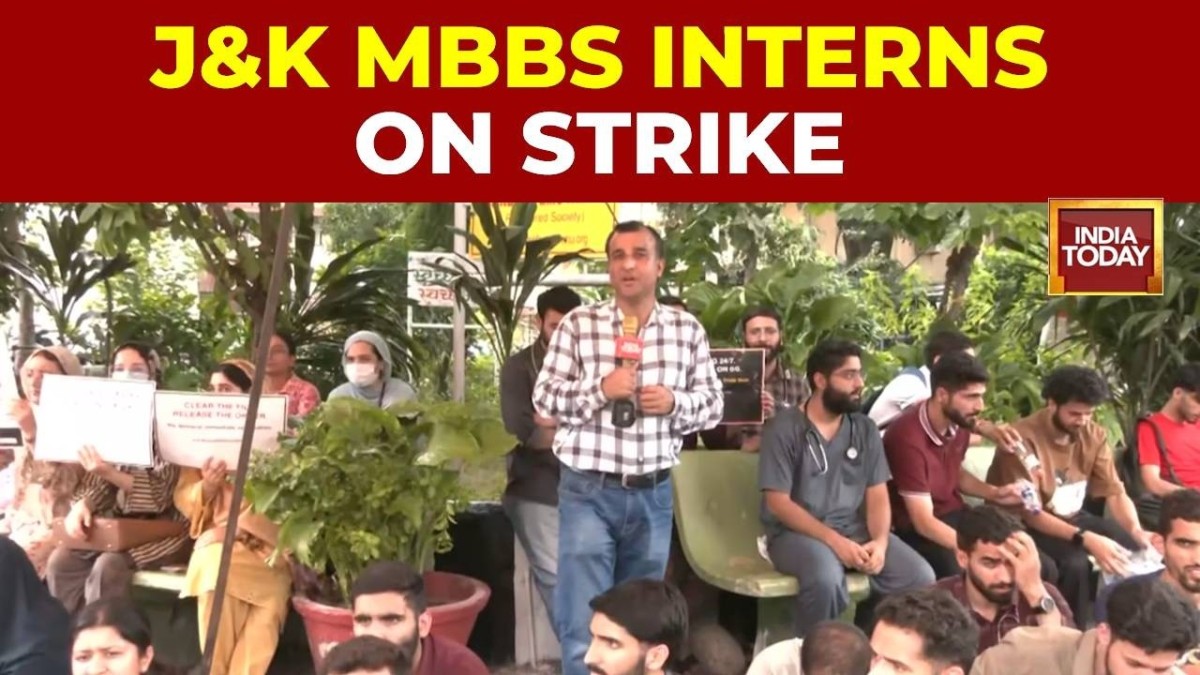
The Numbers Behind the Strike
The arithmetic of this protest is stark. Interns at GMC Jammu report earning roughly Rs 400 per day—a figure derived from dividing their Rs 12,300 monthly stipend across 30 days. Yet their actual working hours tell a different story: over 80 hours per week, translating to more than 11 hours daily, often without overtime compensation. This means the effective hourly wage for these medical professionals falls below Rs 36, a figure that undercuts minimum wage standards in most Indian states.
The scale of participation is significant. Nearly 1,600 to 1,700 medical interns across all medical colleges in Jammu and Kashmir—including GMC Jammu, GMC Srinagar, and the newer government medical colleges in the region—have joined the strike. This represents virtually the entire intern workforce in the Union Territory, effectively halting routine hospital services that depend heavily on intern labor for patient care, record-keeping, and emergency coverage.
Seven Years Without a Revision
The core grievance is temporal. The Rs 12,300 stipend has remained unchanged since 2019—approximately seven years. During this period, inflation has eroded the real value of this amount by an estimated 30-35%, based on Consumer Price Index data. What could purchase a modest monthly ration in 2019 now covers barely half the same basket. For interns who have completed five and a half years of rigorous medical education, many carrying education loans exceeding Rs 20-30 lakh, the financial strain is acute.
The comparison with other states is damning. Interns point to Odisha, Assam, and Delhi, where stipends range from Rs 20,000 to Rs 35,000 monthly. Central institutions like AIIMS Vijaypur (AIIMS Jammu, located at Vijaypur in Samba district) offer significantly higher compensation to their interns, creating a two-tier system within the same Union Territory. This disparity, the striking doctors argue, is not merely about money—it is about valuing medical professionals equitably across the country.
Working Hours: When the Rulebook Is Ignored
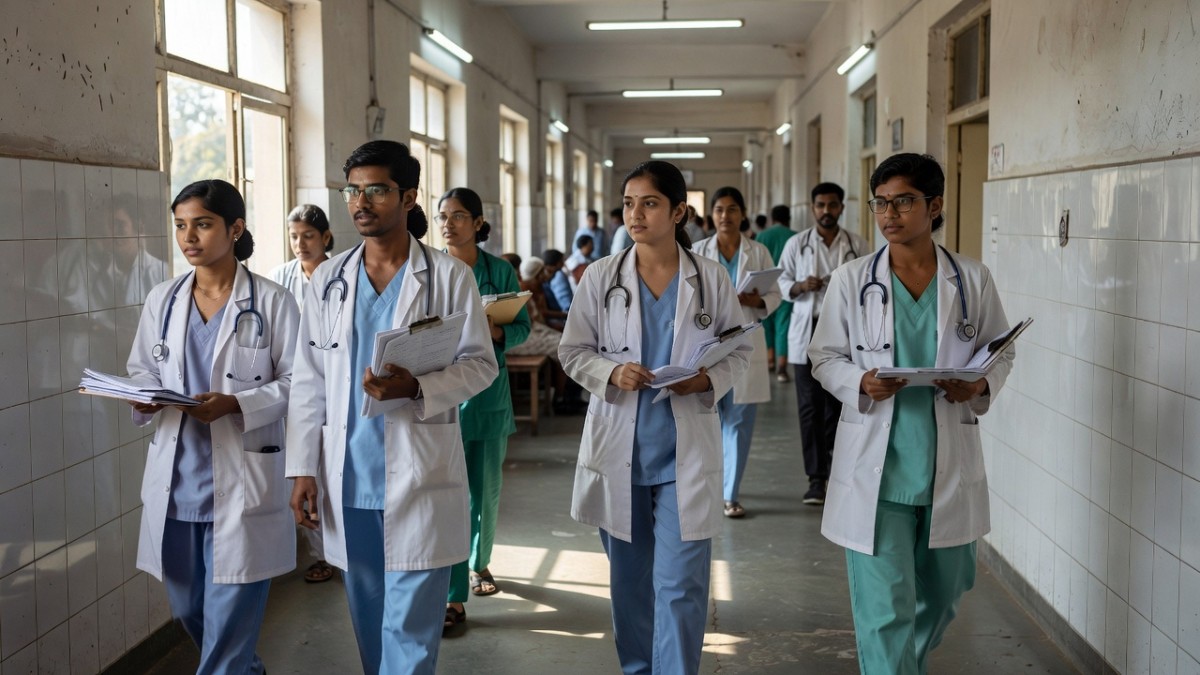
The National Medical Commission has been explicit: resident doctors should work no more than 74 hours per week and not more than 24 hours at a stretch. These norms, established to protect both doctor well-being and patient safety, are routinely violated across Indian medical institutions. The striking interns report that 70-80 hour weeks are not the exception but the norm—a reality that has persisted despite the NMC's recommendations.
The context here is critical. Since the 2024 trainee doctor unrest following the RG Kar Medical College tragedy in Kolkata, junior doctors' working conditions, safety, and compensation have been under national scrutiny. The NMC, in a submission to the Supreme Court, acknowledged that long working hours cause psychological distress among resident doctors. Yet, two years later, the ground reality in J&K suggests that regulatory intent has not translated into institutional practice. The interns' demand for a written implementation order, rather than verbal assurances, reflects a deep-seated distrust of a system that has failed to enforce its own guidelines.
What Other States Pay
Across India, MBBS internship stipends in 2026 present a fragmented picture. The range is broad—from roughly Rs 10,000 to Rs 35,000 per month—depending on the state and institution. Delhi's government hospitals and AIIMS institutions lead the pack, while several states, including J&K, languish at the lower end. This disparity has created an uneven playing field for medical graduates, influencing career choices and specialty preferences.
The economic argument for revision is compelling. An intern working 80 hours a week at Rs 12,300 monthly earns less per hour than a semi-skilled construction worker in Jammu city. This wage compression, when viewed against the backdrop of seven years of inflation, represents a de facto pay cut. The striking doctors argue that the Rs 30,000 demand is not extravagant—it merely brings their compensation in line with the national average for medical interns and acknowledges the intensity of their work.
The Health Minister's Response
J&K Health Minister Sakina Itoo has acknowledged the demand as genuine, stating that the file is under process. This verbal assurance, however, has been met with skepticism. The interns cite three years of unresolved promises—a pattern of official acknowledgment without concrete action. Their rejection of verbal assurances in favor of a formal written implementation order signals a shift in how junior doctors engage with the administration: no longer content with sympathy, they demand institutional commitment.
The timing is politically sensitive. The strike began on August 31, 2026, just days after the interns first threatened indefinite action on August 29. The administration's response will be watched closely, not just in J&K but across India, where similar protests have erupted periodically. The outcome could set a precedent for how other states handle junior doctor compensation demands.
What This Means for India
This strike is not an isolated incident; it is a symptom of a systemic issue in Indian medical education. The NMC's working hour norms, the Supreme Court's scrutiny, and now this strike—all point to a growing recognition that the current model of medical internship is unsustainable. The reliance on underpaid interns for essential hospital services, while understandable from a staffing perspective, raises fundamental questions about the ethics of medical education and the treatment of young professionals.
For patients, the implications are direct. An overworked, underpaid intern is more prone to errors, less attentive to detail, and more likely to experience burnout—all of which compromise patient safety. The strike itself has disrupted services, but the underlying conditions that prompted it pose a longer-term threat to healthcare quality in the Union Territory. For taxpayers, the question is whether the modest increase in stipend costs—estimated at roughly Rs 3-4 crore annually for 1,600 interns—is a worthwhile investment in healthcare quality and workforce stability.
The Bottom Line
The J&K medical interns' strike is a watershed moment for Indian medical education policy. It has laid bare the disconnect between regulatory intent and institutional practice, between the NMC's recommendations and the lived reality of junior doctors. The demand for Rs 30,000 is not merely about money—it is about dignity, recognition, and the enforcement of existing norms. As the administration processes the file, the striking interns hold their ground, their resolve hardened by seven years of stagnation and three years of broken promises.
The resolution of this strike will send a signal far beyond Jammu and Kashmir. It will tell India's 60,000-plus medical interns whether the system values their contribution or merely exploits their dedication. The numbers are clear, the arguments are compelling, and the stakes—for doctors and patients alike—could not be higher.
-- By Dr. Raj Patel, Staff Writer
This article was produced with AI-assisted research and editorial support. Reporting is based on sources cited in the article.
What's Your Reaction?
 Like
0
Like
0
 Dislike
0
Dislike
0
 Love
0
Love
0
 Funny
0
Funny
0
 Wow
0
Wow
0
 Sad
0
Sad
0
 Angry
0
Angry
0

India/South Asia Correspondent at Global1.News. Analytical voice with a background in science and health journalism. Based in New Delhi, covering Indian politics, education, healthcare, technology, and policy. Breaks down complex data into clear, actionable reporting.














Comments (0)