
Bessent Tells Russia's Finance Minister: No Economic Relief Until Ukraine War Ends
ASHEVILLE, North Carolina — The G20 finance ministers summit this week delivered a stark message to Moscow: there will be no economic relief, no side deals, and no normalization until the war in Ukraine ends. In a tense bilateral meeting on Monday, U.S.
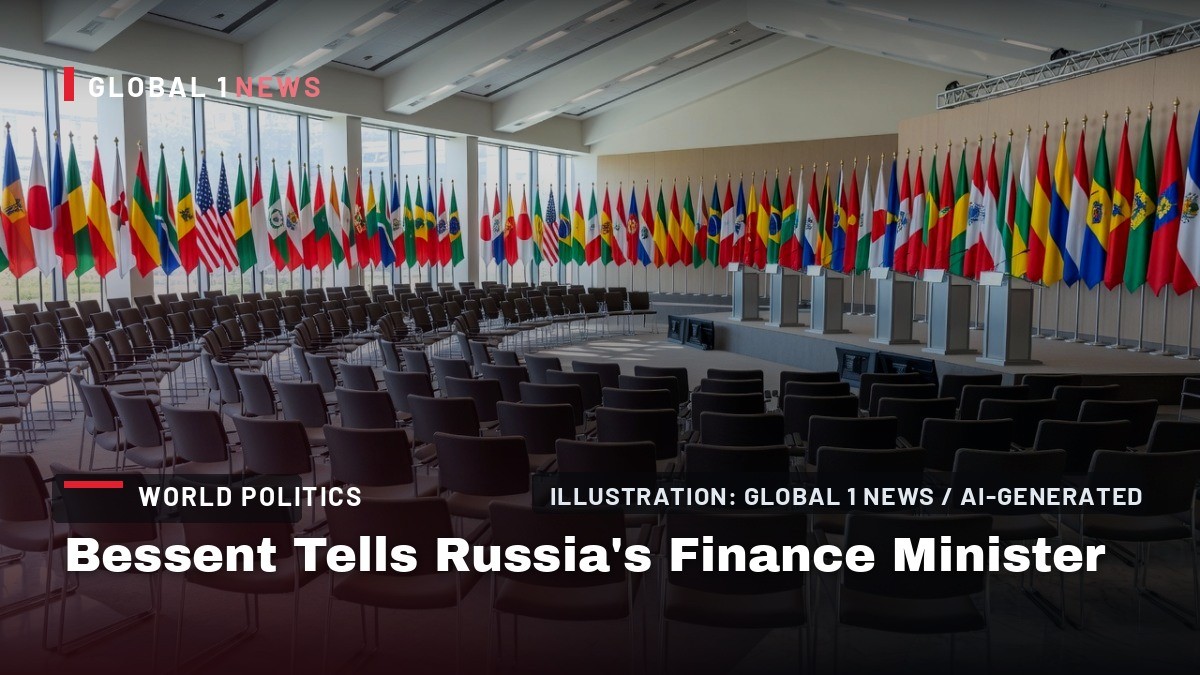
ASHEVILLE, North Carolina — The G20 finance ministers summit this week delivered a stark message to Moscow: there will be no economic relief, no side deals, and no normalization until the war in Ukraine ends. In a tense bilateral meeting on Monday, U.S. Treasury Secretary Scott Bessent told Russian Finance Minister Anton Siluanov that Washington will not grant Russia any economic concessions or negotiate separate agreements while the Kremlin's invasion continues, a source familiar with the talks told Reuters.
The encounter, held on the sidelines of the G20 gathering in Asheville, North Carolina, marked Siluanov's first in-person attendance at a G20 event since Russia launched its full-scale invasion of Ukraine in 2022. His unexpected presence sent ripples through the summit, drawing sharp rebukes from European officials and exposing deep transatlantic divisions over how to handle Moscow's return to the international stage.
Bessent's blunt message: No relief until the war ends
According to a source with direct knowledge of the conversation, the focus of the Bessent-Siluanov meeting was President Donald Trump's peace plan for Ukraine. Russia's Finance Ministry characterized the discussion as covering economic cooperation within the G20 framework. But the reality on the ground was far more pointed.
When Siluanov attempted to steer the conversation toward areas of mutual economic interest, Bessent interrupted him, emphasizing that "nothing is possible until the war is over," the source said. The U.S. Treasury Secretary's message was unambiguous: Washington will not provide Russia with economic relief or negotiate side agreements until Moscow ends its aggression against Ukraine.
The meeting came as global debt levels have reached a record of nearly $353 trillion, and the world economy faces an energy shock triggered by the US-Israel war on Iran. Yet for Bessent, the priority was clear — the war in Ukraine remains the central obstacle to any economic rapprochement with Moscow.
Siluanov's return: A signal of normalization?
Siluanov, who has served as Russia's finance minister since 2011, has not attended a G20 meeting in person since the 2022 invasion. His return to the table in Asheville was widely interpreted as an attempt by Moscow to reassert its presence in global economic forums, a move that European officials view with deep suspicion.
German Finance Minister Lars Klingbeil did not mince words. "Receiving the Russian finance minister here sends a signal I find troubling," Klingbeil told reporters. He said he would have preferred a clear U.S. stance denying Siluanov a regular guest platform. The German minister's comments reflect a broader European anxiety that Washington's eagerness to broker a peace deal may come at the expense of a unified Western position on Russia's aggression.
Klingbeil said he told Siluanov during a plenary session that Moscow had to end the war and "that we clearly support Ukraine." He also revealed that Europe is preparing a further package of sanctions against Russia and hopes for close cooperation with Washington on the measures.
European backlash: 'We do not trust Russia'
The European response to Siluanov's presence was swift and forceful. Polish Finance Minister Andrzej Domanski said he was unhappy to see Moscow represented, although he recognized the right of G20 hosts to invite guests. "We do not trust Russia. They lie constantly, and you need to be really, really cautious while discussing with them," Domanski told Reuters, stressing that Russia was the aggressor in its conflict with Ukraine. "So for me, it would be very difficult to have any kind of conversation with Russia."
European ministers and central bankers went so far as to oppose appearing with Siluanov in the traditional G20 "family photo." The photograph was ultimately taken without the Russian minister, a symbolic but telling gesture of the isolation Moscow still faces among Western economic powers.
Klingbeil said European officials, including European Central Bank President Christine Lagarde, had discussed Russia's involvement on Sunday and agreed that maintaining an avenue for dialogue could allow them to deliver a frank message to Moscow. "However, the mere fact that the Russian finance minister is back – after, I believe, four G20 meetings without Russian participation – indicates an attempt at normalisation, and that makes it all the more important for us to push back," he said.
White House defends engagement with Moscow
The Trump administration, for its part, defended the decision to engage with Siluanov. White House spokesman Kush Desai told AFP that the administration has been working with Russia to push for a peace deal that "would stop the endless bloodshed that the president has really condemned."
"The president and the administration will never shy away from talking with the folks we need to talk to, to further that," Desai said. "That's what we're working on here at the G20."
Trump himself struck a characteristically conciliatory tone, telling reporters: "We like getting along with everybody. One of the reasons I'm so successful, I get along with everybody." This approach, however, has created friction with European allies who view any engagement with Moscow as premature without concrete steps toward ending the war.
A sharp contrast with 2022
Siluanov's appearance in Asheville marked a stark departure from the G20 meeting in Washington, DC, in April 2022, when his virtual participation prompted officials from Canada, the United Kingdom, the US, and the European Central Bank to walk out in protest. That walkout symbolized the Western consensus that Russia had forfeited its seat at the table through its brutal invasion of Ukraine.
Now, four years later, the calculus has shifted. The Trump administration's peace plan for Ukraine — an initial 28-point proposal that largely adhered to Russia's demands — was criticized by Ukraine and European governments for being too favorable to Moscow. The plan's failure to gain traction has left the conflict in a precarious stalemate, with no clear path to resolution.
For Moscow, Siluanov's presence at the G20 represents a diplomatic foothold, a chance to project normalcy and re-engage with global economic institutions. But the European pushback suggests that Russia's road back to the international mainstream remains blocked by the war it started.
G20 tensions: Press credentials and geopolitical rifts
The Asheville summit was not without its own controversies beyond the Russian question. The US, which currently holds the rotating G20 presidency, did not invite South Africa, last year's G20 host, to the gathering. Poland, which is not a permanent G20 member, was invited — a move widely seen as a nod to Washington's Eastern European allies.
Certain reporters from major US newsrooms, including The New York Times and Bloomberg News, were not granted credentials to cover the gathering. The decision was condemned by the National Press Club, which said that "no administration should be allowed to handpick the press corps that scrutinizes it." The move raised concerns about press freedom and transparency at a time when the administration is navigating complex geopolitical waters.
What this means for Moscow's finances and the Kremlin's isolation strategy
For ordinary Russians, the implications of this week's G20 standoff are profound. The Kremlin has spent years building a narrative of resilience against Western sanctions, touting its ability to pivot trade toward China, India, and the Global South. But the reality is more complicated. Russia's economy remains heavily dependent on energy exports, and the war in Ukraine has drained state coffers at an alarming rate.
The message from Bessent — that no economic relief is possible until the war ends — underscores the fundamental dilemma facing the Kremlin. Moscow's isolation strategy, which relies on cultivating alternative partnerships and presenting itself as an indispensable player in global energy markets, has limits. The G20, once a forum where Russia could project its economic weight, has become a stage for its diplomatic isolation.
Analysts suggest that Siluanov's return to the G20 was a calculated move by the Kremlin to test the waters, to see whether the Trump administration's desire for a peace deal could be leveraged into economic concessions. The answer from Bessent was a definitive no. This could indicate that Washington, despite its rhetoric about getting along with everybody, is not prepared to reward Russian aggression with economic relief.
The coming months will be critical. Europe is preparing another round of sanctions, and the US has made clear that its position is non-negotiable. For Moscow, the path back to economic normalcy runs through Kyiv — and until the war ends, the doors to the global financial system will remain firmly shut.
By Irina Volkov, Staff Writer
This article was produced with AI-assisted research and editorial support. Sources: The Moscow Times, Reuters, Al Jazeera, CNBC, Axios, NBC News, Bloomberg.
What's Your Reaction?
 Like
0
Like
0
 Dislike
0
Dislike
0
 Love
0
Love
0
 Funny
0
Funny
0
 Wow
0
Wow
0
 Sad
0
Sad
0
 Angry
0
Angry
0
Russia/Eastern Europe Correspondent at Global1.News. Covering Russian politics, energy, security, and the shifting dynamics of the post-Soviet space. Provides clear-eyed analysis on one of the world's most opaque regions.











Comments (0)