
It’s OK to tell ICE their actions will haunt them, judge rules in speech fight
When a federal judge steps in to tell Immigration and Customs Enforcement (ICE) it can’t muzzle a critic for merely voicing outrage, the ripple goes far beyond the courtroom.
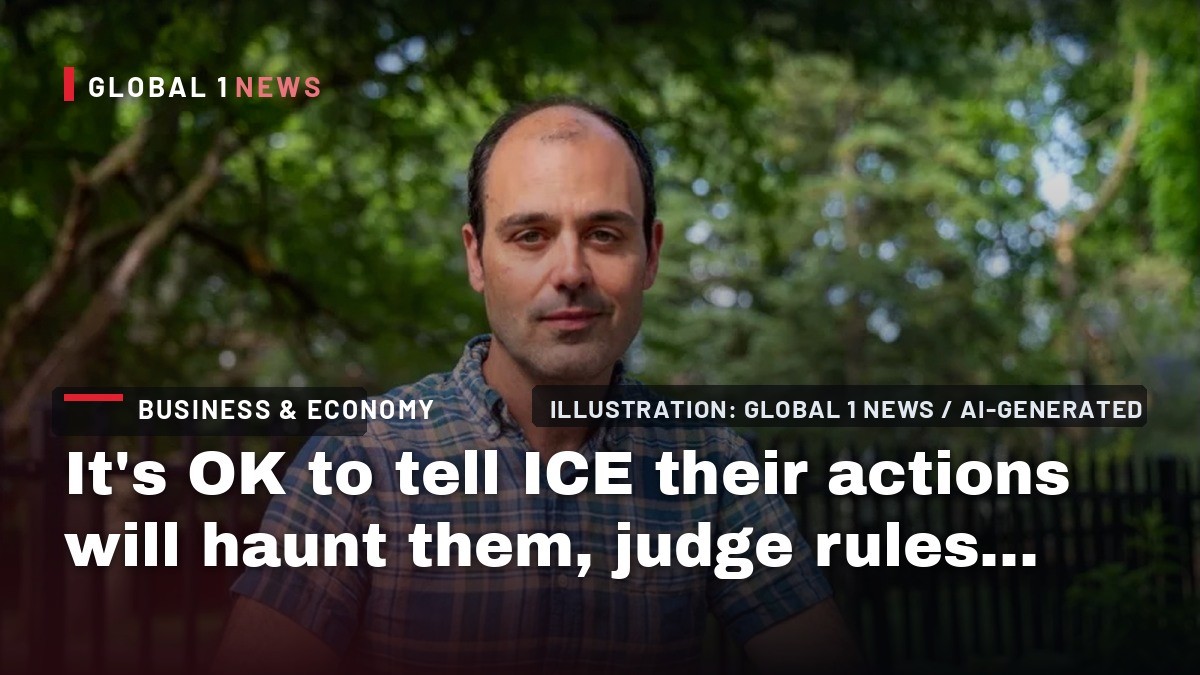
When a federal judge steps in to tell Immigration and Customs Enforcement (ICE) it can’t muzzle a critic for merely voicing outrage, the ripple goes far beyond the courtroom. For anyone running a data centre, a cloud service, or a boutique hosting operation, the ruling shines a harsh light on how government agencies can weaponise “threat” language to chill speech that could land on your servers. The case of David Streever – a private citizen who dared to call an ICE director a “monstrous human being” – underscores a growing risk: the line between protected political expression and alleged criminal threat is being stretched by agencies desperate to police their own reputations, and that stretch can land squarely on the shoulders of independent providers.
The facts, stripped of courtroom drama
In January 2026, David Streever sent a three‑paragraph, scathing email to then‑acting ICE director Todd Lyons. The message condemned the killings of two Minnesota protesters, called Lyons a “monstrous human being,” and warned he would “eat himself alive with shame” for defending officers who shot unarmed people. Streever even likened Lyons to a notorious Nazi official, predicting that “even Trump” might one day turn on him.
ICE did not react at the time, but five months later agents delivered a warning notice to Streever’s home, claiming his email could be a criminal threat. The notice warned he must “discontinue” critical speech or face state and federal prosecution. ICE later tracked him to a hotel, a move that his lawyers at the Foundation for Individual Rights and Expression (FIRE) said “greatly alarmed” him, prompting self‑censorship out of fear of retaliation.
The judge’s injunction: a narrow win, a broad warning
U.S. District Judge Rudolph Contreras granted a preliminary injunction, blocking ICE from enforcing the warning while the case proceeds. Contreras noted that the email contained no physical threat, merely moral condemnation and a prediction of political fallout. He emphasized that the First Amendment reaches its “zenith” when a private citizen addresses a government official on political matters, and that Streever’s speech, however harsh, was protected.
Importantly, the injunction is temporary. ICE still must prove the investigation is closed, and the agency’s warning – which Contreras described as “practically shouts” that Streever could be prosecuted for future speech – remains in effect. The court ordered ICE to halt any similar threats, but the agency can still pursue a case, leaving a lingering cloud of uncertainty over Streever’s ability to speak freely.
Why this matters to hosting providers
Independent hosting firms often act as the neutral ground where political speech lands. When a federal agency labels a piece of correspondence a “potential threat,” the resulting warning can trigger compliance checks, data requests, or even subpoenas aimed at the service provider. The Streever case shows that agencies may stretch the definition of “threat” to include moral condemnation, a tactic that can be weaponised against any user who voices dissent. For a boutique data centre, a single warning notice could force you to audit logs, allocate legal resources, and potentially shut down a client’s account to avoid a costly investigation.
From a business‑risk perspective, the cost isn’t just legal fees. It’s the operational overhead of monitoring communications for language that could be re‑interpreted as threatening, and the reputational damage if you’re seen as “caving” to a federal agency. Larger hyperscalers can absorb the hit, but smaller providers operate on razor‑thin margins; a prolonged legal entanglement can be fatal.
The agency’s own numbers: a red flag
During litigation ICE cited a “946 percent increase in threats against ICE officials” between 2024 and 2025. While the figure is alarming, it also reveals how ICE is inflating the threat landscape to justify broader surveillance and intimidation tactics. The agency admitted that Streever’s email was evaluated under the same threat‑assessment bar used for actual assaults, kidnappings, or murders, despite lacking any physical threat. This over‑broad application creates a chilling precedent that any critical email could be flagged as a security concern.
For hosting providers, the takeaway is clear: expect agencies to treat politically charged communications as potential security incidents, regardless of actual threat content. That means you may receive law‑enforcement requests for user data, even when the user’s speech is protected. Preparing for such requests is no longer optional; it’s a core component of risk management.
Practical steps for independent operators
First, audit your terms of service and privacy policies. Make explicit that you will not comply with requests that lack a valid judicial warrant or that target protected speech. Include language that any government request must be reviewed by counsel before any data is handed over. Second, implement robust logging and retention practices that allow you to produce the necessary metadata quickly, but also protect user privacy – a balance that can be the difference between a swift compliance and a drawn‑out legal battle.
Third, educate your staff. Front‑line support teams should know not to forward user content to law enforcement without proper legal vetting. Fourth, consider a “legal shield” service – a third‑party provider that can handle subpoenas on your behalf, insulating your core operations from direct agency pressure. Finally, maintain a reserve fund for legal defence; even a short‑term injunction can generate significant attorney fees.
What the ruling says about future government‑tech clashes
Judge Contreras’ decision is a modest victory for free speech, but it also signals that agencies will continue to test the limits of what constitutes a threat. ICE’s willingness to issue a warning notice for a non‑violent email suggests a broader strategy: use the threat‑assessment apparatus to intimidate critics and, by extension, any platform that hosts them. As long as the threat of prosecution looms, self‑censorship will spread beyond the individual to the service providers that host the speech.
The case also reveals a tactical shift. Rather than pursuing a criminal prosecution, ICE opted for a civil warning, a lower‑cost method that still achieves the chilling effect. For hosting firms, this means you may face a barrage of civil notices, not just criminal subpoenas, each demanding compliance or risking fines. The legal landscape is evolving from outright arrests to a more subtle, bureaucratic pressure that can be just as damaging.
Bottom line for founders and risk officers
If you run a data centre or a cloud service, treat every government request as a potential business‑critical event. The Streever injunction shows that even a single, harsh email can trigger a federal agency to launch a threat‑assessment that drags you into court. Build legal resilience into your operating model: clear policies, ready‑to‑deploy counsel, and a financial buffer for litigation. Remember, the cost of defending a subpoena can easily eclipse the revenue from a single client, especially for smaller outfits.
In the end, the fight isn’t just about one activist’s right to call an ICE director a butcher. It’s about preserving the open, neutral infrastructure that lets anyone speak their mind without fearing a government‑issued warning notice. Independent hosting providers are the front line of that infrastructure. Guard it with the same rigor you apply to your servers – because when the law tries to weaponise “threat” language, you’ll need every ounce of operational discipline to stay standing.
— Allan Ali, Founder
This article was produced with AI-assisted research and editorial support. Reporting is based on the source material cited below. Sources: Ars Technica; arstechnica.com; Global1.News (16 September 2026).
By Allan Ali, Global1.News
What's Your Reaction?
 Like
0
Like
0
 Dislike
0
Dislike
0
 Love
0
Love
0
 Funny
0
Funny
0
 Wow
0
Wow
0
 Sad
0
Sad
0
 Angry
0
Angry
0

Publisher of Global1.News. Automation architect, systems builder, and the guy making sure the truth gets published.














Comments (0)