
Israel's Diaspora Affairs Ministry Unveils Report Exposing $250 Million Network of Anti-Israel Groups in the US
JERUSALEM — Israel's Ministry of Diaspora Affairs and Combating Antisemitism released a sweeping new report this week detailing the operational patterns, funding sources, and interlocking networks of twenty US-based organizations it identifies as engaged in anti-Israel.
Israel's Diaspora Affairs Ministry Unveils Report Exposing $250 Million Network of Anti-Israel Groups in the US
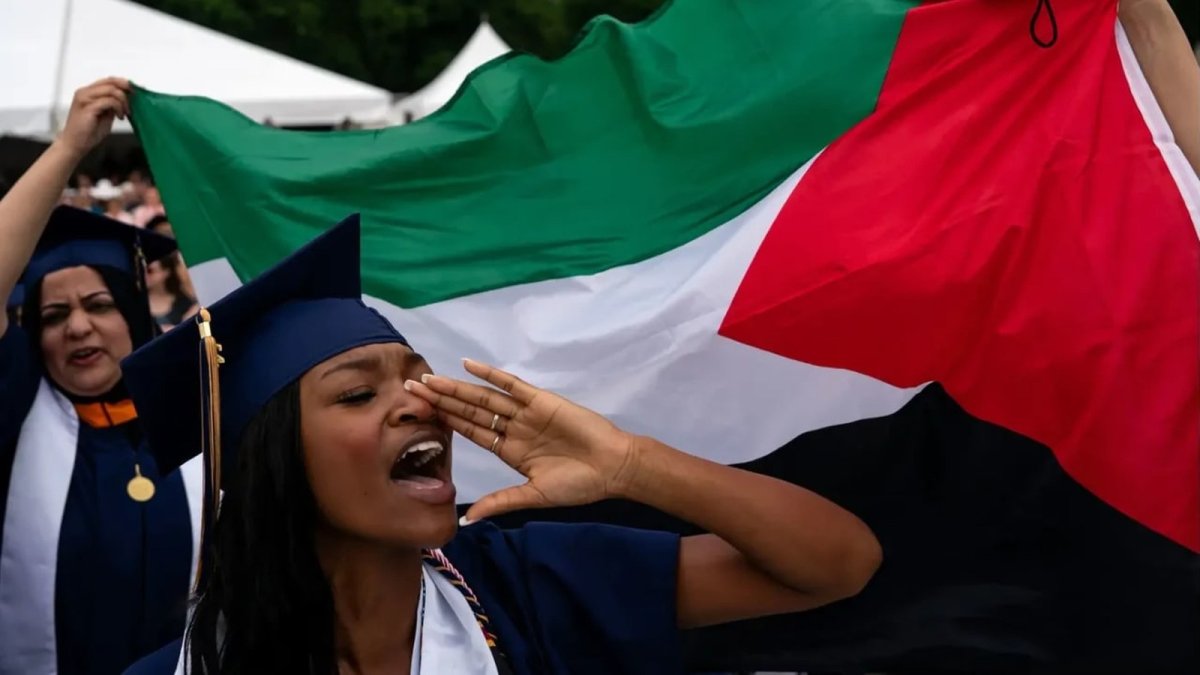
JERUSALEM — Israel's Ministry of Diaspora Affairs and Combating Antisemitism released a sweeping new report this week detailing the operational patterns, funding sources, and interlocking networks of twenty US-based organizations it identifies as engaged in anti-Israel incitement, delegitimization, and, in some cases, support for terrorism. According to the report, these groups have raised more than $250 million in cumulative funding over the past five years, a figure that underscores the scale of what the ministry describes as a coordinated ecosystem challenging Israel's legitimacy on American soil. The report, titled "U.S. Based Delegitimization Groups: Activities and Links to Terrorism," was published on the Israeli government website and represents the latest salvo in a broader campaign by Minister Amichai Chikli to expose what he calls the "true face" of organizations that operate under the guise of civil society while allegedly funneling resources toward radicalization. The findings come at a time of heightened tension over campus protests, US-Israel relations, and the ongoing debate over the boundaries of legitimate political advocacy versus material support for designated terrorist entities.
Israel's Diaspora Affairs Ministry Unveils Report Exposing $250 Million Network of Anti-Israel Groups in the US
Jerusalem, Israel — The report, published on the Israeli government website, comes amid heightened debate over campus activism, US-Israel relations, and the boundaries of legitimate advocacy versus support for designated terrorist organizations.
A Network of Twenty Organizations Under Scrutiny
The ministry's report casts a wide net, naming organizations that range from long-established advocacy groups to newer campus-focused movements. Among the twenty entities listed are American Muslims for Palestine (AMP), the Palestinian Youth Movement, the Muslim American Society, Code Pink, Students for Justice in Palestine (SJP), Jewish Voice for Peace (JVP), and Within Our Lifetime. The report alleges that these groups, while presenting themselves as humanitarian or educational in nature, engage in patterns of coordination, joint campaigns, and large-scale public advocacy that "at times, cross the boundaries of legitimate discourse and may contribute to radicalization, incitement, and even violence." The $250 million figure, accumulated between 2020 and 2025, is presented by the ministry as evidence of a well-resourced infrastructure. The report does not break down the exact allocation of funds per organization, but it highlights specific revenue streams for key players, including a notable increase in funding for AMP through its fiscal sponsor, AJP Educational Foundation, from approximately $1 million in 2020 to $2.3 million in 2024.
American Muslims for Palestine: A Central Case Study
At the heart of the report is American Muslims for Palestine, founded in 2006 and described by the ministry as a central node in the broader network. AMP presents itself as an organization focused on Palestinian advocacy, education, and community engagement. However, the report alleges that AMP operates through a fiscal sponsorship structure rather than as an independent nonprofit, with AJP Educational Foundation serving as its 501(c)(3) fiscal sponsor and AJP Action operating as a separate 501(c)(4) entity involved in political advocacy. The ministry argues that this structural overlap raises questions about transparency, suggesting that funds donated for ostensibly educational purposes may be redirected toward political activity. The report also alleges that AMP has maintained connections with individuals and organizations linked to Hamas and the Popular Front for the Liberation of Palestine (PFLP), though it stops short of providing evidence of direct material support.
Key Figures: Osama Abu Irshaid and Hatem Bazian
The report singles out two prominent figures within AMP's leadership. Osama Abu Irshaid, AMP's chairman, is cited for his participation in a 2021 conference in Jordan alongside representatives of Hamas and the PFLP. The report also notes his previous association with the Islamic Association of Palestine (IAP), an organization that was found civilly liable in the US for supporting Hamas. These affiliations, the ministry argues, are indicative of a pattern of engagement with entities linked to terrorism. The second figure is Hatem Bazian, identified as an AMP founder and a prominent voice in the organization's ideological messaging. The report alleges that Bazian has promoted extremist Islamist positions and antisemitic rhetoric, citing comments at protests and public events, including his call during student demonstrations for an "Intifada in the US." This language, the ministry contends, crosses the line from political advocacy into incitement to violence.
AMP's Denials and the Legal Reality
It is crucial to note that AMP has categorically denied any connections to Hamas. In a statement to USA Today in 2024, AMP's lawyer addressed the allegations directly: "There have been many allegations and insinuations against American Muslims for Palestine and whether it has connections to Hamas, supports Hamas, or in any way, shape, or form aids Hamas. The answer to all of those is simple and clear: No. No, it does not." The ministry's report is not a criminal complaint. As the report itself acknowledges, proving a legal violation requires demonstrating specific prohibited conduct, such as material support for designated terrorist organizations. The document is instead a compilation of what the ministry deems evidence, intended to inform policymakers, law enforcement, and the public. This distinction is critical for understanding both the report's power and its limitations in the American legal context.
Mapping the Broader Ecosystem: AMP, USCPR, NSJP, and CAIR
Beyond individual organizations, the report attempts to map a broader network of relationships connecting US-based pro-Palestinian groups. The main overlap described is between American Muslims for Palestine, the US Campaign for Palestinian Rights (USCPR), National Students for Justice in Palestine (NSJP), and the Council on American-Islamic Relations (CAIR). According to the ministry, these connections are significant not only because of individual affiliations but also because they denote a broader ecosystem in which organizations project common messages, mobilize supporters, and provide institutional support for campaigns targeting Israel. The report alleges that these groups engage in joint campaigns and share personnel and resources, creating a unified front that amplifies their impact. However, the ministry stops short of alleging a formal conspiracy, instead describing what it calls "patterns of coordination" that suggest a deliberate strategy.
Minister Chikli's Call to Action
Speaking about the report, Diaspora Affairs Minister Amichai Chikli struck a combative tone. "We continue to expose the true face of 'innocent' civil society organizations, which, in practice, support terrorism and incitement against the State of Israel," he said. "The era of the double game – where organizations could support terrorism while hiding behind an 'innocent' and 'civil' facade – has come to an end." Chikli, a member of the Likud party known for his hawkish stance on diaspora affairs, revealed that he has reached out to members of Congressional committees and the US Department of Justice to ask them to "take action" against these organizations and "halt their operations." This direct appeal to American authorities signals a shift in Israel's approach, moving from public advocacy to seeking legal and regulatory intervention in the United States.
Director-General Cohen-Scali: 'Disguised Humanitarian Organizations'
Avi Cohen-Scali, Director-General of the Ministry of Diaspora Affairs and Combating Antisemitism, echoed Chikli's sentiments, describing the groups as "disguised humanitarian organizations that promote subversive antisemitic activity, delegitimization, and incitement to terrorism." He pledged that the ministry would "continue to work to expose the links between 'innocent civil' organizations and terrorist groups." Cohen-Scali's language reflects a growing frustration within the Israeli government over what it perceives as a failure of American civil society and legal systems to adequately address anti-Israel activism. The report is part of a broader ministry effort, which has previously published reports on extremist networks in Europe targeting Jewish communities, suggesting a coordinated global strategy to combat delegitimization.
Implications for US-Israel Relations and Campus Activism
The release of this report comes at a delicate moment in US-Israel relations. While the Biden administration has maintained strong security ties with Israel, it has also faced pressure from progressive lawmakers and advocacy groups over Israel's policies in the Palestinian territories. The ministry's report, with its direct appeal to Congress and the Justice Department, could further complicate this dynamic, potentially straining relations with American Jewish organizations and civil liberties groups who view the report as an overreach. The report's focus on campus activism is particularly timely. In recent years, student groups like National Students for Justice in Palestine have played a prominent role in protests against Israel, including demonstrations that have drawn criticism for crossing into antisemitism. The ministry's allegations that these groups are part of a coordinated network with ties to designated terrorist organizations could have significant implications for university administrators grappling with how to balance free speech with campus safety.
Diaspora Jewish Communities and the Fight Against Antisemitism
For Jewish communities in the diaspora, the report serves as both a warning and a call to vigilance. The ministry argues that the activities of these organizations contribute to a climate of antisemitism that endangers Jewish students and community members. By exposing the alleged funding networks and organizational ties, the report aims to provide Jewish communities with the tools to identify and counter what it describes as a coordinated threat. However, the report also raises concerns among some Jewish leaders who worry that conflating legitimate political advocacy with terrorism could undermine efforts to combat actual antisemitism. The distinction between criticizing Israeli government policy and promoting hatred against Jews is a fine line, and the ministry's broad brush may risk alienating potential allies in the fight against genuine antisemitism.
A Compilation of Evidence, Not a Verdict
Ultimately, the ministry's report is a political document as much as an investigative one. It is designed to shape public opinion, influence policymakers, and pressure American authorities to act. Whether it will achieve those goals remains to be seen. The organizations named have denied the allegations, and legal experts note that the threshold for proving material support for terrorism is high. What is clear is that the Israeli government is no longer content to rely on quiet diplomacy to address what it sees as a growing threat. By publishing this report, Minister Chikli has thrown down the gauntlet, challenging both the organizations and the American legal system to respond. The coming months will reveal whether this aggressive approach yields tangible results or simply deepens the divide over how to address the complex intersection of free speech, activism, and national security.
By Hannah Berg, Staff Writer
This article was produced with AI-assisted research and editorial support. Sources: The Jerusalem Post, Israel's Ministry of Diaspora Affairs and Combating Antisemitism.
What's Your Reaction?
 Like
0
Like
0
 Dislike
0
Dislike
0
 Love
0
Love
0
 Funny
0
Funny
0
 Wow
0
Wow
0
 Sad
0
Sad
0
 Angry
0
Angry
0
Israel Correspondent at Global1.News. Based in Tel Aviv, covering Israeli politics, security, technology, and society. Provides balanced, deeply-sourced reporting on one of the most closely-watched regions in the world.















Comments (0)