
Israeli Forces Demolish Entire Palestinian Hamlet of Khirbet al-Tabban in Masafer Yatta
In a Middle East Eye video report released this week, the sound of shovels scraping against rubble and dust is the only noise that fills the air where Khirbet al-Tabban once stood.
In a Middle East Eye video report released this week, the sound of shovels scraping against rubble and dust is the only noise that fills the air where Khirbet al-Tabban once stood. Residents are seen sifting through the remains of their homes, their movements slow and deliberate, as one man pauses to address the camera with a quiet, devastating summary: "This time it was thorough; they wanted to leave nothing standing." The footage offers a stark window into the aftermath of a demolition that has erased an entire Palestinian community from the map of the occupied West Bank.
Israeli Forces Demolish Entire Palestinian Hamlet of Khirbet al-Tabban in Masafer Yatta
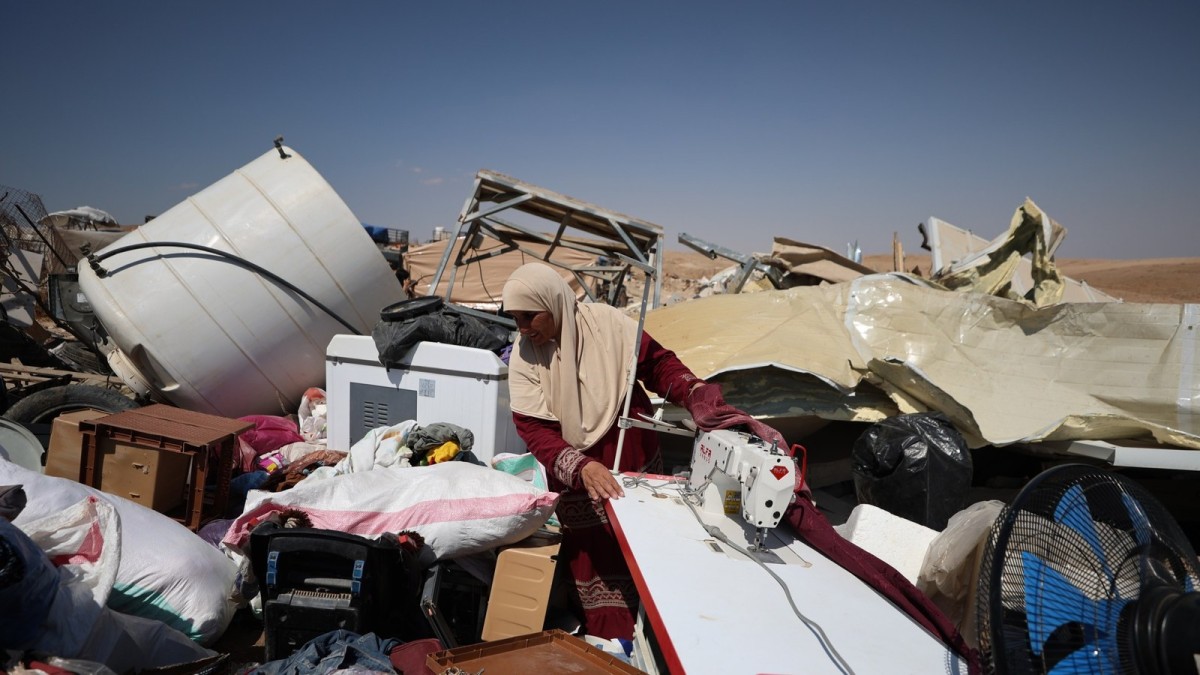
Hebron, occupied West Bank - On Wednesday 2 September 2026, Israeli forces demolished all 12 homes in the hamlet of Khirbet al-Tabban, a small agricultural community in the Masafer Yatta region of the southern Hebron Hills, along with most of the village's other structures. The operation, which began in the early morning hours with the arrival of heavy machinery, has left approximately 70 people from a dozen families homeless, including around 28 children, according to the Israeli rights group B'Tselem and the Masafer Yatta village council. The demolition was not limited to residences; sheep pens, barns, water wells, water storage tanks, kitchens, and bathrooms were also razed, effectively dismantling the infrastructure of an entire community in a single day.
A Community Erased in a Single Morning
The scale of the destruction was documented by the Palestinian Centre for Human Rights (PCHR), whose field researchers recorded the demolition of 38 residential, service, and agricultural structures. This included 12 residential rooms and a tent, seven livestock barracks, and five water wells and water storage facilities holding roughly 500 cubic metres of water. PCHR counted eight families, comprising 58 people including 26 children, as directly affected, and noted that livestock farming constitutes the families' main livelihood. The loss of the water infrastructure is particularly devastating in this arid region, where access to water is already severely restricted for Palestinian communities in Area C of the West Bank, which remains under full Israeli military control.
Villagers told WAFA, the official Palestinian news agency, that Israeli forces arrived early with bulldozers and other heavy machinery, preventing residents from removing their furniture and personal belongings before the structures were destroyed. Media activist Osama Makhameh, who was present in the village, confirmed that families named Abu Obeid and al-Hamamdeh were among those who lost their homes. The speed and thoroughness of the operation left residents with little time to react, and the video report released by Middle East Eye this week captures the grim task of clearing rubble that followed, a task undertaken by people who have lost not just their houses but their entire way of life.
Years of Legal Battles End in Final Court Ruling
The demolition of Khirbet al-Tabban did not occur in a vacuum. It was the culmination of a legal saga that stretched back more than two decades. Demolition orders against structures in the hamlet date to 2003, 2015, 2017, and 2020, reflecting a persistent campaign by the Israeli authorities to remove the community. Residents, seeking to regularise their status, applied for building permits through the Israeli military administration. These applications were rejected, a near-universal outcome for Palestinians in Area C, where the permit approval process is widely regarded by human rights organisations as practically impossible for Palestinian applicants, while Israeli settlements in the same area continue to expand.
Following the rejection of their permit applications, the residents of Khirbet al-Tabban petitioned Israel's High Court of Justice. The court issued interim suspension orders on the demolition orders, providing a temporary reprieve while the case was considered. The residents submitted a detailed planning scheme for the village, a process intended to demonstrate their legitimate presence and their commitment to legal channels. That scheme was rejected. In June 2026, the High Court delivered its final judgment, rejecting the residents' petition and clearing the way for the demolition that took place this week. For the families of Khirbet al-Tabban, the legal process, which they had hoped would protect their homes, ultimately served as the mechanism for their dispossession.
'Wiping the Village Off the Face of the Earth'
Nidal Younis Abu 'Aram, the head of the Masafer Yatta Village Council, did not mince words when describing the operation. He characterised the demolition as "wiping the village off the face of the earth." In a statement to reporters, he added: "The goal, as we see it, is to displace Palestinians and change the reality of these areas." His assessment reflects a broader concern among Palestinian communities in the southern West Bank that these demolitions are not isolated punitive actions but part of a coordinated strategy to depopulate areas designated for Israeli military use or settlement expansion.
For Nasser Mahmoud Obeid, a villager born in the hamlet in 1977, the demolition is the latest chapter in a long history of displacement and attack. His father and grandfather lived on this land before him, and he recalls a major demolition in 1999 that destroyed the family home. In the years since, he has endured what he describes as years of army and settler attacks, a constant pressure that has made life in the village increasingly precarious. Yet, standing amidst the rubble of his latest loss, Obeid's resolve remained unbroken. "This is our land, and here we will build and rebuild," he said, beginning the arduous task of clearing the debris by hand. "We have not lost hope, and we will not." His words, captured in the video report released this week, speak to a determination that has come to define the Palestinian communities of Masafer Yatta in the face of relentless pressure.
The Wider Pattern of Displacement Since October 2023
The destruction of Khirbet al-Tabban is not an isolated incident but part of a deeply concerning trend. B'Tselem, the Israeli information centre for human rights in the occupied territories, has documented that Khirbet al-Tabban is the 66th Palestinian community to be completely displaced since October 2023, the start of the current war in Gaza. A further 18 communities have been partially displaced in the same period. These figures represent a dramatic acceleration of a policy that has been ongoing for decades but has intensified significantly in recent years. Yuli Novak, the executive director of B'Tselem, issued a stark warning in the wake of this week's demolition, stating that Israel was erasing Palestinian communities at an accelerating pace and accusing the international community of doing nothing to stop it.
The legal backdrop to this escalation dates to May 2022, when Israel's High Court authorised the forcible evacuation of several Masafer Yatta villages on the grounds that the area is a designated military firing zone. That ruling opened the floodgates for increased demolitions and settler activity across the region. The Israeli military body responsible for civil affairs in the West Bank, COGAT, responded to queries about the Khirbet al-Tabban demolition by stating that the structures were "illegal" and stood "inside a firing zone" used by the army. COGAT further asserted that the operation followed "relevant authorities and procedures." This justification, however, does not address the fundamental legal questions raised by international law. The Fourth Geneva Convention, specifically Article 49, prohibits an occupying power from destroying property except where absolutely necessary for military operations, and prohibits forcible transfers of protected persons. The UN and numerous human rights groups have long argued that Israel's policies in the West Bank, including the demolition of Palestinian homes and the expansion of settlements, constitute a de facto annexation of territory and a violation of international law.
Life Under the Shadow of the Firing Zone
The designation of Masafer Yatta as a firing zone has hung over the region's communities for years, creating an atmosphere of uncertainty and fear. The Israeli military has argued that the area is needed for training exercises, a claim that residents and human rights groups dispute, noting that the land has been cultivated by Palestinian families for generations. The High Court's 2022 ruling, which accepted the military's position, effectively criminalised the presence of these communities on their own land. Since then, demolitions have surged, and the residents of villages like Khirbet al-Tabban have lived under the constant threat of losing everything. The August 2026 demolition of an agricultural structure in the hamlet was a warning of what was to come, and this week's operation has now made the village uninhabitable.
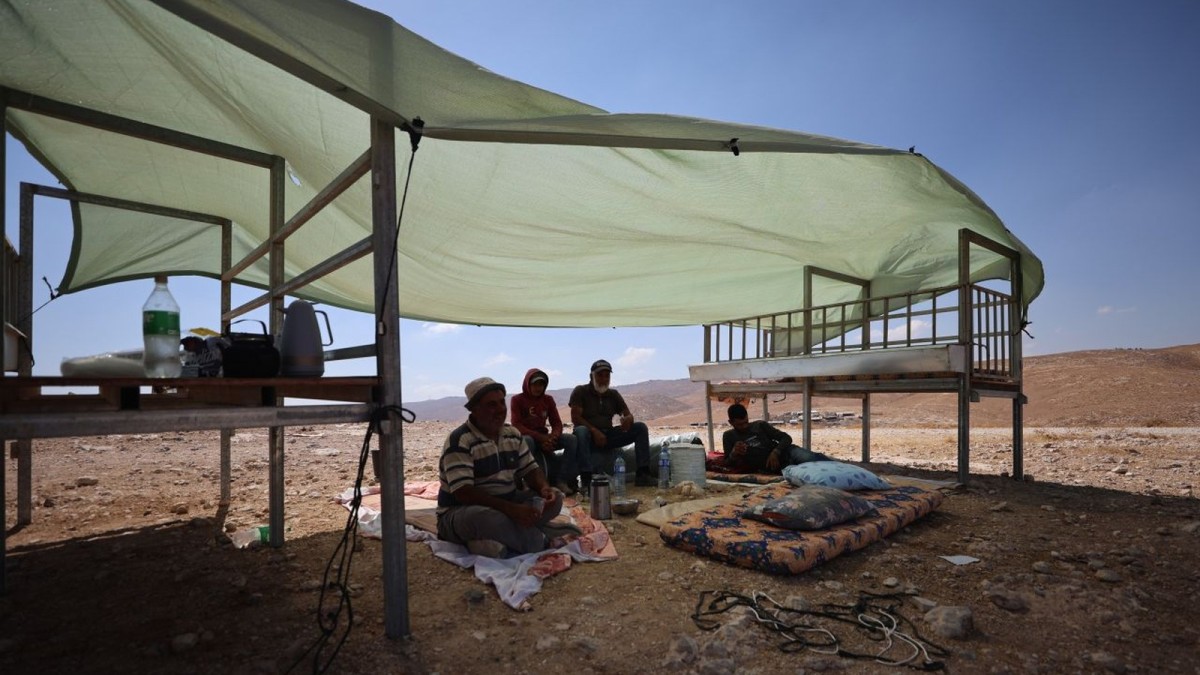
The human cost of this policy is immeasurable. The families of Khirbet al-Tabban have lost their homes, their livelihoods, and their connection to a land that has been in their families for generations. The children, 28 of whom are now homeless, have been uprooted from their schools and their communities. The destruction of water wells and storage tanks, essential for survival in this semi-arid region, makes it nearly impossible for the families to remain on the land even if they were to attempt to rebuild. The demolition of the livestock barracks, which housed the sheep and goats that are the primary source of income for most families, has destroyed their economic base. The thoroughness of the operation, as the resident in the video report noted, was designed to ensure that nothing remained standing, and that nothing could be salvaged.
An Uncertain Future and a Community's Resolve
As the dust settles over the ruins of Khirbet al-Tabban, the immediate future for its residents is bleak. They are now displaced, forced to seek shelter with relatives in nearby villages or in makeshift tents, their belongings reduced to what they could carry or salvage from the wreckage. The Masafer Yatta Village Council has called for international intervention, but past experience suggests that such appeals are unlikely to yield concrete results. The international community, including the UN, has repeatedly condemned Israeli settlement activity and demolitions, but has failed to take meaningful action to halt them. The words of B'Tselem's Yuli Novak, accusing the world of doing nothing, resonate deeply in this context.
Yet, despite the overwhelming odds, the residents of Khirbet al-Tabban have made their intentions clear. Nasser Mahmoud Obeid's declaration that "we will build and rebuild" is not merely a statement of defiance; it is a testament to the resilience of a people who have faced displacement and destruction for generations. The video report released by Middle East Eye this week captures this duality: the devastation of the present and the determination to persist into the future. The residents are already clearing the rubble, preparing the ground for reconstruction, even as the legal and military apparatus that destroyed their homes remains in place. The question that hangs over Masafer Yatta, and indeed over the entire occupied West Bank, is whether the international community will finally act to prevent the erasure of these communities, or whether it will continue to stand by as villages like Khirbet al-Tabban are wiped off the face of the earth, one by one.
By Fatima Al-Rashid, Staff Writer
This article was produced with AI-assisted research and editorial support. Reporting is based on sources cited in the article.
What's Your Reaction?
 Like
0
Like
0
 Dislike
0
Dislike
0
 Love
0
Love
0
 Funny
0
Funny
0
 Wow
0
Wow
0
 Sad
0
Sad
0
 Angry
0
Angry
0

Gulf/MENA Correspondent at Global1.News. Based in Doha, covering Gulf politics, energy markets, diplomacy, and development across the Middle East and North Africa. Tracks the economic transformation of the Gulf states.












Comments (0)