
Israel Tortures Doctors for Saving Lives: Abu Safiya's 20-Month Ordeal
Dr Hussam Abu Safiya, director of Kamal Adwan Hospital, has been held by Israel for nearly 20 months without charge or trial. UN experts and rights groups warn the paediatrician, tortured in detention, faces imminent death.
In a recent Middle East Eye report, the plight of Dr Hussam Abu Safiya, a Palestinian paediatrician held in Israeli detention for nearly 20 months without charge or trial, has drawn renewed international attention. The video report, titled 'Israel Tortures Doctors for Saving Lives', features Dr James Smith, a lecturer in Humanitarian Policy and Practice at University College London and an emergency physician who volunteered in Gaza, calling for the immediate release of Abu Safiya. Smith's account, drawn from his time working alongside Abu Safiya at Kamal Adwan Hospital in northern Gaza, frames the doctor's detention as part of a broader Israeli campaign against Palestinian healthcare workers.
Abu Safiya, who walked toward Israeli tanks in his white coat in December 2024, has become a symbol of the systematic targeting of medical personnel in Gaza. As the UN Working Group on Arbitrary Detention and human rights organisations have weighed in, his case raises urgent questions about medical neutrality under occupation.
Doctor Held 575 Days Without Charge Faces Death in Israeli Prison
Gaza City, Palestine - 18 August 2026 - Dr Hussam Abu Safiya, the 52-year-old director of Kamal Adwan Hospital in Beit Lahia, northern Gaza, has been held in Israeli detention for nearly 20 months - more than 575 days - without formal charges or trial. His case, which has drawn condemnation from UN experts and human rights organisations, has become emblematic of what advocates describe as Israel's systematic targeting of Palestinian health workers. Abu Safiya, a paediatrician and neonatologist who remained at his post when most international staff had evacuated, is now reportedly in such poor health that his own lawyer says he is at immediate risk of death.
The Case of Dr Abu Safiya
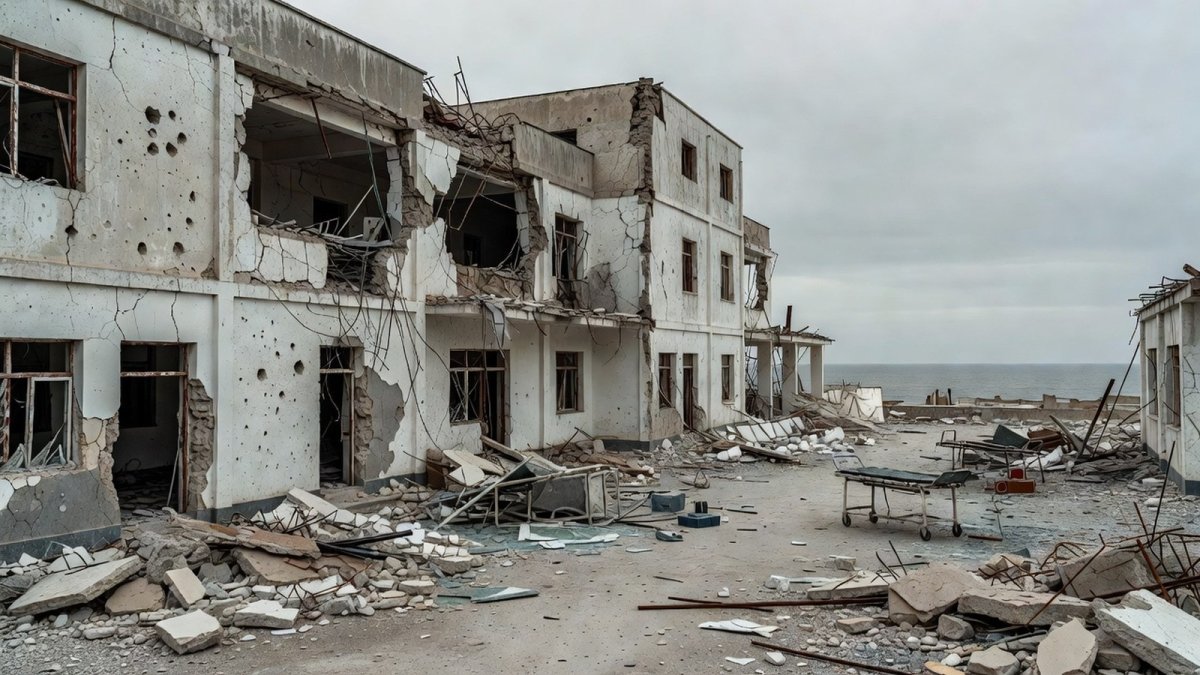
Abu Safiya was taken into custody on 27 December 2024, when Israeli forces surrounded and stormed Kamal Adwan Hospital, the last major medical facility still operating in northern Gaza. In a moment captured on video and described by journalist Jonathan Cook in a Middle East Eye op-ed as "if there was an image from 2024 that captured the year's news, it was this one," Abu Safiya walked out across the rubble toward Israeli tanks in his white medical coat after a loudspeaker demanded he come out. He has not been seen publicly since.
His detention is authorised under Israel's 'Unlawful Combatants Law', which permits indefinite detention without charges, subject to judicial review by a district court every six months. According to his lawyer, Nasser Odeh, no formal indictment has ever been filed against him. Israel has accused Abu Safiya of being a Hamas operative, but no evidence has been presented and no charges have been filed. The Israeli prison service has denied allegations of torture as "false and entirely without factual basis," and Israeli authorities maintain his detention is lawful under the Unlawful Combatants Law, though they declined to comment on his health, citing privacy.
Abu Safiya's personal losses have been profound. His 15-year-old son Ibrahim was killed during an Israeli raid on the hospital in October 2024, and Abu Safiya himself was wounded by shrapnel from an Israeli strike a month later. Despite these losses, he continued to work, keeping the paediatric ward running for critically ill children.
The Video Report and James Smith's Testimony
In the Middle East Eye video report, Smith, who volunteered in Gaza in December 2023-January 2024 and again in April-June 2024, described meeting Abu Safiya on 1 May 2024 at Kamal Adwan Hospital. Smith recalled that the hospital was the most northern in Gaza, that the drone buzz was relentless, and that the paediatric ward was full of critically ill children, some visibly malnourished. On that day, Smith's ambulance convoy evacuated four children - three wounded by an Israeli strike and one needing urgent evacuation for a transplant.
Smith's analysis of Abu Safiya's detention is pointed. He argues that Abu Safiya's "crime" was that he insisted on staying with his patients, refusing to leave when UN and international NGO staff had evacuated. By staying, Smith wrote in a July 2026 op-ed for Middle East Eye, Abu Safiya "withheld legitimacy from Israel's repeated ethnic-cleansing attempts." Smith added: "Healing hands that resist erasure by saving lives will always be regarded as a threat by those whose ambition is genocide."
Smith also placed Abu Safiya's case within a broader pattern, stating that "the detention, torture and murder of Palestinians inside the Israeli prison system are not an aberration... they represent one of the most perverse consequences of Israel's intrinsic need to dehumanise and oppress the Palestinian people." He noted that six Palestinian health professionals have already been killed while in Israeli custody since October 2023. As of April 2026, Smith wrote, 83 health workers remained held in Israeli prisons, 23 of whom had worked at Kamal Adwan Hospital.
Testimony of Released Detainees
The conditions of Abu Safiya's detention have been detailed in harrowing testimony from released detainees. Ahmad Qaddas, 34, and Rami Abu Amira, 32, both from Jabalia refugee camp, were detained in December 2025 and December 2024 respectively. In testimony published by Mondoweiss on 19 June 2026, they described Abu Safiya as weighing no more than 40kg, subjected to beatings, dog attacks, stun grenades thrown under his bunk at night, shackling for a week at a time, food deprivation, and being forced to insult himself while soldiers placed boots on his chest.
Qaddas said Abu Safiya was "constantly asking for medical treatment" but that a prison doctor would only give him a single blood-pressure pill. "They singled him out for torture and humiliation more than the other prisoners," Qaddas said, adding that doctors were the most tortured prisoners in the facility. "When we heard his screams, we first feared for ourselves. Then we grieved for what Dr Hussam Abu Safiya was enduring." Abu Amira described how Abu Safiya was stripped of his clothes, dragged across the ground, slammed into walls, and attacked with dogs.
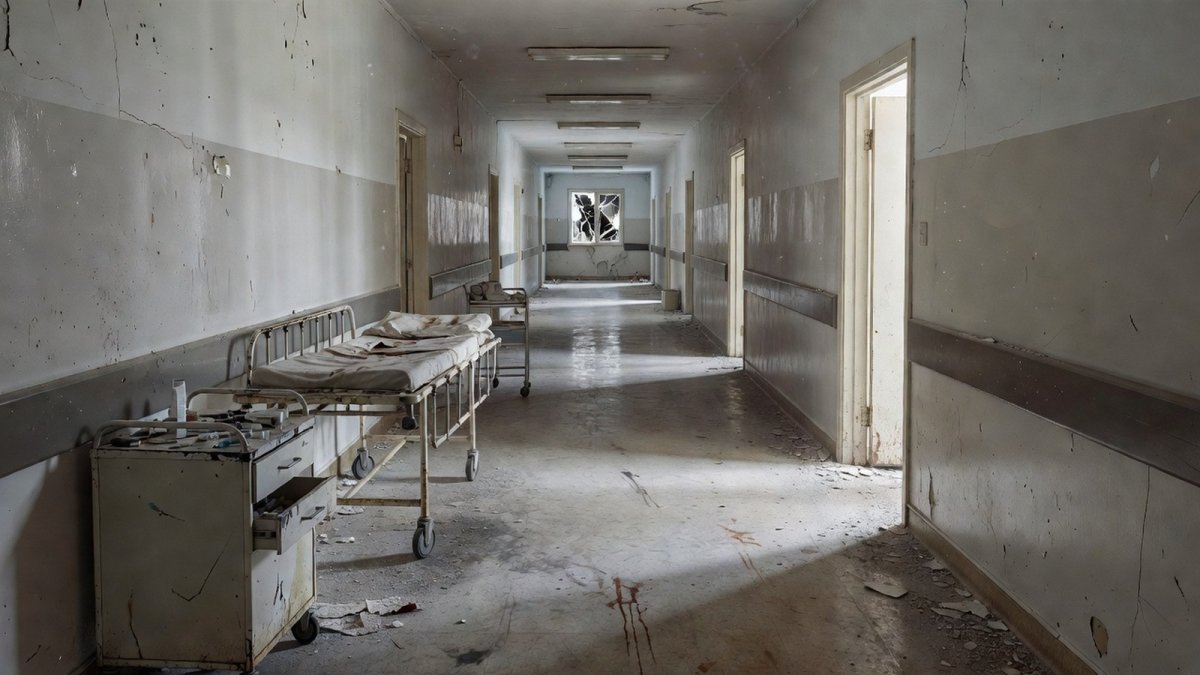
Abu Safiya's lawyer, Nasser Odeh, met with him on 2 July 2026 and described a man almost unrecognisable due to severe injuries. In a joint statement with Physicians for Human Rights Israel (PHRI), Odeh quoted Abu Safiya as saying: "They brought me here to kill me. I don't see myself surviving. This is the end." Odeh said Abu Safiya had difficulty breathing and speaking continuously, was so weak he struggled to sit upright, and repeatedly seemed on the verge of losing consciousness. He called for an immediate independent medical examination, saying: "His physical and psychological state, the severe injuries visible on his body, and his personal testimony leave no room for doubt: his life is in immediate danger."
A Pattern of Medical Neutrality Violations
Abu Safiya's case is not isolated. He is one of 14 Palestinian doctors from Gaza currently held in Israeli detention, according to Odeh. Healthcare Workers Watch has documented 384 cases of unlawful detention of health workers in Palestine, 339 of them from Gaza. About 100 Palestinian doctors remain detained by Israel across the occupied territories, according to figures cited by The Journal and MSF in August 2026.
Filipe Ribeiro, MSF Head of Mission for Palestine, told The Journal and Liberation on 12 August 2026 that Abu Safiya, like so many others, was targeted "not only because he was a doctor, but because he was a witness." Ribeiro described Israeli logic as holding that "the pain, treatment and survival of the Palestinian body must remain subject to the will of the occupier."
The scale of violence against healthcare in Gaza is staggering. The WHO estimates that more than 1,500 healthcare workers have been killed in Gaza as of August 2026, and other tallies compiled from official records put the number above 1,700 by July 2026. No contemporary conflict has seen such a high level of violence against healthcare staff. Within two months of the war starting on 7 October 2023, the Israeli army had put 21 of Gaza's 35 hospitals out of action. Israeli Defence Minister Yoav Gallant's declaration on 9 October 2023 - "We are imposing a complete siege on Gaza. No electricity, no water, no food, no fuel. Everything is shut down. We are fighting human animals, and we are acting accordingly" - set a tone that human rights groups say has been borne out in the treatment of medical workers.
Precedents: Doctors Who Died in Custody
The fate of Abu Safiya must be understood against the backdrop of doctors who have already died in Israeli custody. Dr Adnan al-Bursh, head of orthopaedics at al-Shifa Hospital, died in April 2024 after four months of abuse at Ofer prison. He was reportedly dumped by guards in the prison yard, naked from the waist down, bleeding and unable to stand. He was the first known Palestinian doctor to die in Israeli custody.
Dr Iyad al-Rantisi, 53, director of Kamal Adwan Hospital's maternity department, was detained on 10 November 2023 at the Netzarim checkpoint while fleeing south with his family on the Israeli-designated 'safe corridor'. He was still in his surgical scrubs. He died six days later at Shikma prison, a Shin Bet interrogation facility in Ashkelon. His death was first reported by Haaretz on 18 June 2024, after an Israeli court had banned publication of details for six months. His daughter Dina, 19, said: "I could not believe he died. Even now, I can't comprehend he will no longer be in my life." Rantisi was the second known Palestinian doctor to die from torture in Israeli detention.
The Gaza government media office reported in June 2024 that Israeli forces had killed nearly 500 Palestinian medical workers and detained 310 more. These figures, while impossible to independently verify, are consistent with the broader documentation of violence against healthcare in Gaza.
International Response and the UN Ruling
The international community's response to Abu Safiya's detention has been slow but is now gaining momentum. On 6 July 2026, the UN Working Group on Arbitrary Detention found that Israel's detention of Abu Safiya was arbitrary, contravening multiple articles of the Universal Declaration of Human Rights, and urged his immediate release. The following day, UN experts from the Office of the High Commissioner for Human Rights (OHCHR) stated: "Dr Abu Safiya's ongoing arbitrary detention without charges or trial is a reflection of Israel's systematic targeting of Palestinian health workers and the continuing decimation of the health care system in Gaza."
PHRI's director, Milena Ansari, said the conditions of Abu Safiya's detention "reflect a broader pattern in which the conditions necessary to realise Palestinians' right to health are being systematically undermined." Abu Safiya's lawyer, Odeh, has described his client's treatment as "deliberate medical neglect," noting that he has been deprived of essential medication for high blood pressure and other chronic conditions affecting his back, eyes, and neck.
Abu Safiya's own words, relayed through Odeh after a court hearing, are a testament to his endurance: "I am a pediatrician, providing medical care to patients, the wounded, and the vulnerable in Gaza. I carried out my work in accordance with international law and humanitarian principles. My detention is unjust and arbitrary."
Analysis and Implications
The case of Dr Hussam Abu Safiya raises fundamental questions about the protection of medical neutrality in conflict zones and the accountability of states that violate it. Israel's position - that it acts against Hamas infrastructure embedded in hospitals - has been rejected by medical groups and UN experts as a justification for targeting health care. The systematic nature of the violence against healthcare workers in Gaza, documented by organisations like Healthcare Workers Watch and the WHO, suggests a deliberate strategy rather than incidental collateral damage.
Abu Safiya's detention history reflects this pattern. He was initially held at Sde Teiman, a facility described by rights groups and released detainees as a torture camp, before being transferred to Ofer and Ketziot prisons. In late May 2026, he was moved to Ganot prison complex and placed in solitary confinement without explanation. In early June, he was moved to Nafha prison, and in late June to Rakefet, an underground prison built in the 1980s for senior organised crime figures, closed as inhumane, and reopened on orders of far-right National Security Minister Itamar Ben-Gvir. Prisoners at Rakefet report feeling breathless and choking in unventilated, overcrowded cells.
On 10 June 2026, Abu Safiya appeared via video link before Israel's Supreme Court, looking gaunt, visibly emaciated, with his hands and feet bound. The court later rejected his appeal, and a district court had renewed his detention on 28 April 2026. Given his deteriorating health, his lawyer and human rights groups fear he may not survive to the next review.
As Smith wrote in his op-ed, the detention of Palestinian doctors is not an aberration but a consequence of a system that dehumanises Palestinians. The question now is whether the world will act to save Abu Safiya before it is too late, or whether his name will be added to the growing list of doctors who have died in Israeli custody.
For the people of northern Gaza, Abu Safiya is the doctor who stayed when others left. His detention is a reminder that under occupation, even saving lives can be criminalised - and a test of whether the international community's commitment to medical neutrality is more than rhetorical.
By Fatima Al-Rashid, Staff Writer
This article was produced with AI-assisted research and editorial support. Reporting is based on sources cited in the article.
What's Your Reaction?
 Like
0
Like
0
 Dislike
0
Dislike
0
 Love
0
Love
0
 Funny
0
Funny
0
 Wow
0
Wow
0
 Sad
0
Sad
0
 Angry
0
Angry
0

Gulf/MENA Correspondent at Global1.News. Based in Doha, covering Gulf politics, energy markets, diplomacy, and development across the Middle East and North Africa. Tracks the economic transformation of the Gulf states.










Comments (0)