
UN peacekeeping force reports sharp rise in Israeli military activity in southern Lebanon
The United Nations Interim Force in Lebanon (UNIFIL) reported on Monday a sharp and sustained increase in Israeli military activity across southern Lebanon over the past two weeks, documenting an average of 137 projectiles per day between 5 and 16 August.
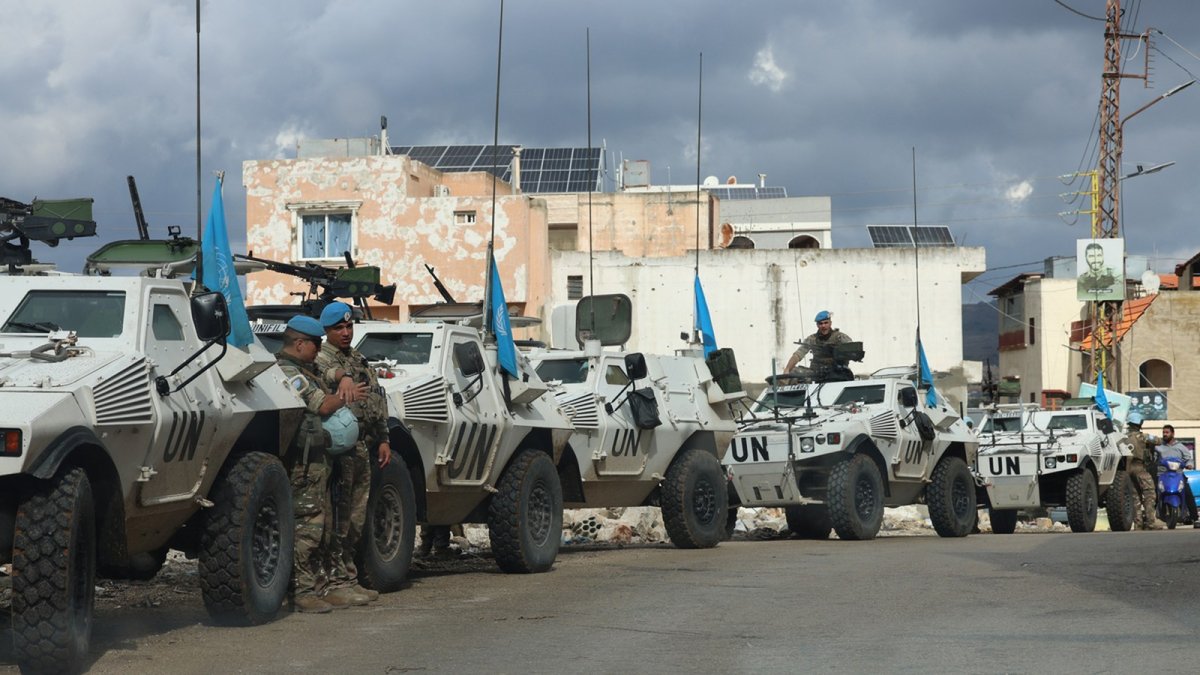
The United Nations Interim Force in Lebanon (UNIFIL) reported on Monday a sharp and sustained increase in Israeli military activity across southern Lebanon over the past two weeks, documenting an average of 137 projectiles per day between 5 and 16 August. The peacekeeping mission warned that civilians are once again bearing the heaviest burden of the escalation, with families displaced and daily life upended by relentless insecurity. The report comes at a critical juncture, as the mission’s mandate is scheduled to expire at the end of 2026 and as regional actors debate the future of international peacekeeping in the area.
UNIFIL Documents Daily Barrage of Projectiles
According to a statement released by UNIFIL on Monday, the two-week period between 5 and 16 August saw an average of 137 projectiles per day crossing or landing in the mission’s area of operations. The intensity peaked over the weekend, with 208 projectiles recorded on Saturday and 185 on Sunday, figures that underscore the volatility of the current situation along the Blue Line.
The mission’s peacekeepers have maintained a visible field presence throughout the escalation, conducting patrols, monitoring activity, removing obstacles from roads, and working to reduce risks posed by unexploded ordnance. UNIFIL also said it has been facilitating access for humanitarian aid convoys, a task that has become increasingly dangerous as the exchange of fire continues.
Civilians Pay the Highest Price
In its statement, UNIFIL expressed grave concern over the human impact of the escalation, noting that “as tensions rise, civilians are once again paying the highest price.” The mission highlighted that many families in southern Lebanon have been displaced from their homes, while others have been forced to alter their daily routines because of pervasive insecurity and uncertainty.
The psychological toll is compounded by the physical dangers. Villages along the border have seen repeated strikes, and residents describe a life of constant vigilance, where the sound of drones and artillery has become a backdrop to everyday existence. For those who remain, access to basic services, schools, and medical care has been severely disrupted, with many roads rendered impassable or too dangerous to travel.
The Role of UNIFIL and Resolution 1701
UNIFIL was established to monitor the cessation of hostilities between Israel and Hezbollah and to support the Lebanese army in maintaining security in the south. Its mandate is rooted in UN Security Council Resolution 1701, adopted in August 2006 following the 34-day war between Israel and Hezbollah. The resolution calls for a permanent ceasefire, the withdrawal of Israeli forces from Lebanese territory, and the deployment of the Lebanese army and UNIFIL in the south.
UNIFIL reiterated on Monday that Resolution 1701 remains the basic framework for restoring stability in southern Lebanon. However, the mission’s ability to fulfill its mandate has been increasingly tested by the scale of recent violence, which has at times restricted its movements and limited its capacity to observe and report.
President Aoun Calls for Extended UNIFIL Mandate
Lebanese President Joseph Aoun on Monday voiced his support for extending UNIFIL’s mandate, which is scheduled to expire at the end of 2026. Speaking amid an international debate over the force’s future and mission, Aoun called for adopting a formula that ensures the continued presence of international forces in the south.
Beirut has consistently insisted on maintaining UNIFIL’s presence as a key element of stability in the region. For many Lebanese officials, the peacekeeping force is seen as a buffer against further Israeli incursions and as a vital partner for the Lebanese army in asserting state authority over the south. The president’s remarks reflect a broader concern that any reduction or withdrawal of UNIFIL could leave a security vacuum that neither the Lebanese state nor regional actors are prepared to fill.
The June 26 Framework Agreement and the Withdrawal Question
The latest escalation comes amid efforts to consolidate security arrangements linked to a “framework formula” agreement signed by Beirut and Tel Aviv on June 26. The agreement, if implemented, calls for a gradual Israeli withdrawal from all occupied Lebanese territory, after which Lebanese army forces are expected to deploy into vacated areas. It also calls for the disarmament of “armed groups,” a reference to Hezbollah.
However, Israeli forces remain present in several parts of southern Lebanon, some of which have been occupied for decades. Other areas have remained under occupation since a previous round of fighting in 2023 and 2024, during which Israeli forces advanced more than 10 kilometers (6.2 miles) into sovereign Lebanese territory. The slow pace of any withdrawal, coupled with the continued military activity, raises questions about the viability of the framework agreement and the political will on both sides to see it through.
The Human Cost: 4,346 Killed Since March
The human toll of the ongoing violence is staggering. According to figures cited by UNIFIL and Lebanese authorities, the death toll from repeated Israeli assaults on southern Lebanon has risen to 4,346 since March 2. This number increased over the weekend after 11 people were killed on Saturday in two separate Israeli airstrikes.
Each number represents a life cut short, a family shattered, and a community left to mourn. The victims include civilians, medical workers, and first responders, many of whom were killed while trying to help others. The scale of the loss has overwhelmed local hospitals and morgues, and the psychological scars on the surviving population are likely to persist for generations.
Displacement and the Strain on Host Communities
The recent escalation has triggered new waves of displacement, adding to an already dire humanitarian situation. Many families from border villages have fled northward, seeking refuge with relatives or in temporary shelters. Host communities, already stretched thin by years of economic crisis and previous waves of displacement, are struggling to cope with the influx.
Humanitarian organizations have warned of growing needs for food, shelter, and medical care, but access to affected areas remains limited due to the ongoing violence. UNIFIL’s efforts to facilitate humanitarian access are critical, but the mission’s resources are finite, and the scale of the need is immense. Figures for the number of newly displaced were not immediately available, but local officials have described the situation as increasingly desperate.
Regional Implications and the Path Forward
The situation in southern Lebanon is not occurring in a vacuum. The escalation threatens to draw in regional actors and further destabilize an already volatile Middle East. The continued presence of Israeli forces on Lebanese soil, the unresolved question of Hezbollah’s disarmament, and the fragility of the June 26 framework agreement all point to a precarious path forward.
For the international community, the coming months will be decisive. The debate over UNIFIL’s mandate is not merely a bureaucratic matter; it is a question of whether the world is willing to invest in the mechanisms that have, for two decades, provided a measure of stability in a region prone to conflict. As UNIFIL itself noted, Resolution 1701 remains the basic framework for restoring stability, but a framework is only as strong as the commitment of the parties to uphold it.
For the people of southern Lebanon, the stakes could not be higher. They have endured decades of occupation, war, and displacement. They have buried their dead and rebuilt their homes, only to see the cycle repeat. The international community’s response to the current crisis will be a test of whether the lessons of the past have truly been learned, or whether the people of the south are once again to be left to bear the consequences of a conflict not of their making.
This article was produced with AI-assisted research and editorial support. Sources: Middle East Monitor.
By Fatima Al-Rashid, Staff Writer
What's Your Reaction?
 Like
0
Like
0
 Dislike
0
Dislike
0
 Love
0
Love
0
 Funny
0
Funny
0
 Wow
0
Wow
0
 Sad
0
Sad
0
 Angry
0
Angry
0
Gulf/MENA Correspondent at Global1.News. Based in Doha, covering Gulf politics, energy markets, diplomacy, and development across the Middle East and North Africa. Tracks the economic transformation of the Gulf states.










Comments (0)