
Israel-Lebanon Peace Prospects: Israelis Weigh In on What's Next
As Rome talks stall and a fraying ceasefire holds, Israelis weigh whether Lebanon can follow the Abraham Accords path to peace. Hezbollah disarmament and an Israeli withdrawal timetable remain the key hurdles as September negotiations approach.
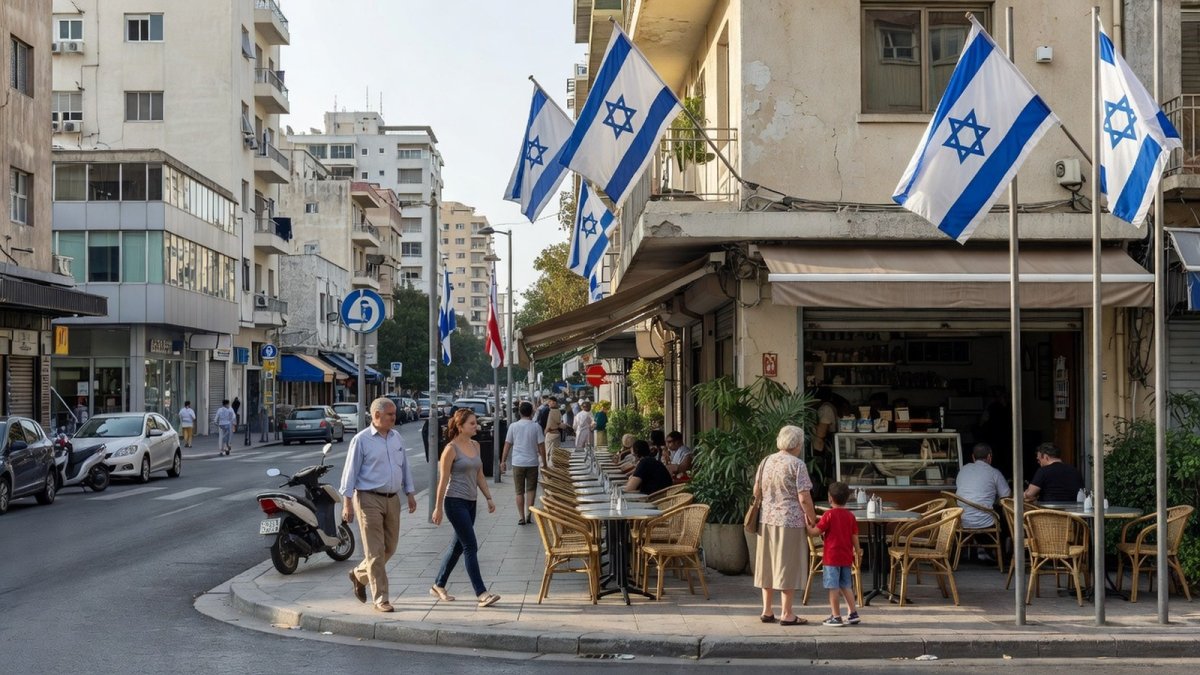
In a recent i24NEWS English street vox-pop, Israelis were asked a deceptively simple question: could Lebanon be next in the wave of regional normalization that began with the Abraham Accords? The responses, captured in the Aug. 15 short titled "Could Lebanon be next?", reflect a public that is deeply skeptical yet not entirely dismissive of the prospect—a sentiment that mirrors the chasm between the diplomatic track in Rome and the grim reality on the ground in southern Lebanon, where Israeli forces continue to occupy towns and Hezbollah's arsenal remains intact.
Israel-Lebanon Peace: Israelis Weigh In on What's Next
Jerusalem, Israel — The question is no longer hypothetical. After multiple rounds of American-mediated talks that began in Washington in April and continued in Rome earlier this month, Lebanese and Israeli officials are now discussing the technical architecture of a potential peace. But as the vox-pop suggests, Israelis are asking whether this is a genuine breakthrough or just another round of diplomatic theater while rockets and bulldozers continue their work along the Blue Line.
The Rome Talks: Technical Progress, Political Stalemate
The most recent round of negotiations, held in Rome from Aug. 4-6, produced no new Israeli withdrawal and no finalized verification mechanism. Yet a US State Department spokesperson described the talks as "productive on the technical and expert levels," noting the two sides are "a lot closer on what needs to be done to advance and expand the pilot zones." The next round is expected to resume in early September, according to Al Jazeera reporting from Aug. 14.
This technical convergence, however, masks a fundamental political gap. The June trilateral framework—in which the United States is a formal party—links Hezbollah's disarmament to a gradual Israeli withdrawal from southern Lebanon. Israeli Defence Minister Israel Katz stated on Thursday that Israel will not withdraw until Hezbollah is disarmed, a position he first articulated on June 12 when he declared Israel would not leave security zones in Lebanon, Syria, or Gaza. Meanwhile, Lebanese Prime Minister Nawaf Salam, the former president of the International Court of Justice, is demanding a clear timetable for withdrawal—a demand he reiterated in a Friday meeting with US Ambassador to Beirut Michel Issa and General Joseph Clearfield, head of the US military coordination group for Lebanon.
The "chicken-and-egg dilemma," as described by Dr. Joseph Gebeily, remains the core obstacle: Lebanon doubts Israel's withdrawal commitment, while Israel sees no guarantee that Hezbollah won't simply return to the border once Israeli forces leave. This is not a technical problem; it is a strategic impasse that no amount of expert-level convergence can resolve on its own.
Hezbollah's Rejection and the Fraying Ceasefire
Hezbollah's leadership has made its position unmistakable. On Friday, Secretary-General Naim Qassem accused Lebanese officials of putting the army under "undue pressure" by implementing what he called a non-functional agreement. "How can you accept this ongoing humiliation of the Lebanese army, exposing it to bombardment and Israeli pressures, instead of acting as its protectors?" Qassem asked, challenging officials to "name a single achievement from the seven rounds of negotiations."
Qassem pointed specifically to Zawtar al-Gharbiyeh, the first designated pilot zone, where he claims Israel continues to strike homes and demolish tunnels. The ceasefire announced on April 17 and extended to May 17, followed by a mid-June framework meant to pave the way for durable peace, has since frayed badly. The New York Times reported on Aug. 15 that Israeli strikes in Lebanon killed 11 people in Ansar, and fighting continues across southern Lebanon despite the nominal truce.
For Israeli readers, Qassem's rhetoric is familiar—it is the same maximalist posture that has defined Hezbollah since 2006. But his specific targeting of the pilot zones is significant. If the first test case for cooperation collapses under continued Israeli operations, the entire framework risks becoming a dead letter before the September round even convenes.
Public Opinion: Israelis Want Action, Not Ambiguity
The vox-pop skepticism is backed by hard data. A June 2026 poll by the Institute for National Security Studies (INSS) in Tel Aviv found that roughly 60% of Israelis support intensifying military operations against Hezbollah, with support even higher among Netanyahu coalition voters. This is not a population in a mood for compromise; it is a population that has watched 38 soldiers and one civilian contractor killed since the war erupted in early March, according to figures reported by the New Indian Express on Aug. 5.
Assaf Orion, a senior fellow at the Washington Institute, describes a growing Israeli public frustration at the disconnect between government promises and the reality of daily security threats. "The government is still hoping for the complete disarmament of Hezbollah," Orion said, "but professional assessments suggest that this will require a combination of diplomatic and military means." Israel, he notes, is flexible on sequencing but unyielding on verified disarmament—a position that leaves little room for the kind of symbolic gestures that could build trust.
Israeli Ambassador to the US Yechiel Leiter captured this duality in May: "The goal is peace, as if there's no Hezbollah, and to fight Hezbollah as if there's no peace." That formulation may be intellectually coherent, but it is politically unsustainable. With Israeli elections scheduled for Oct. 27, the Lebanon file is now a live domestic political issue, and the government's credibility rests on demonstrating that the diplomatic track is producing tangible security gains, not just talking points.
Lebanese Perspectives: A Divided Society, A Fragile State
On the Lebanese side, the picture is more complex than the official position suggests. A May 2026 poll by Information International, reported by al-Jadeed and cited by Algemeiner, found support for peace with Israel reaching 84% among Druze citizens, 77% among Maronites, and 72% among Orthodox Christians. An April 2026 FDD survey found that only 42% of Lebanese oppose peace with Israel outright. These numbers are remarkable for a country that has been in a formal state of war with Israel since 1948.
Yet the political reality is constrained by Hezbollah's armed dominance. A World Israel News poll found that only 28% of Lebanese respondents said the country should repeal laws criminalizing dealings with Israel, while 32% said the laws should remain and 40% declined to answer. The silent 40% speaks volumes about the fear that still governs public discourse in Lebanon.
Lebanese President Joseph Aoun is seeking direct government meetings with Israel, and his recent Washington visit tested his vision for Hezbollah's disarmament. But Prime Minister Salam has been careful to frame the issue in terms of state sovereignty, not normalization. "Lebanon is not seeking normalization with Israel, but rather peace," he said in May, adding that talk of a meeting with Prime Minister Benjamin Netanyahu was "premature" and that "any high-level meeting with the Israeli side requires major preparations." Lebanon's "minimum demand," he insisted, is a timetable for Israel's withdrawal.
The Human Cost: Numbers That Undermine the Narrative
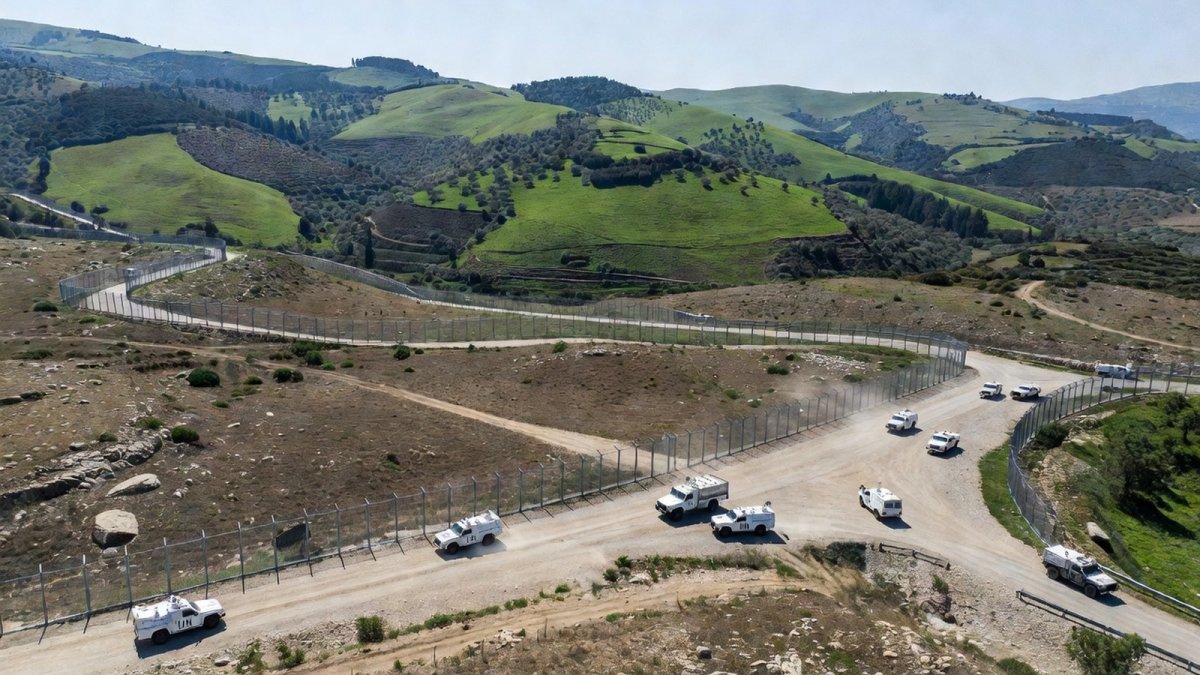
While diplomats discuss pilot zones and verification mechanisms, the human toll continues to mount. According to Lebanese authorities, as reported by Al Jazeera on Aug. 14, Israeli attacks since March 2 have killed 4,335 people, wounded 12,277, and displaced more than a million. May figures from Anadolu put the death toll at 2,704 with 8,311 wounded and more than 1.6 million displaced—roughly one-fifth of Lebanon's population. Israeli forces currently occupy multiple towns inside the Lebanese border, demolishing homes and displacing residents, according to Lebanese officials.
Lebanese Parliament Speaker Nabih Berri, a longtime Hezbollah ally, cited village demolitions, bulldozed farmland, forest fires, and damage to heritage sites as evidence that "Israel has not stopped its violations and attacks on Lebanon." His conclusion is stark: "The key to stability remains forcing Israel to stop its war and withdraw to the international border."
These figures are not just statistics; they are the political fuel that Hezbollah uses to justify its continued armed existence. Every demolished home in Zawtar al-Gharbiyeh is a recruiting poster for the next generation of fighters. Every displaced family is a reminder that the Lebanese state cannot protect its citizens—a fact that undermines the very state authority the US framework is meant to strengthen.
What Comes Next: September's Test
The next round of talks in early September will be a critical test of whether the Rome process can produce concrete results. US Ambassador Issa called the talks "positive" and said negotiations would continue, but he offered no date for the next round and delivered a blunt message: Israeli attacks will stop only once Hezbollah disarms. "If they give up their weapons, everything will stop," he told reporters.
That formulation, however logical from Washington's perspective, ignores the sequencing problem that has plagued every attempt at a deal. Hezbollah will not disarm while Israeli forces occupy Lebanese towns; Israel will not withdraw while Hezbollah retains its arsenal. The June framework was supposed to break this deadlock by creating pilot zones where both processes could proceed in parallel. But with fighting continuing in those very zones, the framework's credibility is on the line.
For Israelis watching the vox-pop, the question "could Lebanon be next?" carries a different weight than it did in 2020, when the Abraham Accords normalized relations with the UAE, Bahrain, and Morocco. Those agreements were signed between states with no active military conflict. Lebanon is a different case entirely—a country where the state's authority is contested by an armed militia that has been a recurring adversary along Israel's northern border for decades. The path to peace runs through Beirut, but it also runs through the tunnels of Zawtar al-Gharbiyeh and the rubble of Ansar.
The Israeli public's skepticism, as captured in the i24NEWS vox-pop, is not cynicism; it is the hard-earned wisdom of a society that has seen too many ceasefires fray and too many "peace processes" become preludes to the next war. The question is whether the September talks can produce something different—a verifiable, sequenced, and enforceable arrangement that gives both sides a reason to believe this time is different. The alternative is more of the same: more strikes, more demolitions, more displacement, and a peace that remains perpetually "next."
By Hannah Berg, Staff Writer
This article was produced with AI-assisted research and editorial support. Reporting is based on sources cited in the article.
What's Your Reaction?
 Like
0
Like
0
 Dislike
0
Dislike
0
 Love
0
Love
0
 Funny
0
Funny
0
 Wow
0
Wow
0
 Sad
0
Sad
0
 Angry
0
Angry
0
Israel Correspondent at Global1.News. Based in Tel Aviv, covering Israeli politics, security, technology, and society. Provides balanced, deeply-sourced reporting on one of the most closely-watched regions in the world.












Comments (0)