
Iran Rejects Trump's Hormuz 'Lies' — Filipino Pump Prices at Risk
Iran's military rejects Trump's claims of US control over the Strait of Hormuz, insisting Tehran manages the vital oil chokepoint. The standoff threatens global oil prices and directly impacts Filipino consumers facing fuel costs, transport fares, and OFWs in the Gulf region.
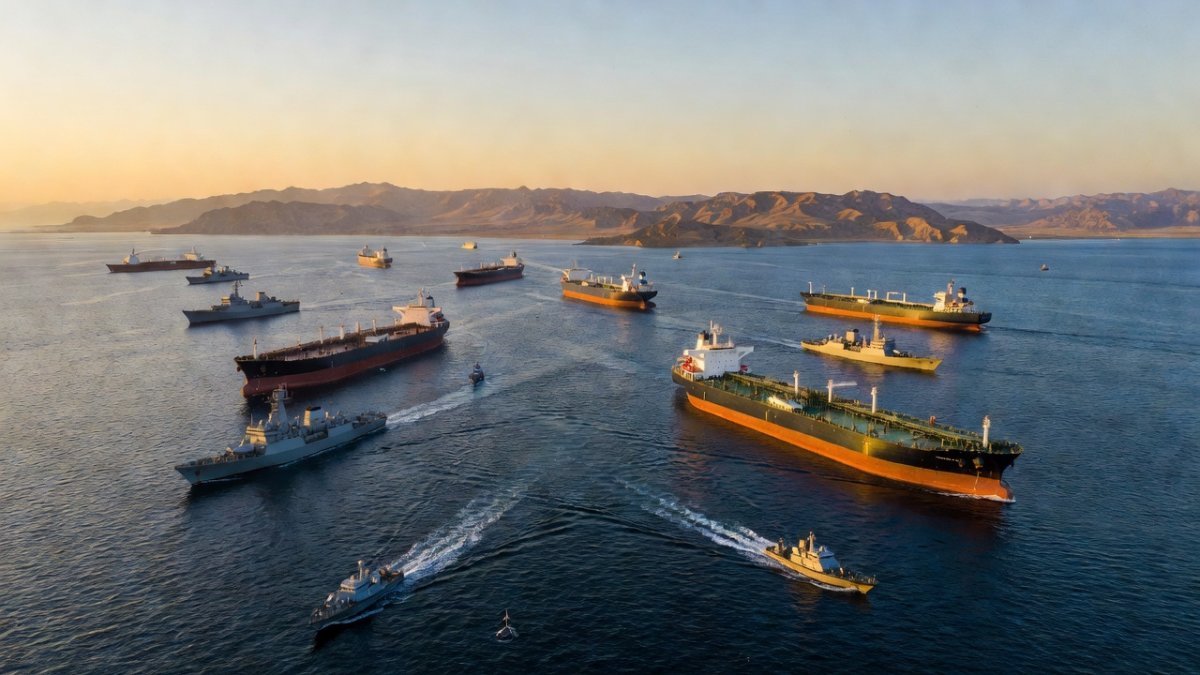
Iran Rejects Trump's 'Lies' on Hormuz Control — What It Means for Global Oil and Filipino Pump PricesTehran — Iran's military on Thursday dismissed as "lies" US President Donald Trump's claims that American forces have taken control of the Strait of Hormuz, insisting the strategic waterway remains firmly under Iranian management and warning that no vessel can pass without Tehran's permission.The sharp exchange comes as the world watches one of the most critical oil chokepoints on the planet — a narrow passage that carries roughly a fifth of global oil trade — and as ordinary Filipinos brace for what this geopolitical standoff could mean for the price of every liter of gasoline, every jeepney fare, and every delivery of goods to the sari-sari store."The false claims of the United States that ships are passing through the Strait of Hormuz normally ... are nothing more than lies and fabrications," said Ebrahim Zolfaghari, the spokesperson for Iran's central military command, Khatam-al Anbiya, in a statement carried by Iranian state broadcaster IRIB."The Strait of Hormuz is, as in the past, under the complete management and control of the Islamic Republic of Iran, and no commercial ship or tanker without the permission and supervision of the powerful Iranian armed forces has had and will have the possibility of safe passage through this strait," Zolfaghari added.
The 'Wall of Steel' vs. Iranian Control
The war of words escalated dramatically on Wednesday when Trump took to his Truth Social platform to declare that the US "has total control over the Strait of Hormuz. I THINK WE WILL KEEP IT!""Our Naval Blockade is being called, by everyone, 'A WALL OF STEEL,' and there is nothing Iran can do about it," the president wrote.Iran's military was quick to push back. Hossein Taeb, the head of Iran's paramilitary Basij forces under the Revolutionary Guards, told state television that the strait remains under Iranian control."Today, you see that the Strait of Hormuz is under the management and control of the Islamic republic, and our country continues on its path in complete security," Taeb said.Iran's top diplomat, Abbas Araghchi, took to X (formerly Twitter) to accuse Washington of repeated miscalculations. "The U.S. has long miscalculated due to intelligence failures. Case in point: The war on Iran. Now, an even bigger miscalculation on the Strait of Hormuz," he wrote.The rhetoric reflects a dangerous standoff that has been building since the outbreak of war in the Middle East on February 28. Since that date, Iran has maintained control of the waterway, requiring vessels to obtain permission and pay transit fees before using it — a dramatic shift from the decades of relatively free navigation that preceded the conflict.Why the Strait of Hormuz Matters to the Philippines
For many Filipinos, the Strait of Hormuz might seem like a distant geographic detail — a sliver of water between Iran and Oman that most of us will never see. But its importance to our daily lives cannot be overstated.The Philippines imports the vast majority of its fuel requirements. We do not have the oil reserves of our Southeast Asian neighbors; we rely on global markets to keep our power plants running, our jeepneys rolling, and our tricycles buzzing through barangay streets from Luzon to Mindanao.When the Strait of Hormuz — the passage through which a fifth of the world's oil travels — faces disruption, the effects ripple across the globe and land directly at our local gasoline stations. The Department of Energy and oil firms in the Philippines typically adjust pump prices weekly based on global oil price movements. Any sustained disruption in the strait could mean sharp increases at the pump, and those increases cascade through the economy.Consider the jeepney driver who wakes up before dawn to line up at the depot, counting every peso to fill his tank before the first passenger of the day. Consider the fisherman in Iloilo whose boat fuel costs determine whether his catch will turn a profit. Consider the OFW in Saudi Arabia or the United Arab Emirates who sends remittances home to support a family in Pangasinan or Cebu — and who now watches nervously as the region where they work edges closer to a wider conflict.Iran-Oman Talks and the Conditions for Reopening
Amid the confrontation, there are diplomatic threads being pulled. Iran and Oman have been in talks to establish a new route through the strait, though negotiations have not yet been finalized.Tehran, however, has made clear that even if those talks produce a new route, that alone would not open the waterway. The US must first meet Iran's demands, according to Iranian officials.This conditionality is crucial for understanding the situation. The strait's closure is not simply a technical matter of shipping lanes — it is a political lever, a bargaining chip in a much larger confrontation between Tehran and Washington that has already erupted into open war since late February.Iranian parliamentarian Behnam Saeedi, a member of the national security commission, made Tehran's position even more explicit in comments to state TV."Ships belonging to the Zionist regime will not have the right to pass through the Strait of Hormuz under any circumstances, whether in war or peacetime," Saeedi said, adding that "US military ships will also be barred from passing through the Strait."The military command's statement, carried by IRIB, reinforced the message: "The false US claims regarding the normal passage of vessels through the Strait of Hormuz, which reflect the helplessness and confusion of that country's military, are nothing but falsehoods and baseless lies."What This Means for Filipino Families and Workers
For Filipino families, the practical question is simple: what does this mean for our household budgets?The answer depends on how long the standoff lasts and whether it escalates further. If the strait remains under Iranian control with restricted passage, global oil prices are likely to remain elevated or climb higher. That translates to higher pump prices for gasoline and diesel, which in turn affects the cost of transporting goods — from the vegetables sold at the palengke to the construction materials for new homes.Transport groups have historically been quick to call for fare increases when fuel prices spike. Jeepney drivers, UV Express operators, and tricycle drivers all feel the pinch directly. When they raise fares, commuters feel it too — the factory worker in Laguna, the call center agent in BGC, the student taking the jeep to school.OFWs in the Gulf region face a double burden. They are geographically close to the conflict zone, raising concerns for their safety and the safety of their families back home who depend on their remittances. At the same time, the economic pressures of the conflict could affect employment and wages in the Gulf states, which are major oil producers and employers of Filipino workers.There is also the broader question of energy security. The Philippines has been working to diversify its energy sources and reduce dependence on imported fuel, but those efforts take time. In the short term, we remain vulnerable to global oil price shocks.The Human Cost of a Distant Conflict
Behind the geopolitical posturing and the military statements, there is a human cost that resonates with Filipinos who know all too well the pain of conflict and displacement.The war that began on February 28 has already displaced families across the Middle East, much as conflicts in Mindanao have displaced Filipino families over the years. The bayanihan spirit — that uniquely Filipino tradition of community cooperation and mutual support — is something we recognize in the resilience of people caught in conflict zones, whether in Marawi or in the cities of the Gulf.For the Filipino domestic worker in Kuwait who sends money home every month, for the seafarer whose ship may be rerouted away from the strait, for the engineer working on infrastructure projects in Qatar — the situation in Hormuz is not abstract. It affects their livelihoods, their safety, and their ability to support the families they left behind.The Philippine government has historically maintained a policy of neutrality in Middle East conflicts while prioritizing the welfare of overseas Filipino workers. As this situation develops, that balancing act will become more challenging.Looking Ahead: Uncertainty and Preparation
What can Filipinos expect in the coming weeks and months?The immediate outlook is one of uncertainty. Both Washington and Tehran are making maximalist claims — Trump asserting total control, Iran insisting on complete management. The reality on the water is likely somewhere in between, but the perception of risk is what drives oil markets.For Filipino consumers, the prudent approach is to prepare for continued volatility in fuel prices. This might mean budgeting more for transportation, considering alternative modes of travel, or supporting local businesses that are working to manage their own rising costs.The Department of Energy and other government agencies will be monitoring the situation closely. Historically, the Philippine government has explored options such as strategic petroleum reserves and diplomatic engagement with oil-producing countries to mitigate the impact of global price shocks.There is also a deeper lesson in this moment — a reminder of the importance of energy independence and diversification. Every solar panel installed on a Filipino rooftop, every wind farm in Ilocos Norte, every geothermal plant in Leyte is a small step toward reducing our vulnerability to conflicts happening thousands of kilometers away.For now, the Strait of Hormuz remains a flashpoint, and its fate will continue to shape the economic realities of Filipino families. As we watch this distant waterway, we are reminded that in our interconnected world, the ripples of conflict in one corner of the globe can become waves that reach our shores.The situation bears watching closely. For the jeepney driver, the OFW, the sari-sari store owner, and every Filipino family that fills up a tank or rides a tricycle, the stakes could not be higher.By Bella Reyes, Staff WriterThis article was produced with AI-assisted research and editorial support. Sources: Inquirer.net (Agence France-Presse), Anadolu Agency.
What's Your Reaction?
 Like
0
Like
0
 Dislike
0
Dislike
0
 Love
0
Love
0
 Funny
0
Funny
0
 Wow
0
Wow
0
 Sad
0
Sad
0
 Angry
0
Angry
0

Isabella "Bella" Reyes
Philippines/Southeast Asia Correspondent at Global1.News. Manila-based journalist covering Philippine politics, environment, maritime security, and social issues. Passionate about marine conservation and the communities protecting the Philippines' natural heritage.













Comments (0)