
Do Mexicans celebrate Halloween? It’s not what you’d expect
When the night of October 31 rolls in, many Mexican families hear the familiar rustle of candy wrappers and the soft thump of little feet on cracked sidewalks.
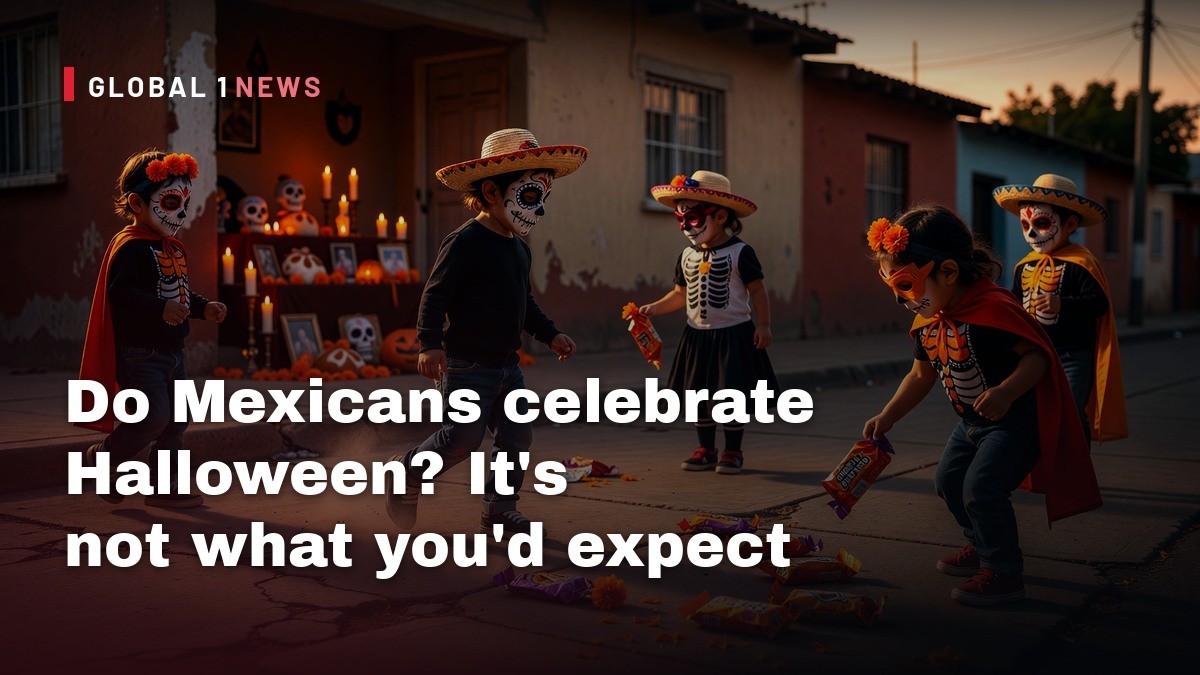
When the night of October 31 rolls in, many Mexican families hear the familiar rustle of candy wrappers and the soft thump of little feet on cracked sidewalks. Yet beneath the playful chatter of “¿Me da mi calaverita?”—the local twist on “trick‑or‑treat”—lies a deeper rhythm that beats to the drum of centuries‑old traditions. As Andrea Fischer notes in her recent feature for Mexico News Daily, the question “Do Mexicans celebrate Halloween?” invites a layered answer: yes, we join in the fun, but we do so while keeping the solemn glow of Día de Muertos at the heart of our November rituals.
Childhood Memories of Trick‑or‑Treat
Fischer recalls the excitement of school‑yard parties, where classmates organized “trick‑or‑treat evenings” that centered on the simple joy of sweets. Children would swap costumes—pumpkins, skeletons, even makeshift vampires—and race from house to house, their faces painted with bright colors. These gatherings, she admits, were “mostly about the treats,” a sentiment that resonates with many families who see Halloween as an opportunity for children to indulge in harmless mischief.
Yet even in those youthful celebrations, the shadow of November’s more profound observances loomed. Fischer’s own family, like countless others across the country, made a point to shift focus as the calendar turned, preparing a Día de Muertos altar that would honor their departed relatives. The contrast between the fleeting thrill of candy and the enduring reverence for ancestors sets the stage for the cultural negotiation that defines Mexico’s approach to Halloween.
The Weight of Día de Muertos
Day of the Dead, or Día de Muertos, is far more than a festive backdrop; it is a living conduit between the present and the past. Fischer emphasizes that the ritual of building an altar—an ofrenda—carries “millennia‑old traditions” that trace back to pre‑Hispanic times. The cempasúchil flower, with its bright orange petals, is said to guide spirits back to the world of the living, while the thin veil between worlds, she notes, feels especially permeable during this period.
The altar is a space of intimacy and remembrance. Families lay out favorite foods of the departed—mole de olla for an aunt, a beloved Diet Coke, even cigarettes for a brother—alongside traditional sweets like Pulparindo and Pelón Pelo Rico. The language itself reflects affection: “nuestros muertitos,” a diminutive that blends the Nahuatl honorific “‑tzin” with Spanish affection, underscores the deep respect afforded to those who have passed.
Diversity Across the Nation
Mexico’s cultural tapestry is woven from 68 official Indigenous languages and 364 linguistic variants, a fact Fischer underscores to caution against sweeping generalizations. From the massive ofrenda erected annually at UNAM in Mexico City to the nocturnal vigils held in Pátzcuaro, Michoacán, practices vary dramatically. Each community infuses its own symbols, foods, and songs into the celebration, creating a mosaic of remembrance that defies a single definition.
This diversity also shapes how Halloween is received. In regions where Indigenous customs dominate, the emphasis remains firmly on ancestral rites, while in more urbanized or tourist‑heavy areas, the influence of U.S. customs—costumes, candy, and jack‑o‑lanterns—finds a foothold. The coexistence of these traditions illustrates the fluidity of Mexican cultural identity, constantly negotiating between preservation and adaptation.
Historical Echoes of Proximity
Fischer invokes a remark by Porfirio Díaz, who observed that Mexico was “very far from God, but very close to the United States.” This geographic and economic proximity has long facilitated cultural exchange. As trade and migration intensify, the flow of American holiday customs into Mexican neighborhoods becomes inevitable. The presence of jack‑o‑lanterns on Día de Muertos altars, for instance, signals a blending rather than a replacement of traditions.
Such exchanges are not merely passive; they are actively embraced by many Mexicans who enjoy the opportunity to “dress up, eat candy until we’re stuffed and have an excuse to run through the streets dressed as pumpkins.” The enthusiasm for these recreational aspects coexists with a reverence for the more solemn elements of the season, creating a dual celebration that reflects both modern influences and ancient roots.
Halloween as Recreation, Not Ritual
While Halloween’s costumes and candy have become a familiar sight in many Mexican colonias, Fischer stresses that the holiday remains “more of a recreational activity than a cultural one.” The festivities are largely centered on fun—children’s laughter, neighborhood block parties, and the occasional spooky décor—rather than on the spiritual communion that defines Día de Muertos. This distinction matters because it frames how families allocate time and resources: the elaborate altar preparation and family gatherings dominate the November calendar, while Halloween’s festivities occupy a single night of lighthearted play.
Nevertheless, the two celebrations are not mutually exclusive. Fischer recounts seeing jack‑o‑lanterns placed alongside marigolds on altars, a visual testament to the dialogue between the two holidays. Children may ask for their “calaverita” on October 31, blending the language of trick‑or‑treat with the reverence of the calavera, the sugar skull that symbolizes the departed.
Family Stories and Everyday Practices
At the heart of these customs are personal stories that bridge generations. Fischer describes setting out a Coke for her grandmother, a gesture that embodies the belief that the dead return to partake in the offerings left for them. Such acts—leaving a favorite drink, a cherished snack, or a beloved song—transform the abstract notion of remembrance into tangible, daily practices that keep ancestral connections alive.
These intimate moments echo across the country, from the modest kitchen altars of small towns to the grand public displays in city plazas. Whether a family prepares mole de olla for an aunt or simply leaves a candy bar for a child’s favorite ghost, each offering is a thread in the larger fabric of Mexican cultural memory, weaving together the past, present, and future.
What the Future Holds
Looking ahead, the interplay between Halloween and Día de Muertos will likely continue to evolve. As globalization deepens and younger generations adopt new forms of expression, the balance between recreation and ritual may shift. Yet, as Fischer’s narrative suggests, the core of Mexican observance—honoring “nuestros muertitos” with love, food, and song—remains steadfast. The holiday season will keep offering both a night of spooky fun and a profound, communal act of remembrance.
In the words of the author, if you ask a Mexican whether we celebrate Halloween, the answer will be a nuanced “yes, but we also observe Día de Muertos.” It is a response that captures the duality of modern Mexican identity: a people who can revel in the thrill of costumes while simultaneously lighting candles for the souls of their ancestors. This coexistence, rooted in history and nurtured by everyday family rituals, ensures that the spirit of both holidays will continue to illuminate Mexican streets and homes each November.
This article was produced with AI-assisted research and editorial support. Reporting is based on the source material cited below. Sources: Mexico News Daily; mexiconewsdaily.com; Global1.News (31 October 2026).
By Rosa Martinez, Staff Writer
What's Your Reaction?
 Like
0
 Dislike
0
 Love
0
 Funny
0
 Wow
0
 Sad
0
 Angry
0
Latin America/Andes Correspondent at Global1.News. Based in Bogota, covering politics, environment, energy, and social movements across the Andean region. Passionate about environmental journalism and communities protecting their land.












Comments (0)