
Infantino Faces Silent Re-Election Challenge After FIFA Sell-Off Collapses
The collapse of Gianni Infantino's $4bn World Cup sell-off plan has thrown South African football into uncertainty, with CAF president Patrice Motsepe's unanimous April endorsement of the FIFA leader now under global scrutiny ahead of the March 2027 Congress in Rabat. SAFA stands to lose critical development funding while Bafana Bafana's 2026 breakthrough under Hugo Broos risks fading without stable FIFA Forward payments.
The collapse of Gianni Infantino's $4bn World Cup sell-off plan has thrown South African football into uncertainty, with CAF president Patrice Motsepe's unanimous April endorsement of the FIFA leader now under global scrutiny ahead of the March 2027 Congress in Rabat. SAFA stands to lose critical development funding while Bafana Bafana's 2026 breakthrough under Hugo Broos risks fading without stable FIFA Forward payments. This week the question from Al Jazeera English cuts straight to the heart of the matter for every South African fan, as the sport's governance crisis ripples from Rabat all the way to Johannesburg's training fields and township pitches.
Infantino Faces Silent Re-Election Challenge
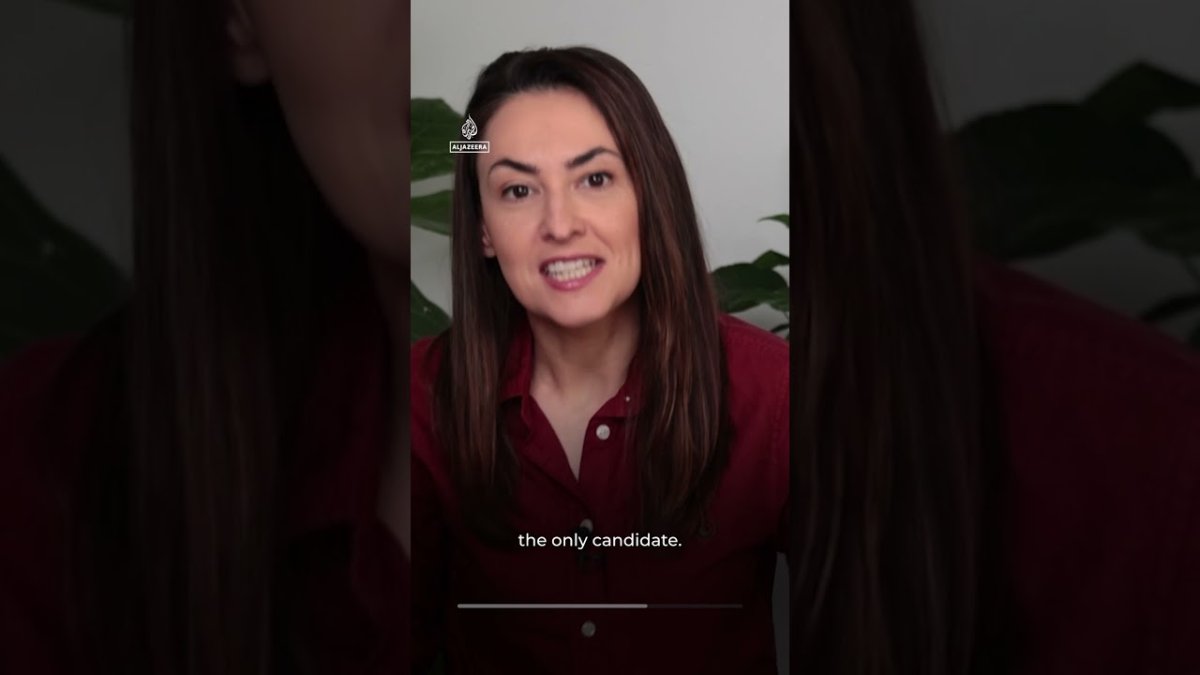
Johannesburg, South Africa — Al Jazeera English released a video today asking why no candidate has formally challenged Gianni Infantino for the FIFA presidency despite the Swiss leader's weakened position after scrapping his World Cup sell-off plan. Infantino was expected to win a third full term unopposed at the 77th FIFA Congress next March in Rabat, Morocco. The deadline for any challenger to declare sits on 18 November 2026.
The Question Nobody Is Answering
Al Jazeera English's video published this week highlights the absence of any declared opponent even after UEFA, the Dutch FA, the German DFB and England's FA all declared they have lost confidence in Infantino. He secured more than 200 letters of support from member associations for his re-election campaign, yet those letters can still be withdrawn before the November deadline. Infantino ran unopposed in both 2019 and 2023 after first winning the presidency in February 2016 with 115 votes against Sheikh Salman's 88.
The rarity of open challenges stems directly from the incumbency machine that controls development funding across all 211 associations. Infantino's $40m-per-association offer created a chilling effect, making smaller federations reluctant to risk losing access to FIFA Forward payments that arrive every four-year cycle. Letters of support remain withdrawable precisely because they function as leverage rather than binding commitments, allowing the administration to project strength while quietly managing dissent before the 18 November deadline.
Unopposed victories in 2019 and 2023 meant no public debate on governance or funding priorities, leaving associations like SAFA without alternative voices on how FIFA Forward money reaches grassroots programmes. For South African fans this silence matters because it delays scrutiny of whether development funds truly serve transformation and the 2010 legacy infrastructure still used by the Premier Soccer League and Bafana Bafana squads.
How the World Cup Sell-Off Collapsed
Infantino scrapped the plan on Saturday after it triggered a global revolt. The proposal aimed to raise over $4bn by selling 20 percent of a new commercial company that would control the men's and women's World Cups. He had offered each of FIFA's 211 member associations $40m if they backed the scheme, needing 106 votes to pass. UEFA's 55 votes plus Concacaf's 35 and AFC's 46 totalled 136 nations against the plan. On Thursday UEFA secured a boycott pledge from all 55 members while Concacaf unanimously rejected the idea. FIFA initially insisted nobody was selling football, but COO Kevin Lamour admitted the administration had been deceived. Senior adviser Carlos Cordeiro resigned, calling the plan a bad deal that would mortgage football's future. On Saturday Infantino announced the proposal would not proceed.
The vote arithmetic showed UEFA's 55 plus Concacaf's 35 and AFC's 46 creating an immediate 136-vote bloc that exceeded the 106 needed to block the scheme. Concacaf and AFC solidarity proved decisive because both confederations coordinated rejection on the same Thursday, preventing Infantino from peeling off individual associations with the $40m offer. For smaller federations that $40m represented a transformative sum relative to their annual budgets, yet the boycott threat from UEFA's 55 members made acceptance politically costly.
Carlos Cordeiro's resignation carried symbolism as a senior adviser publicly labelling the plan a mortgage on football's future, exposing internal divisions. The initial defiance that "nobody is selling football" collapsed within 48 hours once COO Kevin Lamour confirmed the administration had been deceived. South African observers note that CAF and OFC were scheduled to discuss the plan in August, meaning the U-turn spared associations like SAFA from choosing between the reported $20m lifeline and broader African solidarity.
UEFA's Fury and the Letters of Support
UEFA demanded a thorough and fundamental review of FIFA governance, stating no option should be off the table. The statement condemned secret schemes on fast-track timescales cooked up by faceless individuals. It quoted Infantino's own 2016 words that the money of FIFA is the members' money and must serve football development. England's FA backed UEFA and called for a full review of FIFA leadership. Dutch FA president stated the KNVB no longer has confidence in Infantino's leadership. DFB president Bernd Neuendorf accused the FIFA president of acting unilaterally and irresponsibly. UK PM Andy Burnham said Infantino was the wrong man to lead the organisation.
UEFA's statement explicitly quoted Infantino's 2016 pledge that FIFA money must serve development, not anything else, and declared he had failed on both counts. The demand for a thorough review with no options off the table signals that European federations view the crisis as existential rather than temporary. England's FA, the Dutch KNVB and Germany's DFB breaking ranks publicly amplified the pressure because these heavyweight associations control significant resources and influence within the 211-member body.
Andy Burnham's intervention as UK PM added political weight by labelling Infantino the wrong man to lead the organisation. The pressure now builds directly on the re-election machine because more than 200 letters of support can still be withdrawn before 18 November. For South African football this European fracture matters because it tests whether CAF's unanimous April endorsement organised by Patrice Motsepe will hold or whether African associations will face similar calls to reassess their position ahead of the Rabat Congress.
The Would-Be Challengers
Victor Montagliani, the 60-year-old Canadian Concacaf president and one of eight FIFA vice-presidents, is reported to be making moves. He became the first non-Caribbean Concacaf president since 1969 after the 2015 scandal and sits at the peak of his influence after the North American World Cup. Nasser Al-Khelaifi's spokesperson confirmed the PSG president has absolutely no ambition, no intention and no interest in the FIFA role. Sheikh Salman, who lost to Infantino in 2016, has not declared. UEFA president Aleksander Ceferin has left his intentions unclear.
Victor Montagliani emerges as the most credible threat because his Concacaf presidency gives him direct control over 35 votes and his post-2015 reform credentials position him as an outsider to the current administration. Hosting a successful North American World Cup this summer further strengthens his platform at the exact moment Infantino's sell-off plan collapsed. Al-Khelaifi's explicit refusal removes one potential European-backed candidate, narrowing the field and forcing attention onto whether Sheikh Salman, who came within 27 votes in 2016, will attempt another run.
A divided opposition benefits Infantino because no single challenger has yet consolidated support from UEFA's 55 members and Concacaf's 35. South African fans watch this dynamic closely since CAF's 54 associations, unified behind Patrice Motsepe in April, could become the decisive bloc if letters of support begin to shift before the November deadline. A Montagliani candidacy would test whether African federations maintain their current stance or seek new leadership that prioritises transparent FIFA Forward distribution.
What This Means for South African Football
Patrice Motsepe organised the unanimous CAF endorsement of Infantino for the 2027-2031 term at a meeting on 29 April in Vancouver where all 54 CAF associations backed the incumbent within minutes. CAF and OFC will now discuss the scrapped plan in August, placing Africa's position under close watch. Reports indicate SAFA weighed a $20m development lifeline tied to the investment scheme. FIFA Forward payments remain the central funding mechanism for all 211 associations over each four-year cycle. The outcome directly affects transformation programmes, grassroots development and the 2010 World Cup legacy that still shapes South African football infrastructure. Bafana Bafana's historic 2026 qualification under Hugo Broos showed what stable support can deliver for the national team.
Patrice Motsepe's rapid organisation of unanimous CAF backing in Vancouver demonstrated South African influence within African football governance, yet the scrapped plan now places that unity under scrutiny at the August meeting. The reported $20m lifeline SAFA considered would have supplemented FIFA Forward payments that fund transformation programmes and grassroots initiatives across the country. Any disruption to those cycles directly threatens the 2010 World Cup legacy stadiums and training facilities still central to the Premier Soccer League and national team preparations.
Bafana Bafana's 2026 breakthrough under Hugo Broos proved that consistent development funding produces on-field results, raising the stakes for SAFA's vote at the Rabat Congress. South African fans understand that CAF's 54 associations represent a significant bloc whose position on Infantino will shape whether FIFA Forward resources continue flowing reliably to township academies and women's football structures. The outcome determines whether the 2010 legacy continues to deliver tangible benefits or becomes another chapter of funding uncertainty.
What to Watch For
The 18 November deadline will reveal whether Montagliani declares or whether any of the 200-plus letters of support are withdrawn. CAF's August meeting will show whether Motsepe and the 54 African associations shift their stance. Rabat in March 2027 remains the decisive Congress. SAFA and CAF must decide whether to maintain their current position or join the call for new leadership. South African fans deserve governance that delivers real development money rather than repeated crises that distract from on-field progress.
The 18 November deadline creates two clear scenarios: either Montagliani formally declares, forcing a contested election, or enough letters of support are withdrawn to weaken Infantino's projected unopposed path. CAF's August meeting will test whether Motsepe maintains the unanimous Vancouver endorsement or whether African associations respond to the European revolt by demanding governance changes. A Montagliani candidacy would present African federations with a choice between continuity and a Concacaf leader whose region just hosted the World Cup that featured Bafana Bafana's historic qualification.
Whatever unfolds, South African supporters have a direct stake because SAFA's single vote at the Rabat Congress carries weight within CAF's 54-member bloc. Stable FIFA Forward funding underpins everything from grassroots coaching courses to the infrastructure upgrades that keep the 2010 legacy alive. Fans across the country will judge the final outcome by whether it secures predictable development money that lets Bafana Bafana and the women's national teams build on recent progress rather than navigate another governance distraction.
By Dante Williams, Staff Writer
This article was produced with AI-assisted research and editorial support. Reporting is based on sources cited in the article.
What's Your Reaction?
 Like
0
Like
0
 Dislike
0
Dislike
0
 Love
0
Love
0
 Funny
0
Funny
0
 Wow
0
Wow
0
 Sad
0
Sad
0
 Angry
0
Angry
0

Breaking News and Investigations Correspondent at Global1.News. Based in London, covering global breaking news, security, and investigative stories. Known for digging deeper and connecting the dots across continents.











Comments (0)