
Infantino's African Backing Tests Fifa Unity
Africa's football confederation unanimously backed Fifa president Gianni Infantino after his plan to sell stakes in global competitions collapsed, even as Senegal - the continent's second-highest ranked men's team - has yet to take a public position on the saga.
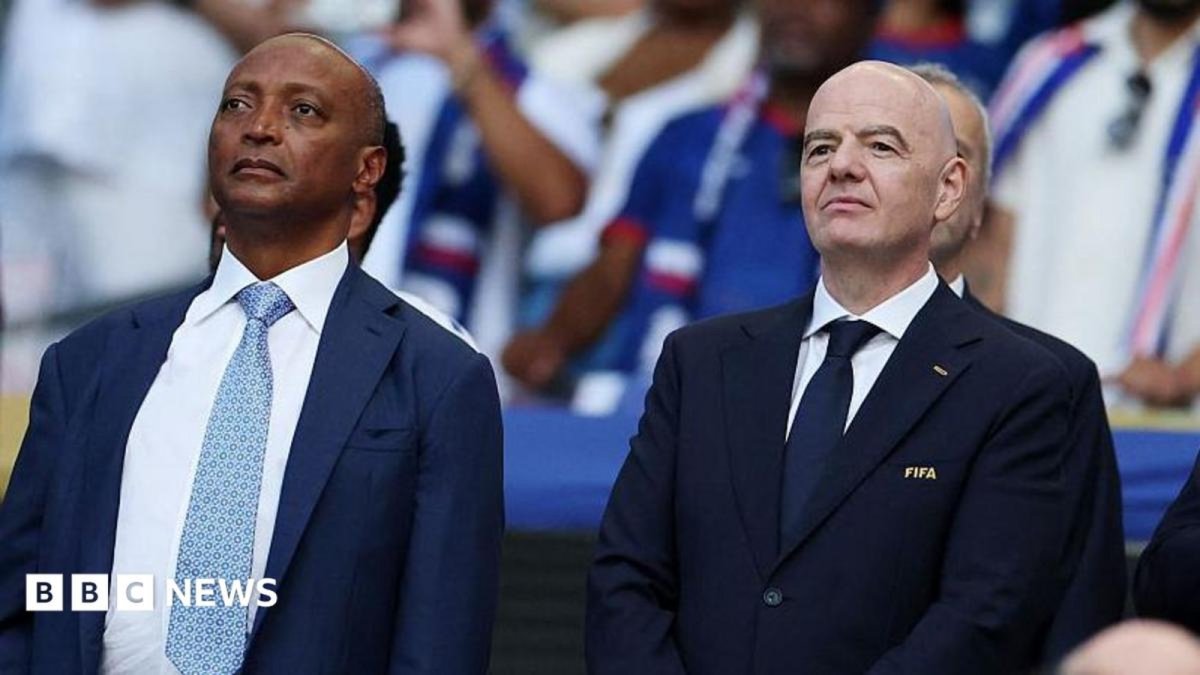
As pressure mounts on Fifa president Gianni Infantino over his abandoned plan to sell stakes in world football's biggest competitions, the continent of Africa has emerged as his most reliable block of support. Late on Thursday, the executive committee of the Confederation of African Football unanimously confirmed its backing — even as Senegal, Africa's second-highest ranked men's team behind Morocco, has yet to take a public position on the saga.
Infantino's African Backing Tests Fifa Unity
Dakar, Senegal — Article continues: African football's relationship with Infantino is defined by the Fifa Forward programme, the funding scheme he launched in 2016 that many cash-strapped federations now depend on to build stadiums, train coaches and develop youth football.
Continental Support for Infantino Remains Firm
Across Africa, football federations have rallied behind Fifa president Gianni Infantino in recent days, even as his plans for private investment in global competitions faced opposition elsewhere. The executive committee of the African confederation, Caf, confirmed its unanimous support late on Thursday after several leading administrators sent messages of backing. The controversial proposal, known as Fifa Forward Enterprise, involved selling stakes in Fifa's global competitions to private investors; it was scrapped after opposition from some regional governing bodies.
Support from the continent largely stems from the Fifa Forward programme, a funding scheme Infantino introduced in 2016 that many African federations have become increasingly reliant on to finance football projects where government and commercial investment in the sport is limited. Five of the seven African countries on the Fifa Council — Egypt, Morocco, Niger, Mauritania and Comoros — have already supported him publicly. But the backing is not universal: former Sierra Leone FA president and ex-Fifa Council member Isha Johansen was among the African voices opposing the plan, warning that it risked over-commercialising the game and asking what price the continent would have to pay for elevated development. This measured backing shows how practical needs shape continental positions amid wider global divisions.
Morocco Strengthens Its Fifa Ties
Morocco has emerged as a key partner for Fifa, hosting the organisation's Africa regional office in Rabat along with events such as the Club World Cup and a women's under-17 World Cup. The country will also co-host the men's 2030 World Cup with Spain and Portugal. Moroccan Football Federation president Fouzi Lekjaa described Infantino's withdrawal of the controversial proposal as a wise move that prioritised unity among Fifa's 211 member associations. Senior executives gathered in Morocco on Wednesday to reaffirm their support during this period of turbulence.
Egypt Maintains Close Institutional Links
Egypt, home to Caf headquarters, stands as one of Infantino's strongest allies on the continent. Fifa Council member Hany Abo Rida has maintained close ties with the president since 2016. The Egyptian Football Association has used Forward funding for infrastructure, youth development, coach education and women's football. While officials appreciate the expanded investment, they now call for greater emphasis on good governance, transparency and allowing Caf more space to shape African priorities beyond financial aid alone.
Congo Welcomes the Withdrawal Decision
The Congolese Football Federation issued a statement earlier this month praising Infantino's decision to scrap the proposal as wise. It highlighted a decade of work promoting football worldwide, particularly support for African nations with fewer resources. The federation noted it had greatly benefited from Fifa programmes through investment in development and infrastructure. President Véron Mosengo-Omba, elected in May 2026, assured continued full support beyond 2027, referencing renewed mandates in Paris in 2019 and Kigali in 2023.
Nigeria Eyes Forward Funding Benefits
The Nigeria Football Federation has aligned itself towards a supportive stance for Infantino's leadership, despite the wider backlash globally. For a federation facing chronic funding constraints and enormous infrastructure needs, the proposed plans would have been difficult to dismiss. Former NFF president and deputy chairman of Fifa's Men's National Teams Competitions Committee, Amaju Pinnick, argued that Infantino's plan would deliver a much-needed financial boost to every member association without over-relying on local governments.
Nigeria remains eligible for up to $8m (£5.95m) in the current Fifa Forward funding cycle, despite failing to qualify for the last two men's World Cup tournaments. The most prominent Forward project under way is the redevelopment of the NFF Technical Centre in the capital, Abuja, funded with approximately $4.88m and including the reconstruction of training pitches and a modern accommodation complex for the national teams. Nigeria's stance reflects the broader African pattern, where federations weigh immediate practical gains against wider debates on governance and commercialisation — and where steady progress on facilities and programmes benefits players and communities across the country.
Regional Voices Highlight Practical Realities
South Africa's Minister of Sports, Arts and Culture, Gayton McKenzie, posted on X that Infantino had been "very good to African football" and urged caution against joining calls for his removal. "Africa should be cautious in joining the public lynching of Infantino," he wrote. "We can debate his ideas but let's not forget who has been a friend to us. Many of those calling for his head want the old status quo back too."
Officials from Malawi and Uganda told the BBC that Fifa investment had transformed the game both on and off the pitch, arguing such funding is vital given the financial realities facing many African nations. "Malawi needs money. Malawi needs stadiums, our government cannot manage to give us even $1m every year for football," Malawi FA president Fleetwood Haiya told the BBC's Newsday programme. Gambia Football Federation president Lamin Kaba Bajo said most colleagues would encourage Infantino to stay and ensure his re-election in 2027, adding that a good number of African memberships stand on that line. Caf president Patrice Motsepe, who lauded Infantino's "excellent work" after this year's World Cup and hailed him as "a good friend", put it plainly on 22 July: "He is loyal to Africa. When people have been loyal to you, you never stab them in the back."
Senegal Observes Without Public Comment
Senegal, a football-mad nation whose men's team ranks as Africa's second-highest behind Morocco, has not yet commented publicly on the matter. In a country where matches bring communities together from Dakar to the Casamance, the sport carries deep cultural weight and inspires daily conversations in markets and neighbourhoods. As other federations weigh their positions, Senegal's silence leaves room for reflection on how Fifa's decisions might shape the next generation of players and the broader development of the game across West Africa.
The continent's reliance on Forward funding shapes the debate in Dakar and beyond, as nations balance loyalty to existing support schemes with questions about future governance and commercial models. Senegal's position highlights how West African federations observe carefully — weighing the benefits of programmes introduced in 2016 against calls for greater transparency and local priorities. This measured approach mirrors the patience often seen in Senegalese football culture, where steady progress matters more than hasty declarations, and leaves space for thoughtful engagement as the continent navigates the evolving dynamics of global football.
Senegal's decision to remain silent amid the broader continental conversation reveals a deliberate style of football diplomacy that favors measured observation over swift public alignment. By holding back while Morocco leads with visible endorsement, Senegal signals respect for regional hierarchies and a preference for collective harmony within African structures. This quiet posture draws from a cultural tradition in Senegalese football that prizes patience and steady reflection, where communities often watch developments unfold before committing words that could shape future relations. Such restraint allows space for internal deliberation on how global shifts might affect youth pathways and community ties, underscoring a belief that thoughtful timing strengthens long-term influence more than immediate declarations. In this way, the absence of comment becomes its own form of engagement, rooted in values that see football as a patient builder of shared continental standing rather than a stage for hasty positioning.
The Road to the 2027 Election
The unified stance from the African confederation illustrates how practical solidarity can translate into decisive leverage within Fifa, positioning the continent as a stabilizing force ahead of the 2027 vote. Expressions of loyalty underscore personal and institutional bonds that have grown through sustained partnership, suggesting these ties will carry weight when re-election discussions intensify. At the same time, voices calling for stronger governance and transparency alongside cautions about excessive commercial influence highlight an evolving expectation that support must evolve beyond funding alone. This episode shows Africa's capacity to act as a cohesive bloc capable of shaping outcomes, balancing appreciation for past assistance with demands for greater voice in setting priorities. The result is a demonstration of strategic patience, where collective backing serves both immediate stability and longer-term influence in global football governance.
By Amara Diop, Staff WriterThis article was produced with AI-assisted research and editorial support. Reporting is based on sources cited in the article.
What's Your Reaction?
 Like
0
Like
0
 Dislike
0
Dislike
0
 Love
0
Love
0
 Funny
0
Funny
0
 Wow
0
Wow
0
 Sad
0
Sad
0
 Angry
0
Angry
0
West Africa/Sahel Correspondent at Global1.News. Dakar-based journalist covering politics, security, climate, and development across Francophone and Anglophone West Africa. Tells the stories of a region undergoing profound transformation.










Comments (0)