
Incheon Airport's Homeless Eviction Orders During Record Heat Wave Spark Rights Backlash
The decision by Incheon International Airport Corporation (IIAC) to post eviction notices on the belongings of homeless individuals sheltering in its passenger terminals has ignited a significant governance controversy in South Korea.
The decision by Incheon International Airport Corporation (IIAC) to post eviction notices on the belongings of homeless individuals sheltering in its passenger terminals has ignited a significant governance controversy in South Korea. Occurring during a record-breaking heat wave that has prompted the government to declare a national disaster, the measure pits the operational imperatives of a flagship public institution against the legal protections and social welfare obligations owed to vulnerable citizens. The dispute, which has drawn sharp criticism from homeless rights advocates, raises fundamental questions about the balance between order maintenance and social protection in Korean public policy.
Incheon Airport's Homeless Eviction Notices During Record Heat Wave Spark Legal and Policy Clash
Seoul, South Korea – August 12, 2026 — Incheon International Airport Corporation has been posting eviction notices on the belongings of homeless people sheltering in the airport's passenger terminals since July 30, 2026, a move that has triggered a legal dispute and a broader debate about South Korea's social safety net. The notices, issued during one of the most severe heat waves in the nation's recorded history, order individuals to cease sleeping or lodging in airport facilities, citing the Airport Facilities Act, and warn of fines, detention, and liability for damages. Homeless Action, a Seoul-based advocacy group, has condemned the measure as a violation of administrative law and a dereliction of public duty, demanding an immediate halt and the construction of a proper support system.

The Eviction Orders: A Measure of Last Resort or a Hasty Action?
The eviction notices represent a significant escalation in the airport's efforts to manage its facilities. According to IIAC, an estimated 16 homeless people have been living in the terminals, including four women, with the longest-staying individual having been there for more than 500 days. However, media reports suggest the number of people seeking refuge in the airport is far higher, with as many as 200 homeless individuals and elderly residents at times using the 24-hour air-conditioned facility to escape the heat. The airport's accessibility, including free rides on the Airport Railroad for those aged 65 and over, has made it an attractive refuge for vulnerable populations.
The airport operator has received 21 homelessness-related complaints through its customer grievance system this year, ranging from reports of lounge seats occupied for long periods and food waste left uncollected to altercations with passengers and homeless individuals entering nursing rooms to sleep. An IIAC official stated, "We cannot forcibly remove the individuals, so we posted the eviction notices as nonbinding guidance. We urge the Incheon city government to intervene." This statement reveals a critical limitation: the notices are not legally enforceable orders but rather a form of pressure, highlighting the airport's constrained position in addressing a complex social issue.
The Legal Dispute: Administrative Procedure vs. Operational Authority
The core of the legal challenge lies in the interpretation of the Framework Act on Public Administration. Homeless Action argues that the eviction notices violate Article 32 of the act, which prescribes legally required compliance periods and mandates that administrative measures detail the reasons, timing, and consequences of noncompliance. The group contends that IIAC's hasty posting of notices, without adhering to these procedural requirements, renders the measure legally deficient. This argument positions the dispute not merely as a matter of airport policy but as a test of whether public institutions can bypass established administrative procedures when dealing with vulnerable populations.
From IIAC's perspective, the Airport Facilities Act provides the legal basis for prohibiting sleeping or lodging in airport facilities. The notices serve as a formal warning that non-compliance could result in penalties. However, the airport's own admission that it cannot forcibly remove individuals underscores the gap between legal authority and practical enforcement. This legal ambiguity creates a challenging environment for both the airport operator and the homeless individuals, who face the threat of penalties without a clear, procedurally sound path to resolution. The dispute is likely to hinge on whether the courts view the notices as a legitimate exercise of facility management authority or as an administrative action that failed to comply with mandatory procedural safeguards.
Heat Wave and the Social Safety Net: A Crisis Within a Crisis
The eviction controversy unfolds against the backdrop of a historic heat wave that has placed immense strain on South Korea's social infrastructure. Yangsan, a southeastern inland city, recorded 42.5 degrees Celsius on August 2, the highest temperature in 122 years of weather observations. The Korea Disease Control and Prevention Agency has reported 21 confirmed heat-related deaths and 2,441 emergency room visits since monitoring began in May. President Lee Jae-myung has ordered an all-out government response and described the heat wave as a national disaster, with Seoul issuing its first-ever "severe heatwave warning."
In this context, the airport's air-conditioned terminals have become a de facto cooling center for those with nowhere else to go. Homeless Action's statement argues that "the fundamental cause is the absence of a support system for homeless people," and that "measures that drive homeless people out of public spaces do not solve homelessness; they merely shift elsewhere a problem that the state and local governments should be responsible for." The advocacy group's position is that evicting people from the airport during a national heat emergency, without providing viable alternatives, constitutes a failure of public responsibility. The airport, for its part, has previously urged unhoused people to move to self-reliance shelters, but this effort was reportedly ineffective, with the homeless individuals refusing the offer.
Governance at a Global Gateway: Institutional Responsibility and Regional Dynamics
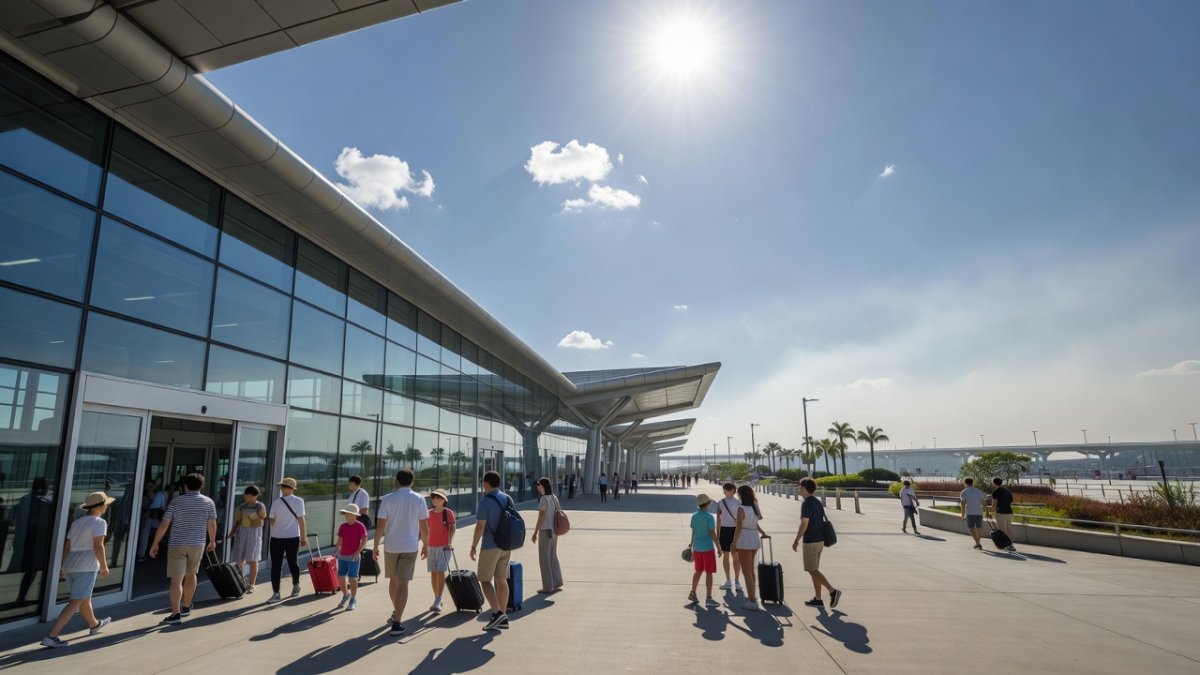
Incheon International Airport is not merely a transportation hub; it is South Korea's primary international gateway and one of the world's busiest airports. As such, it serves as a symbol of national prestige and efficiency. The presence of homeless individuals in its terminals, and the resulting complaints from passengers, creates a tension between the airport's operational mandate and its social obligations. The IIAC official's plea for the Incheon city government to intervene reveals a fragmentation of responsibility, with the airport corporation, Incheon Metropolitan City, and Yeongjong District all having previously attempted to address the issue without success.
This institutional fragmentation is a recurring theme in Korean social policy, where the responsibility for vulnerable populations often falls between the cracks of different government bodies. Joo Jang-wook, a full-time activist at Homeless Action, articulated this critique: "The Incheon International Airport Corporation should halt the eviction measure it pushed through hastily and fulfill its duty as a public institution. The City of Incheon, which has effectively neglected building a support system for people sleeping rough on the streets, must also move to build one." The dispute thus highlights a governance challenge that extends beyond the airport itself, raising questions about how public institutions coordinate to address homelessness and whether the burden is being unfairly shifted onto a single entity.
Policy Implications: The Need for a Coherent Homelessness Strategy
The Incheon Airport controversy underscores the absence of a comprehensive, coordinated strategy for addressing homelessness in South Korea. The reliance on self-reliance shelters, which homeless individuals have reportedly refused, suggests that existing support mechanisms are not adequately tailored to the needs of the population they are meant to serve. The fact that some homeless people who felt pressured by the eviction measure received emergency housing support through Homeless Action indicates that alternative pathways exist but are not being systematically integrated into public policy.
For policymakers, the dispute offers several lessons. First, administrative actions targeting vulnerable populations must be procedurally sound and consider the broader context, particularly during public health emergencies like the current heat wave. Second, public institutions like IIAC require clear protocols for engaging with social welfare agencies and local governments when they encounter homeless individuals on their premises. Third, the development of a robust support system, including emergency shelters and cooling centers, is essential to prevent public spaces from becoming the default refuge for those in crisis. The scheduled press conference by Homeless Action on August 12 at Incheon Airport Terminal 2 will likely amplify these demands and keep the issue in the public eye.
Expert Perspectives and Looking Ahead
The resolution of this dispute will have implications beyond the immediate fate of the 16 individuals currently living in the airport terminals. It will set a precedent for how public institutions in Korea handle similar situations, particularly as the frequency and intensity of extreme weather events increase due to climate change. The legal challenge to the eviction notices could also clarify the application of the Framework Act on Public Administration to actions taken by public corporations, potentially strengthening procedural protections for citizens.
Looking ahead, the controversy presents an opportunity for a more fundamental reassessment of Korea's approach to homelessness. The current situation, in which a world-class airport becomes a refuge for the homeless and elderly during a heat wave, is a symptom of deeper social and policy failures. A sustainable solution will require not only the withdrawal of the eviction notices but also a collaborative effort between the airport corporation, Incheon city, and central government agencies to develop a comprehensive support system. The heat wave that has gripped the nation has exposed the fragility of the social safety net; the response to this crisis at Incheon Airport will be a measure of whether Korean institutions can learn from that exposure and build more resilient systems for the future.
By Prof. David Park, Staff Writer
This article was produced with AI-assisted research and editorial support. Reporting is based on sources cited in the article.
What's Your Reaction?
 Like
0
Like
0
 Dislike
0
Dislike
0
 Love
0
Love
0
 Funny
0
Funny
0
 Wow
0
Wow
0
 Sad
0
Sad
0
 Angry
0
Angry
0

East Asia/Technology Correspondent at Global1.News. Seoul-based voice covering Korean politics, technology, business, and culture. Analyzes how technology and geopolitics intersect across East Asia.













Comments (0)