
US Official Reassures Asia of Commitment, Calls for Greater Burden Sharing
In a carefully calibrated address delivered before the Stratbase Institute in Manila on Monday, August 10, 2026, US Under Secretary of War for Policy Elbridge Colby sought to dispel a persistent anxiety coursing through Asian capitals: that the United States, under a transactional administration, is preparing to retrench from the Indo-Pacific. Speaking on the first leg of a Southeast Asian tour that will also take him to Jakarta, Bangkok, and Phnom Penh, Colby delivered a dual message of reassur
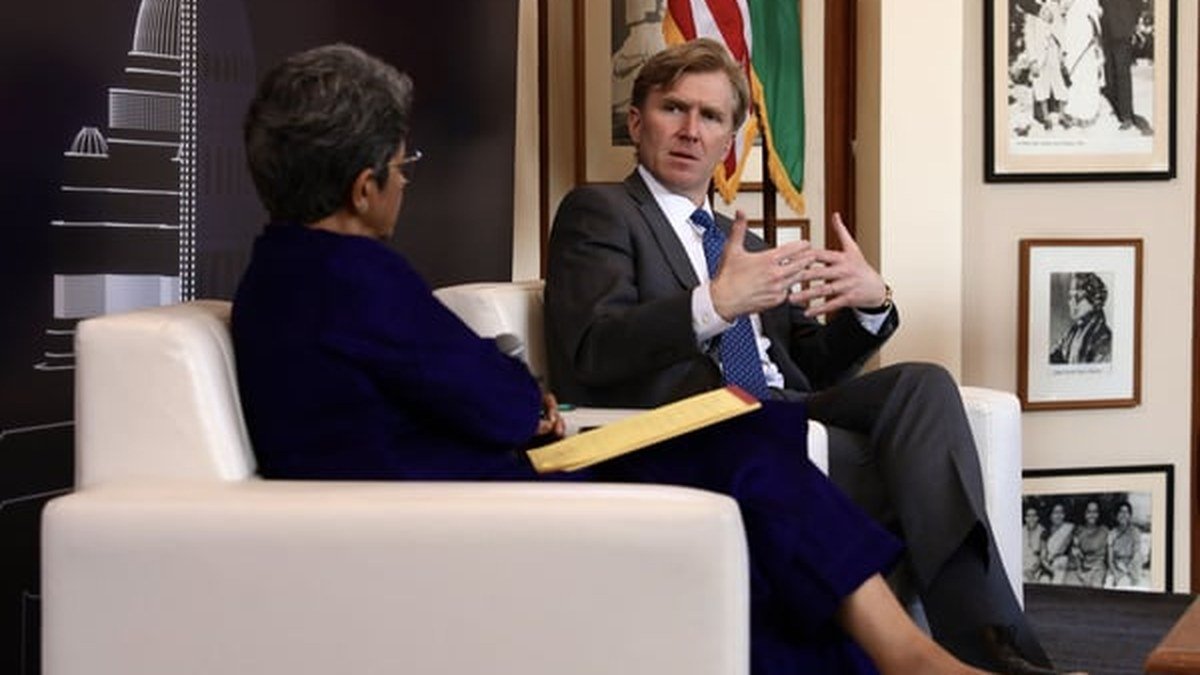
In a carefully calibrated address delivered before the Stratbase Institute in Manila on Monday, August 10, 2026, US Under Secretary of War for Policy Elbridge Colby sought to dispel a persistent anxiety coursing through Asian capitals: that the United States, under a transactional administration, is preparing to retrench from the Indo-Pacific. Speaking on the first leg of a Southeast Asian tour that will also take him to Jakarta, Bangkok, and Phnom Penh, Colby delivered a dual message of reassurance and demand. Washington, he insisted, is "digging in" to preserve a favorable balance of power, but it expects its allies to invest more heavily in their own defense. The address, which praised the Philippines as a "model ally," offers a clarifying lens through which to examine the trajectory of the US-ROK alliance, particularly as Seoul navigates its own complex security calculus.
The Manila Doctrine: Partnership, Not Dependency
Colby’s remarks at the Stratbase Institute were notable for their blunt framing of the new US approach to alliance management. "We seek partnerships, not dependencies," he stated, adding that Washington is "putting our alliances on a sustainable, realistic, and durable footing for the long haul." This formulation is a direct rebuke to the notion that the United States is seeking to maintain a network of client states. Instead, Colby articulated a vision of a "network of highly capable sovereign nations" that can contribute meaningfully to regional deterrence. He explicitly rejected the abandonment narrative, asserting, "When we ask our allies and partners to step up, to invest more in their own defense, and to take responsibility for their own sovereign security, we are not signaling abandonment. We are doing the exact opposite: we are inviting you to build a true partnership."
The strategic logic underpinning this rhetoric is a concept Colby has long championed: "denial defense" along the First Island Chain. This geographic arc, stretching from Japan through Taiwan and the Philippines to Borneo, is the frontline of US-China strategic competition. Colby argued that the United States is actively building a "strong denial defense to back up a peace-through-strength approach of a lastingly favorable balance of power in Asia." This is not a strategy of retreat but one of forward posture, designed to make aggression infeasible. He was emphatic that this commitment is measured not by declarations but by concrete capabilities. "A signed piece of paper or a newly formed working group does not deter coercion; fielded hard power and the demonstrated political will to use it do," he said.
The Philippines as a Model: A Template for the Region
Colby’s choice of Manila as the venue for this doctrinal statement was deliberate. He repeatedly cited the Philippines as the exemplar of the new model of alliance. "We see and respect a resolute and proud nation that is determined to strengthen its own capabilities to better defend itself and its interests. A model ally," he said, crediting President Ferdinand Marcos Jr. and Defense Secretary Gilberto Teodoro Jr. for their leadership. He pointed to the "historic modernization" of the alliance, including the operationalization of sites under the Enhanced Defense Cooperation Agreement (EDCA), investments in resilient infrastructure, and expanded joint training. He also confirmed the rotational deployment of four US Fast Response Cutters to work with the Philippine Coast Guard in patrolling the country’s exclusive economic zone.
This praise serves a dual purpose. It rewards Manila for its strategic choices, which include not only deepening ties with Washington but also diversifying its partnerships through reciprocal access agreements with Japan, Canada, New Zealand, and France, as well as defense procurement from India and South Korea. But it also functions as a template for other allies, signaling what the United States expects in return for its security guarantee. Stratbase Institute President Victor Andres Manhit noted that the alliance now carries "greater weight than any point in recent memory," reflecting a public trust in the United States that consistently ranks it first among preferred security partners. The challenge, Manhit said, is translating that trust into a "stronger, more capable, and more resilient alliance."
Burden-Sharing and the Korea Question
For South Korea, Colby’s Manila address resonates with particular urgency. The language of "partners, not protectorates" is not new to Seoul. In January 2026, during a visit to Seoul, Colby reportedly used similar phrasing, describing South Korea as a "model ally" while pressing for greater contributions to the alliance. This pressure is not merely rhetorical. The 12th Special Measures Agreement (SMA), which took effect in 2026 and runs through 2030, saw Seoul agree to pay approximately 1.52 trillion won (about US$1.1 billion) in 2026, an increase of 8.3 percent over the previous agreement. While this was a compromise, it fell far short of the US$10 billion annual figure that President Donald Trump has publicly demanded. The gap between Washington’s stated expectations and Seoul’s actual contributions remains a source of friction.
The burden-sharing debate is further complicated by the question of OPCON (Operational Control) transfer. Under the 2026 National Defense Strategy, there has been renewed speculation about the timeline for transferring wartime operational control of ROK forces from the US-ROK Combined Forces Command to Seoul. Colby’s emphasis on allies taking "responsibility for their own sovereign security" could be interpreted as an acceleration of this process, though it also carries risks. A premature transfer, without the requisite capabilities in place, could weaken deterrence on the Korean Peninsula. The strategic calculus is delicate: Washington wants Seoul to do more, but it cannot afford a security vacuum that would embolden North Korea or complicate its broader China strategy.
Trilateralism and the Regional Architecture
Colby’s call for a "network of highly capable sovereign nations" also speaks to the growing importance of trilateral security cooperation between the United States, Japan, and South Korea. Dr. Doo Jin-ho of the Korea Institute for Defence Analyses has argued that the Trump administration’s emphasis on containing China would necessitate such cooperation. "Strengthening military readiness in the Indo-Pacific is essential to rein in China, which makes it highly likely that the US-Japan-South Korea security cooperation will continue," he said, adding that this has the added benefit of establishing deterrence against North Korea. The institutionalization of this trilateral framework, which was a legacy of the Biden administration, appears to be continuing, albeit under a different rhetorical guise.
However, the path is not without obstacles. The political situation in Seoul remains unsettled in the aftermath of President Yoon Suk Yeol’s short-lived martial law decree on December 3, 2025. The defense minister position was vacant for months, and the country has struggled to engage with the Trump administration. This instability was underscored by Defense Secretary Pete Hegseth’s decision to skip South Korea on his maiden regional tour in March 2026, a snub that was keenly felt in Seoul. Colby’s earlier visit in January, and his current messaging, may be an attempt to repair this diplomatic friction, but the underlying political uncertainty in Seoul complicates any long-term planning.
Strategic Diversification and the Hedging Calculus
For all of Colby’s reassurances, Asian allies are not putting all their eggs in the American basket. Philippine geopolitical analyst Robin Garcia noted that Manila is "no longer putting all its eggs in the US basket," and that the Marcos government "understands that while Washington is a crucial partner, strategic diversification is key." This sentiment is echoed across the region. Japan, under Prime Minister Shigeru Ishiba, has mooted hosting Self-Defence Forces personnel on US territory in Guam, a symbolic gesture of reciprocity. South Korea, for its part, is exploring additional contributions, with Dr. Byun Sang-jeong of the Institute for National Security Strategy suggesting that Seoul might consider deploying additional THAAD missile defense systems to support both its own security and Trump’s strategy to contain China.
This hedging behavior is rational. As Professor Heng Yee Kuang of the University of Tokyo observed, "Trump’s unpredictability cuts both ways. On the one hand, it may enhance deterrence. On the other, it can also fuel the fear of abandonment." The United States is a government with many faces and competing voices, as Dr. Tosh Minohara of the Research Institute of Indo-Pacific Affairs cautioned. While Colby’s message is one of commitment, the broader administration’s rhetoric on trade, climate, and security treaties has been inconsistent. Allies are therefore wise to build redundancies into their security architectures, even as they deepen their ties with Washington.
Conclusion: A Sustainable Balance or a Precarious Equilibrium?
Elbridge Colby’s Manila address represents a coherent attempt to square the circle of American grand strategy in the Indo-Pacific. He is asking allies to do more, while simultaneously reassuring them that the United States is not leaving. The doctrine of "denial defense" along the First Island Chain is a concrete military concept, not a vague aspiration. And the emphasis on "partnership, not dependency" is a realistic acknowledgment that the United States cannot, and should not, bear the entire burden of regional security alone.
For South Korea, the implications are clear. The alliance remains the cornerstone of its security, but the terms of that alliance are being renegotiated. Seoul must be prepared to offer an "appropriate additional contribution," as Dr. Byun suggested, whether through increased SMA payments, additional THAAD deployments, or a more rapid path to OPCON transfer. The challenge is to do so without undermining the very deterrence that the alliance is designed to provide. Colby’s message is that the United States is digging in, but it expects its allies to dig alongside it. The question for Seoul is whether it can meet that expectation while managing its own domestic political turbulence and the ever-present threat from the North. The balance of power in Asia is being recalibrated, and South Korea must decide what role it will play in the new architecture.
This article was produced with AI-assisted research and editorial support. Sources: The Diplomat, Daily Tribune (Philippines), The Manila Times, Pakistan Today, The Straits Times, Yonhap News Agency.
By Prof. David Park, Staff WriterWhat's Your Reaction?
 Like
0
Like
0
 Dislike
0
Dislike
0
 Love
0
Love
0
 Funny
0
Funny
0
 Wow
0
Wow
0
 Sad
0
Sad
0
 Angry
0
Angry
0

East Asia/Technology Correspondent at Global1.News. Seoul-based voice covering Korean politics, technology, business, and culture. Analyzes how technology and geopolitics intersect across East Asia.















Comments (0)