
iKON's Koo Jun-hoe Enlists: Military Service & K-pop Impact
iKON's Koo Jun-hoe entered an Army recruit training center on August 11, 2026 to begin active-duty military service, completing the enlistment cycle for all six members of the K-pop group. He enlists amid Korea's broader conscription reform debate over record-low fertility.
On Tuesday, August 11, 2026, Koo Jun-hoe, the main vocalist of the K-pop group iKON, entered a Republic of Korea Army recruit training center to begin his mandatory military service as an active-duty soldier. The enlistment marks a significant milestone not only for the artist personally but for the group as a whole, as he becomes the final iKON member to begin fulfilling his national defense obligations.
His agency, 143 Entertainment, had announced the enlistment date on July 28, 2026, via official social media channels, stating: "On August 11, member Jun-hoe will enter a training camp to fulfill his active-duty military service." The agency also requested that fans refrain from visiting the enlistment site, citing safety concerns and respect for the many other soldiers and families sharing that day.
iKON's Koo Jun-hoe Begins Mandatory Military Service, Completing the Group's Enlistment Cycle
Seoul, South Korea – August 16, 2026 — Koo Jun-hoe, known professionally as Ju-ne, has begun his mandatory military service, entering a Republic of Korea Army recruit training center on August 11, 2026. The 29-year-old main vocalist of iKON will undergo basic military training before serving on active duty, with a scheduled discharge date of February 10, 2028, according to reports from Cineplay and Yonhap News Agency.
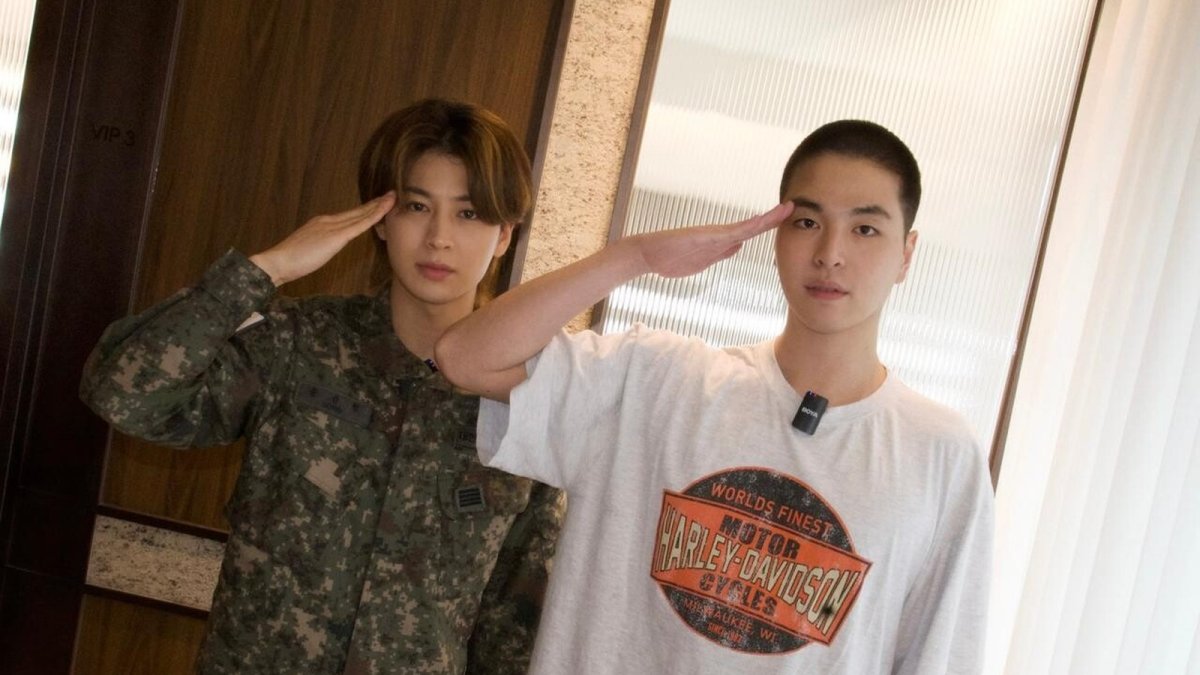
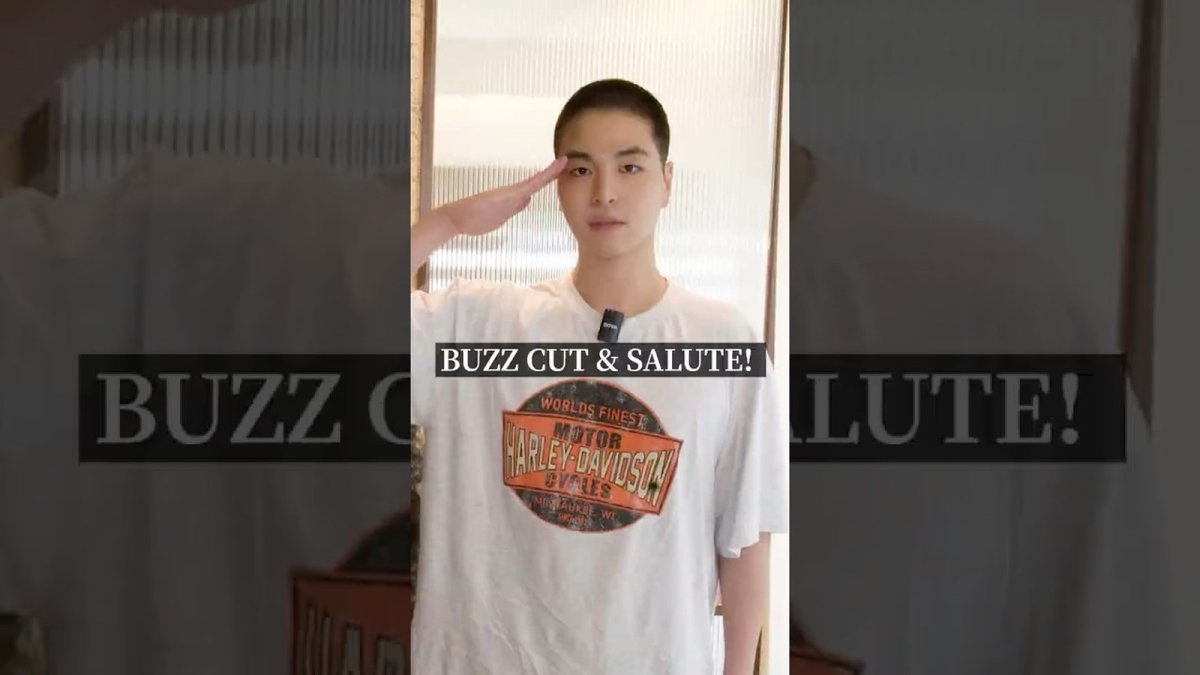
In the days leading up to his enlistment, Koo shared poignant moments with his fans. On August 9, he posted a video on social media showing himself cutting his own hair while watching footage of past performances — a moment of quiet reflection that culminated in a sheepish smile as he caught sight of his bare head in the mirror. The same day, he posted a photograph of himself with a freshly shorn head, dressed in a white short-sleeve shirt, standing beside a person in military uniform and saluting with his right hand. His caption read: "I'll go and come back healthy!" (건강히 잘 다녀오겠습니다).
A Career Defined by Vocal Power and Versatility
Koo Jun-hoe's journey to this point has been anything but ordinary. Born on March 31, 1997, he first appeared on the survival program "WIN: Who Is Next" in 2013 as part of Team B, before securing his place in iKON through the follow-up program "Mix & Match" in 2014. The group officially debuted in September 2015 with the digital single "My Type" (취향저격), and Koo quickly established himself as the group's main vocalist, renowned for his husky tone, impressive vocal range, and powerful belting technique.
iKON's discography includes the half and full albums both titled "WELCOME BACK" (2015), the studio album "Return" (2018) featuring the group's signature hit "Love Scenario" (사랑을 했다), and "TAKE OFF." Koo's artistic growth extended beyond group activities; on July 3, 2024, he released his first solo EP "Meong" (멍) under his own name, participating in the writing and composition of every track. He had previously contributed to "Want You Back" from iKON's third album "TAKE OFF."
His creative ambitions also reached into acting. Koo took on the lead role of No Bong-gyun in the film "Again 1997," appeared in the drama "Bora! Deborah" as Yang Jin-ho, made a special appearance in "Twinkling Watermelon" as Koo Jun-hyeong, and starred as Choi Ki-jun in the 2024 drama "Marry YOU" (결혼해YOU). This multifaceted career trajectory reflects a broader trend among K-pop idols who increasingly pursue parallel paths in music, acting, and content creation to sustain their public presence.
iKON's Complete Enlistment: A Group-Wide Milestone
Koo Jun-hoe's enlistment carries particular significance for iKON because it completes the group's military service cycle. All six current members have now begun or fulfilled their mandatory service obligations:
Jay (Kim Jin-hwan) enlisted first on July 20, 2023, and was discharged in early 2025. Chanwoo followed in May 2024, completing his service on November 26, 2025. BOBBY enlisted in June 2024 and was discharged on December 3, 2025. Song Yun-hyeong was discharged on February 12, 2026, after enlisting the previous year. Kim Dong-hyuk (DK) is currently serving in the military band with a discharge scheduled for January 27, 2027. With Koo's enlistment, the group has entered a phase where all members have begun their service obligations, setting the stage for a full-group reunion after his February 2028 discharge.
This pattern is familiar within the K-pop industry, where group hiatuses due to military service have become a predictable part of the career cycle. The enlistment of prominent idols like BTS members, EXO, SHINee, and Super Junior has normalized this rhythm, with agencies typically planning comebacks around discharge dates. For iKON, the period between now and February 2028 represents both a challenge and an opportunity — a time for individual members to explore solo projects while fans anticipate the group's eventual return.
Conscription as a Korean Rite of Passage
Koo's enlistment occurs within the framework of the Republic of Korea's Military Service Act, which requires all able-bodied Korean men to perform approximately 18 months of military service, with slightly longer terms for Navy and Air Force personnel. Enlistment is generally required before age 30, with various deferment rules available for educational and other reasons. South Korea maintains one of the world's largest standing militaries — approximately 500,000 active personnel — under a conscription-based model that is a direct legacy of the Korean War armistice and the continued division of the peninsula.
For Korean men, military service functions as a social equalizer, a shared experience that transcends class, education, and profession. For K-pop idols specifically, enlistment represents a forced pause in their careers at a time when the industry moves at breakneck speed. The hiatus can be professionally costly, yet it is universally accepted as an unavoidable obligation. The fact that Koo's agency explicitly requested fans not to visit the enlistment site — a common practice to prevent overcrowding and safety incidents — reflects how institutionalized this process has become.
The cultural weight of this moment was captured in Koo's own social media posts. Koo's decision to document his own preparation — filming himself cutting his hair and posting a salute photo — speaks to the emotional complexity of enlistment — a mixture of pride, apprehension, and determination that resonates deeply with Korean audiences who have witnessed countless idols undergo the same transition.
Demographic Pressures and the Conscription Reform Debate
Koo's enlistment also unfolds against a backdrop of significant policy debate regarding the future of South Korea's conscription system. The country currently has the world's lowest fertility rate, approximately 0.7 children per woman, which has sharply reduced the pool of young men available for military service. Projections indicate that the number of available conscripts will decline steeply in the coming years, raising fundamental questions about the sustainability of the current model.
In response, President Lee Jae-myung has ordered the introduction of a "selective volunteer military system" — a mixed conscription model — with implementation beginning next year. This order, issued on August 13, 2026, follows earlier remarks made during a June 24, 2026 meeting with the Marine Corps, where the President stated: "We will minimize conscription and, through a volunteer system, allow people to choose the military as their own path." The hybrid model is designed to keep the draft framework intact while expanding professional non-commissioned officer roles and technology-intensive positions. Defense reform is being framed around the dual pressures of low birth rates and AI-driven changes in battlefield dynamics, with the goal of creating a "smart, strong military."
It is important to note that this reform is being phased in gradually. The selective volunteer system has been ordered for introduction beginning next year and is not yet in effect. The transition will likely take years to implement fully, and the conscription framework will remain the backbone of South Korea's defense posture for the foreseeable future. For the K-pop industry, this means that the enlistment cycle will continue to shape group activities for years to come, even as policymakers debate how long the current system can be sustained.
Looking Ahead: iKON's Return and Industry Implications
For iKON and their fans, the countdown to February 2028 has begun. Koo's discharge will mark the moment when all six members — Jay, Song Yun-hyeong, BOBBY, DK, Koo Jun-hoe, and Chanwoo — are finally free of their military obligations and able to reconvene as a full group. The anticipation surrounding this reunion reflects the enduring bond between iKON and their fanbase, known as iKONIC, who have supported the group through lineup changes, hiatuses, and the inevitable disruptions of military service.
The broader implications for the K-pop industry are equally significant. As the demographic pressure on conscription intensifies, the entertainment industry will need to adapt its planning cycles. Agencies already structure contracts and comeback schedules around enlistment dates, but the shrinking conscript pool may eventually alter the landscape in ways that are difficult to predict. Should the selective volunteer system expand, it might eventually offer idols greater flexibility in scheduling service, though no such provisions have been announced.
Koo Jun-hoe's enlistment is, in many ways, a microcosm of larger forces at play in Korean society. It represents the intersection of individual obligation, group dynamics, industry practice, and national policy. As he begins his service, he joins hundreds of thousands of Korean men in a shared rite of passage that remains one of the defining features of Korean masculinity and citizenship. His promise to "go and come back healthy" is not merely a personal sentiment but a reflection of a society that continues to navigate the tension between tradition and transformation, between the demands of national defense and the realities of demographic change.
This article was produced with AI-assisted research and editorial support. Sources: KOREA NOW (Yonhap News Agency), 143 Entertainment, Yonhap, Chosun Ilbo, TopStarNews.
By Prof. David Park, Staff Writer
What's Your Reaction?
 Like
0
Like
0
 Dislike
0
Dislike
0
 Love
0
Love
0
 Funny
0
Funny
0
 Wow
0
Wow
0
 Sad
0
Sad
0
 Angry
0
Angry
0
East Asia/Technology Correspondent at Global1.News. Seoul-based voice covering Korean politics, technology, business, and culture. Analyzes how technology and geopolitics intersect across East Asia.













Comments (0)