
Chad's Déby Pardons Rival Masra in Surprise Move That Shakes Sahel Politics
Chad's President Mahamat Idriss Déby has pardoned rival and former prime minister Succès Masra, who was serving a 20-year sentence, along with eight other opposition leaders. The move, announced Friday, paves the way for Masra's release and reshapes Sahel politics.
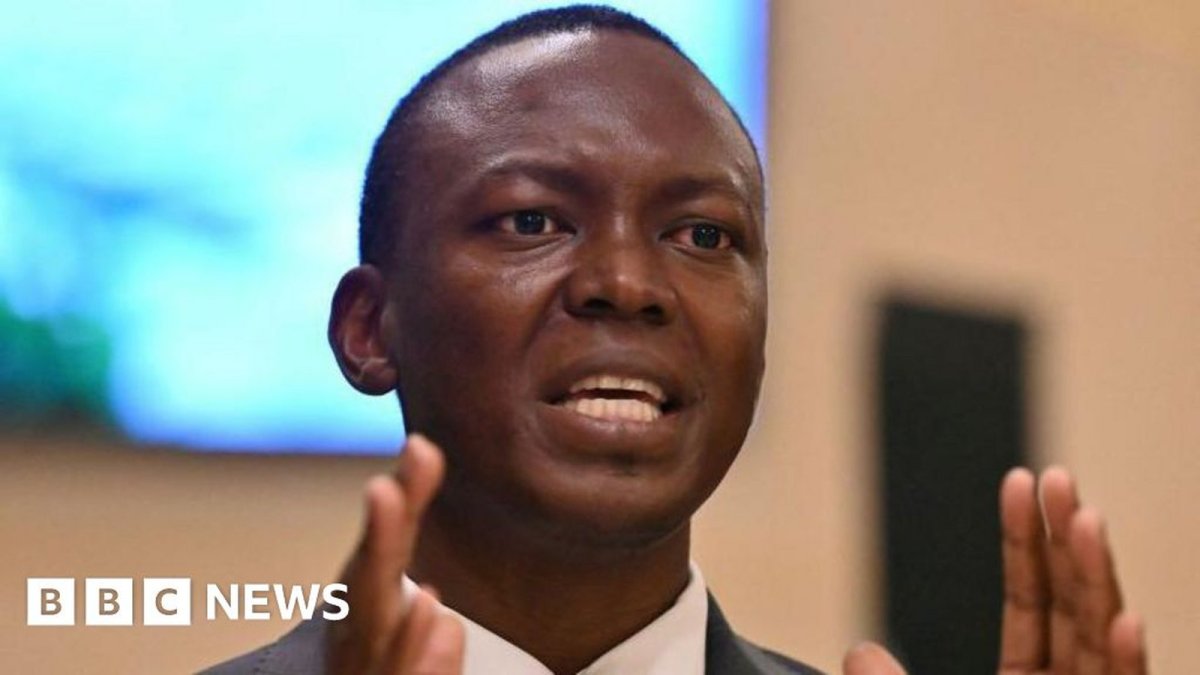
In a decision that has sent ripples through the political landscape of the Sahel, Chad's President Mahamat Idriss Déby has granted a presidential pardon to his main rival, Succès Masra, along with eight other opposition leaders. The pardon, announced on Friday 14 August 2026, paves the way for the release of Masra, who was serving a 20-year prison sentence on charges linked to deadly inter-communal violence. The move marks a dramatic reversal in a country where political dissent has often been met with the full weight of the state, and it raises immediate questions about the calculations behind this unexpected act of clemency.
The Pardon
The presidential decree, issued from N'Djamena, covers Masra and eight other jailed opposition figures, according to reports confirmed by multiple regional outlets. While the official statement from the presidency did not elaborate on the motivations, the timing is significant. Masra, the founder of the Les Transformateurs party and a former prime minister, had been imprisoned since May 2025. His conviction in August 2025, upheld by Chad's highest court in May 2026, had been widely condemned by human rights groups as a politically motivated attempt to silence the country's most prominent opposition voice.
The pardon does not automatically mean the prison gates have swung open, but it is the clearest legal signal yet that the state intends to release him. For a president who has faced international scrutiny over the treatment of his opponents, this move is being read in diplomatic circles as a calculated attempt to reset the narrative. It is a rare moment of political grace in a region where transitions of power are often marked by violence or exile, not pardons.
From Prime Minister to Prisoner
Succès Masra's trajectory has been one of the most volatile in recent Central African politics. An economist by training, he founded Les Transformateurs in 2018, positioning himself as a youthful, reformist alternative to the Déby dynasty that has ruled Chad for over three decades. His moment appeared to arrive in January 2024, when he was appointed prime minister of the transitional government, a role he held for just four months. That brief tenure ended in May 2024 when he resigned to contest the presidential election, setting the stage for a confrontation that would define his fate.
Masra claimed victory in that election, asserting he had defeated Mahamat Idriss Déby at the ballot box. The official results told a different story, giving Déby the win and Masra a distant second place with nearly a fifth of the vote. Masra disputed the outcome, alleging fraud, and his refusal to accept the result turned him from a government insider into a vocal opponent. The arrest in May 2025 came during a wave of violence that the state linked to his rhetoric, and the subsequent trial moved swiftly. By August 2025, he was sentenced to 20 years in prison and fined 1 billion CFA francs, a punishment that effectively removed him from the political scene.
The Mandakao Case
The charges against Masra were rooted in the tragic events of May 2025 in Mandakao, a locality in southwestern Chad. There, clashes between herders and farmers spiralled into deadly violence that left 42 people dead, most of them women and children. The massacre shocked the nation and provided the state with the legal basis for Masra's prosecution. He was charged with inciting inter-communal violence, racist and xenophobic messaging, criminal association, and complicity in murder.
Human Rights Watch and other advocacy organisations were quick to label the trial as politically motivated, arguing that the evidence linking Masra to the violence was thin and that the proceedings were designed to neutralise a political threat. The court, however, rejected those arguments, and the conviction was upheld on appeal in May 2026. For many observers, the Mandakao case became a symbol of how the Déby government used legitimate security concerns to justify the suppression of dissent. The pardon now casts a shadow over that entire judicial process, suggesting that the legal verdict was, at least in part, a political instrument.
A Senegal Comparison: Prison to Presidency
To understand the weight of this pardon, one need only look west to Senegal, where a strikingly different outcome unfolded in 2024. In Senegal, opposition leader Ousmane Sonko spent 11 months in prison, arrested on charges his supporters said were fabricated to keep him from running for president. His release, just days before the election, was the result of intense domestic pressure and a legal system that ultimately bent toward the rule of law. Sonko did not win the presidency himself, but his ally, Bassirou Diomaye Faye, did, capturing 54% of the vote in a peaceful transition that saw outgoing candidate Amadou Ba concede defeat.
The contrast between the two neighbours is stark. In Senegal, the prison cell became a stepping stone to the ballot box, and the political rivalry was channelled into an electoral contest that the country survived intact. In Chad, the prison cell was the end of the road, a place where political ambition went to die. The Senegalese model showed that opposition leaders can be brought back into the fold without dismantling the state; the Chadian model, until Friday, showed the opposite. The pardon suggests that N'Djamena may be looking at Dakar with a new appreciation for the stability that comes from letting rivals breathe.
What the Pardon Means
Analysts are divided on what prompted this sudden clemency. Some see it as a tactical de-escalation, a move to ease tensions ahead of a politically sensitive period. Chad's political calendar is never empty, and the government faces pressure from regional partners, including the African Union and neighbouring states, to demonstrate a commitment to dialogue. The Sahel is already a tinderbox, with military juntas in Mali, Burkina Faso, and Niger, and a prolonged political crisis in Chad would only add to the instability. A pardon, in this reading, is a cheap way to buy goodwill.
Others suggest that the release of Masra could be a precursor to a broader political opening, perhaps even a power-sharing arrangement or a role for the opposition in a future government. That would be a significant shift for Déby, who has shown little appetite for sharing power since taking over from his father, Idriss Déby Itno, in 2021. The pardon is not an admission of wrongdoing, but it is an acknowledgment that Masra cannot be kept in prison forever without consequences. For the opposition parties across the Sahel, the message is mixed: the state can still crush you, but it may also, on a whim, set you free.
The Road Ahead
The immediate question is whether Masra will return to the political fray. He is an ambitious man, and his party, Les Transformateurs, remains a force in Chadian politics despite his imprisonment. A return to the streets, or to the negotiating table, would reshape the opposition landscape. But the pardon comes with conditions, and the state will be watching closely to see if Masra moderates his rhetoric or reignites his challenge to Déby's rule.
For the wider region, this moment is a reminder that political outcomes are rarely predetermined. Senegal showed that imprisonment can lead to the presidency; Chad is now showing that imprisonment can lead to a pardon. Neither path is a guarantee of democracy, but both are preferable to the silence of the grave. As Masra prepares to walk free, the people of Chad will be watching to see if this is a genuine opening or just another chapter in a long and painful political drama. The answers will come in the months ahead, and they will shape not just Chad, but the entire Sahel.
By Amara Diop, Staff Writer
This article was produced with AI-assisted research and editorial support. Reporting is based on sources cited in the article.
What's Your Reaction?
 Like
0
Like
0
 Dislike
0
Dislike
0
 Love
0
Love
0
 Funny
0
Funny
0
 Wow
0
Wow
0
 Sad
0
Sad
0
 Angry
0
Angry
0

West Africa/Sahel Correspondent at Global1.News. Dakar-based journalist covering politics, security, climate, and development across Francophone and Anglophone West Africa. Tells the stories of a region undergoing profound transformation.










Comments (0)