
Hurricane Lala: Historic Threat to Hawaii's Big Island
Folks, listen up. Right now, as I speak to you from the Global1 News desk in Atlanta, a monster is knocking on the door of paradise. Hurricane Lala is bearing down on the Big Island of Hawaii this weekend, and this isn’t just another weather alert you can scroll past. This is a historic, life-threatening event that has the potential to reshape communities and test the resilience of an entire state. We are watching a storm that hasn’t done this in 155 years, and the clock is ticking.
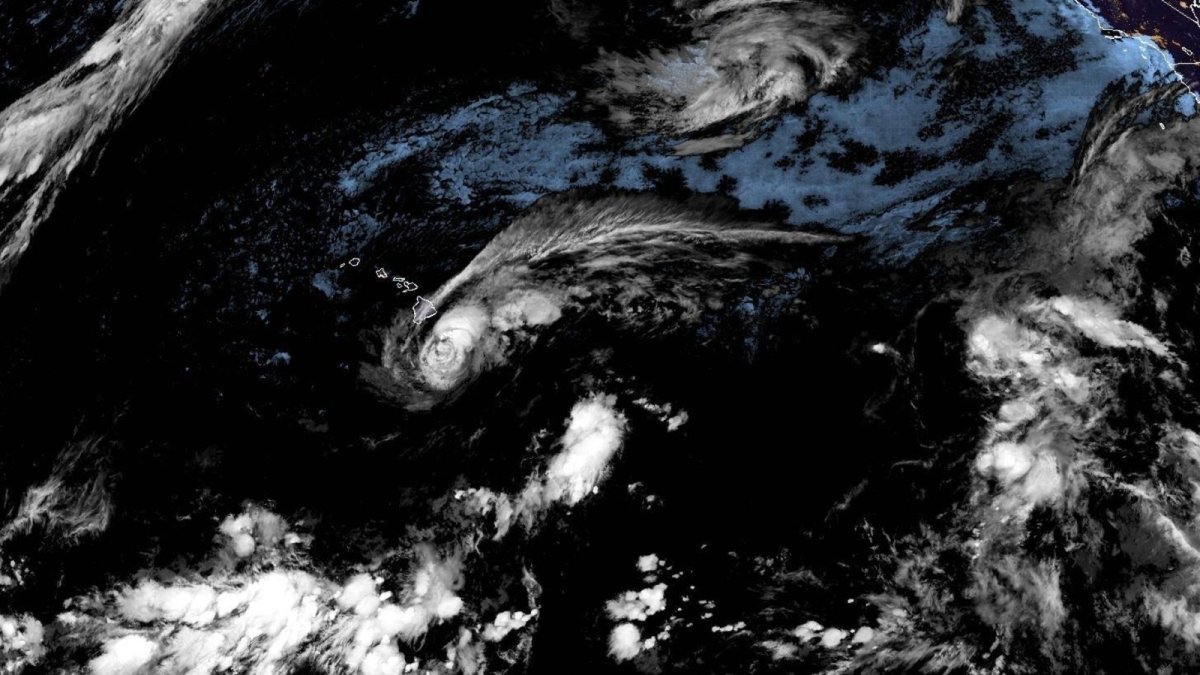
Folks, listen up. Right now, as I speak to you from the Global1 News desk in Atlanta, a monster is knocking on the door of paradise. Hurricane Lala is bearing down on the Big Island of Hawaii this weekend, and this isn’t just another weather alert you can scroll past. This is a historic, life-threatening event that has the potential to reshape communities and test the resilience of an entire state. We are watching a storm that hasn’t done this in 155 years, and the clock is ticking.
Forget everything you think you know about tropical storms. This is a direct hit on volcanic slopes thousands of feet above sea level, with winds that could be 30 percent stronger than what the official advisories are telling you. We are talking about life-threatening mudslides, catastrophic flooding, and the very real possibility of wildfires in the middle of a hurricane. The eyewall is forecast to move over or near the island’s southern end by Saturday evening, and officials are begging people in vulnerable areas to get to safety immediately. This is not a drill, folks. This is the real deal, and we are tracking every second of it for you.
The 155-Year Curse: A Landfall That Defies History
Let’s put this into perspective, because the statistics here are staggering. The Big Island has not experienced a direct hurricane landfall in 155 years. Think about that. The last time this happened, Ulysses S. Grant was in the White House. According to research by University of Hawaii atmospheric scientist Steven Businger, who dug through newspaper accounts, a Category 3 hurricane slammed into the northeast corner of the Big Island back in 1871. That is ancient history, folks. We have no living memory of this. We have no modern infrastructure built for this specific scenario.
As of 8 a.m. Hawaii time, Tropical Storm Lala was located about 90 miles southeast of South Point, Hawaii, and about 300 miles southeast of Honolulu. But don't let the "Tropical Storm" label fool you. The National Hurricane Center confirmed Lala has already reached that critical threshold: maximum sustained winds increased to 75 mph, officially making it a Category 1 hurricane as of Saturday. The storm is moving toward the west-northwest at 12 mph, and it is on a collision course with the southern tip of the Big Island. Governor Josh Green didn't mince words when he said, "This is an enormous storm." And he is absolutely right.
This isn't just about the coast. The real danger lies inland, on the towering slopes of Mauna Kea. Forecasters are predicting up to 25 inches of rain at higher elevations. That is over two feet of water dumping onto volcanic terrain. That water has nowhere to go but down, and it is going to bring mud and debris with it. We are talking about a recipe for disaster in a mountainous area where people live off the grid in improvised housing. If you are in one of those structures, you need to move. Now.
Winds of Destruction: The Invisible Threat on the Slopes
Here is the scientific reality that should scare everyone on that island: the wind speeds you hear on the news are not the wind speeds you will feel on the mountain. The National Hurricane Center issued a stark warning that wind speeds atop mountains and on the windward and leeward slopes "are often up to 30% stronger than the near-surface winds" indicated in their advisory. That means if the advisory says 75 mph, you could be facing nearly 100 mph gusts on the slopes. That is the kind of wind that rips roofs off homes and turns debris into projectiles.
Vanessa Almanza, a weather service meteorologist in Honolulu, put it perfectly when she said, "It doesn't take landfall to create destruction." She is absolutely right. Even if the core stays just shy of a hurricane, the sheer size of this system is the problem. Tropical storm force winds are extending outward for as much as 220 miles. That is a massive footprint. These winds are expected to hit the islands of Oahu and Kauai by Sunday morning. We are not just talking about one island bracing for impact; we are talking about an entire island chain under threat.
And here is a terrifying twist that most people don't associate with hurricanes: wildfires. As winds ramp up across the islands, Almanza noted that dry and breezy conditions outside the storm would elevate fire concerns. We saw this exact scenario play out in 2023 when the Maui town of Lahaina burned during extreme winds as a hurricane passed far to the south. That fire killed over 100 people and destroyed an entire historic town. Now, we have a hurricane making a direct hit, and the potential for fire is on the table. The combination of hurricane-force winds and dry conditions is a pyromaniac's dream, and a resident's nightmare.
Ground Zero: The Remote and Rural South
Let’s zoom in on where this storm is going to hit hardest. The southern end of the Big Island is remote, rural, and growing in population because of its affordability. This is agricultural land, home to coffee farms and cattle ranches. But it is also home to a growing number of people living off the grid in unpermitted structures. These are folks who wanted to escape the rat race, live simply, and be self-sufficient. But self-sufficiency doesn't protect you from a 25-inch rain event or 100 mph winds.
State Rep. Jeanné Kapela is the voice of reason right now, and her message is urgent. She is specifically worried about those off-grid residents. Her advice is simple and direct: "If you feel now that your house doesn't have a great roof or might not be able to withstand hurricane force winds, then first things first you go to a family or friend's house and you kind of hunker down there." She texted that to the Associated Press, and I want to repeat it because it is that important. Do not wait. Do not think you can ride this out in a shack. Go to a sturdy structure. Go to a shelter. Go to a friend's house. Just go.
Mike Caputo, a 50-year-old local fire captain living in Keaau near the east coast, knows exactly what the main threats are. He told the AP that flash flooding and fallen trees are the primary concern, specifically the albizia tree. "They're not very sturdy but they grow extremely large," Caputo said. "They can make roads impassable." He did the smart thing and trimmed his trees days ago. But not everyone has that luxury. These trees are going to come down, and they are going to block escape routes. If you are in a low-lying area, you need to move to higher ground before the roads disappear.
Infrastructure Under Siege: Airports Closed, Power at Risk
The logistical nightmare is already unfolding. Governor Josh Green issued a state emergency proclamation on Thursday, and the state is shutting down. Hilo International Airport was in the process of closing Saturday morning, and Ellison Onizuka Kona International Airport also closed. Dozens of flights have been canceled. If you have family in Hawaii, do not expect to fly in or out this weekend. The airports are closed, and they are going to stay closed until this thing passes.
Officials are warning of extensive power outages. This is not a "maybe." This is a "when." With winds gusting potentially exceeding 85 mph, the power grid is going to take a beating. Residents have been urged to stock up on propane, ice, and other supplies. The New York Times reported that people are already doing this, but if you haven't, it's too late to panic-buy. You need to be preparing for days without electricity, without water, and without communication. Charge your devices now. Fill your bathtubs with water. Have a plan for your medications.
And here is the thing that really gets me, folks. Many Hawaiians are still dealing with the aftermath of devastating flooding from March. They haven't even recovered from the last disaster, and now they are being hit again. Brian Miyamoto, the director of the Hawaii Farm Bureau, said growers still recovering are worried about suffering more damage. This is a community that is being kicked while it's down. The economic impact of this storm on the agricultural sector alone is going to be felt for years.
The Ghost of Iniki and the El Nino Factor
We cannot talk about hurricanes in Hawaii without talking about Iniki. That was the last full-fledged hurricane to hit the state, making landfall on Kauai as a Category 4 in 1992. Steven Businger, the professor who researched the 1871 hurricane, laid out the grim numbers: "It did $3 billion worth of damage. It destroyed thousands of homes, and it did kill six people." That was 34 years ago, and it remains the benchmark for destruction in the islands.
Here is the chilling part: 1992 was an El Nino year. And guess what? So is this one. The warming of the Pacific near the equator increases Pacific hurricane activity and affects weather patterns across the globe. We are in the same atmospheric setup that produced Iniki. Businger warned, "We just can never know if a storm is going to turn." That uncertainty is the most dangerous thing of all. The forecast currently has Lala turning westward on Sunday, with the core staying south of the rest of the main Hawaiian Islands. But forecasts change. Storms wobble. And complacency kills.
Archie Kalepa of Lahaina, a well-known surfer and paddler who lived through the 2023 fire, is watching this storm closely. He told the AP, "Since the fire, everybody is way more aware of weather in general and our environment and things that are happening." That awareness is good, but it needs to translate into action. The people of Lahaina know what happens when you underestimate the weather. They know the cost of that mistake. The rest of the islands need to learn from their tragedy.
What You Must Do Right Now
Folks, I am going to be blunt with you because that is my job. If you are on the Big Island, specifically the southern end, you are in the crosshairs. The hurricane warning is in effect. Winds of 75 mph are expected Saturday, with gusts potentially exceeding 85 mph. The storm surge and ocean swells are "likely to cause life-threatening surf and rip current conditions." Stay away from the water. Do not go to the beach to watch the waves. That is how people die.
If you are in an unpermitted structure, a mobile home, or a house with a questionable roof, get out. Go to a family member's house. Go to a friend's house. Go to a shelter. Shelters are open. Events have been canceled. Ranchers have been urged to leave their cattle in pastures rather than structures that might collapse. If ranchers are being told to abandon their livestock for safety, you need to understand the severity of this situation. Your property can be replaced. Your life cannot.
For everyone else in the Hawaiian Islands, from Maui to Oahu to Kauai, do not let your guard down. Tropical storm warnings are in effect for Maui, Molokai, Lanai, Kahoolawe, Oahu, Kauai, and Niihau. You are going to get heavy rain and strong winds. The forecast calls for 8 to 12 inches of rain across Maui and lower elevations of the Big Island, and 4 to 6 inches across the rest of the chain. That is enough to cause flash flooding and downed trees. Secure your property. Have an emergency kit ready. And stay informed.
And for those of us watching from the mainland, this is a wake-up call. Climate change is making these storms more intense and more unpredictable. The El Nino pattern is amplifying Pacific hurricane activity. We cannot afford to be complacent. We need to support the people of Hawaii, not just with our thoughts and prayers, but with our attention and our resources. This is a community that has been through fire and flood, and they are about to face the ultimate test.
We will be tracking Hurricane Lala around the clock here at Global1 News. We will bring you updates as soon as we get them. But for now, the message is clear: take this storm seriously. It is a historic event, and it demands historic preparation. Stay safe, Hawaii. We are watching, and we are with you.
By Jessica Ali, Staff Writer
This article was produced with AI-assisted research and editorial support. Sources: Associated Press, CNBC, Bloomberg, The Weather Network, The New York Times, Hawaii News Now, Big Island Now.
What's Your Reaction?
 Like
0
Like
0
 Dislike
0
Dislike
0
 Love
0
Love
0
 Funny
0
Funny
0
 Wow
0
Wow
0
 Sad
0
Sad
0
 Angry
0
Angry
0

Editor-in-Chief at Global1.News. Atlanta-based journalist who cuts through the BS and tells it like it is. Lead anchor, host, and the voice you hear when the spin stops and the truth starts.













Comments (0)