
Japan Minister's Yasukuni Visit Draws China, Korea Rebukes
Folks, let’s cut through the diplomatic fog and get straight to it. On Saturday, August 15, 2026—the 81st anniversary of Japan’s surrender in World War II—Japan’s Defence Minister Shinjiro Koizumi walked through the gates of Yasukuni Shrine.
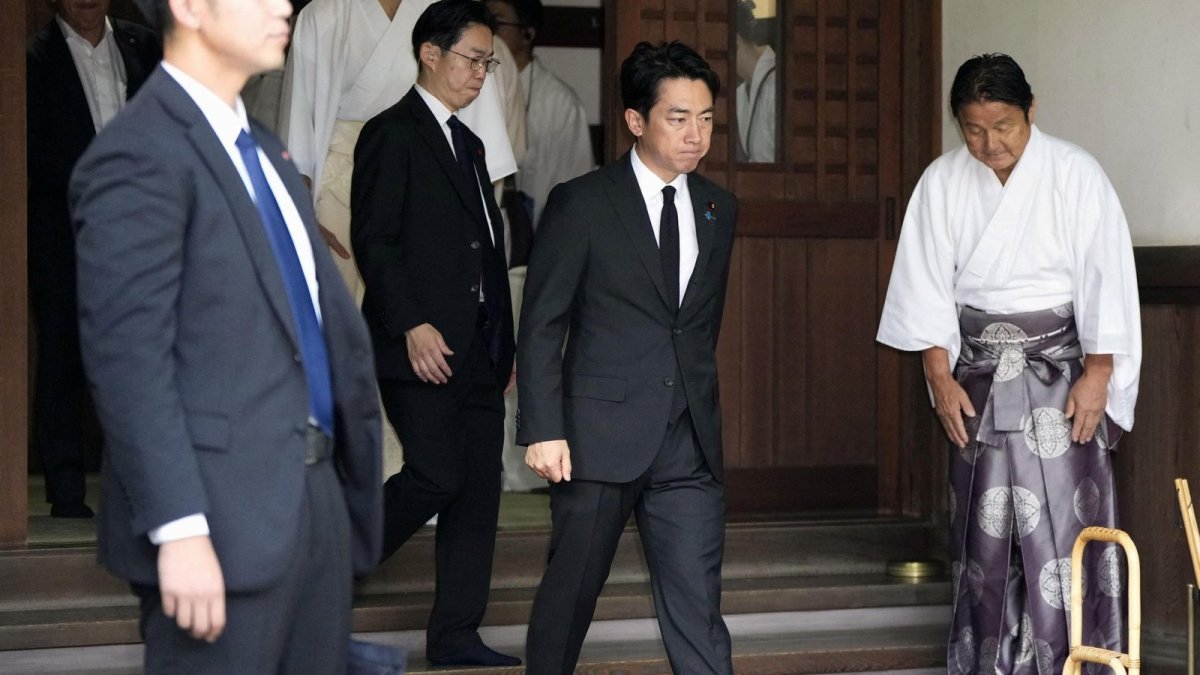
Folks, let’s cut through the diplomatic fog and get straight to it. On Saturday, August 15, 2026—the 81st anniversary of Japan’s surrender in World War II—Japan’s Defence Minister Shinjiro Koizumi walked through the gates of Yasukuni Shrine. Within hours, Beijing was fuming, Seoul was seething, and the entire region was once again holding its breath over a question that should have been answered decades ago: Has Japan truly atoned for the horrors of its imperial past, or is it still dancing around the ghosts of history?
This isn’t a footnote in a history book, folks. This is a live wire in modern geopolitics, and it just got a jolt. Koizumi’s visit—and the reported offering sent by Prime Minister Sanae Takaichi—has reignited a firestorm that threatens to destabilize an already volatile region. And while the politicians in Tokyo talk about "heroic spirits" and "peaceful nations," the rest of us need to understand exactly what’s at stake. Let’s break it down, because this story is moving fast, and you need to know what’s real.
The Shrine at the Center of the Storm
Let’s start with the location, because context is everything. Yasukuni Shrine is not just any religious site. It is a Shinto shrine in central Tokyo that commemorates approximately 2.5 million Japanese war dead—the vast majority of whom were soldiers who died in conflicts spanning from the late 19th century through World War II. On the surface, it’s a place of mourning. But here’s the rub, folks: among those honored are 14 Class-A convicted war criminals, leaders who were found guilty by Allied tribunals of the most serious crimes against peace and humanity. At least 1,000 others enshrined there were also convicted by those same tribunals after Japan’s 1945 defeat.
For China and South Korea, this isn’t a matter of abstract symbolism. These are the nations that bore the brunt of Imperial Japan’s brutal invasion and occupation in the 1930s and 1940s. We’re talking about the Nanking Massacre, the forced labor systems, the "comfort women"—a euphemism for the systematic sexual slavery of hundreds of thousands of women. When a senior Japanese official bows at Yasukuni, Beijing and Seoul see it as a whitewash of those atrocities. They see it as a refusal to fully confront the past. And they are not wrong to be angry.
Koizumi’s Defiance and the Prime Minister’s Calculated Absence
Now, let’s talk about the man at the center of this. Shinjiro Koizumi—yes, the son of former Prime Minister Junichiro Koizumi—is no stranger to this controversy. He’s been a regular visitor to Yasukuni for years. On Saturday, he reportedly left the shrine without answering a single question from reporters. No explanations, no justifications. Just a silent walk through the gates. Later, he took to Instagram, of all places, to say he visited to "offer his sincere condolences to the heroic spirits who sacrificed their precious lives for the nation." He added, "Along with our vow to renounce war, I reaffirmed our determination to continue fulfilling our responsibility to uphold Japan's postwar path as a peaceful nation."
Folks, let’s be clear: you can’t have it both ways. You can’t honor convicted war criminals as "heroic spirits" and simultaneously claim to be a beacon of postwar peace. That’s not diplomacy; that’s doublespeak. And while Koizumi was making his pilgrimage, Prime Minister Sanae Takaichi was notably absent. This is significant. Takaichi, who took office in October 2025, was a regular visitor to Yasukuni on August 15 every year before she became PM. But on Saturday, she stayed away. Local media reported she sent an offering instead—a traditional move that previous prime ministers have made to appease their conservative base without triggering the full diplomatic firestorm of a personal visit.
This is a calculated move, folks. Takaichi is clearly prioritizing diplomatic relations with China and South Korea over the symbolic gesture. But here’s the kicker: in her official address marking the 81st anniversary of Japan’s surrender, she reportedly did not mention Japan’s wartime past in Asia or express any remorse over it. Not a word. So, she’s dodging the shrine visit to keep the peace, but she’s also refusing to utter the words that might actually heal the wounds. That’s not leadership; that’s political gymnastics.
The Regional Backlash: Beijing and Seoul Fire Back
And the backlash was swift and severe. China’s Ministry of Foreign Affairs didn’t mince words. They said the nation "strongly condemns" Takaichi’s offering and the minister’s visit. They went further, stating, "We have lodged ... strong protests with the Japanese side." That’s diplomatic language for "we are furious, and we are putting this on the record." South Korea’s Ministry of Foreign Affairs expressed "deep regret" over what it called the "anachronistic" actions of Japanese leaders. They urged Japan’s leaders to face history and demonstrate through actions "humble reflection and sincere remorse" for the past.
Folks, when China and South Korea—two nations that have their own historical rivalries—are united in their condemnation of Japan, you know this is a serious problem. This isn’t just about one shrine visit. It’s about a pattern of behavior that has persisted for decades. Japanese officials have long claimed these visits are in their "personal capacity" to honor the war dead. But that excuse wears thin when you’re the Defence Minister of a major nation. There is no such thing as a "personal" visit when you hold public office. Every step you take is a statement of national policy.
A History of Provocation: From Abe to Today
Let’s put this in historical perspective, because this isn’t the first time we’ve been here. The last sitting Japanese prime minister to visit Yasukuni was Shinzo Abe in December 2013. That visit drew an expression of disappointment from the administration of then-U.S. President Barack Obama—a rare public rebuke from Washington. Japanese defence ministers have attended the shrine before, with the last one being Minoru Kihara in 2024. And this year marks the seventh consecutive year that serving cabinet members have visited the shrine on the anniversary of Japan’s surrender.
So, this isn’t an anomaly. This is a tradition—a deeply troubling one. Every year, we see the same dance: a few cabinet ministers show up, a group of lawmakers prays, and the regional neighbors explode in protest. And every year, Japan’s leaders claim they are honoring the dead and reaffirming their commitment to peace. But the dead they are honoring include men who were convicted of orchestrating wars of aggression that killed millions. You cannot separate the two. The shrine’s very structure—its decision to include those 14 convicted war criminals among the honored dead—makes it a political landmine, not a neutral place of remembrance.
What This Means for the Region and the World
Now, let’s talk about the bigger picture, folks. Why should you care about a shrine visit in Tokyo? Because this isn’t just about history—it’s about the future of the Indo-Pacific. Japan, China, and South Korea are three of the largest economies in the world. They are also neighbors with a tangled, painful history. When Japan’s leaders refuse to fully reckon with that history, it poisons the well for regional cooperation on everything from trade to security to climate change.
And there’s a geopolitical dimension here that we can’t ignore. As the United States and its allies work to counter China’s growing assertiveness in the region, Japan is a key partner. But Japan’s inability to resolve its historical baggage with its neighbors makes that partnership more complicated. It gives Beijing ammunition to paint Japan as an unrepentant militarist power. It gives Seoul reasons to hesitate in trilateral security arrangements. And it undermines the moral authority of the entire alliance structure.
Prime Minister Takaichi’s decision to stay away from the shrine on Saturday is a sign that she understands this calculus. She’s trying to walk a tightrope between her conservative base, which demands loyalty to the shrine, and the international community, which demands accountability. But by refusing to address Japan’s wartime past in her speech, she’s failing to provide the leadership that the moment requires. You can’t just avoid the shrine and hope the problem goes away. You have to actually confront the history.
What You Should Do: Don’t Look Away
So, what should you, the reader, take away from this? First, don’t let the diplomatic jargon fool you. This is a serious crisis in Japan’s relations with its neighbors, and it’s not going to resolve itself. Second, pay attention to the language. When Japanese leaders talk about "heroic spirits" and "peaceful nations," they are using coded language that obscures more than it reveals. Demand clarity. Demand that they name the crimes and acknowledge the victims.
Third, and this is crucial, folks: don’t let this story fade from the headlines. The 81st anniversary of Japan’s surrender comes and goes, but the underlying issues remain unresolved. The Yasukuni controversy is a litmus test for Japan’s commitment to its postwar identity. Every visit, every offering, every speech is a signal of where Japan is headed. And right now, the signals are mixed at best.
We need to hold our leaders—in Japan, in the United States, and around the world—accountable for addressing this issue head-on. That means pushing for genuine reconciliation efforts, not just symbolic gestures. It means supporting civil society groups in Japan, China, and South Korea that are working to build bridges across the historical divide. And it means refusing to accept the status quo, where every August 15 brings the same predictable cycle of provocation and protest.
Folks, history is not just the past. It’s the foundation upon which we build the future. If Japan wants to be a true leader in the 21st century—a beacon of democracy and peace in a turbulent region—it must finally come to terms with the darkest chapter of its history. That means more than just staying away from a shrine. It means acknowledging the pain it caused, apologizing without caveats, and ensuring that the lessons of the past are never forgotten. Until that happens, the Yasukuni Shrine will remain not a place of peace, but a symbol of unresolved conflict. And that’s a problem for all of us.
Stay informed, stay engaged, and don’t let the politicians off the hook. This story is far from over.
By Jessica Ali, Staff Writer
This article was produced with AI-assisted research and editorial support. Sources: Al Jazeera/AFP/Reuters, AP, Xinhua, Kyodo News, Yonhap.
What's Your Reaction?
 Like
0
Like
0
 Dislike
0
Dislike
0
 Love
0
Love
0
 Funny
0
Funny
0
 Wow
0
Wow
0
 Sad
0
Sad
0
 Angry
0
Angry
0

Editor-in-Chief at Global1.News. Atlanta-based journalist who cuts through the BS and tells it like it is. Lead anchor, host, and the voice you hear when the spin stops and the truth starts.














Comments (0)