
How Ceuta, football and Israel are shaping Morocco's election
As Morocco heads to the polls this week, the streets pulse with a mix of football chants, migration anxieties and a fierce debate over the kingdom’s ties with Israel.
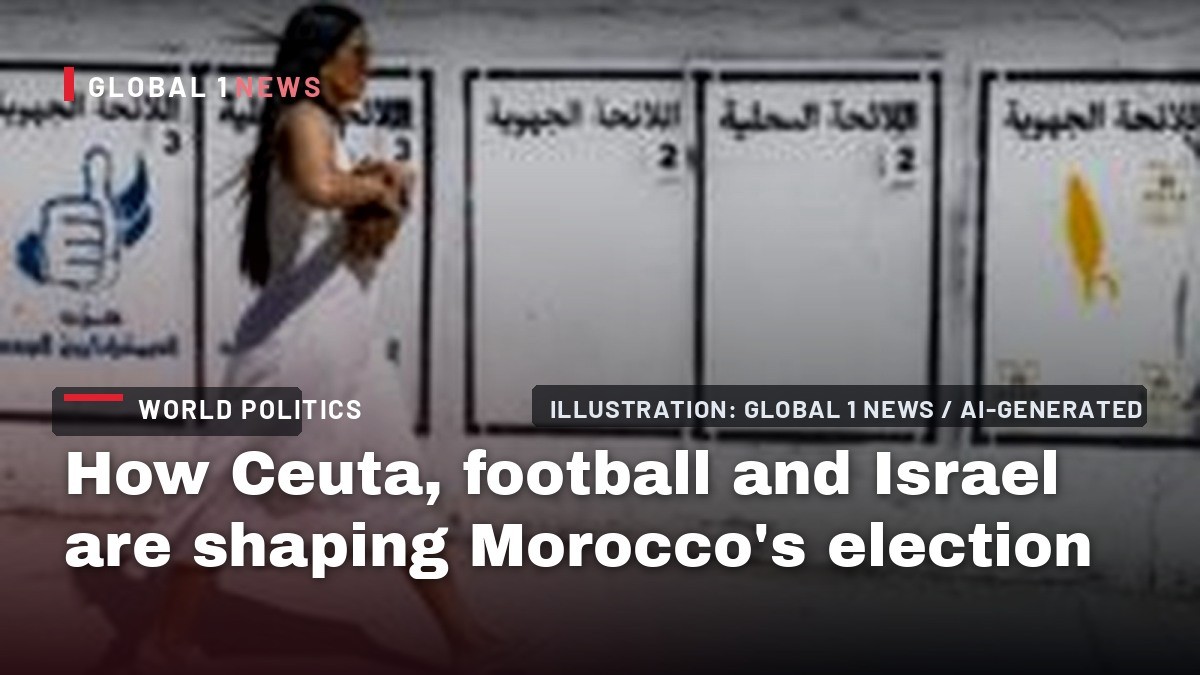
As Morocco heads to the polls this week, the streets pulse with a mix of football chants, migration anxieties and a fierce debate over the kingdom’s ties with Israel. For many young Moroccans, the campaign feels less a promise of change than a continuation of a political theatre that has long sidelined their aspirations. Yet the very symbols that dominate the election – a viral “Sir” chant, a mass crossing to Ceuta and the promise of one million jobs – reveal a nation at a crossroads, where youthful discontent meets entrenched royal authority.
The election landscape: parties, seats and the crown
Morocco’s parliamentary election will determine the composition of the 395‑seat House of Representatives, the lower chamber of a constitutional monarchy that still places considerable power in the hands of King Mohammed VI. While the king appoints the prime minister from the party that wins the most seats, he also chairs the Council of Ministers, the country’s most influential policy‑making body. This duality means that even a sweeping victory for any party will still be filtered through a royal vision of governance.
The centrist Party of Authenticity and Modernity (PAM), now buoyed by the popularity of football administrator Fouzi Lekjaa, is one of the main contenders. It faces off against Prime Minister Aziz Akhannouch’s National Rally of Independents (RNI), which is campaigning on a pledge to create one million jobs by 2031, and the Islamist Justice and Development Party (PJD), which is reviving anti‑Israel rhetoric to win back support. In total, 27 parties are vying for seats, each trying to translate their slogans into votes in a country where more than half the population is under 35 yet only a small fraction of registered voters are young adults.
Football fever as political currency
In a nation where the national team, the Atlas Lions, captured imaginations during the 2022 World Cup run, football has become a potent political tool. Fouzi Lekjaa, who heads the Royal Moroccan Football Federation and works in the finance ministry, has leveraged his sporting credentials to become a “new political sensation.” Campaign videos featuring crowds chanting “Sir” – the rallying cry that propelled Morocco to the semi‑finals – have gone viral, linking the team’s FIFA ranking aspirations with promises to lift education and healthcare to the same global standing.
This blend of sport and politics taps into a deep cultural passion. By aligning his political platform with the national pride evoked by football, Lekjaa offers a narrative of progress that resonates with a public eager for symbols of success. Yet critics warn that such charisma may mask the lack of concrete policy alternatives, noting that major parties often debate the implementation of royal‑endorsed goals rather than proposing fundamentally different economic models.
Migration to Ceuta: a symptom of youth despair
Just weeks before the election, an estimated 60,000 people – Moroccans and others – attempted to cross the border into the Spanish enclave of Ceuta, a surge that resulted in at least 100 deaths. The crossing, centred near Fnideq beach, underscores the desperation felt by many young Moroccans who see limited prospects at home. Hamza El Kharroubi, a 29‑year‑old activist from Tetouan now running for parliament with the little‑known Environment and Sustainable Development Party, argues that the migration wave is directly linked to economic hardship and soaring youth unemployment.
The International Monetary Fund estimates overall unemployment at 13 % while youth unemployment – for those aged 15 to 24 – sits at 37.3 %. For young people like El Kharroubi, the promise of one million jobs feels more rhetorical than real. His candidacy reflects a growing trend of activists entering formal politics, hoping to secure a voice in the legislative arena and push for long‑term solutions that go beyond short‑term job creation pledges.
Economic promises and the reality of jobs
The RNI’s headline pledge to generate one million jobs by 2031 dominates the campaign trail, echoing the “one million jobs” slogan that has become a staple of Moroccan election rhetoric. Political analyst Rachid Aourraz of the Moroccan Institute for Policy Analysis cautions that such promises are “overused” and lack substance, especially given the structural challenges that prevent the creation of stable, well‑paid positions. He notes that while parties discuss raising the minimum wage, the underlying economic framework remains unchanged.
For many voters, especially those in the Gen Z cohort that sparked protests in September 2025 over unemployment, healthcare and living costs, the promise of jobs is intertwined with broader demands for dignity and social justice. Demonstrators have shifted from slogans of “freedom, dignity, and social justice” to direct calls for the removal of Prime Minister Akhannouch, indicating a deep frustration with the status quo and a desire for tangible improvements in everyday life.
Israel, the Abraham Accords and political fault lines
Morocco’s diplomatic normalization with Israel in December 2020, part of the US‑brokered Abraham Accords, remains a contentious issue. The Justice and Development Party, led by former Prime Minister Abdelilah Benkirane, is reviving anti‑Israel sentiment, promising to sever ties and portraying the 2020 agreement as a mistake made by the party that governed from 2016 to 2021. The PJD’s campaign leans heavily on this narrative, especially after the Gaza war, when protests in Rabat and other cities intensified and the Israeli liaison office was closed.
Despite massive pro‑Palestinian demonstrations, recent diplomatic talks have led to an agreement to open full embassies in each other’s capitals, a move facilitated by the United Nations and the United States. Benkirane’s rhetoric suggests that a shift in policy could be achieved if the king were persuaded that ending ties would align with popular sentiment, highlighting the delicate balance between royal prerogative and public opinion in Morocco’s foreign policy.
Youth participation: hope, cynicism and the road ahead
Surveys indicate that more than half of Morocco’s roughly 38.8 million people are under 35, yet only about 4 % of the 15.8 million registered voters fall in the 18‑24 age bracket. This demographic gap underscores a sense of disenfranchisement among young Moroccans. Voices like Siham Azeroual, a 32‑year‑old environmental activist from the Atlas region, describe the election as “a complete circus,” reflecting a deep cynicism toward the political process.
Nevertheless, there are signs of engagement. Hamza El Kharroubi’s decision to run for parliament, despite a brief arrest during the 2025 protests, illustrates a growing belief that change can be pursued from within the system. He emphasizes a long‑term strategy: “by 2031 we have strong young politicians who can compete for a seat in the government.” This generational ambition, coupled with the diaspora’s interest – as highlighted by a 27‑year‑old Moroccan living in Montreal – points to a broader, transnational conversation about Morocco’s future.
What the election could mean for Morocco’s trajectory
The outcome of this parliamentary vote will shape the next government’s composition, but the real test lies in how the elected officials navigate the constraints of a monarchy that still wields decisive authority. If the RNI retains power, the one‑million‑job promise will likely be pursued, though its feasibility remains contested. A strong showing by PAM, buoyed by Lekjaa’s football‑driven popularity, could bring a blend of sport‑inspired optimism and technocratic governance, yet still within the bounds set by the crown.
Should the PJD make significant gains, the anti‑Israel platform could pressure the king to reconsider diplomatic ties, potentially reshaping Morocco’s foreign policy and its role in regional geopolitics. Meanwhile, the rise of smaller, issue‑focused parties like the Environment and Sustainable Development Party signals that youth activism is gradually finding institutional footholds.
In the end, the election is less about any single party’s manifesto and more about how Morocco reconciles the aspirations of a youthful, increasingly restless population with a political system that balances modern aspirations against a long‑standing royal tradition. The streets of Rabat, the chants echoing from football stadiums, and the desperate crossings to Ceuta together paint a portrait of a nation poised on the edge of change – a change that will only materialise if the voices of its young people are finally allowed to shape the policies that determine their future.
This article was produced with AI-assisted research and editorial support. Reporting is based on the source material cited below. Sources: BBC News Africa; bbc.co.uk; Global1.News (26 September 2026).
By Amara Diop, Staff Writer
What's Your Reaction?
 Like
0
Like
0
 Dislike
0
Dislike
0
 Love
0
Love
0
 Funny
0
Funny
0
 Wow
0
Wow
0
 Sad
0
Sad
0
 Angry
0
Angry
0
West Africa/Sahel Correspondent at Global1.News. Dakar-based journalist covering politics, security, climate, and development across Francophone and Anglophone West Africa. Tells the stories of a region undergoing profound transformation.









Comments (0)